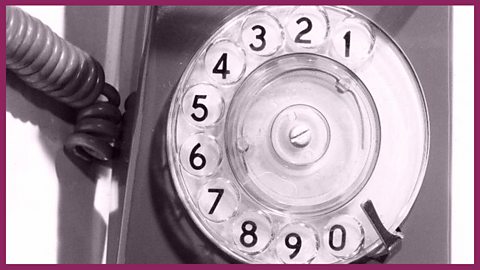
That's the voice of a computer. Bootstrap memory capacity options, partial word transfer, cascading index addressing, nanosecond scratchpad storage, core memory write-protection. And that's the language of the computer types. I wish I understood what it was all about. Three computer experts with infinite patience tried to explain, in terms as non-technical as they could, how a computer functions.
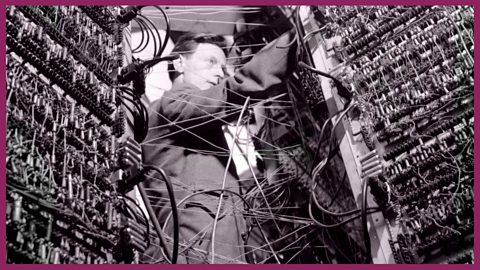
Well, I have to report that they had about a 90% failure. But I'll tell you what the whole set-up looked to a non-mathematician. After my preliminary briefing, or maybe it should have been 'brainwashing', I was shepherded into the presence…into the computer room. It was about three times the size of an average lounge and people at what looked like large filing cabinets, some with flickering lights which were going mad, some with glass fronts behind which tapes were whirling back and forth, and the rest with tightly shut doors, which could have housed coats or the tea-brewing utensils, but which apparently were the homes of memories and mass storage units.
This system here in Birmingham is the largest computer service under one roof in Europe. And although only five people, and they were all surprisingly young, were attending to the needs of the monster, the firm has 400 on the payroll, pre-digesting the fodder which the machine gobbles up. And once an operative has had some experience of working a computer, even a simple one, he or she needs only 3 weeks training to understand the foibles of this monster…
1970 - A description of a large, early computer.
Current day personal computers (or 'PCs') are vastly different to the early computers described here. The modern PC was made possible by the development of the microprocessor in the early 1970s. Microprocessor technology meant that a single computer chip could contain all the circuitry that previously occupied the large cabinets mentioned in this report.
Early PCs were initially sold by mail order in kit form, which proved to be a great success and inspired electronics firms to manufacture and sell them. In the mid 1970s, two programmer-engineers set up a new computer manufacturing company called Apple and in 1977 introduced the world's first personal computer.
Further developments in the late 70s and 80s improved the speed and functionality of PCs to the range of computers we have today - for home and office and even on the move, in the form of desktop, laptop, pocket and tablet computers.
The image shows the computer complex run by a large bank (exact date unknown).
Play next
The water speed record. video
The Campbells, Bluebird and the water speed record
A description of an early computer. video
A reporter describes the computer used to assist counting at the 1955 general election
The spread of 'talking machines' video
A reporter describes how 'talking machines' play an ever greater role in people's lives.