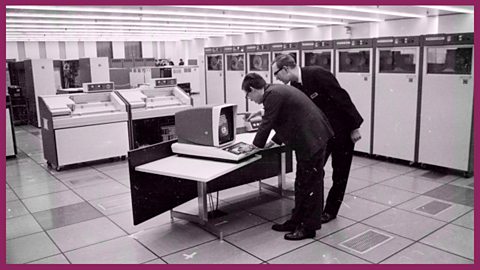
MACHINE: Hello, this is a telephone answering machine. If you'd like to leave a message for Cliff when he gets back, please speak now.
CALLER: I don't want to speak to a machine.
MACHINE: That's fine. Thank you very much for phoning.
REPORTER: Good evening, and that is an example becoming ever more familiar to us all of the talkative machine, the natterbox, the machine with a voice going cheerily on, bland and infuriating, supposedly improving communication between one human being and another…
MACHINE: Lines from London are engaged. Please try later.
REPORTER: But only it seems, getting in the way. Yet, we can't escape the machines that are supposed to be our obedient servants, but already almost begin to show signs of independence, if not outright mutiny. The computer has given the machine a kind of brain. There's a sinister note sounding somewhere, even in the joke noises with which we try to laugh the computer down to size. So far though the talking machines are really under our control, even though we may not realise how long some of them have been with us. Now this one's been around for years.
MACHINE: Twelve stone one…
REPORTER: And my goodness, its age is beginning to show, but the 'speak your weight' machine, venerable as it may be, is every bit as infuriating as the genteel voice that blocks your trunk call, or the recorded invitation to leave a message. They're machines that talk, but they don't listen, in other words they can't understand, but they're only the forerunners of a much cleverer kind of machine that can understand.
1971. Machines that can 'talk' and 'understand'.
This news report is over 45 years old but the notion that machines will become capable of thought and understanding - will take over - remains a familiar one. The inspiration behind the computer science of AI - artificial intelligence - is that human intelligence can be so precisely mapped that it will be possible for machines to replicate it.
Whether a machine can ever truly be capable of independent thought is in part a philosophical question - but there is in fact a test for it. In 1950 mathematician Alan Turing devised the Turing Test. It suggests that if a panel of judges holds a text-based conversation with a person or machine in another room and cannot tell after 5 minutes that the conversation is with a machine, then the machine must have the power of independent thought.
Alan Turing's theory is put to the test each year when the Loebner Prize for Artificial Intelligence is competed for.
Play next
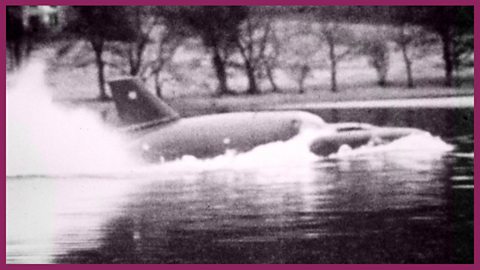
The water speed record. video
The Campbells, Bluebird and the water speed record
A description of an early computer. video
A reporter describes the computer used to assist counting at the 1955 general election
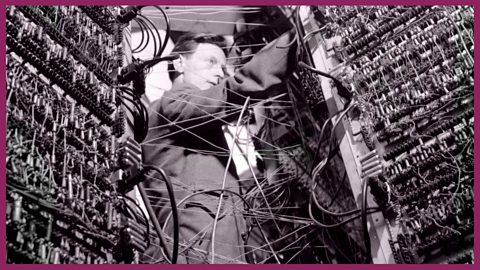
Early computers - like 'a living thing' video
Early computers were very different from the PCs that we are all familiar with today.