Tutorial: learn the 'Mozart zig-zag song' and 'The surprise song'
The tutorial: learn the songs
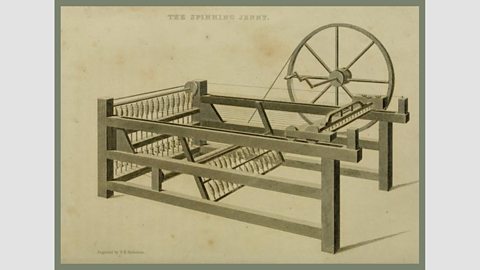
We hear about some 18th century inventions of the 'Industrial Revolution', such as the ‘Seed drill’, ‘Threshing machine’, ‘Flying shuttle’ and ‘Spinning Jenny’.
Then we travel to Austria in 1788, and London in 1791, where we meet Wolfgang Amadeus Mozart and Joseph Haydn. We learn two songs, each based on a famous melody by the composers.
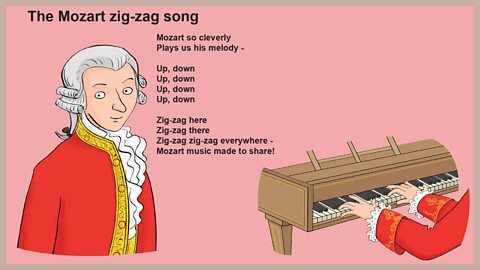
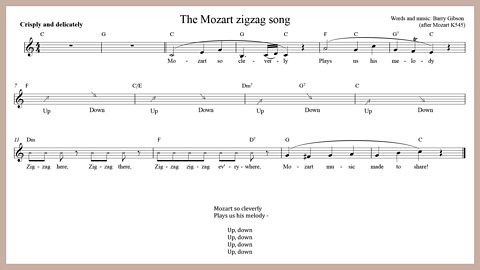
Song: 'The Mozart zigzag song'
Song: 'The Mozart zig-zag song' (vocal)
Song: 'The Mozart zig-zag song' (backing)
The melody of the song is from the first movement of Mozart's famous Piano Sonata K545.
Once you have learnt the song by singing with vocal version polish your performance by singing with the backing track.
Click here for the lyric sheet.
Click here for the music sheet.
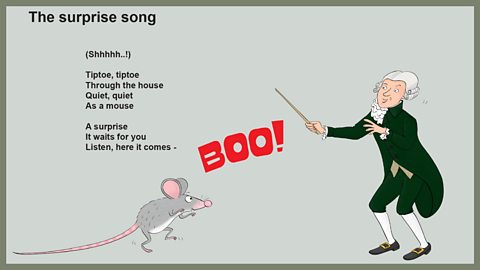
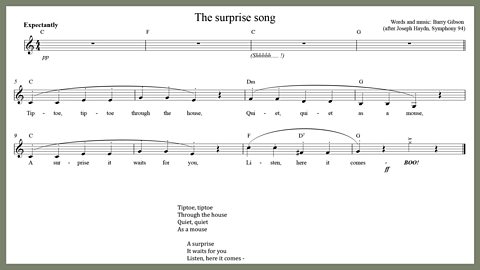
Song: 'The surprise song'
Song: 'The surprise song' (vocal)
Song: 'The surprise song' (backing)
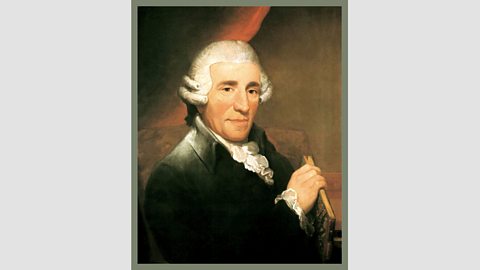
The melody for the song is taken from Haydn's Symphony no 94 - the 'Surprise'.
Once you have learnt the song by singing with vocal version polish your performance by singing with the backing track.
Click here for the lyric sheet.
Click here for the music sheet.
Listening music
Listen to 'Symphony No. 94' by Joseph Haydn, published in 1791.
Both Mozart and Haydn (as here) wrote music based on a melody that would become 'Twinkle, twinkle, little star'.
Can the children identify the nursery rhyme?
They will have to wait until a repetition of the phrase before the loud 'surprise' chord.
Resources
Teacher's Notes. document
Guidance on all the content (pdf)
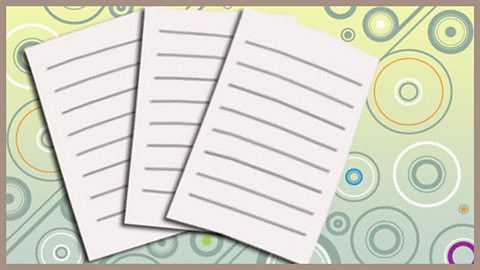
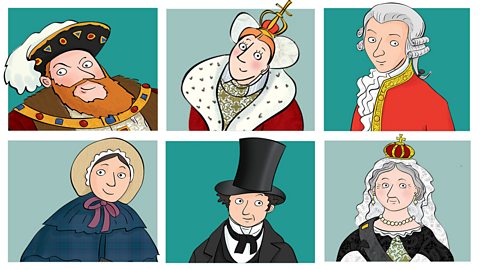
Meet the famous people. image
Meet the famous people in this slideshow of images
Lyric sheets for pupils. document
All the lyric sheets together (pdf)
Lyrics - The Mozart zig-zag song. document
Download / print the lyrics (pdf)
Music - The Mozart zig-zag song. document
Download / print the music (pdf)
Lyrics - The surprise song. document
Download / print the lyrics (pdf)
Music - The surprise song. document
Download / print the music (pdf)
More from this series
6. Bach, Vivaldi, Mozart and Haydn - part 1. audio
Exploring great composers with songs based on some of their most famous melodies.
8. Stephenson, Anning, Brunel and Queen Victoria. audio
Celebrating famous Victorians: the Stephensons, Brunel, Mary Anning and Victoria herself.
9. John Logie Baird and mass communication. audio
The series ends in the 20th century, celebrating TV and other mass communications.