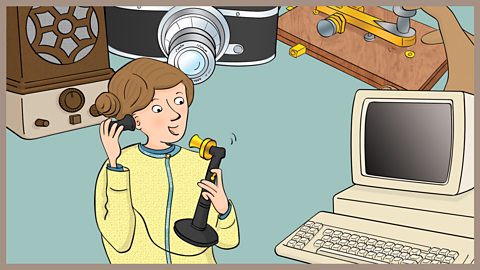
Tutorial: learn the song 'Hurrah, the Nineteenth Century'
The tutorial: learn the song
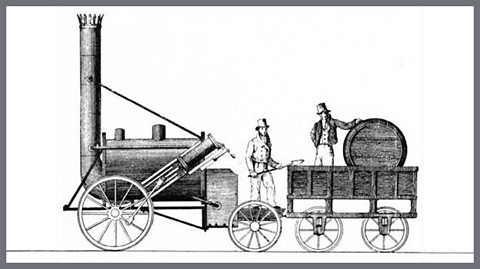
We travel back to the 19th century to hear about the 'Industrial Revolution'; then meet the Stevensons to find out about the coming of the railways; then travel to 1830 to hear from Mary Anning, the famous fossil hunter.
Next onto 1843 to meet engineer Isambard Kingdom Brunel at the launch of his ship, the SS Great Britain. Finally we head to 1851 to hear Queen Victoria read from her journal about the Great Exhibition in Hyde Park.
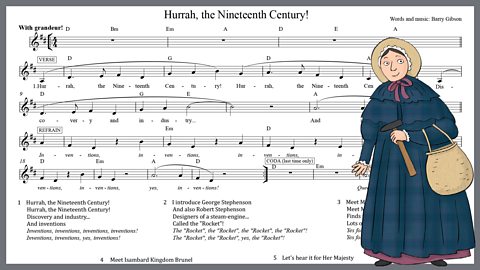
The song: 'Hurrah! The Nineteenth Century'
Song: 'Hurrah, the Nineteenth Century' (vocal)
Song: 'Hurrah, the Nineteenth Century' (backing)
The song has an upbeat tempo and is full of Victorian confidence and purpose!
Once you have learnt the song by singing with vocal version polish your performance by singing with the backing track.
Click here for the lyric sheet.
Click here for the music sheet.
Listening music
An old train stutters into motion - 'The little train of the Caipira' by Villa Lobos
An old train stutters into life…
There are many evocations of the rhythm of trains in music - steam trains in particular. In this recording an old train pulls away and builds up speed.
Can the children identify the different sounds of the train?
Resources
Teacher's Notes. document
Guidance on all the content (pdf)

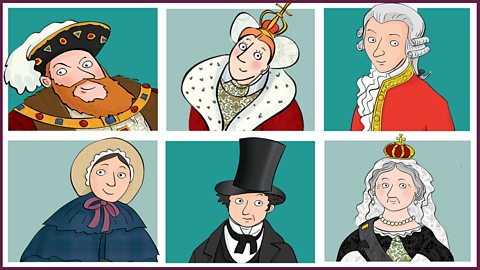
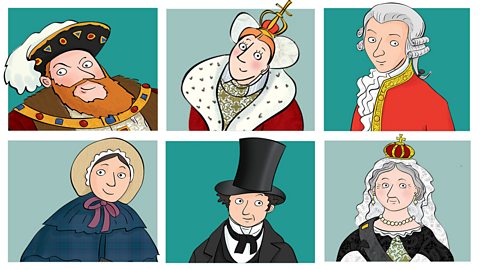
Meet the famous people. image
Meet the famous people in this slideshow of images
Lyric sheets for pupils. document
All the lyric sheets together (pdf)
Lyrics - Hurrah! The Nineteenth Century. document
Download / print the song lyrics (pdf)
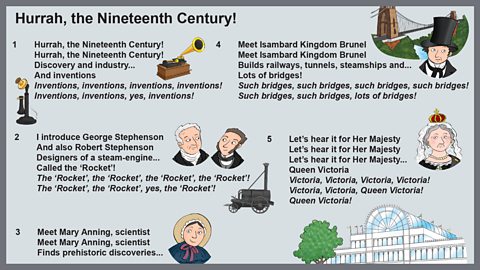
Music - Hurrah! The Nineteenth Century. document
Download / print the music (pdf)
More from this series
6. Bach, Vivaldi, Mozart and Haydn - part 1. audio
Exploring great composers with songs based on some of their most famous melodies.
7. Bach, Vivaldi, Mozart and Haydn - part 2. audio
Exploring great composers with songs based on some of their most famous melodies.. Part 2 looks at Mozart and Haydn.
9. John Logie Baird and mass communication. audio
The series ends in the 20th century, celebrating TV and other mass communications.