The song and other video content explores the achievements of Ancient Greek civilisation in architecture, theatre and the arts.
The song
'Build up stones and sculptures' - vocal
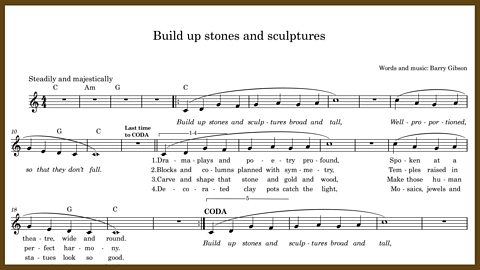
Build up stones and sculptures broad and tall
Well-proportioned, so that they don’t fall
Drama-plays and poetry profound
Spoken at a theatre, wide and round
Build up stones and sculptures broad and tall
Well-proportioned, so that they don’t fall
Blocks and columns planned with symmetry
Temples raised in perfect harmony
Build up stones and sculptures broad and tall
Well-proportioned, so that they don’t fall
Carve and shape that stone and gold and wood
Make those human statues look so good
Build up stones and sculptures broad and tall
Well-proportioned, so that they don’t fall
Decorated clay pots catch the light
Mosaics, jewels and metal shining bright
Build up stones and sculptures broad and tall
Well-proportioned, so that they don’t fall
Build up stones and sculptures broad and tall
Well-proportioned, so that they don’t fall
Broad and tall, so they don’t fall
A celebration of Greek architecture, columns, temples, theatres, statues and sculpture.
The strong, stately melody rises then falls symmetrically, starting at the ‘root’ note © as a ‘foundation’ to build on and return to. There is a stable, steady beat throughout the song, which features four square phrases in 4/4 time - suggesting rational, careful building.
The sound world highlights lyres, ancient horns/trumpets (such as the salpinx), panpipes and flutes. There’s also a range of percussion patterns to evoke the hard work of making and building by hand.
Refer to the Teacher Notes for more information about the song, including follow-up music activities based on it and suggestions for cross-curricular study.

Context: what contribution did Ancient Greece make to architecture, theatre and the arts?
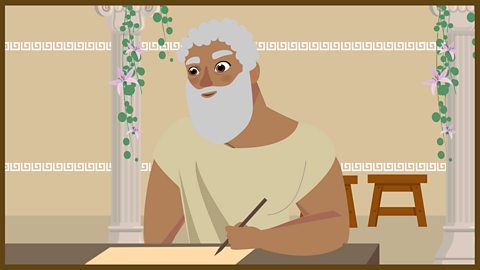
We meet the dramatist Euripides (c 480 BCE - c 406 BCE) who introduces us to the various forms of art and architecture enjoyed by the Ancient Greeks and explains how their artwork reveals many details of how the Ancient Greeks lived.
Euripides explains the importance of Greek drama and how the first theatre was cut into the cliff below the Acropolis in the centre of Athens. He describes how theatres were designed with tiered seating to enable the audience to see, and how the actors wore special masks to amplify their voices so that everyone could hear.
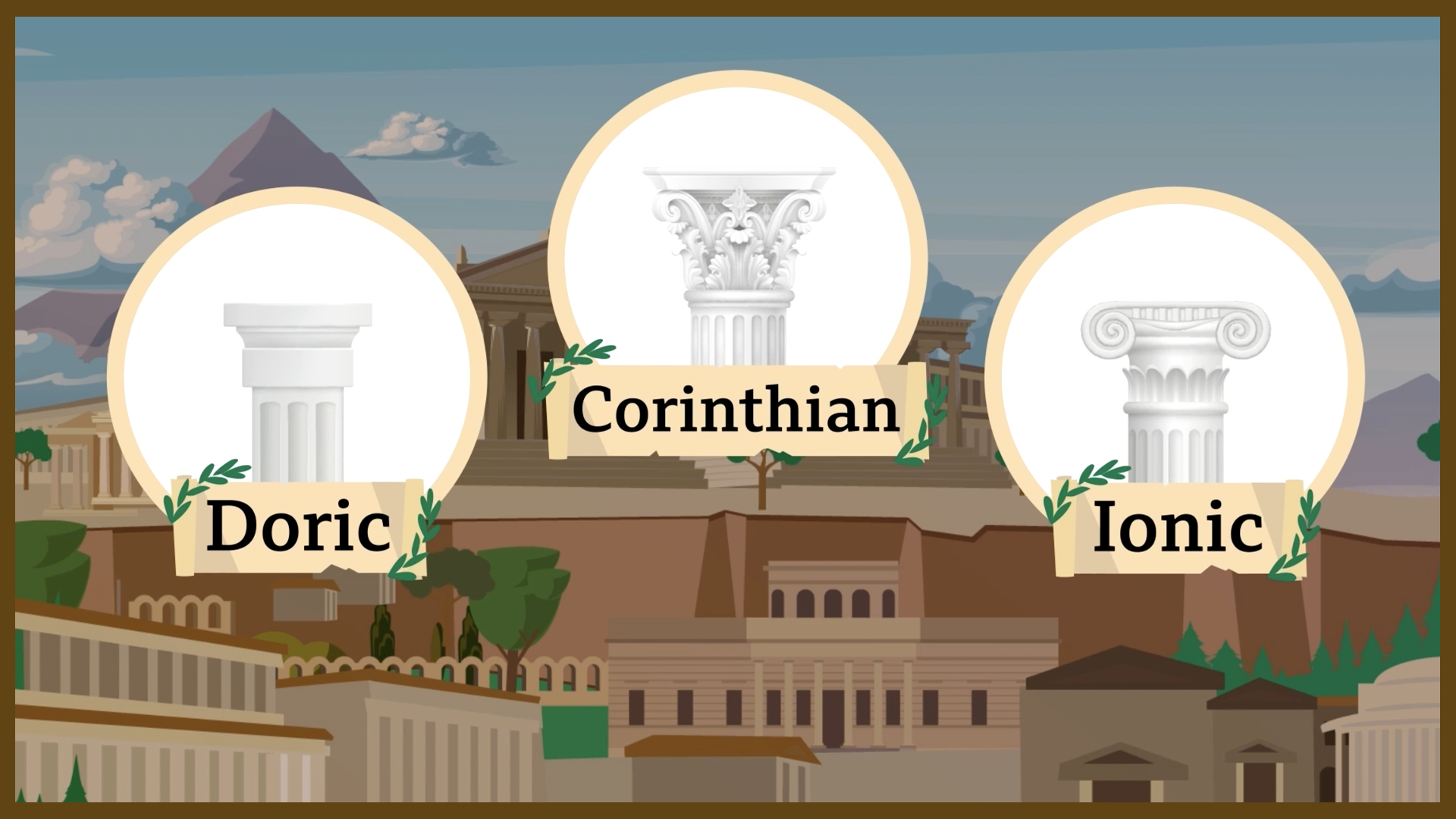
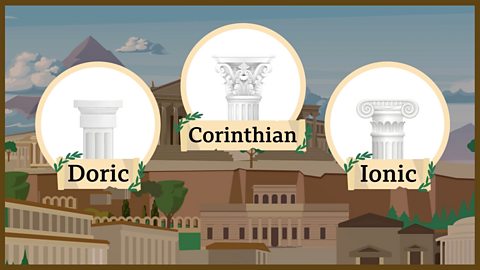
He describes the features of Ancient Greek architecture - including symmetry, straight lines and columns - and how Greek ceramic art, which often depicted scenes of everyday life, has provided historians with so much evidence of how the Ancient Greeks lived.
Resources
'Build up stones and sculptures' - instrumental
Build up stones and sculptures broad and tall
Well-proportioned, so that they don’t fall
Drama-plays and poetry profound
Spoken at a theatre, wide and round
Build up stones and sculptures broad and tall
Well-proportioned, so that they don’t fall
Blocks and columns planned with symmetry
Temples raised in perfect harmony
Build up stones and sculptures broad and tall
Well-proportioned, so that they don’t fall
Carve and shape that stone and gold and wood
Make those human statues look so good
Build up stones and sculptures broad and tall
Well-proportioned, so that they don’t fall
Decorated clay pots catch the light
Mosaics, jewels and metal shining bright Build up stones and sculptures broad and tall
Well-proportioned, so that they don’t fall
Build up stones and sculptures broad and tall
Well-proportioned, so that they don’t fall
Broad and tall, so they don’t fall
Teacher Notes. document
Click to download / print the Teacher Notes (pdf)
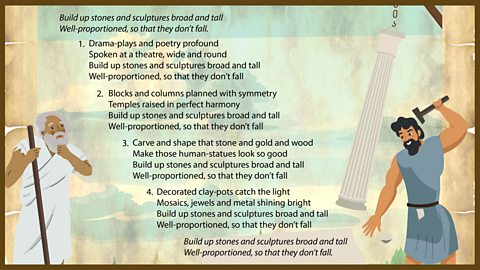
Build up stone and sculptures - Lyrics. document
Click to download / print the lyric sheet (pdf)
Build up stone and sculptures - Music. document
Click to download / print the music sheet (pdf)
Download audio. podcast
Download the backing track of the song (mp3)

Greek columns - Doric, Ionic and Corinthian
Click to display image full size
More from KS2 Music: Ancient Greece
4. Get training
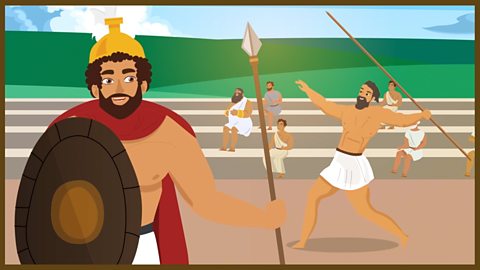
The original Olympic Games of Ancient Greece and how they differed from the Games of today.
5. Philosophy
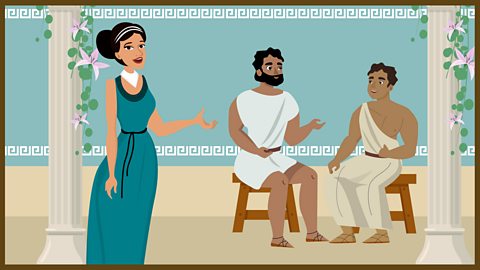
Exploring the Ancient Greek contribution to philosophy, maths, astronomy, medicine - and more.
6. Story, story, story
A song referencing many of the best-known myths and stories of Ancient Greece.