[A beetle disappears out of shot.]
Narrator:
Hey. You.
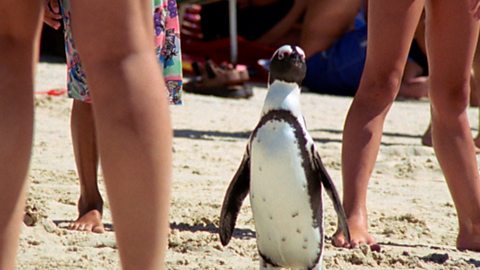
[A penguin wanders off.]
Excuse me.
[A wolf cub looks our way.]
Could I…
[It disappears into the trees.]
Well, never mind, they're busy, they're all getting on with the business of life.
From starting off small, to growing up, to producing the next generation, all living things have a life cycle and each stage is as important as the last.
For these arctic fox cubs life is all play at the moment. But there is a serious side to the fun and games – they are learning the skills they will need to survive as adults, like hunting and chasing.
When the fox cub grows into an adult, it will need to catch its own food and be able to survive the harsh conditions where it lives. Only then, will it have the chance to reproduce, to make the next generation of arctic foxes. To complete the arctic fox's life cycle.
Life cycles are as varied and diverse as life on Earth.
Whether it's a mammal, like the arctic fox, or a bird, or a plant or an insect, different groups of organisms all have different kinds of life cycles.
These are the seeds of the Alsomitra vine, a type of climbing plant.
The plants start life as these amazing gliding seeds. Their incredible gliding shape helps distribute new plants all around the forest.
The seed germinates and a new vine begins to grow up towards the light.
When the vine's flower is pollinated by insects or other animals, seeds will grow and the next generation is started.
The life cycle starts again.
One of the most amazing life cycles in nature can happen in your own back garden or local pond.
These are tadpoles. They've hatched from these small jelly covered eggs. They don't look like much, perhaps you might think they are small fish, but they are about to go through an amazing transformation.
And turn into one of these…
Frogs and toads are amphibians and they have an incredible life cycle. Their remarkable transformation happens through a process we call metamorphosis.
The tadpole grows a spine, it grows legs, it looses its gills for breathing in water and grows lungs that can breathe air instead. It even changes its digestive system to allow it to eat worms and insects. The tadpole seems to change into a completely different creature…
But these adult frogs will start the next generation. The females will lay eggs and the hatching tadpoles will go through the same remarkable metamorphosis… A transformation, that, if you're lucky, you might be able to see happening in your own back garden or local park.
Amphibians are not the only animals that go through metamorphosis.
From the moment they emerge from their eggs caterpillars are eating machines. They need to put on as much weight as possible, as quickly as possible. So they eat and eat and eat.
If this caterpillar was a human baby, within a month it would be the size of a bus! Which is one big baby.
But all this eating is for a very good reason. Caterpillars need to store up a lot of energy as they will soon go through a remarkable transformation. Like a tadpole, they will go through a metamorphosis, and emerge as a completely different looking creature.
The adult butterfly will look for a mate, the females will lay eggs and a new generation of hungry caterpillars will be born – starting the life cycle all over again.
(whispering)These eggs have been laid by the female Osprey.
Ospreys are found all over the world, but in the UK these osprey chicks, are very rare.
Like almost all birds, learning to fly is a big step in their life… Some get it quicker than others.
As adults, these magnificent birds of prey specialise in hunting fish.
They catch fish to survive, but when they reproduce and start the next generation, they also need to catch fish to feed their young.
The growing they did as chicks and the skills they developed as young adults help them to survive and eventually produce the next generation of ospreys. To start the life cycle again.
This mammal probably looks very familiar to you. Like every other living thing in nature, we humans have a life cycle too.
We start out small, we grow, and we learn new skills which we can use to look after ourselves as adults. Just like other living creatures. And we reproduce the next generation. So the life cycle can start all over again.
So although it happens in an amazing amount of different ways, from your back garden, to the local park, to the farthest corners of the world, we can see that all living things have a life cycle.
Life starts off small, it grows into an adult and it produces the next generation – so the whole process can start all over again.
I'm glad you agree.
Video summary
This clip explore the life cycles of various organisms using amazing wildlife footage and simple summary graphics.
First, we visit the arctic fox in its natural habitat and see fox cubs learning to catch prey.
We also look at plants and the Alsomitra vine.
From here we move onto two examples of metamorphosis - a butterfly and a frog - and finally we see the life cycles of a bird and a human.
This clip is from the series Natural world of plants and wildlife.
Teacher Notes
Start a lesson with this clip as an introduction into the wide variety of life cycles on our planet.
Pupils could list the different organisms shown leading into a discussion about differences between life cycles and how they are not all the same.
The clip could be paused during the graphics to allow the teacher to discuss the life cycle further and get any suggestions from the pupils about which other organisms may have the same lifecycle as the one just shown.
The human life cycle is last, we see clips of the different stages in the life cycle of a human.
The teacher could then ask the students what they think the life cycle of a human is.
This clip will be relevant for teaching science at Key Stage 2 and Key Stage 3 in England, Wales and Northern Ireland or Second/Third Level in Scotland.
How animals have adapted. video
A look at a selection of animals, investigating how they have adapted to their environments.
Classification of organisms. video
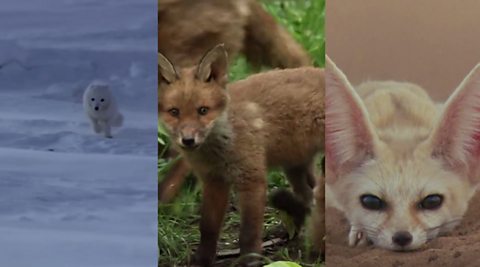
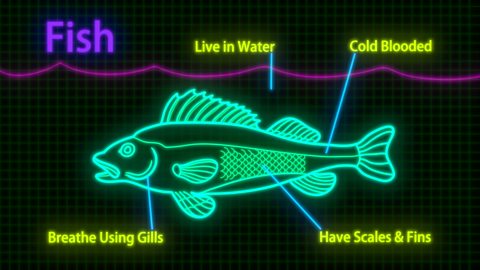
A look at how fish, reptiles, mammals and birds are classified into groups based on shared characteristics.
How plants and animals reproduce. video
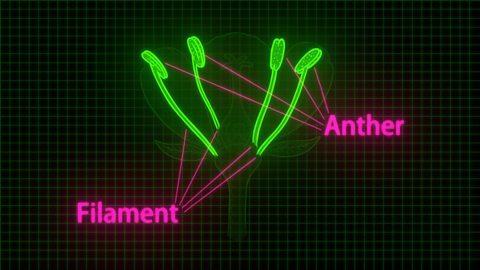
An investigation into the many different ways animals and plants reproduce.
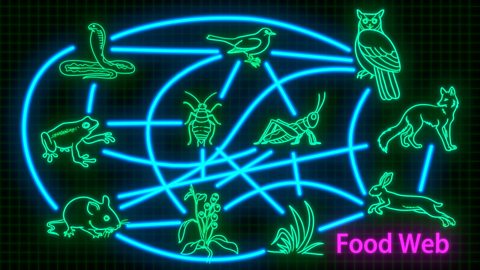
Food chains and food webs in animals. video
How energy is transferred through food chains and food webs via producers, primary and secondary consumers, predator, prey and decomposers.
The connections within ecosystems. video
An introduction to the concept of an ecosystem, exploring different types and looking at the connections between the living and non-living components of an ecosystem.
Human impact on the environment. video
A look at the impact of humans on ecosystems and the environment by focusing on the the penguins of Boulders Beach, Simons town, South Africa.