What do these two have in common? Fish and trees…
Not much, you'd think. This fish lives the majority of its life in the open ocean and these trees grow far from the sea, many miles inland.
But if I told you that the trees in this forest have such abundant growth because of those fish, would you believe me?
And it's not just the trees, all the animals here flourish in one way or another because of the fish.
How is this possible?..
Well, everything in nature is connected, even the non-living things like the soil, the sunlight and the rain.
When we look at all the living and non-living things together, this is called an ecosystem. An ecosystem is like a community – it consists of both living organism and their habitat.
And if we look at this forest ecosystem, and the connections within it, we can see how all the plants and animals here do in fact rely on a fish.
The secret is the bears.
The salmon swim up the rivers from the sea, deep into the forest, in order to reproduce and lay eggs. For the hungry bears, waiting for the fish to arrive, it's a sea-food bonanza.
With so much food available, the bears discard tonnes of half-eaten fish, often carrying them deep into the forest. This salmon, left behind by the bears, is packed with nitrogen, which disperses into the soil. This nitrogen is a key nutrient to help trees grow.
And in fact scientists have discovered that up to 80 per cent of the nutrients taken up by this forest is salmon-based. So with the help of the sun and the rain, this forest flourishes.
The animals that are supported by the forest flourish too. And not just because of the rich habitat. The insects that live here also eat the leftover fish, which in turn feeds small birds and rodents, which in turn feed all the other larger predators in the forest.
Everything in the ecosystem is connected in many ways… And they all benefit from the nutrients provided by the migrating salmon.
The sun, the rain, the water, the soil, the plants and the animals are all connected; they are all part of the ecosystem.
Ecosystems come in all shapes and sizes!
An ecosystem can be as small as this termite mound.
Or all the life in a single tree.
They can be in the countryside…
And they can also be in cities.
Wherever you look, an ecosystem is simply the links between the living and non-living things you see. The size of an ecosystem depends only on the area being examined.
The earth itself, is one giant eco-system, where everything, living and non-living is connected.
Video summary
An ecosystem is like a community and shows how all the living and non-living components are connected.
These connections can be seen in a forest ecosystem where salmon is vital for the stability of life within it.
The secret behind this is the bears, and how they hunt for the fish and then discard some of the carcasses which are rich in nitrogen.
The nitrogen in turn helps the trees to grow.
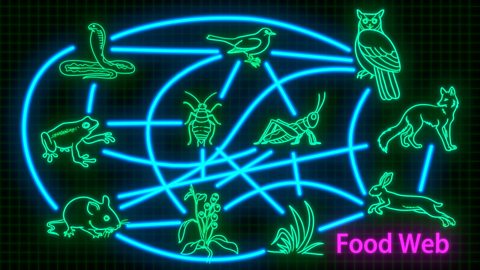
This is then linked to the food chains and webs within the ecosystem.
Ecosystems can come in all shapes and sizes, as small as a termite mound or as large as a tree.
This clip is from the series Natural world of plants and wildlife.
Teacher Notes
The size of an ecosystem depends on the area being examined.
Pupils could be asked what other ecosystems they can think of.
They could be asked to describe the links between the living and non-living components within the ecosystem.
This clip will be relevant for teaching science at Key Stage 2 and Key Stage 3 in England, Wales and Northern Ireland or Second/Third Level in Scotland.
How animals have adapted. video
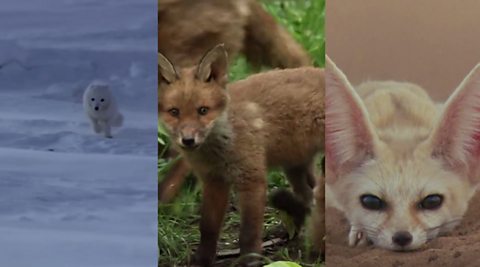
A look at a selection of animals, investigating how they have adapted to their environments.
Classification of organisms. video
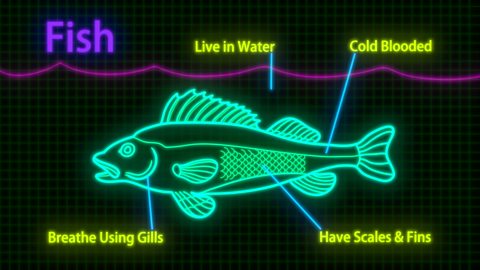
A look at how fish, reptiles, mammals and birds are classified into groups based on shared characteristics.
The life cycles of different organisms. video
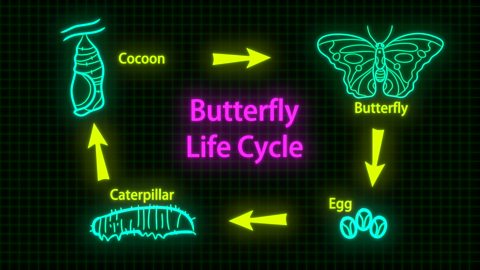
A look at the life cycles of a range of organisms including a mammal, an amphibian, an insect, a flowering plant, a bird and a human.
How plants and animals reproduce. video
An investigation into the many different ways animals and plants reproduce.
Food chains and food webs in animals. video
How energy is transferred through food chains and food webs via producers, primary and secondary consumers, predator, prey and decomposers.
Human impact on the environment. video
A look at the impact of humans on ecosystems and the environment by focusing on the the penguins of Boulders Beach, Simons town, South Africa.