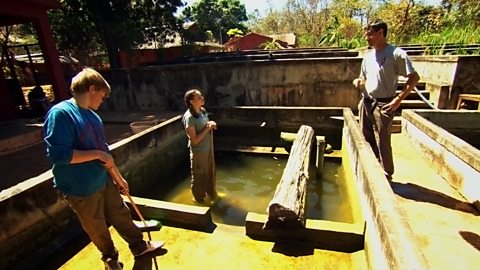
The teenagers consider what can be done when local people feel compelled to hunt endangered species for meat.
The video
KS3 Geography. Africa - Conservation in Madagascar.
When the need for food threatens endangered species
STEVE BACKSHALL: This is Madagascar. It’s a vast island in the Indian Ocean off the east coast of Africa. And it’s home to some of the most unique and rare creatures on the planet. Incredibly 80% of the wildlife here exists nowhere else on earth. But it’s a paradise under threat.
I’ve sent eight ordinary kids from the UK to discover for themselves how the people and animals can both survive here together. This was never going to be easy.
CHILD NARRATOR: On our mission the one thing that became immediately obvious when we arrived was the culture. The smells, the colours, but also unfortunately how poor it was.
CHILD: I was a bit shocked by the fact that the villages were so poor. I didn’t expect them to be that poor.
CHILD: The poverty we’ve seen here is quite hard to deal with because you just see it everywhere.
CHILD NARRATOR: The lifestyle here is completely different to back home. Most of the time finding food is more important than just playing.
CHILD: Compared to this we’ve got an easy life. Where they’ve got chores to do - the rice - we don’t have chores as hard as that.
CHILD NARRATOR: Rice only goes so far and when you have many mouths to feed it’s easy to understand why some people in Madagascar are forced to rely on other ways to get food. Finding enough meat is the biggest problem.
We discovered that people were catching all kinds of wildlife, stuff that we wouldn’t normally choose to eat, and unfortunately that also means endangered animals. In particular, bats. Around the world bats area great source of protein. And, as we discovered, they’re easy to catch. We went into a cave where bats are regularly hunted.
[NOISE OF BATS INSIDE THE CAVE]
CHILDREN: Wow! / There’s a lot of bats!
CHILD: [TO LOCAL ADULT] Is bat considered a speciality or is it just general food?
ADULT: I think the fruit bat - the largest one - is even sold in some restaurants. But these ones are generally eaten by people when they don’t have any other…
CHILD: [TO LOCAL ADULT] So it’s kind of like something to fall back on, if there’s nothing else to eat?
ADULT: Yeah.
CHILD NARRATOR: And the method to catch the bats was quite shocking. They are basically just knocked down.
CHILD: Just smacking them with a stick…
CHILD: It’s quite crude. I think it’s quite crude, just picking up a big stick and smack a bat with it. Dinner.
CHILD: I just think they want food. Hitting it with a stick works, so they’re going to do it.
CHILD: Yeah.
CHILD NARRATOR: So, in a place where protein is hard to find, is it right that people eat endangered animals? What would you do?
[QUESTION MARK]
[WALKING THROUGH DENSE UNDERGROWTH]
CHILD: Hold on to that one there…
CHILD NARRATOR: On another day we witnessed not the locals eating bats but conserving them. [WATCHING MAN CLIMB TREE AT CONSERVATION CENTRE] It was cool to see how their specialist skills came in handy.
CHILD: Wow! How does he do that?
CHILD: Oh! The bats are coming down!
CHILD NARRATOR: We got involved with a health check on these bats. And we found out they had a really useful job. Something which was a surprise to us and something not many people in Madagascar might know about either. Bats all over the world eat loads of insects. Insects that can be a real nuisance to human beings…
CONSERVATIONIST: [COUNTING THE BATS] …11, 12…
CHILD NARRATOR: And these bats target one insect in particular. They eat mosquitoes. Which doesn’t sound very impressive, but it’s mosquitoes that carry malaria.
Malaria is a deadly parasite that kills millions of people across the world. You can catch it if you are bitten by an infected mosquito.
CHILD: If they conserve the trees and the bats, for a start they would have less mosquitoes because the bats…one of their favourite things to eat is mosquitoes. And that means there would be less risk of having malaria and other mosquito-related diseases around the area.
CHILD NARRATOR: It seems that animals that are eaten can also play a key role in an ecosystem. And, as malaria affects a lot of people in Madagascar, surely we should protect bats at all costs. What do you think?
Video summary
Download/print a transcript of the video.
Warning: This film discusses the killing of animals. Whilst this isn’t shown, the stick used to strike the bats is shown. Some students may be sensitive to this.
The teenagers must consider what, if anything, can be done when sources of protein are scarce and some people feel compelled to eat endangered species for meat.
Madagascar is classified as a Low-Income Country ('LIC') and many people are poor. Sources of protein are scarce and so bats - an endangered species - are often hunted for food. The teenagers are shown a typical method of hunting bats, which involves entering a bat cave and striking them with sticks.
They then visit a bat conservation project and learn that bats predate mosquitos, which spread malaria. So, eating bats may increase the prevalence of the disease.
This clip was originally from the series Deadly Dilemmas.
Teacher Notes
Download/print a copy of the Teacher Notes for this video.
Teacher Notes prepared in partnership with the Geographical Association.
Before watching the video
- Locate Madagascar using maps of the world and Africa.
- Discuss with students what they already know about Madagascar and whether they can name other Low-Income Countries. What do those countries have in common? Discuss what percentage of Madagascans live in poverty (roughly 75.2% - Worldbank data) and the impact this might have on everyday life. Show images of Madagascar to avoid a single-story narrative.
- Discuss the types of food we eat in a day, and what we could eat if we no longer had access to protein sources such as chicken and beef.
- Introduce key terms such as:
Conservation: the practice of protecting Earth's natural resources for the benefit of current and future generations.
Endemic: a species that lives in a limited area.
Endangered: a species is at a high risk of extinction, or disappearing forever.
Malaria: a life-threatening disease caused by parasites that are transmitted to people through the bites of infected female Anopheles mosquitos.
While watching
You may wish to stop at relevant points during this short film to pose questions and check understanding, or wait until the end. Useful questions might include:
- What types of animals are people hunting?
- What problems might this cause?
- Is it right for people to hunt bats?
- Would you eat other types of animals if our typical food sources were too expensive?
- Why is conservation important?
- What is malaria?
- Why do we need to conserve bat species?
After watching
- Students could participate in a silent debate, writing their thoughts and opinions on whether we should eat bats and other endangered species or not. Lay large sheets of paper out on tables with a range of opinions on, students then add their opinions. Students can agree with each other or provide counter opinions.
- This could lead to a discussion about what we should be eating and whether certain species should be off-limits.
- Students should be given an opportunity to weigh up the benefits and challenges of conservation, especially in the wider context of Madagascar.
Curriculum links
This clip will be relevant for teaching Geography at KS3 in England and Northern Ireland, 3rd/4th Level in Scotland and Progression Step 4 in Wales.
Where next?
- In a world where we should be looking to reduce our carbon footprint, many scientists suggest that we should consider eating insects instead of meat. Read this article from Newsround and watch the films. Should we consider eating insects as a source of protein?
Links
Benefits and challenges of conservation:
https://www.bbc.co.uk/bitesize/guides/zsbn7p3/revision/6
Endangered species and hunting:
https://www.bbc.co.uk/bitesize/guides/zsbn7p3/revision/5
The land as a resource:
https://www.bbc.co.uk/bitesize/articles/zq7jqfr#zjwkdp3
Managing ecosystems:
https://www.bbc.co.uk/bitesize/guides/z2tstv4/revision/6
More from Africa - Conservation in Madagascar:
Balancing tourism and conservation in Madagascar. video
The teenagers consider the impact of tourism in Madagascar. They explore the link between the economy and conservation.
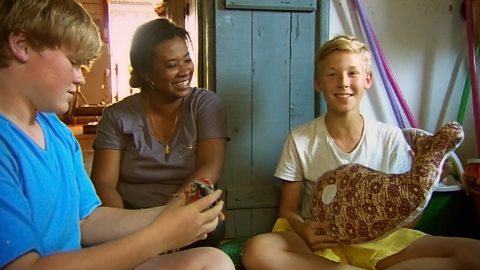
How fishing on a coral reef in Madagascar causes habitat loss. video
The teenagers consider a local conservation dilemma: families who fish on a coral reef even though the activity is destroying the habitat.
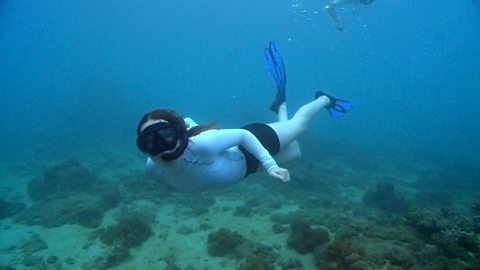
How deforestation in Madagascar is threatening animal habitats. video
The teenagers investigate how deforestation in Madagascar threatens the lemur's habitat, but happens in response to local needs.
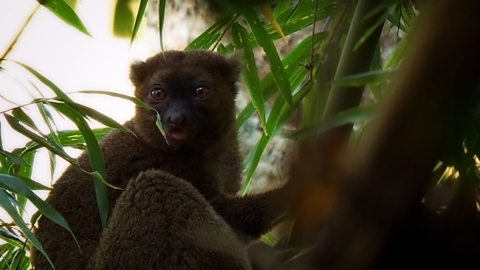
Protecting endangered species in Madagascar. video
The teenagers consider two contrasting wildlife conservation projects, both working to protect endangered species.