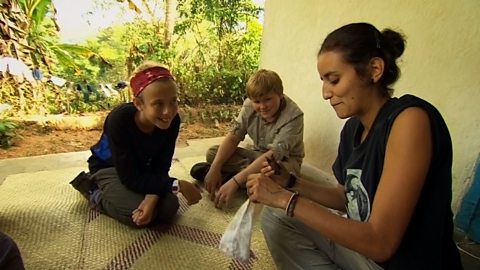
UK teenagers in Madagascar consider the merits of two contrasting wildlife conservation projects.
The video
KS3 Geography. Africa - Conservation in Madagascar.
Protecting endangered species in Madagascar
STEVE BACKSHALL: This is Madagascar. It’s a vast island in the Indian Ocean off the east coast of Africa. And it’s home to some of the most unique and rare creatures on the planet. Incredibly 80% of the wildlife here exists nowhere else on earth. But it’s a paradise under threat.
I’ve sent eight ordinary kids from the UK to discover for themselves how the people and animals can both survive here together. This was never going to be easy.
CHILD NARRATOR: One of the things we learned on our mission is that sadly many animals in Madagascar might go extinct…even within our lifetime.
CHILD: I never thought that I would get…to be this close to one of the most endangered primates in the world.
CHILD NARRATOR: We met many dedicated people working hard to prevent such species from dying out. And the reality of preserving animals in the wild is not always guaranteed.
CONSERVATIONIST: Does everybody have their fingers crossed? All right, guys, last trap’s empty.
CHILD NARRATOR: The fossa, in particular, is so rare we weren’t able to track one down in the wild.
CHILD: The elusive has remained elusive.
CHILD NARRATOR: Instead, we went to a zoo where they had a rescued female and her baby.
CHILD: Mini fossa, baby fossa.
CHILD: Much, much smaller than I was expecting.
CHILD: Kind of looks like a cross between a cat and a dog, with like a stretched-out body and a lemur tail…basically!
CHILD: It’s amazing to get this close to such a small…like a baby fossa…it’s amazing!
CHILD NARRATOR: Having young in captivity is a positive sign that they are doing well, which is a good thing as we discovered that wild fossa are now being pushed out of their territory by dogs.
[GIRL GASPS AS SHE IS SHOWN VIDEO OF DOGS]
CONSERVATIONIST: The village dogs here will sometimes go in the forest and when they go in they completely displace the fossa from the area.
CHILD NARRATOR: It would be difficult for these guys to live safely in the wild. To save these species, surely we should keep them safe in captivity? What do you think?
[QUESTION MARK]
CHILD NARRATOR: But there is an alternative way to saving a species. Another incredible thing we got involved with was to get up close with some really endangered turtles.
CHILD: Why is this species of turtle so endangered?
CONSERVATIONIST: Well this is the only turtle that is found just in Madagascar, so it’s the only one that is endemic to this area. When people are fishing, people will actually eat the turtles as well, because they need some protein.
CHILD NARRATOR: At this conservation centre the turtles’ future was not to be a life in captivity.
CHILD: They’re really cute and they are quite small.
CHILD NARRATOR: They were part of a different solution. When baby turtles become big enough adults they are prepared to be released back into the wild.
CHILD: [TURTLE BEING HANDLED] Oh! It peed!
CONSERVATIONIST: [MEASURING A TURTLE] 24.4. 24.4 - great!
CHILD NARRATOR: Our challenge was to travel five hours off-road to get to a remote lake that was an ideal spot for the turtles.
CHILD: This bag has some of the turtles that we tagged and microchipped and that yesterday, so I’m going to be very careful while carrying it cos…very, very precious goods in here.
CHILD NARRATOR: When we got to the lake we realised why it was the perfect place.
CHILD: Because it’s their sacred lake, and we are entering it to release these turtles, so we are going to do it their way.
CHILD NARRATOR: Their way was to have a ceremony, which would ensure the protection of these turtles. [LOCAL PEOPLE SPEAKING TO EACH OTHER] This lake was so sacred to the local people it means they do not hunt or fish in it.
CHILD: The lake is ready for us to release the turtles into.
[APPLAUSE AS A TURTLE IS RELEASED]
CHILD NARRATOR: Releasing the turtles here was the only realistic way they could have a future in the wild.
CHILD: I think the turtles have definitely got a good home here cos all the people are like in unity with their lake, so the turtles are really well protected by the people.
CHILD NARRATOR: Surely releasing animals into protected areas like this is the best way to save a species? What do you think?
Video summary
Download/print a transcript of the video.
The teenagers consider two contrasting approaches to conservation in relation to turtles and the fossa - a cat-like creature unique to Madagascar.
In the first part of the video they consider the fossa. These elusive creatures are threatened by local dogs who have encroached on their natural habitat. The video poses the question: is the best way to protect the fossa to have them living in captivity?
Part two of the video introduces the teenagers to a conservation project for turtles which works with local people. Turtles are bred in the safety of a reserve and when they are big enough are released into the wild - specifically into a lake deemed sacred by the local people. The video asks the audience to consider which conservation project is the more successful.
This clip was originally from the series Deadly Dilemmas.
Teacher Notes
Download/print a copy of the Teacher Notes for this video.
Teacher Notes prepared in partnership with the Geographical Association.
Before watching the video
- Locate Madagascar using maps of the world and Africa.
- Discuss with students what they already know about Madagascar and what animals they may know that are from there. For example ring-tailed lemurs and the fossa.
- Introduce key terms such as:
Conservation: the practice of protecting Earth's natural resources for the benefit of current and future generations.
Endemic: a species that lives in a limited area.
Endangered: a species is at a high risk of extinction, or disappearing forever.
Captivity: being confined to a particular area, for example a zoo.
White watching
You may wish to stop at relevant points during this short film to pose questions and check understanding or wait until the end. Useful questions might include:
- What percentage of the species are only found in Madagascar?
- Why might these animals be endemic to Madagascar?
- Why are the fossa threatened?
- Why are conservation projects needed?
- Why are the turtles released into the lake?
- Which project is most successful?
After watching
- The video could be used to start a discussion about endangered animals. Ask the class to research different approaches to saving endangered species. Split them into small groups and ask them to find examples of different approaches to saving species from taking tusks off elephants, horns from rhinos to captive breeding programmes.
- Once they have collected their data, they could put it into a presentation, explaining what they have discovered and how it could be used or how the idea could be adapted to save the Fussa.
Curriculum links
This clip will be relevant for teaching Geography at KS3 in England and Northern Ireland, 3rd/4th Level in Scotland and Progression Step 4 in Wales.
Where next?
- Research the Aspinall Foundation and the work they do in Madagascar. How did they increase the numbers of the Greater Bamboo Lemur, when it was nearly extinct?
- The news articles on the website could be used as in-class reading and the conservation sites could be mapped, this also provides an opportunity to look at the variety of rainforest ecosystems in Madagascar.
Links
Benefits and challenges of conservation:
https://www.bbc.co.uk/bitesize/guides/zsbn7p3/revision/6
Endangered species and hunting:
https://www.bbc.co.uk/bitesize/guides/zsbn7p3/revision/5
The land as a resource:
https://www.bbc.co.uk/bitesize/articles/zq7jqfr#zjwkdp3
Managing ecosystems:
https://www.bbc.co.uk/bitesize/guides/z2tstv4/revision/6
More from Africa - Conservation in Madagascar:
Balancing tourism and conservation in Madagascar. video
The teenagers consider the impact of tourism in Madagascar. They explore the link between the economy and conservation.
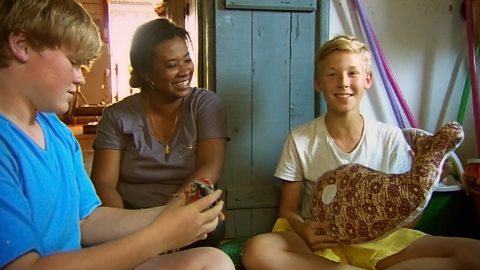
How fishing on a coral reef in Madagascar causes habitat loss. video
The teenagers consider a local conservation dilemma: families who fish on a coral reef even though the activity is destroying the habitat.
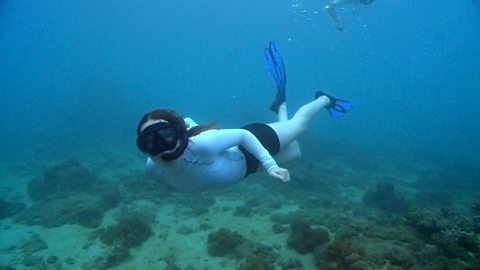
How deforestation in Madagascar is threatening animal habitats. video
The teenagers investigate how deforestation in Madagascar threatens the lemur's habitat, but happens in response to local needs.
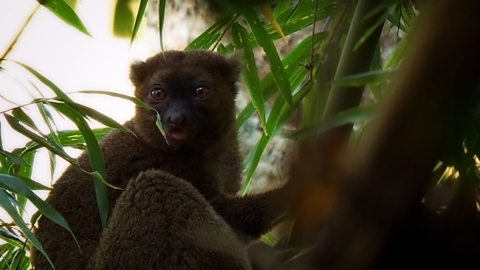
When the need for food threatens endangered species. video
The teenagers consider what can be done to protect bats, which are often hunted as a source of meat although endangered.