STEFAN GATES:
Of all the boring stuff that people bang on about when it comes to nutrition, can there be anything more boringly boring than this stuff? Water. I mean, it's tasteless, it's colourless, it's odourless, it's pretty much free. But when you take a closer look at it, you find that it's actually weird, amazing stuff. What it does to your body is brilliant and vital, and occasionally a little bit disgusting.
Give yourself a little squeeze. I bet you feel quite solid, don't you? Well, it turns out that we're all a little bit wet. I happen to be this wet. It turns out the human body is 60% water. I weigh 70 kilos, which means there are about 40 litres of water in my body. Question is - where is it? Well, it's in my blood and my guts, it's in all my organs, it's in my wee, it's in my sweat. Oh, hello. There's even some in my bones. It's a wonder we can all stand up straight.
Now, we need regular rehydration, because we're constantly losing water from our bodies, and about a fifth of that is lost through sweat. Now, I'm not feeling very sweaty at the moment, so I need to call in a special sweat expert. A sweat-spert, if you will.
NATASHA JONAS:
My name's Natasha Jonas and I'm a female amateur boxer. I was lucky enough to get to qualify for the London 2012 Olympics, and I also went to the 2014 Commonwealth Games. On a normal training day, we would train three times a day, five days a week. So that includes a run first thing in the morning. Then you'd go back, eat your breakfast. I decided to make some poached eggs because it's my favourite. And there it is. Poached egg butty.
We then have a little rest, then we'd go along to our strength and conditioning session, which is a lot of weights and circuit-training type of stuff. I'd always take along some water. And then we again have a little break, a little snack before I go to my actual boxing training session, which can last anything from an hour to an hour and a half. Some cucumber sticks and hummus. Last one. To training I go.
Hydration is really important when you're doing any physical sport, but especially boxing. During a session, you can lose anything between 500ml and 2 litres of water, so we have to make sure that you're fully rehydrating yourself after every session, because it's all about keeping your concentration and keeping your brain active and ready. You want to make sure that your reaction times are as fast as they can be. Also, you want your muscles not to be starved of any water and become fatigued, tired or even possibly injured.
The most part of water is taken in through food, but you can also obviously buy bottled water from anywhere or get it out of your tap for free.
STEFAN GATES:
So why do we sweat? Thermo-regulation, my friends. Big word, simple story. Our bodies need to stay at a steady 37.5 degrees for everything to function properly. If your temperature goes up or down just a degree or two from that, you soon feel really ill, but our bodies have an in-built, top-of-the-range heating and cooling system to keep us at the right temperature 24/7, using up to four million teeny, tiny sweat glands dotted all over our bodies.
When we get all hot and bothered, they each produce a teeny, tiny bit of liquid, or sweat to you and me. As that evaporates, it cools us down. After a really active workout, you can lose several litres of water, but even on an ordinary day, you'll sweat about 400 to 650ml. If you don't replace that fluid, you'll be dehydrated, you could get headaches, feel tired, and it'll even affect your concentration and, erm… What was I saying? Oh, yes, short-term memory.
When you add up all the fluid that you get during one day, it comes to about this much. Between two and three litres, which is handy because that's how much food you get rid of every day. So where does it go? Well… about half of it goes in wee. And the other half goes in sweat. We think sweat's pretty disgusting, but, actually, making your own sweat can be rather interesting and even quite explosive.
Sweat is mainly made up of water, but it's combined with some small amounts of bodily by-products - salts of magnesium, calcium, sodium and potassium. To make your own sweat, without breaking into one, magnesium is added to a container of water. Little reaction, apart from some minor bubbles, but calcium vigorously bubbles, and sodium a-fizzes and a-sizzles. Then potassium sparks like a mini firework. And that, pretty much, is what's in your sweat.
Video summary
Olympic boxer Natasha Jonas explains the importance of staying hydrated whilst training and competing. Meanwhile, Stefan Gates demonstrates the chemical composition of sweat.
We hear how the body is 60% water, and how we lose 2-3 litres a day in wee and sweat.
We hear how the sweating mechanism and thermoregulation work.
This is short film is from the BBC series, Gastro Lab.
Teacher Notes
You could challenge students to keep a diary of how much water they drink every day for one week.
They can then assess whether they drink enough and increase their rehydration during energetic activities.
Have they ever had symptoms of dehydration (headaches, tiredness, fatigue)?
They can be asked to make a note of the ways that they might increase their fluid intake, making sure that this does not exceed the requirements or add excess sugary or fatty foods and drinks to their overall diet.
This short film is relevant for teaching biology and food technology at Key Stage 3 in England, Wales and Northern Ireland, and 3rd Level in Scotland.
The science behind carbohydrates. video
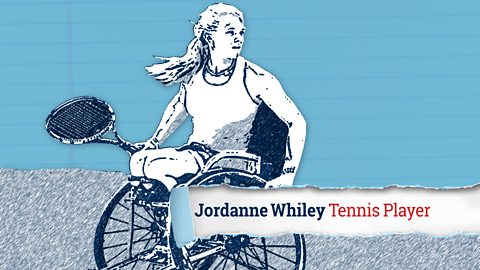
Paralympic athlete Jordanne Whiley explains why carbohydrates are important in her diet. Meanwhile, Stefan Gates uses a 'sugar shotgun' to illustrate how energy is released from food and creates heat.
The science behind dietary fibre. video
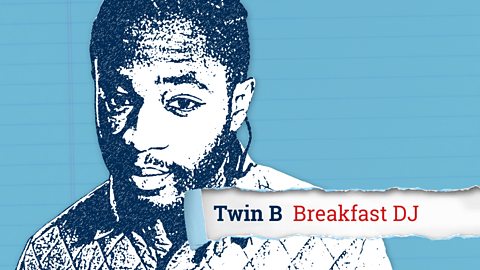
Radio 1Xtra DJ Twin B explains how his breakfast rich in fibre gives him the energy for his show. Meanwhile, Stefan Gates uses a chemical replica of your gut to show how fibre creates gas.
The science behind fat. video
Comedian and CBBC star Johnny Cochrane explains his fondness for fast food and curry. Meanwhile, Stefan Gates shows how much fat is contained in one portion of chicken korma.

The science behind protein. video
Rugby player Danny Cipriani highlights the importance of protein to help him train, whilst Stefan Gates performs an experiment to extract the protein from a glass of milk.

The science behind vitamins and minerals. video
West End actor Savannah Stevenson illustrates how foods full of vitamins and minerals are essential for her health. Meanwhile, Stefan Gates uses red cabbage to show how much vitamin C is in food.