Stefan Gates: Up here, you! Now, people often talk about good and bad food, but the truth is, there's no such thing. There's only balanced and unbalanced diets. Now, the stuff that gets the worst press is this - fat. On the plus side, we do need some fat in our diets. Also, we've got taste receptors on our tongues which are triggered by fat, giving us sensations of pleasure in our brains. On the downside, fat contains huge concentrations of energy, which is fine if you're really, really active and you're using that up. If you're not, you can start laying down reserves of fat in your own body, and it can lead to problems in the long term.
Come over here. For example, if I want to burn off the calories in a high-fat food, for instance, this bar of chocolate, I'm going to have to do quite a lot of exercise. I need to run five and a half miles. Five and a half miles!
HE GROANS
Then again, if I want to take those calories in a different form, I might have to eat a lot more food. Say, lettuces, for instance. Here we go. So those calories in lettuce form is about nine lettuces. Argh!
Johnny Cochrane: I'm a comedian and TV personality. So… I had to get that in, cos no-one knows, otherwise. I would say, as a comedian, you're required to work quite long hours, like, that go well into the night. So quite unsociable hours as well. Right, we're here at the venue. This is where the gig is tonight. I need to go and get some food, erm, because that's the first thing on my mind right now. So come in with me. I'd say the most important meal of my day is probably dinner because it certainly would give me energy to go on stage and perform with. When you're a comic, you use a lot of nervous energy. Yeah!
CHEERING
No-one wants to come and see a tired performance. And then I'm building up to my big crescendo at the end - the double-arm throw. Yeah! What I try to do is have one big dinner and that should sort me out through the day, but I've got to be honest, sometimes I can, erm… lose control, shall we say? Go a bit crazy. And I will stop into, like, a little burger shop on the way home. I would say my guilty pleasures in food would have to be a curry. Again, it is my favourite food, but I know it's not good for me as well. But…I mean, they just taste so nice. At the end of the day, I'm not afraid to have a little bit of fast food sometimes. I'm going to eat these on the way home. So catch you later.
Stefan Gates: Oi, step away from the cake. Now, too much fat overall can lead to long-term problems, things like heart disease, high blood pressure and diabetes. But not all fats are the same, oh, no. Let's take a little look around. There are two main kinds of fats. Saturated fats are found in foods like… Naughty, but nice.
Unsaturated fats are found in foods such as… Still nice, and not so naughty as they help reduce cholesterol and heart disease. Now, one of Johnny's favourite foods is curry and here is a curry. A delicious chicken korma. But the thing is, people often say that korma's got a lot of fat in it, and I hate the way that people say things but never show you. So I thought, can I find a way to show you how much fat is in this chicken korma? Here's what we're going to do. First of all, I need to blend the curry. Here we go. Mmm. So that's blended it a little bit. And now I need to add a solvent which is going to start dissolving all of that fat. This is ethanol, a really powerful solvent.
Remember, don't mess with ethanol - flammable and an irritant, you have been warned. We need to separate all the solids from the liquids. Right, so I've given it a really, really good squeeze out. And this is what's left behind. Oh, look at the colour there. Add a little bit of water to that. It looks just like a bit of a banana milkshake at the moment. But if you leave this for 24 hours, it will look… …like this And this is disgusting but fascinating, because this section here is all of the fat. That is the unsaturated fat, the slightly clearer liquid, and this bright orange solid stuff at the top is the saturated fat. That's how much fat there is in one portion of chicken korma. It's not good, it's not bad, but it is a lot of fat.
Comedian and CBBC star Johnny Cochrane explains his fondness for fast food and curry. Meanwhile, Stefan Gates shows how much fat is contained in one portion of chicken korma.
Stefan Gates demonstrates how much exercise you have to do to burn off high-fat foods, and discusses the long term health risks of putting on weight.
He explains the difference between saturated and unsaturated fats, and their links to cholesterol and heart disease.
We find out about the molecular structure of fat, its food sources and its function in the body.
He uses an experiment to show how much of both types of fat are contained with one portion of chicken korma.
This short film is from the BBC series, Gastro Lab.
Teacher Notes
After watching this short film, you could set your pupils the following task:
Examine food labels (or manufacturer’s nutritional information) from a range of three or four ready meals.
List the unsaturated and saturated fat content.
What ingredients provide the saturated and unsaturated fat content?
Evaluate the amount of fat that is provided by the meal for a healthy diet.
What could be changed to reduce the fat content in the meal?
This short film is relevant for teaching biology and food technology at Key Stage 3 in England, Wales and Northern Ireland, and 3rd Level in Scotland.
The science behind carbohydrates. video
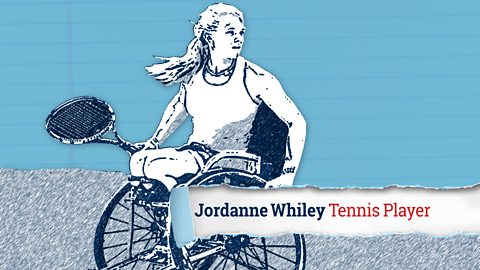
Paralympic athlete Jordanne Whiley explains why carbohydrates are important in her diet. Meanwhile, Stefan Gates uses a 'sugar shotgun' to illustrate how energy is released from food and creates heat.
The science behind dietary fibre. video
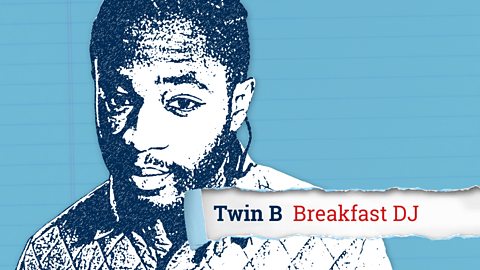
Radio 1Xtra DJ Twin B explains how his breakfast rich in fibre gives him the energy for his show. Meanwhile, Stefan Gates uses a chemical replica of your gut to show how fibre creates gas.
The science behind hydration. video
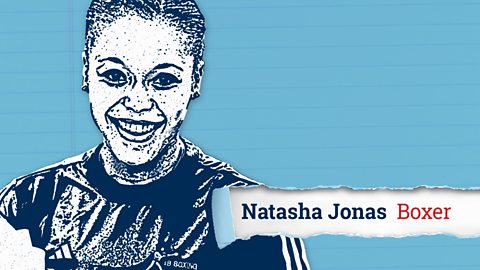
Olympic boxer Natasha Jones explains the importance of staying hydrated whilst training and competing. Meanwhile, Stefan Gates demonstrates the chemical composition of sweat.
The science behind protein. video
Rugby player Danny Cipriani highlights the importance of protein to help him train, whilst Stefan Gates performs an experiment to extract the protein from a glass of milk.

The science behind vitamins and minerals. video
West End actor Savannah Stevenson illustrates how foods full of vitamins and minerals are essential for her health. Meanwhile, Stefan Gates uses red cabbage to show how much vitamin C is in food.