STEFAN GATES: Muscles are amazing things. The hardest-working muscle in the body is probably the heart, and it beats 2.5 billion times in the average lifespan. But what do you need to keep your muscles healthy? Protein, my friends! And that's because muscles and organs are made up mostly of protein, but you are constantly losing it from your body, so you need to eat loads and loads of protein-rich foods to help rebuild muscle, to help build your body tissues and to help your blood to carry oxygen around the body.
But some people need more protein than others.
Danny Cipriani: I'm Danny Cipriani. I play rugby for Sale Sharks in England, and I play fly half. I've been nine years professional now. I made my debut at 17. I'm 26. So if I can eat the right foods and train in the right way, I've got about another ten years left in me.
My job requires me to have speed, power, strength and agility. To get through the game, you have to make sure you're doing the appropriate training throughout the week. We normally have a weights session, do that for an hour-and-a-half in the morning. It's important that you work your full body because you have to have that speed or leg power, especially in my position, but I don't want to get too big, otherwise I'll slow up, but I also need to be the right size so the bigger guys aren't trampling all over me.
Post that session, it's key to get your proteins in, and your carbohydrates. Sweet. I'm going to have some scrambled eggs… which will be my source of protein today. And then I'd also have 125g of rice with it, as well. It's important that I eat the right blends of protein and carbs and get that in me for my session, and especially post-session, to make sure I get the best out of it and you get the best recovery for the next one, as well.
Getting ready for the next weekend's game starts now, really.
Stefan Gates: Danny's pushing his muscles to the extreme on a daily basis, so he needs a high-protein diet to help build up his muscles and to repair them.
Now, think of proteins as chains, and each link in the chain is an amino acid. Now, out of 21 main amino acids, nine are essential because your body can't make them. A protein chain from an animal product like milk, eggs, meat or fish contains all nine essential amino acids, and so they're known as complete proteins.
Incomplete proteins don't contain all nine essential amino acids, but you can combine those foods to hit the magic number. We're talking plant-based foods here, such as nuts, cereals, seeds and beans.
Now, it's all very well saying that Mr Fishy here is packed with protein, but I always want to see these things so I want to get a food and extract the neat protein out of it. I'm not going to do it with Mr Trouty here; I'm going to do it with this - a glass of milk.
This is how we're going to do it. First, I'm going to curdle the milk. All we need to do is add some acid. I've got a couple of lemons here. I'm going to squeeze this in and then it's going to look really unpleasant.
Ugh… Oh, that is already disgusting. So all these kind of grains you can see round here are all the proteins that have clumped together, but they're still sitting in a solution of sugars and fats and water so I'm going to strain this.
OK. Go through here… OK. So now we've got this kind of watery liquid left behind, and in here should be some of the solids.
HE CHUCKLES
It doesn't look very pleasant, but this is basically a type of cheese already but it's still got all the fat inside it so I want to remove the fat.
Now fat doesn't dissolve in water; it dissolves in solvents. I've got some ethanol here, and that should do the trick.
Now ethanol is flammable and it's an irritant, so handle with care and don't splash it around! OK. That should have dissolved all of the fat, so there's still solids in there and that ought to be the casein which is the protein that's in milk.
I need to strain this one more time and hopefully we'll find our protein.
Not enough protein causes malnutrition - not good in anyone's book - but too much protein can also cause problems like heart disease.
What's left in here ought to be pure casein. There we go. That is the protein from half a glass of milk. It's actually a heck of a lot but you wouldn't think it from such a watery substance.
It's such an important part of our diet that without it we simply wouldn't exist.
Video summary
Rugby player Danny Cipriani highlights the importance of protein to help him train, whilst Stefan Gates performs an experiment to extract the protein from a glass of milk.
We find out about protein's importance in building and repairing body tissue, and about the amino acids that form them.
The difference between plant and animal proteins are highlighted, along with the nine essential amino acids we all need in our diets.
This short film is from the BBC series, Gastro Lab.
Teacher Notes
Strict vegetarians called vegans get their protein from plant based sources, such as beans, nuts, lentils and pulses.
You could challenge your students to choose a recipe that is usually made with animal based proteins and modify it for a vegan.
Students can be asked to look up some recipes to show how complete (animal based) proteins foods are complemented by incomplete protein foods (plant based), for example, pasta with a meat sauce.
This short film is relevant for teaching biology and food technology at Key Stage 3 in England, Wales and Northern Ireland, and 3rd Level in Scotland.
The science behind carbohydrates. video
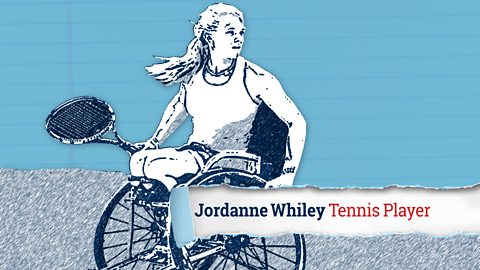
Paralympic athlete Jordanne Whiley explains why carbohydrates are important in her diet. Meanwhile, Stefan Gates uses a 'sugar shotgun' to illustrate how energy is released from food and creates heat.
The science behind dietary fibre. video
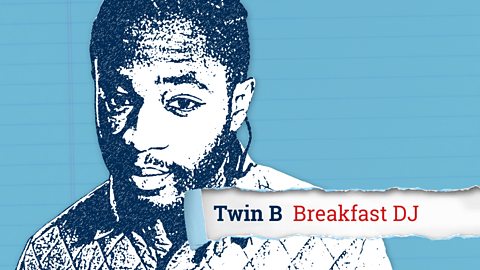
Radio 1Xtra DJ Twin B explains how his breakfast rich in fibre gives him the energy for his show. Meanwhile, Stefan Gates uses a chemical replica of your gut to show how fibre creates gas.
The science behind fat. video
Comedian and CBBC star Johnny Cochrane explains his fondness for fast food and curry. Meanwhile, Stefan Gates shows how much fat is contained in one portion of chicken korma.

The science behind hydration. video
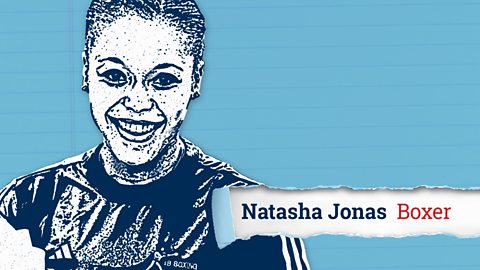
Olympic boxer Natasha Jones explains the importance of staying hydrated whilst training and competing. Meanwhile, Stefan Gates demonstrates the chemical composition of sweat.
The science behind vitamins and minerals. video
West End actor Savannah Stevenson illustrates how foods full of vitamins and minerals are essential for her health. Meanwhile, Stefan Gates uses red cabbage to show how much vitamin C is in food.