Rian and Maya begin their journey at the North Pole, learning as they go how animals have been used for travel and transport.
Rian: Aunt Maya, I can't believe we're going to be travelling from one end of the world to the other on our trip.
Aunt Maya: That's right Rian we're starting here at the North Pole, right at the top of the world and going all the way down to the South Pole at the bottom of the world. Are you ready for the first part of our journey?
Rian: Yeah, so are the dogs. Are they really going to pull the sled the whole way?
Aunt Maya: Only while we are on the ice and snow, they all run along together, sharing the work of pulling the sled.
Rian: Who else uses dogs for transport?
Aunt Maya: People who live in snowy areas, like the Inuit people, have been using dog sleds for many years.
Rian: Is it the only transport you can use on snow and ice?
Aunt Maya: No, there are now other forms of snow transport like snowmobiles.
Rian: Dogs are more friendly than snowmobiles though.
Aunt Maya: They are.
Rian: It looks the same in every direction, how do we know which way to travel?
Aunt Maya: A very good question, Rian. Let's take a look. There are four main directions we can travel in north, east, south and west.
Rian: Which way are we going to travel?
Aunt Maya: We are here and we need to travel all the way down to the sea here and down on a map is usually south.
Rian: So we need to follow the S for south.
Aunt Maya: Exactly.
Rian: The dogs look ready, let's go! These dogs are amazing, they're so fast!
Aunt Maya: Did you know that people have used animals to travel for thousands of years?
Rian: Really? What other animals do people use?
Aunt Maya: People all over the world use horses.
Rian: Like cowboys in America.
Aunt Maya: Yes, cowboys rode on horses, but so did people from Asia and Europe and people also used horses to pull vehicles like carts, chariots and carriages.
Rian: Why are horses good for travel?
Aunt Maya: Well, they're much faster than walking, so you can get places more quickly and they are stronger than us humans so they can pull more and travel further. In hotter areas such as the Sahara Desert in the continent of Africa, people often use camels.
Rian: Wow!
Aunt Maya: Camels are slower than horses, but they are very strong and they can travel in the hot desert for longer as they need less water to drink.
Rian: Do people ever use birds to travel?
Aunt Maya: No the animal needs to be bigger and stronger than a person to be able to carry or pull them.
Rian: Elephants?
Aunt Maya: People do use elephants in many Asian countries like India and more than 2000 years ago, there was a soldier called Hannibal who marched his whole army over huge mountains using elephants and horses.
Rian: Amazing!
Aunt Maya: They must be on the way to the North Pole.
Rian: We were there before them.
Aunt Maya: We were.
Rian: Who was the first person to go to the North Pole?
Aunt Maya: Well, that is a tricky question to answer. There were a few people who said they were first, but it's hard to know for sure if they actually made it to the North Pole, as technology was very basic back then. One team that was trying to get to the North Pole first was led by someone from America called Robert Peary. The story goes that Peary became ill on their journey and had to be pulled on a sled. One of his helpers was called Matthew Henson. He was sent ahead of the main group to check the way was safe. So maybe he was the first person to go to the North Pole. He said he put a flag on the spot too.
Rian: We didn't see any flags just now at the North Pole.
Aunt Maya: No, it happened more than 100 years ago, so a flag would have been moved by now.
Rian: Ah you don't see many people using animals to travel today though.
Aunt Maya: Since cars and trains and planes were invented, fewer people use animals for travel, but they are still needed where there are no roads or railway lines.
Rian: Like us.
Aunt Maya: Yep, so you can check if we're still going in the right direction.
Rian: It's pointing to S, so that means we're travelling south and north is behind us.
Aunt Maya: Excellent.
Rian: Woo-hoo!
Video summary
The video animation introduces pupils to Rian and his Aunt Maya as they begin their journey from the North Pole to the South Pole.
On the way they discuss why sleds and huskies are used for travelling on snow. Maya explains to Rian about the four points of a compass and how you can use a compass to find the direction.
They also learn how animals have been used through history as modes of transport - including horses, camels and elephants - and some of the places and ways that these animals have been used, including considering why using animals might be a more effective method of transport than walking.
Aunt Maya then tells Rian about Matthew Henson, an African American who may have been the first person to visit the North Pole as part of Matthew Peary's expedition of 1909.
Questions to ask:
- Why are sleds good for travelling on ice and snow?
- Which people use sleds as a common mode of transport?
- What is the name of the piece of equipment you can use to find out which direction you are facing? What are the names of the four main points on the compass?
- How did different people use horses for travel and why?
- Which animal do people often use in hot countries and why?
- Why don’t people use birds to travel?
- Why don’t people use animals to travel very much nowadays?
Suggested activities
- Before watching the video, ask the children if they have any experience of snowy days, or activities such as ice skating etc.
- What is it like walking on snow and ice? Is it easy? Get them to imagine they are walking to school on a snowy day and act it out. Why is it so tricky to walk on ice? Is it easy to drive a car on a snowy day? Do any of the children know any ways that make it easier to travel on ice and snow? Some of the children might know about skis and ice skates, or they might know about methods for improving roads in icy conditions, such as use of salt or grit.
- Go through the four points of the compass again with the children. Use a compass to locate north, east, south and west in your own playground or classroom.
- Pretend you are Matthew Henson and Robert Peary travelling to the North Pole. Role play their journey, perhaps using the playground, and imagine how cold and tired they might have been. How would Matthew Henson have felt when he finally reached the North Pole? Role play the moment he arrived there. Take turns sitting in the ‘hot seat’ as Matthew Henson, with other pupils asking Henson questions about his experience and how he feels.
- Write a postcard home from the point of view of Matthew Henson, explaining what his journey was like. Perhaps do some further research into famous journeys to the North Pole (for example Sir Walter Herbert, who was the first person to reach the North Pole on foot).
- Ask children to draw one thing that they can see in the classroom or playground if they look north, east, south or west.
- Play a game where the teacher calls out a direction and the children have to run/skip/hop in that direction (use different method of travelling each time).
Resources
Teachers' notes. video
Download / print notes for the series (PDF)
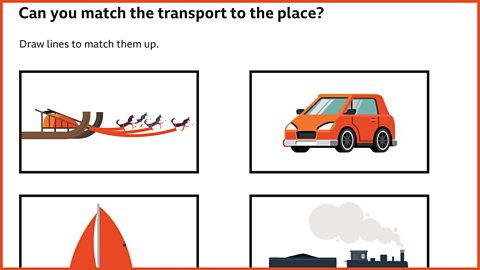
Matching activity. document
Download / print (PDF)
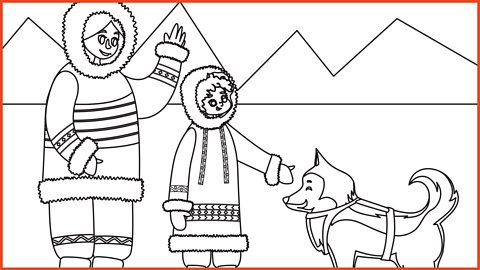
Colouring activity. document
Download / print (PDF)
Other episodes in this series
2. Wonderful wheels. video
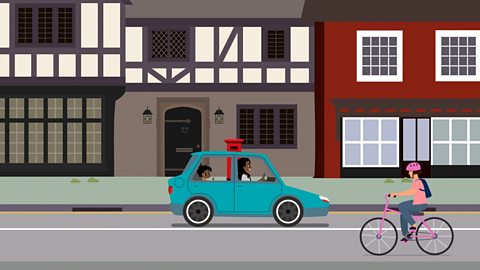
A journey through the UK in an electric car with Rian and Maya finding out about wheeled transport.
3. Brilliant boats video
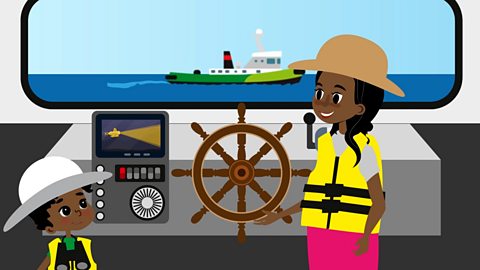
Rian and Maya travel by sea to the continent of Africa and look at the history of boats.
4. Fantastic flying machines. video
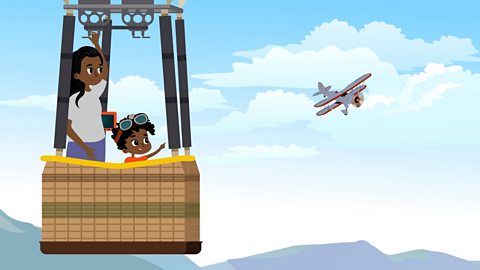
Rian and Maya travel through Africa in a hot air balloon and learn about different forms of air travel.
5: Tremendous trains. video
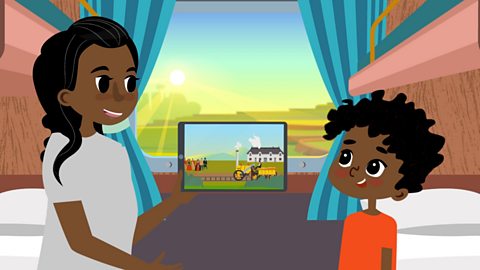
On a train journey across India, Rian and Maya learn about the history of rail travel.
6. The future of transport. video
Maya and Rian are in Australia, where they travel in a driverless car to a 'Future of Transport' exhibition.