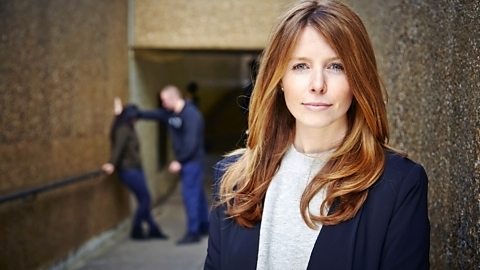
Stacey Dooley goes behind closed doors and speaks to the now younger face of domestic violence. She questions victims and abusers to try and understand how deep the issues surrounding domestic abuse are for those who have survived and those currently experiencing the abuse.
Stacey joins the Lancashire police as they deal with their 9,000 domestic abuse cases per year, as well as getting exclusive access to the national centre of domestic violence and their frontline order server, as he comes face to face with abusers.
Every 60 seconds the British police receive a 999 call to a domestic violent incident. Although constantly in the news, abuse within intimate relationships is often kept secret.
Many people believe it only happens to older, married women, but girls aged 16 to 24 are as, if not more, likely to experience violence from their boyfriends than their adult counterparts.
With one in four women in the UK suffering abuse from their partner or ex-partner in their lifetime, and one in six men in the UK having experienced domestic abuse, Stacey wants to find out whether there's any way to break the cycle of violence. She visits one of the few perpetrator reform programmes in the UK, and gets to quiz the home secretary Theresa May in a rare interview.
Suitable for: Teaching PSHE at KS3 and KS4/GCSE Level.
What is domestic violence? video
Rhiannon Sawyer, a Gang and Sexual Violence Prevention Worker, describes six different types of abuse.
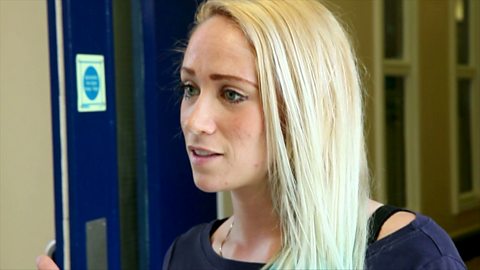
Discussing abuse in relationships. video
Stacey Dooley attends a workshop where students are led in discussion by a charity to raise awareness of what constitutes pestering, rape, pornography and manipulative behaviour.

Surviving abuse - Danni's story. video
Stacey Dooley interviews a mother living in fear of her jealous boyfriend returning to the family home. A panic door is fitted to protect her and her kids from him.
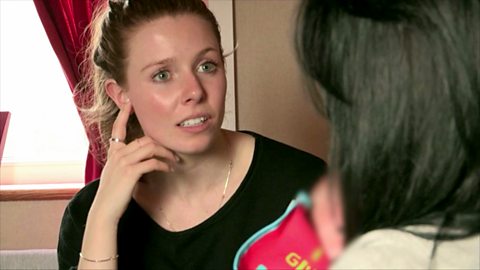
Surviving abuse - Louise's story. video
Stacey Dooley interviews a young woman about the domestic abuse she suffered at the hands of her controlling ex-boyfriend.
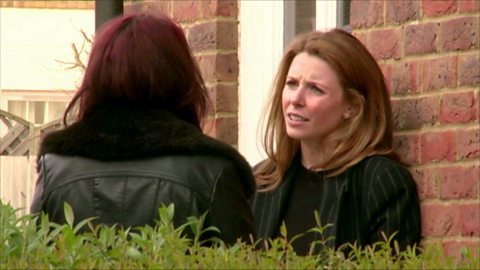
Surviving abuse - Sarah's story. video
Stacey Dooley talks to a domestic abuse survivor about violent relationships. The survivor recalls several incidents when her former partner physically attacked her.

If your students need support
You should always tell someone about the things you’re worried about. You can tell a friend, parent, guardian, teacher, or another trusted adult. If you're struggling with your mental health, going to your GP can be a good place to start to find help. Your GP can let you know what support is available to you, suggest different types of treatment and offer regular check-ups to see how you’re doing.
If you’re in need of in-the-moment support you can contact Childline, where you can speak to a counsellor. Their lines are open 24 hours a day, 7 days a week.
There are more links to helpful organisations on BBC Action Line.
