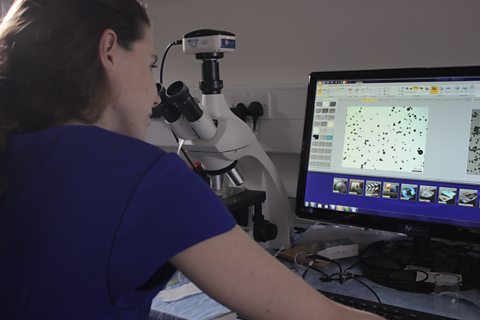
Fran Scott meets Dr Veronika Kapsali from Northumbria University who is researching fabrics.
Dr Kapsali is trying to tackle the problem of clothing waste - each year over one billion items of clothing in Britain are thrown into land fill.
She has turned to nature for her inspiration, looking at penguins and pine cones. She has looked at penguin feathers to investigate fabrics that could be both warm and waterproof.
She has also looked at pine cones to investigate fabrics that shrink when wet (like pine cones) to become breathable when we sweat.
This films shows how she uses a 3D printer to make her fabrics.
This clip is from the series The Imagineers.
Teacher Notes
Students could use this clip as an introduction to the topics of new and smart materials.
This can be followed by a research activity and could lead on to a discussion of nanotechnology.
Curriculum Notes
This clip will be relevant for teaching Design & Technology and Chemistry at KS3 and GCSE in England, Wales and Northern Ireland and 3rd and 4th Level in Scotland. Appears in AQA, OCR, EDEXCEL, CCEA, WJEC, SQA.
More from The Imagineers:
Earthquake engineering. video
Dr Bernali Gosh is working as a seismic engineer to plan the new underground network needed in Delhi and evaluates experimental models of the effect of earthquakes on buildings on this type of soil.
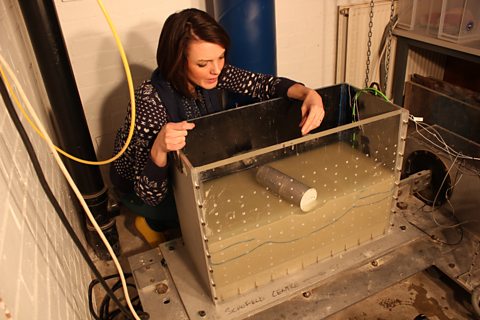
Inventing DIY wind turbines. video
Fran Scott describes how PhD student Jon Sumanik-Leary from the University of Sheffield is developing a DIY wind turbine for isolated Third World communities.
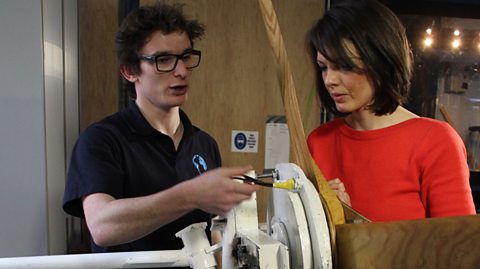
Inventing future fabrics. video
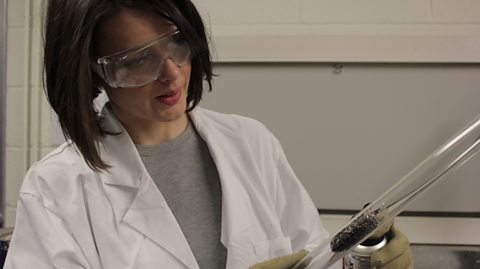
Engineer Dr Manel Torres from Imperial College in London invented Fabrican – a fabric sprayed from a can that can be used in fashion, healthcare and even to help clear up an oil slick.
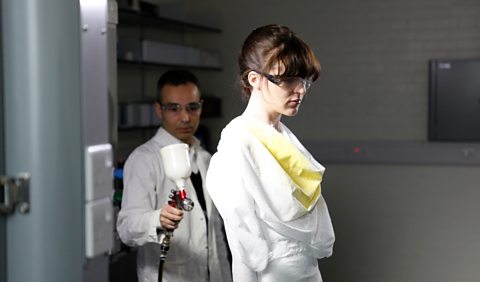
Inventing smoke-free stoves. video
Two students from the University of Nottingham are working to develop a smoke-free stove. Their stove creates sound waves which move a magnetic in a coiled wire to make an electric current.
Nano-bubbles and drug delivery. video
Dr Eleanor Stride is using engineering to tackle a major challenge for medicine. She is using nano-technology to explore how to give cancer medication which are less poisonous than current treatments.