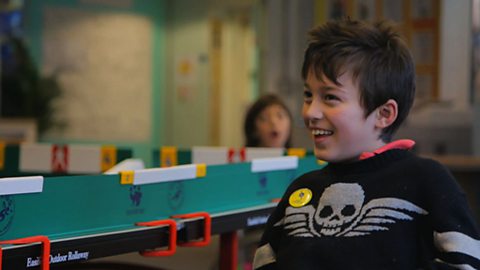
Eleanor:
My name is Eleanor.
Felicia:
I'm Felicia.
Alexander:
Alexandra.
Eleanor:
My sisters, Felicia and Alexandra, are the same age as me.
Felicia:
We are in year three.
Alexander:
We are triplets.
Felicia:
I've got brown-black hair.
Eleanor:
My colour hair is brown, and Alexandra, my other sister's, hair is…
Alexander:
Yellow.
Eleanor:
I'm different to my sisters, because Alexandra has Down Syndrome, and Felicia likes fashion more than me. Sometimes she needs help with everyday things, sometimes she doesn't.
[Dad in the background: "That's it."]
Eleanor:
She can brush her teeth by herself but she can't get dressed by herself.
Alexander:
Mummy. I love you.
Mum:
I love you, too.
Eleanor:
She likes to cuddle and hold people's hands.
Alexander:
Girls… can you help me put my shoes on please?
Eleanor:
We get her ready for school.
Felicia:
There you go!
Alexander:
Thank you.
Felicia:
You're welcome.
Alexander:
Thank you so much.
Eleanor:
We go to the same primary school, and we are in the same class. I sit next to Heidi, Felicia sits next to Jack, and Alexandra sits next to Logan. Alexandra's assistant is Mrs. Eddie.
Mrs Eddie:
What number shall I put down now?
Alexander:
One.
Mrs Eddie:
Just one? I need a higher number than one.
Alexander:
Two.
Felicia:
Mrs Eddie helps Alexandra to spell her words, and she helps with her maths.
Mrs Eddie:
How many am I taking away?
Alexander:
Two.
Mrs Eddie:
Two. Can you take away…
Logan:
My name's Logan. I sit next to Alexandra.
Mrs Eddie:
26, where's 26?
Logan:
I'm not very good at adding up and Alexandra helps me.
Mrs Eddie:
Can you show Logan? Help Logan.
Alexander:
26.
Mrs Eddie:
26, Logan. Two and a six.
Logan:
I like playing with Alexandra, and working with Alexandra.
Felicia:
Together, we do gymnastics, swimming, and Brownies.
Instructor 1:
That's it. Good girl. Jump. That's it, and jump. Good girl. Jump. Jump. Jump… Fiona's coming.
Instructor 2:
Head all the way down, good girl. Thank you. Feet on the end… And do a big jump!
Eleanor:
Alexandra likes Cbeebies.
Mr Tumble:
Banana.
Alexander:
Banana.
Eleanor:
She doesn't like much noise… So she does the quietest things. We've all begun swimming since we were one…
She has a teacher that helps her to learn how to swim…
I think she's starting to get the hang of it.
Swimming teacher:
[Singing] Round and round, round and round… Pass the…
Eleanor:
'Cause Alex has Down Syndrome, Alex might do some groups in different days and we might not be doing the same as each other.
Music teacher:
One, two, three. Think you can do that? Can you do the same?
Alexander:
Yes.
Music teacher:
One, two, three. Go on then.
Alexander:
One, two, three.
Eleanor:
Alexandra's education group helps with her spelling, her reading, and her writing.
Teacher:
Which one says Ellie?
Alexander:
That one.
Teacher:
Ellie, that's right… So that's 'who'. Put it on the 'who'. Good girl, 'who'. And what's she doing?Alexander:
Ellie's lying down.
Teacher:
Ellie's lying down, right. Which one says lying down? Good girl, right. Shall we see if we can read the sentence?
Alexander:
Ellie… Is lying down…
Teacher:
Good girl.
Alexander:
Under the, the table.
Teacher:
[Claps] Well done! Ellie is lying down under the table.
Eleanor:
It's good being a triplet because when there's three there's more fun.
Alexander:
Ta-da!
Felicia:
You get to do activities together, and you've always got your sisters around whenever you need them.
You've gotta treat her kind, and you've gotta treat her nicely because she doesn't exactly know what things mean.
She has lots of friends, and I just want them to be kind to Alexandra and give her a nice life.
Video summary
We meet triplet Alexandra who unlike her other two sisters, has Down's syndrome.
We see how Eleanor and Felicia play a big part in her life, helping with everyday things such as dressing and being around whenever she needs them.
Her sisters talk about the things that Alexandra likes and dislikes.
Although she enjoys the same activities as her sisters such as Brownies, swimming and gymnastics, Alexandra goes to an education group without her sisters to help her learning.
This clip is from the series Same but Different.
Teacher Notes
After watching the clip, the children could have a discussion about Down's syndrome and the ways in which it affects a person's life.
It may also be used as a prompt to discuss how we view people with a disability such as Down's syndrome.
Considering the unique qualities of the three girls could also encourage the children to appreciate the similarities and differences between the triplets; leading on to further discussions about how we develop our own sense of individuality.
This clip could also be used to illustrate how living with a disability affects not only the individual, but also the person's family and friends.
In addition to this, the clip could also be used to highlight the positive influences and experiences living with a person with a disability can bring.
This short film will be relevant for teaching PSHE at KS2 in England, Wales and Northern Ireland and 2nd Level in Scotland.
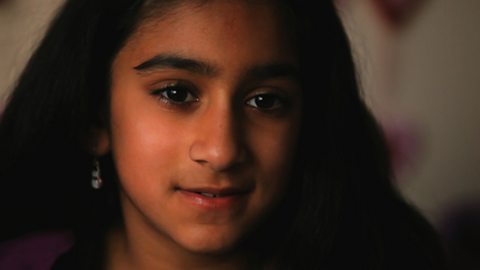
Dealing with asthma - Alesha's Story. video
Alisha is a nine-year-old girl who suffers from asthma. She talks about how it affects her life and the things she finds difficult.
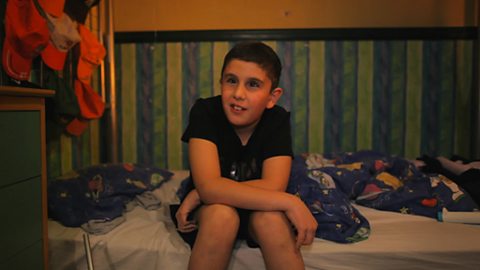
Coping with visual impairment - Theo's Story. video
Theo is a ten-year-old boy with a visual impairment. He does not want to be treated differently because of his disability and doesn't like it when people are being too nice to him.
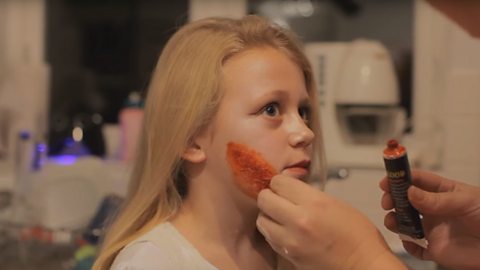
Living with diabetes - Phoebe's Story. video
Phoebe is a seven-year-old girl who suffers from type 1 diabetes. Hear how she manages her medication and still enjoys Trick or Treat on Halloween.
Coping with Dyslexia - Sophie's Story. video
Sophie is a nine year old girl who suffers from dyslexia and struggles with reading and spelling.
Coping with epilepsy - Robbie's Story. video
Robbie is an 11-year-old boy who has epilepsy. Robbie suffers from absences where he does not know where he is.
Cerebral Palsy - Archie's Story. video
In this short film for primary schools we meet Archie, a ten year old boy who has cerebral palsy.