KATHERINE:My name's Katherine Grainger and I refer to myself as Katherine. Rowing falls into two categories, er it's called sweep and sculling. If it's sweep you only have one oar, and if it's sculling you have two.
KATHERINE:When I was growing up I never thought of sport as a-, a potential career. You know, the British team was something that I could never be part of, certainly when I started rowing I wasn't the best at it, I wasn't the best by a long way. in fact I was one of the worst. Er but I loved it, I loved what I did, and it took someone else saying to me, "Go and have a go, just try, just-, just see, why not? What have you got to lose?"
KATHERINE:When I was at university I spent the first year rowing but being awful, but then I thought well I'm in my second year and was quite confident, I knew how to row now, I'd be fine, and they selected four boats and I wasn't in any of them, so I completely, completely failed. And I left the meeting and I walked up this hill, I was in Edinburgh and there's a hill in the middle of the city, and it was …, like, quite dark and I just climbed this hill on my own. I was so frustrated and so annoyed at myself and so disappointed, and I just thought at that point I will never find myself back in the situation, and that's-, that's still the mentality I have now. I'm never-, I never feel I'm good enough, I never feel I've got all the answers in my sport, I always want to be better at it.
KATHERINE:Rowing's all about rhythm, it's-, you use all your different muscles, your legs are the strongest bit we have so it's about really driving the legs strongly and fast and hard. You're creating huge amounts of power and force, er it's very smooth and it's within time with the boat, it's in time with the water. When you create the two together, then you get pure speed.
KATHERINE:Er the start line of the Olympics is a-, is an interesting place, it's surprisingly quiet. I could feel my heart pounding, I could hear it, it was so quiet. And as terrifying as this moment was about to be I wouldn't want to be anywhere else in the world.
COMMENTATOR:For the fourth and final time in Katherine Grainger's long and established career she leaves the start line now in an Olympic final.
KATHERINE:Feels like you're going into battle, take on the world with this one other person with you.
COMMENTATOR:Ladies and gentleman, what we are witnessing, what we are seeing right now, is that dreams do come true, and Great Britain's Katherine Grainger and Anna Watkins are going to win a gold medal in the women's double scull.
KATHERINE:The last few hundred meters was truly deafening 'cause of the crowds. I didn't want to think about winning, I didn't want to think about the crowd, I just wanted to think about getting the boat still moving as well as it could possibly move until we cross the line. So it wasn't until I crossed the line that I kind of lifted the lid on the emotional side.
COMMENTATOR:They are at long, long last, Katherine Grainger is the Olympic champion and the crowds are going mad.
KATHERINE:Biggest thing I would say to anyone is you're all capable of far more than you know right now, but you might think there are limits and other people might tell you there are limits, but you have no idea what you're capable of, and the biggest thing you owe yourself is the chance to go out there and find out just what you can do.
The story of how Katherine Grainger was inspired to become an Olympic rower.
Katherine recalls key events and experiences from childhood that made her the athlete and person she is today.
For Katherine, becoming a champion rower wasn't easy.
She wasn’t the best at rowing when she started - in fact she was the worst.
At times, the effort required to do well felt almost too hard and she nearly gave up after the setback of failing to be selected.
However, with a strong spirit and a determination to succeed, she decided to turn things around instead - to try harder, work harder and do better.
Katherine explains what the different types of rowing are and talks about the particular physical and mental strengths that you need to become accomplished in the field.
Her message to children is that "you have no idea what you are capable of – so find out. Don’t let anyone tell you that you can’t do something. You can do far more than you realise.”
This clip is from the series Olympic Spark: Fire Up Your Future.
Teacher Notes
Katherine talks about how her early rowing experiences did not lead to her being selected as ‘the best’, but gave her personal fulfilment.
Students could discuss if it is important to always be the best or to always try your best.
Katherine’s key message is you never know what you are capable of, and she says you owe it to yourself to find out what you can do.
Students could discuss how this could apply to them or someone else of their age.
How can they find out what they are capable of?
Challenge students to write a personal action plan for things they would like to achieve this year, by the time they leave school, and in their lifetime.
Curriculum Notes
This clip is suitable for teaching Physical Education and PSHE at KS2 and KS3 in England, Wales and Northern Ireland and and 2nd, 3rd and 4th Level in Scotland.
More from Olympic Spark: Fire Up Your Future
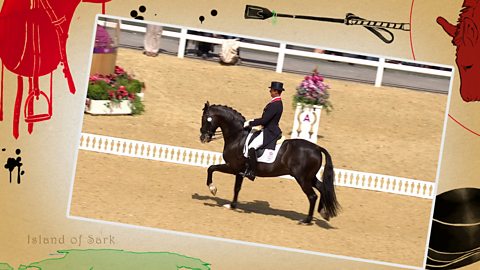
How Carl Hester became an Olympic gold medallist in dressage. video
Equestrian Carl Hester shares his life-long trajectory to gold-medal winning glory at the London 2012 Olympic Games.
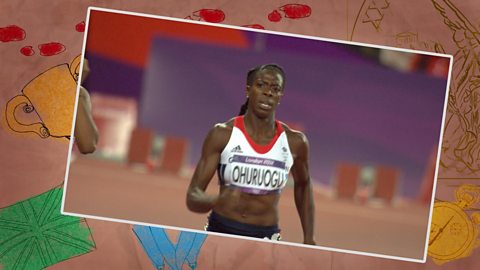
How Christine Ohuruogu became a top athlete. video
How 400m Olympic gold medallist Christine Ohuruogu became a top athlete. Animation, photos and Olympic footage help illustrate her journey,
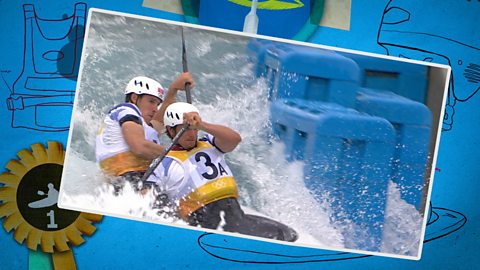
How Etienne Stott was inspired to become a top canoeist. video
Olympic gold medalist Etienne Stott recalls the experiences and events of growing up that spurred him on to victory.
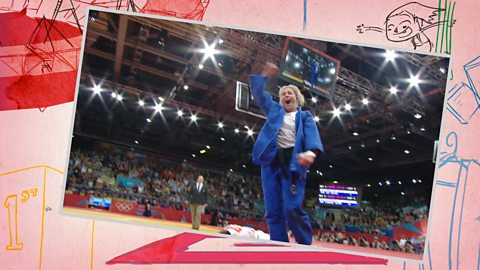
How Gemma Gibbons became an Olympic medal winner in judo. video
Olympic medal winner Gemma Gibbons recalls the people and moments that led to her silver victory at the London 2012 Olympic Games.
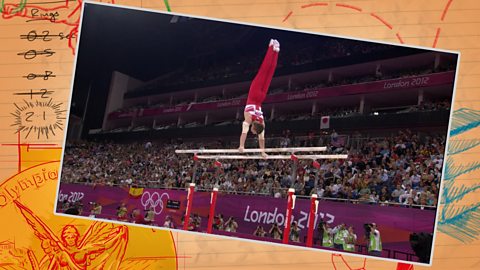
How Sam Oldham was inspired to become an Olympic gymnast. video
Young Gymnast Sam Oldham recounts the stages in his life that led to his success at the London 2012 Games.