ETIENNE:My name is Etienne Stott, I'm a canoe slalomist, and I won the gold medal in the London Olympics with my crewmate Tim Bailey.
MAN COMMENTATOR:This is looking good for Great Britain.
WOMAN COMMENTATOR:Tight in, and then you see Etienne at the back putting the power down as they turn the bow, back down, one gate to go.
ETIENNE:When I was younger I always remember being quite lively, but also kind of shy and a little bit uncomfortable with people. I wasn't in the cool gang for sure. I think when I was a kid everyone's looking to try and find the sort of person that they want to be, and the sort of person that you are, it is you but you can also add things onto that and-, and make yourself into a slightly different person. When I got involved with canoeing I-, I met a lot of people who I really liked and I thought they were really sound, cool and interesting people and they were living a life that I suppose I could see myself living.
ETIENNE:Canoeing on white water is a dynamic environment, there's a lot of power, and it can be dangerous, you know. There is white water even now that I would look at and think 'I-, there's no way I'm going down that'. One of the cool things about canoe slalom is it's a time-trial race, we're not racing like in lanes, head-to-head against each other and we're basically racing against the rapid. So in that way it kind of sets us free. It's not about beating your competitors, it's about actually doing your best and putting your best out onto the racecourse, and if you could do that you know that you'll be successful.
ETIENNE:I just wanted to do something that was going to take me on a journey I suppose, you know, absorb my energy and absorb my interest. So I remember one of my early memories in-, in canoeing was when we were going on our Scout camp, our annual Scout camp, and they let us go down this little rapid, a little [gravelly] … rapid. My Scout leader Tim said to me, "Oh man, you were brilliant out there, you must be a natural, it must be your Canadian blood, you really know which way to paddle." My-, my mum is Canadian so I am half Canadian. It kind of went in my mind and I was like 'wow, that's cool, you know, I did actually go down that rapid, I can do this. I could be good at this and he thinks I'm good', and that sort of flicked a little switch in my mind and kind of encouraged me and I suppose inspired me really. And that really did change my life at that point.
ETIENNE:In training we crashed into an obstacle and the forces that tore my shoulder from its socket dislocated my shoulder joint. It's a very, very painful injury and it's also very, very serious for a canoeist and kayakist. At that point all our plans that we'd made going towards the London Olympics just kind of (sound), just disappeared, went up in smoke.
COMMENTATOR:Great Britain are flying here, no penalties whatsoever. Valiant start, through the finish line, 106.41.
ETIENNE:So amazingly it turned out, you know, I managed to win one of these that day, but 18 months before it looked like it was going to be impossible.
COMMENTATOR:Olympic champions in canoe slalom.
ETIENNE:And I suppose this gold medal is so special because we won it, but a lot of people really helped us so it's divided into lots and lots of small pieces and every-, a lot, a lot of people ow-, own a little piece of this, and I think that's what's so cool about it.
ETIENNE:Sometimes you come to a wave and it kicks you one way, and sometimes you seem to come to that exact same wave in the same way and it kicks you the other, but you're always trying to react to the rapid and react to the river in a way that gives you the best outcome. That's why I think it is a little bit like life in some ways, that sort of idea of trying to do your absolute best in something and also the idea of learning from everything that you do. So if it turns out good or bad or absolutely terrible I always try and, you know, notice that little thought and that little noise in my mind and say to myself actually, nobody knows the future so it doesn't matter where you are at that point, it's where you think you could be or where you have the imagination to end up.
The story of how gold medal-winning canoeist Etienne Stott was inspired to become a top sportsman.
Etiennne recalls key events and experiences from childhood that made him the person he is today, explaining directly to the viewer what he felt like as a child.
With animation, family photos and Olympic footage to illustrate his story, Etienne tells us that he was definitely "not in the cool crowd".
In fact he was really shy, as well as being scared of water.
When a Scout leader encouraged him to try canoeing, he was unsure at first and was surprised to discover a natural affinity for water sport.
Etienne describes how he committed himself to the hours of practice it takes to reach the top and how he overcame adversity and injury.
He also explains the way he sees his gold medal divided into lots of little pieces - as this represents all the people who supported him along the way.
His message to children is, “The main thing is to try things out, and have a go and see what you like.”
This clip is from the series Olympic Spark: Fire Up Your Future.
Teacher Notes
Have students ever heard of slalom canoeing or white-water slalom? What do they think it could be?
Students could research the sport and when it became part of the Olympics.
Etienne talks about how dangerous his sport is and occasionally feeling frightened by the rapids.
Students could discuss what propels him to go on, and how people can overcome nerves when faced with a new situation and challenge?
Etienne believes that we need to learn from every mistake and use our imagination to decide where we want to be in the future -students could think about life goals and map a life goal, detailing the journey to reach an ambition.
Curriculum Notes
This clip is suitable for teaching Physical Education and PSHE at KS2 and KS3 in England, Wales and Northern Ireland and and 2nd, 3rd and 4th Level in Scotland.
More from Olympic Spark: Fire Up Your Future
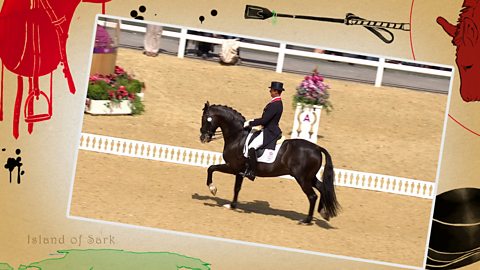
How Carl Hester became an Olympic gold medallist in dressage. video
Equestrian Carl Hester shares his life-long trajectory to gold-medal winning glory at the London 2012 Olympic Games.
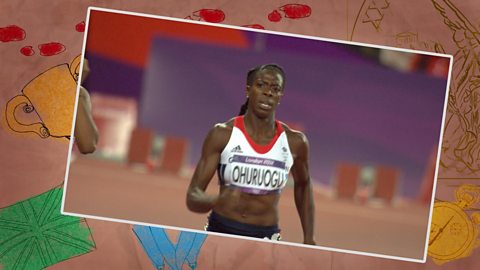
How Christine Ohuruogu became a top athlete. video
How 400m Olympic gold medallist Christine Ohuruogu became a top athlete. Animation, photos and Olympic footage help illustrate her journey,
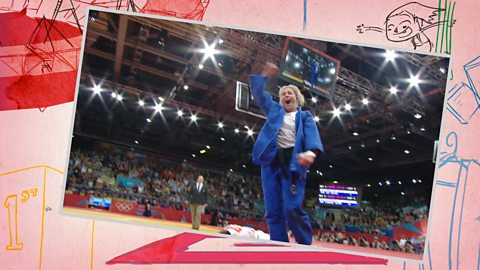
How Gemma Gibbons became an Olympic medal winner in judo. video
Olympic medal winner Gemma Gibbons recalls the people and moments that led to her silver victory at the London 2012 Olympic Games.
How Katherine Grainger was inspired to become an Olympic rower. video
Gold medal-winning Olympic rower Katherine Grainger shares the key moments that led to her sporting success at the London 2012 Games.
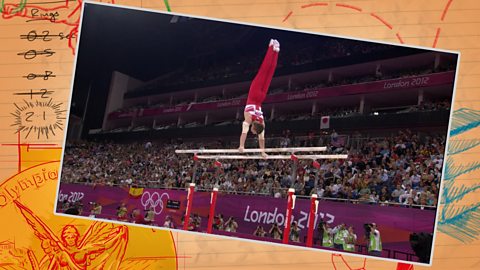
How Sam Oldham was inspired to become an Olympic gymnast. video
Young Gymnast Sam Oldham recounts the stages in his life that led to his success at the London 2012 Games.