CARL:My name is Carl Hester, I'm from the Island of Sark in the Channel Islands. Dressage means to train a horse and that actually goes back to when we used to use horses for fighting in war, and they were trained in some of these movements to help the riders get out of a situation where they might be killed.
CARL:I'm from Sark, which is an island in the Channel Islands, very small, 600 people live there, and it's only three and a half miles long and one and a half miles wide. My school was just literally one room, there was 22 of us in that room and we had one teacher and that teacher taught us all subjects. We would finish school at 3.30 on Sark and we would be down the beach and often picking up er a donkey that I used to ride on the way, and we used to lead this donkey down to the beach and without anyone knowing my friend and I would charge ten pence a ride er on this donkey so we could make some pocket money. We used to do that for a bit of fun, and that was our after-school entertainment.
CARL:I was very much inspired by my grandmother. When my gran said to me, "You're going to England and you are going to really follow your dream, because you cannot do that on a small place like this," I came to England for a week's work experience, I was totally blown away. I had never been in stables, I had never been around horses that were pampered by lots of people, all of our horses where I come from lived in fields and didn't see brushes, didn't see shampoo. When you turn out a horse if you're competing presentation is so important.
CARL:Grand Prix is the top end of my sport and not every horse is er actually going to be able to make that level. What we're working on is teaching them that they go in a straight line when you tell them to go in a straight line, when we touch them with our legs that's the accelerator, so at that point the horse has to increase speed, and then very subtly we use the reigns which is giving the horse signals er either to bend, turn, go straight, or start or stop.
CARL:At international top level we have seven judges, we are being marked on 36 individual movements and the first thing we have to do is just canter straight up the middle of the arena, we stand still, and we trot off. The canter pirouette is the most difficult thing in canter and you'll see the horse turning and he has to do six to eight steps, in a balance, all the way round. Obviously if you get the difficult things right and you get an eight or a nine or even a ten out of ten, which is possible, that can really lift your score to gold medal position.
COMMENTATOR:Take it all in. Carl Hester.
CARL:When I started competing I did 15 years of not winning a medal. It does go to show that if you stick at it long enough, keep trying to get better, watch the other competitors, yes, we all have to have a little bit of luck but I think the harder that I work the luckier I get. None of us have ever reached perfection, none of us ever get that hundred percent, it's still unobtainable, so that has made me strive for years to try and reach that level and um the fact that this is as good as it gets er in my sport er is very special to me.
CARL:For me to be successful in my career I had to learn in the beginning that it was not about money, it was about hard work.
The story of how Carl Hester, who grew up on a tiny island, was inspired to become a top horseman and Olympic gold medallist in dressage at the London 2012 Olympic Games.
Carl recalls the key events and experiences that made him a top equestrian today.
We also learn about the meaning and history of dressage.
With animation, family photos and Olympic footage to illustrate his journey to gold, Carl tells us about his life as a child growing up on the tiny Island of Sark in the Channel Islands.
There were only 22 people in his whole school and their after-school entertainment was selling 10p donkey rides to tourists on the beach.
Carl always loved riding, but could not imagine how to enter the elite world of a top training school until his grandmother – a huge influence in his life – told him he must go to England and follow his dream.
Years of failure preceded great success and, as he explains, there were no short cuts. Carl reflects on how the horses are judged and how it felt to finally realise his goals.
This clip is from the series Olympic Spark: Fire Up Your Future.
Teacher Notes
Before watching the clip, students could discuss what they think horse dressage is.
Do students think horse-riding is a sport? What does it involve and where did it originate from?
After the clip, students could recall and discuss some of the terms they heard such as ‘grand prix’, ‘canter’ and ‘trot’.
Curriculum Notes
This clip is suitable for teaching Physical Education and PSHE at KS2 and KS3 in England, Wales and Northern Ireland and and 2nd, 3rd and 4th Level in Scotland.
More from Olympic Spark: Fire Up Your Future
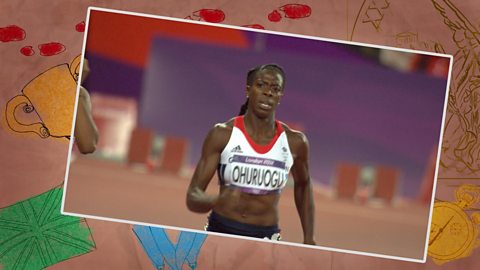
How Christine Ohuruogu became a top athlete. video
How 400m Olympic gold medallist Christine Ohuruogu became a top athlete. Animation, photos and Olympic footage help illustrate her journey,
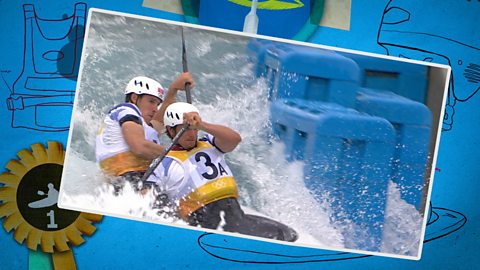
How Etienne Stott was inspired to become a top canoeist. video
Olympic gold medalist Etienne Stott recalls the experiences and events of growing up that spurred him on to victory.
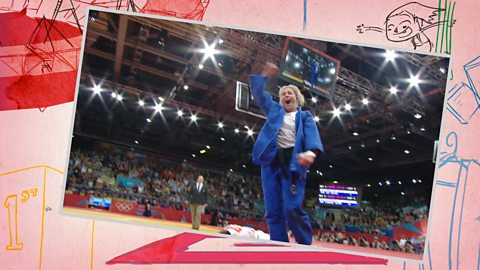
How Gemma Gibbons became an Olympic medal winner in judo. video
Olympic medal winner Gemma Gibbons recalls the people and moments that led to her silver victory at the London 2012 Olympic Games.
How Katherine Grainger was inspired to become an Olympic rower. video
Gold medal-winning Olympic rower Katherine Grainger shares the key moments that led to her sporting success at the London 2012 Games.
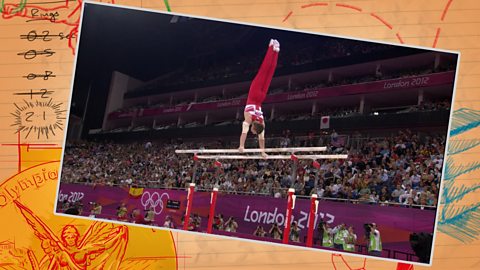
How Sam Oldham was inspired to become an Olympic gymnast. video
Young Gymnast Sam Oldham recounts the stages in his life that led to his success at the London 2012 Games.