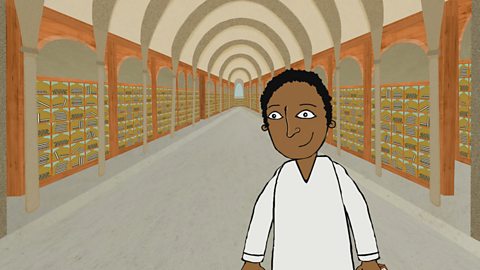
Hello Future people of the UK!
Would you like to visit me at the dawn of civilization in Ancient Sumer? Well, to do that you’ve got to travel back way back in time.
Back before the Vikings, before the Romans and keep going back, back, back before Stonehenge was even built!
Right. Now aim between those two rivers that run through modern day Iraq.
[Yawn] Good morning I’m Uri and I’m afraid I’ve only just got up. And yes, I sleep on the roof – it’s cooler. Hmm, I wonder what time it is?
Oh no – look at the sundial! I’ve slept in again. I’m going to be late for school!
We invented 60-minute clocks, though I wish they came with alarms like your ones.
Actually invention is our big thing. Come on, I’ll show you all the other stuff we’ve invented.
First up is city living - Because this is Uruk, the first city ever! We’ve got streets, shops, and houses – we even use the grid system for our roads and buildings – just like you still do.
We invented all this well before the Ancient Egyptians…
It all started when we stopped hunter-gathering food and began growing it instead. With the abundance of water and good soil we found we could grow almost anything here - That’s why they call it the ‘fertile crescent.’ Soon – we had more crops than we could possibly eat.
This meant we had time to do other stuff instead, that’s when the inventing began!
We thought of lots of stuff to make our lives easier…better ways of farming,sail boats,gamesAnd even skyscrapers – 10 storeys high - which have lasted into your time.
We also invented the first schools, and our teachers are very strict… Yikes - that reminds me, I’m late!
Luckily, we’ve invented wheels too – they’re great for carrying goods for long distances, and faster than walking - Giddy up!
With so much going on, this fast-paced city life can get really confusing, so we started keeping records, and become one of the first people to start writing! Paper doesn’t exist yet but we use clay tablets like this which we mark with… erm… Oh bother, I’ve left it at home! Quick, down to the river!
We don’t have pens – we use sharpened reeds instead. Just one more perk of living near the water!
Phew, I made it just in time.
This is my school – well it’s just a bench…but I’m lucky to be here because most people in our city don’t ever get to learn the secret of writing.
I can show you though. We push the reed into the clay and the different combinations of marks make words. Our written records will last into your time!
They’ll tell you what life was like here, and how, eventually, our crops will dry out and the population will shrink, spelling the end of the Sumerian Empire.
All this? Well, it’ll be History.
Video summary
A boy, Urian, shows us the sights of Ancient Sumer, located in modern-day Iraq, on his way to school.
We find out about many of the inventions developed at the time, as well as the careful urban planning that went into the city of Uruk.
He explains their writing system, using a reed to scratch marks on wax tablets, and the impact this had on life.
He claims teachers are very tough, but agrees he is lucky to go to school, as most people can't read or write.
We discover some of the reasons why the Sumer eventually died out.
This clip is from the series Lost Lands.
Teacher Notes
This could be used to compare the first urban civilisations with the cities of today – what has changed and what has stayed the same?
Pupils could compare schools in Ancient Sumer with schools today - what elements are similar and what elements are different?
Pupils could be asked the questions: Why did Sumer develop such an advanced civilisation? What were the advantages of this civilisation, and why did it finally die out?
This clip is relevant for teaching History at Key Stage 2 and Second Level.
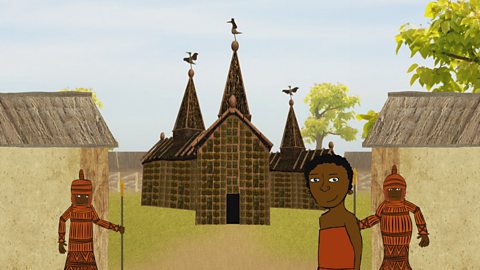
The story of the Benin bronzes. video
A young boy, Ibi, shows us how the trading civilisation of Benin created their famous bronzes.
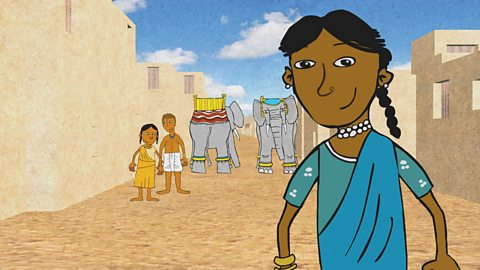
Introduction to the Indus Valley. video
A young girl, Suri, introduces us to life in the ancient Indus Valley 4,500 years ago, where civilisation depends on farming and trade.
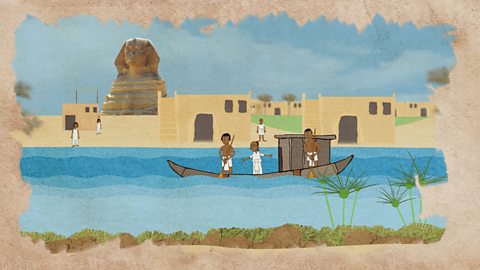
Introducing Ancient Egypt. video
Nefa, a priest in training, shows us ancient Egyptian buildings and introduces us to their religious beliefs about life after death.
Introducing the Shang Dynasty. video
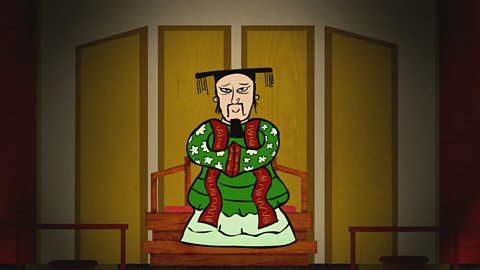
Li and his father introduce us to life in Bronze Age China under the Shang Dynasty.
Introducing the Maya civilisation. video
Like children 1000 years later, Akbal wants to be a professional footballer. He shows us how it's played in Mayan Central America.
Baghdad in 900AD. video
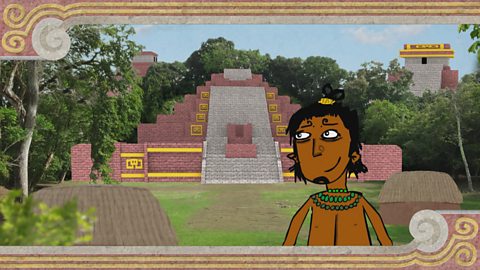
Ali lives in the most advanced city in the world: Baghdad. He wants to be a scholar and contribute to the Golden Age of Islam.