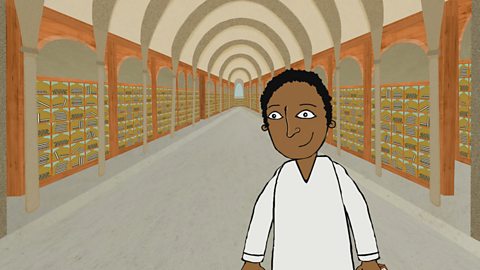
Hello future people of the UK!
I’d like to show you what it’s like to live in the Ancient Indus Valley. One of the earliest civilisations, so we’re a long way back in time.
Back before the Vikings, before the Romans and keep going back, back, back until Stonehenge is being built - 4500 years ago.
Head South East over Europe and you’ll see us just before India. You can’t miss us – we’re about 4 times the size of Britain!
Ah ha, you made it!
Hi I’m Suri… I can’t wait to show you around our village.
We’re farmers by the way, and like all Indus people, we survive from what we can sell.
So today, Mum has made a special trip to sell our grain in the big city.
Hang on …but she won’t sell anything without these… These are mum’s seals - I’ll explain later but they’re really important. So I need to get them to her pronto.
Never mind the village – you’re getting the city tour instead!
Don’t be intimidated by the walls – They’re not to keep invaders out, they’re to keep water out.
We’re called Indus Valley people because we live – surprise, surprise - in the valley of the Indus River. It brings us all sorts of benefits, like farming, irrigation and travel, but it can be a bit of a bad neighbour and occasionally tries to wash us away…
And wait to you see inside – some cities are higgledy piggledy – not ours.
We built some of the first planned cities ever, so the sewers, the roads and the buildings all fit together in a grid system. And down the middle is a big wide straight street…
…just wide enough, in fact, for two elephants to pass side-by-side.
You’d call it a ‘high street‘ – we were using the same idea 4500 years before you.
She’s got to be around here somewhere…
Hang on – that looks like my Uncle. He’s a builder, can’t you tell?
We don’t have stones around here so, just like you, we use bricks, all baked from clay.
They’re very durable, lasting for thousands of years, which is how your historians will find out about us.
So as you know, our houses have all the mod cons including personal wells and flushing toilets – we’re actually one of the first people in the world to have those.
Uncle, any idea where I can find Mum?
Second right, first left, got it.
Check this out! We’re really big gamers in the Indus Valley, and this one is so addictive that I bet you’ll still be playing it in your time.
At last the market – I love it here!
They’ve got clothes, toys… And just look at this necklace.
In fact all our products are so great, that people come from miles away just to buy them, but money hasn’t been invented yet – we just trade things instead. It’s just like swapping things, but once the swap is made, it’s made for good.
But people don’t like to buy anything without one of these seals – Don’t worry if you can’t read it – no one from your time has figured out what it says yet.
They tell the buyer who made the goods. So they’re a bit like logos – would you ever buy a pair of trainers without the right logo?
Without our seals, mum won’t be able to sell our grain. So, yikes…
Now, which way was I supposed to be going again…?
Phew I’m back on main street, thank heavens for the grid system.
Let’s try again - Second right, first left.
Yes! There she is.
I think you’ll be needing these?
Ah shucks, don’t mention it!
Wow, thanks mum - Pocket money!
Well that’s about it.
Our way of life is still a bit of mystery in your time. But needless to say, it didn’t last forever – the river here dried up and we were forced to move away.
And all this? Well – it’ll be history.
Video summary
In this short animation for primary schools we meet a young girl called Suri, who introduces us to her home in the ancient Indus Valley.
Suri takes us from her rural home to the city market to help out her mother, who is trading in the city but has left her identification seals at home.
The importance of the Indus River is explored, both for farming and for travel, as well as the design of the city and its houses.
The people of the Indus Valley traded with other countries and cities, even though they did not use money.
Teacher Notes
This short animation could be used to explore city planning and homes.
You could ask your pupils whether they would have liked to live in this city. Why? Why not?
Pupils could compare the Indus Valley city to cities today, and explore the role of the Indus River in the growth of the civilisation.
In what ways was the river good for the area, and in what ways did it present challenges?
This video could also be used to explore the idea of trading without money.
How do you decide what (for example), a chicken is worth? What do you compare it to?
Pupils could compare and contrast Indus Valley barter and trade with modern use of money.
This animation is relevant for teaching history at Primary level.
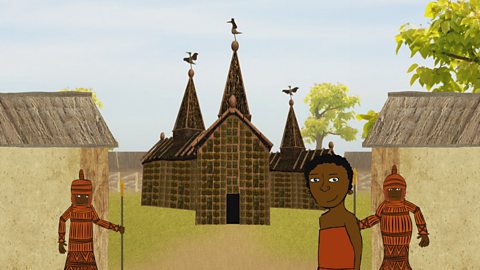
The story of the Benin bronzes. video
A young boy, Ibi, shows us how the trading civilisation of Benin created their famous bronzes.
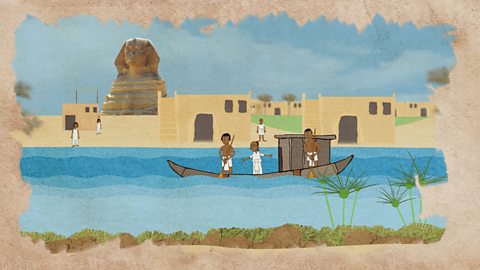
Introducing Ancient Egypt. video
Nefa, a priest in training, shows us ancient Egyptian buildings and introduces us to their religious beliefs about life after death.
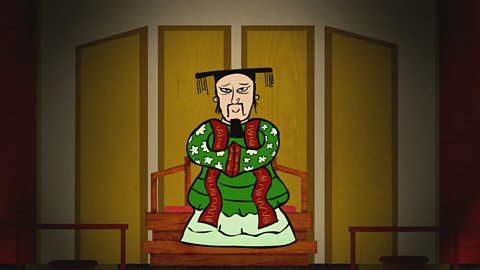
Introducing the Shang Dynasty. video
Li and his father introduce us to life in Bronze Age China under the Shang Dynasty.
Introducing Ancient Sumer. video
Urian, who is learning to read and write, gives us a tour of one of the first known cities: Uruk in what became modern-day Iraq.
Introducing the Maya civilisation. video
Like children 1000 years later, Akbal wants to be a professional footballer. He shows us how it's played in Mayan Central America.
Baghdad in 900AD. video
Ali lives in the most advanced city in the world: Baghdad. He wants to be a scholar and contribute to the Golden Age of Islam.