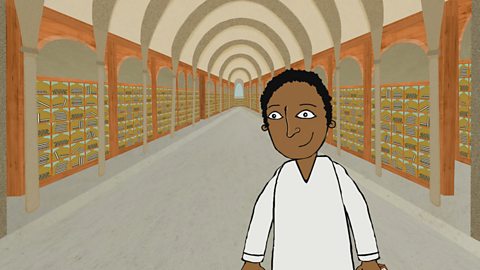
Hello, future people of the UK.
Fancy a trip to Ancient Egypt?
Well, to reach us, you will need to go way back in time. 5,000 years, in fact. So, go back before the Vikings, back before the Romans, and keep going back, back, back, until you're at the start of the Bronze Age. And, they're building Stonehenge. Now, head southeast to Egypt, about 2,000 miles away.
We're just at the top of Africa. And, well, I'm down there. Yes, you made it. I'm Neffa, by the way, and today is my big day. I'm going to feed the Pharaoh.
Anyway, time to get ready…
Linen kilt, check.
Sandals, check.
Eye make-up, check.
Now, let me quickly show you around my home.
It's got all the mod cons. An oven makes great bread. A fridge, well it's a hole in the ground, but it keeps things cool. And, this is our toilet. Well, it's a bowl with a chair on top. Um, will you excuse me for a minute? [WHISTLES].
Okay, time to go to work. I might be only 12, but in Ancient Egypt, everyone's got a job at my age.
I think we should walk. I would take the camel, but camels don't arrive in Egypt for another 3,000 years. I'm following in my father's footsteps. Luckily for me, he's not a farmer like most people, because farming is a tough job.
Can you imagine digging the fields under the sun all day?
We scarcely even get clouds here. As for a nice drop of rain, forget it.
We couldn't even live here if it wasn't for the Nile. It provides all our water and our food, because every summer it floods and covers the fields with a special black earth that makes it really easy to grow crops. Which means there is plenty for everyone to eat, especially Pharaohs.
The Nile is also a great way to get around. Not so good for swimming, though. Bad case of crocodiles. In fact, our whole civilisation is clustered around this river, in cities hugging its banks for 300 miles.
With this river providing everything we need, we've had time to invent some really cool stuff, like a special type of paper, which we made from papyrus reeds. And, astronomy. We use the sun and stars to predict when this river will flood. And, of course, building with stone. Big time.
I expect some of our buildings will be famous for a very long time. These look familiar? Yup, the pyramids. Well, that's how you see them.
In my day, they don't look like that. They've got smooth sides covered in polished limestone.
We build pyramids to bury our Pharaohs in. You do something similar. You've built big stone structures, like Westminster Abbey and Windsor Castle, and they've got tombs underneath where you bury your kings and queens.
But, our pyramid is over twice the height of Westminster Abbey. Just saying.
Anyway, mustn't be late. Can't have the Pharaoh waiting for his food.
Well, this is it. This is where I work. It's a temple. My dad is a priest and I am a trainee. Now, to be a priest, you have to learn some special knowledge, like reading and writing, but hieroglyphics. They are really tricky.
Take the word cat. You draw a milk jar, and then a feather, and then a bird.
Wouldn't it be easier if you could just draw a cat? But, what do I know, I'm just a trainee.
As a priest, my job will be to look after Khufu, one of the most famous Pharaohs ever. And, the most important task is to feed him.
So, this is it. Today, I'm finally allowed to go with the high priest to take him his lunch. Not many people are allowed in here.
By the way, don't expect to meet him because Khufu has been dead for a few years. In fact, he's a mummy now.
When he died, they took out his intestines, his liver, his lungs, and his stomach, and put each of them in a separate jar. They covered them in salt to suck all the water out, wrapped him in cloth, and put him in the biggest pyramid with lots of treasure to take with him into the afterlife.
Anyway, given that he's dead and doesn't have a stomach, you might be wondering why he needs feeding. Well, Pharaohs aren't just kings. They're also Gods, and when they die, they go on a long journey to the heavens. And, the last thing any God wants is to be hungry on the way, so we make sure that Khufu the Great never becomes Khufu the Hungry.
In case we ever forget, the door has a magic spell to create food anyway.
Having said that, he never eats it.
Thanks for coming. Hope you enjoyed it. Quite an impressive place, don't you think? Of course, it won't last forever. After three and a half thousand years, the Romans kind of take over and all this, well, it'll be history.
Video summary
A visit to Ancient Egypt, and life 5000 years ago begins by exploring houses and homes, and contrasting them with our homes today.
The dependence of Ancient Egypt on the River Nile is explored, as are some of the inventions Egypt is famous for.
What happens to pharaohs when they die is investigated, and the role of High Priests is explained.
This clip is from the series Lost Lands.
Teacher Notes
Pupils could compare life in Egypt then and now.
They could study the differences and similarities with their own life and why living near a river was so important to communities.
They could look at how buildings have changed and discuss why Pyramids might have been chosen as a design structure.
They could look at the life and death of Pharaohs, discussing why Gods are so important, and how religion and the way people worship has changed.
They could look at what the Egyptians invented and how it stills affects their lives today.
This clip is relevant for teaching History at Key Stage 2 and Second Level.
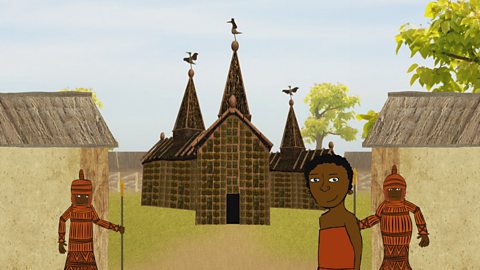
The story of the Benin bronzes. video
A young boy, Ibi, shows us how the trading civilisation of Benin created their famous bronzes.
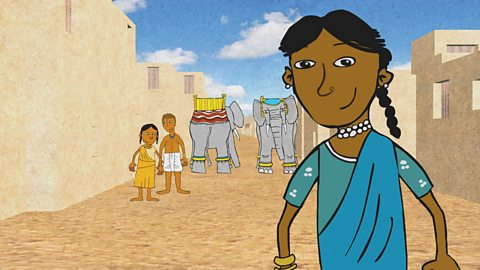
Introduction to the Indus Valley. video
A young girl, Suri, introduces us to life in the ancient Indus Valley 4,500 years ago, where civilisation depends on farming and trade.
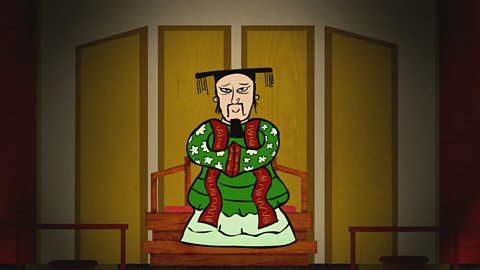
Introducing the Shang Dynasty. video
Li and his father introduce us to life in Bronze Age China under the Shang Dynasty.
Introducing Ancient Sumer. video
Urian, who is learning to read and write, gives us a tour of one of the first known cities: Uruk in what became modern-day Iraq.
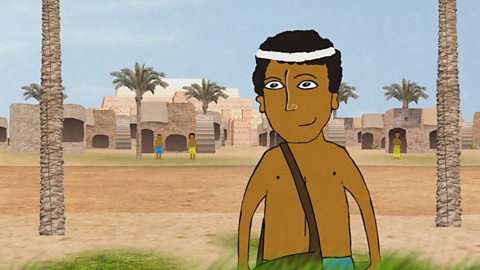
Introducing the Maya civilisation. video
Like children 1000 years later, Akbal wants to be a professional footballer. He shows us how it's played in Mayan Central America.
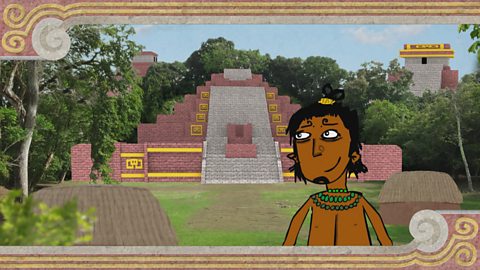
Baghdad in 900AD. video
Ali lives in the most advanced city in the world: Baghdad. He wants to be a scholar and contribute to the Golden Age of Islam.