Nigel Clarke finds out about the children's author Malorie Blackman, including how she began her writing career.
The video
Hi, I'm Nigel, and you may know me from the television. As you can see, I'm black. I was born and grew up in this country, the United Kingdom, but my parents were born and grew up in the Caribbean. My mum, dad, aunts and uncles moved here from a Caribbean country called Guyana many years ago.
There are over two million black people just like me living here in the UK, and many of us who moved here long ago, and who live here now, have worked really hard to make a difference to the lives of people that live here.
This is the story of just one of them - the amazing author Malorie Blackman.
Malorie has written more than 60 books for children and has won many awards for her work. She also writes for TV shows like Doctor Who. Her most famous story is called Noughts and Crosses.
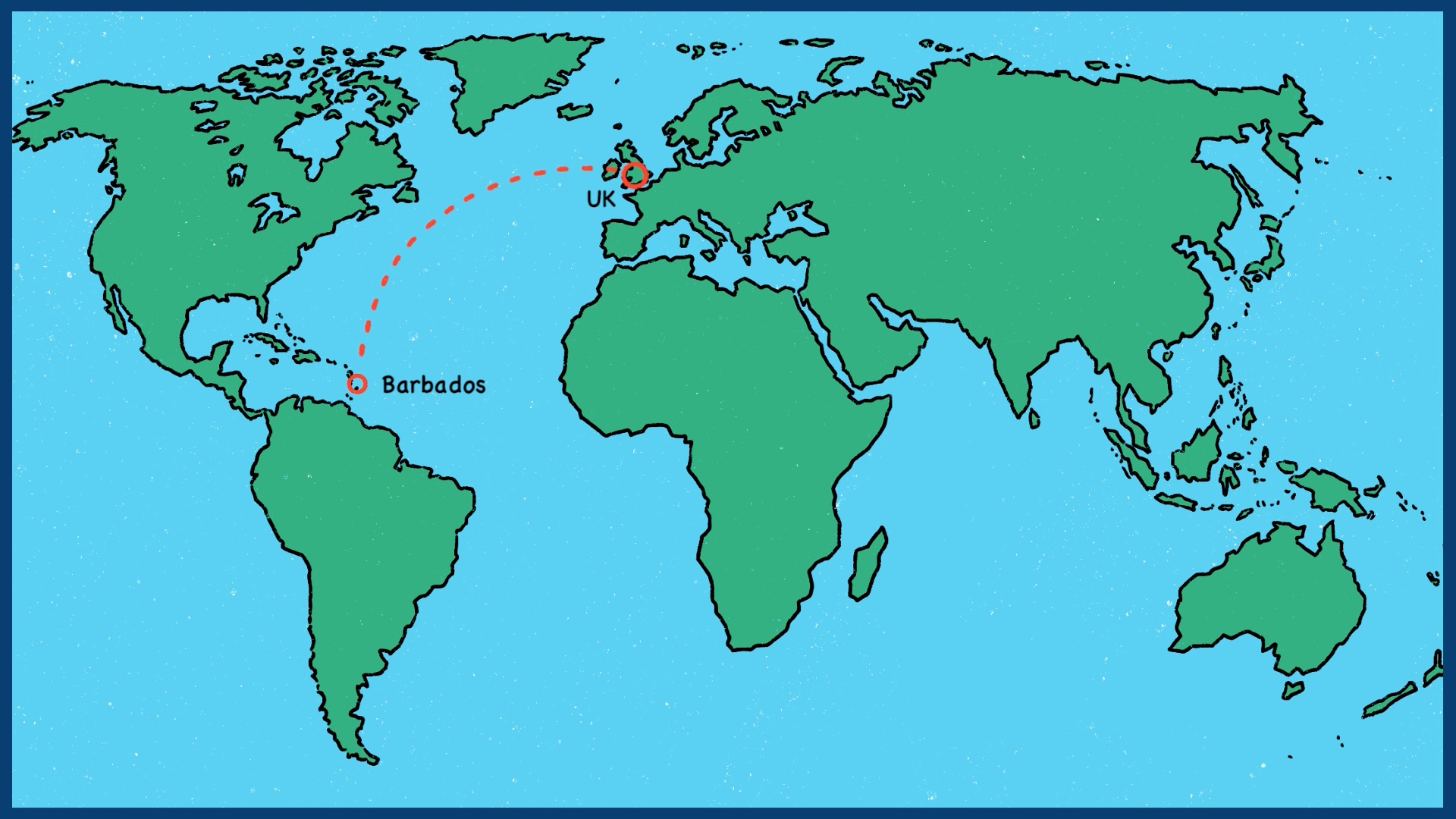
Malorie's parents moved to the UK from the Caribbean island of Barbados. She was born in London in 1962, not far from where I am right now, and she's one of five children.
As a child Malorie says she'd like to daydream about her favourite stories and fairy tales. Malorie loved reading, and by the time she was 11 she had read all the books in the children's section at her local library!
She said she wanted to be a teacher when she grew up, but when she finished studying at college and school, she found a job working with computers. She worked as a programmer, which means she was really good at computer coding.
In her spare time Malorie wrote her first book for children, which was called Not So Stupid.
Once she finished writing it she had to find someone called a publisher to turn her story into an actual book you can buy in shops.
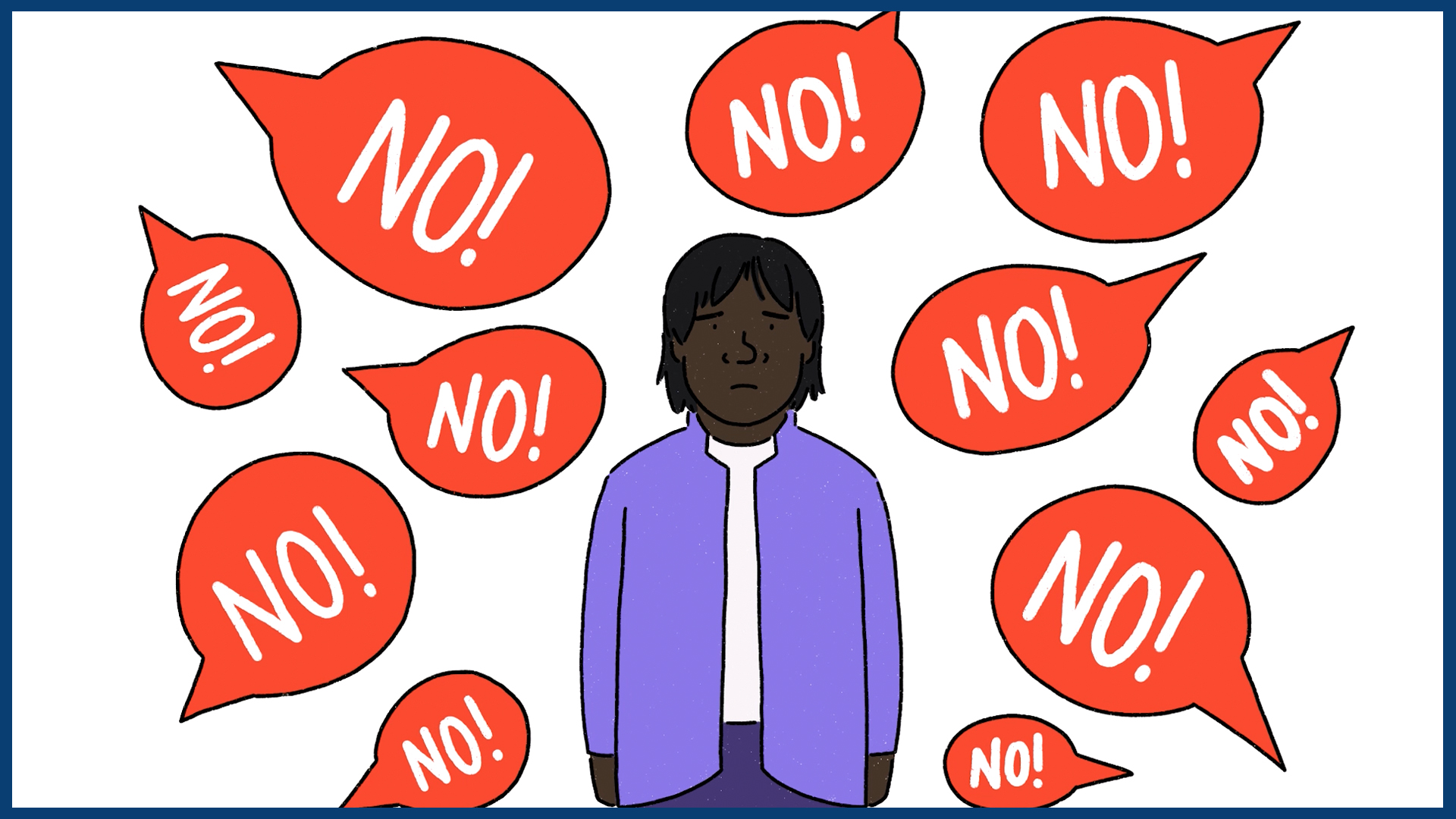
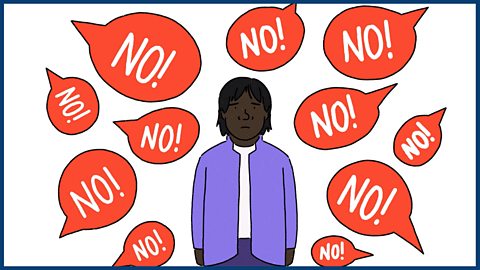
It was a difficult time because Malorie couldn't find anyone who wanted to turn her story into a book. The book was turned down many times, but Malorie kept on trying. She said to herself: 'I will never give up'.
She was 28 when she finally found a publisher who loved her story and helped her to get it into the shops. And that's when Malorie was able to start writing all the time.
Malorie's next two books were called Trust Me and Hacker. In Hacker she drew on her love of computers to tell the story of a young girl who helps her dad, who has been wrongly accused of breaking the law.
Then she wrote a story called Faith about a boy who travels into the future and Pig Heart Boy about a boy who needs a new heart, which won lots of awards.
In 2001, Mallory started writing her most famous book, Noughts and Crosses. It's become one of the most popular books for young people in the country and has even been made into a TV series. Perhaps you'll read the book when you're older.
Once Malorie had become famous, she started to help other writers from many different places to tell their own stories.
In 2008 Malorie was given a special award called an OBE, so that everyone would know just how important her work is to so many people living in this country. The award was given by the royal family.
In 2021 the final part of Malorie's Noughts and Crosses series was released, called Endgame. It marked 20 years since the first instalment and once again showed that Malorie is one of the most important British writers alive.
(Recap) Malorie Blackman's parents came to the UK from Barbados. As a young girl she loved stories and reading and in her spare time she started to write. Now she's written over 60 books aimed at children and young adults that are loved all over the world. But the best thing about Malorie Blackman is that she still has stories to tell!
Teacher Notes
Malorie Blackman was born in 1962 in London. She says that as a child she loved reading so much that by the age of 11 she had read all of the children’s books in her local library. She dreamt of becoming an English teacher, but at college she studied computer science and her first job was as a computer programmer.
Malorie's first book Not So Stupid (published 1990) was written in her spare time and is a collection of science fiction stories. It was rejected by publishers more than 80 times; but Malorie persevered and eventually she found one. Today Malorie has published more than 60 books and has also written a stage play and scripts for television, including Doctor Who. Her best-known work is the award-winning Noughts and Crosses series, which was adapted for television in 2020.
In October 2022 Malorie added her voice to those calling for black history to be taught in schools all year round. See BBC News.
Before watching the video
Malorie Blackman has written many books for older children. Their themes are too complex for KS1 but you could explain to children that they may read them once they are older. Malorie is considered by many to be an important British writer, who uses her work to explore important issues, including racism.
Malorie’s story is one of never giving up. Her first work was rejected many times by publishers but eventually she realised her ambition. She demonstrates perseverance, passion and a growth mindset - qualities that can be discussed in relation to PSHE.
Prepare for Malorie's story by asking the children:
- What is a writer?
- What is a computer programmer? What is 'coding'?
- Does anyone know what they'd like to be when they grow up?
- Why is it important that we 'never give up trying'?
- Can anyone say what the word 'perseverance' means?
After watching the video
Consolidate pupils' recall and understanding of Malorie's story by asking:
- Where was Malorie born? (London)
- What did Malorie want to become when she was still at school? (A teacher)
- What is the first job that Malorie actually did? (Computer programmer)
- What is a 'publisher'? (Someone who turns stories into books that can be sold in shops)
- What is Malorie’s job today? (She writes books for children and young adults)
- How many books has she written? (More than 60)
- Can you remember what any of Malorie's books are called? (For example, Not So Stupid, Trust Me, Hacker, Thief, Pig Heart Boy and Noughts and Crosses)
Activities
Discussion. Talk about how Malorie must have felt when her first book was rejected by publishers. How did Malorie react to this setback? Why was Malorie eventually successful in finding a publisher?
Discussion. As a child Malorie had a passion for reading. Discuss what 'passions' the children have. Are they things that the children can follow through to adult life?
Discussion. Why do you think Malorie chose to write about computers and computer programming in some of her stories? (She was writing from experience). What things would you like to write about in stories - and why?
Further resources
Teacher's Notes (pdf) document
Download / print the Teacher Notes to accompany the videos
Malorie's parents' journey to London from Barbados. map
Image from the video - click to display image full size
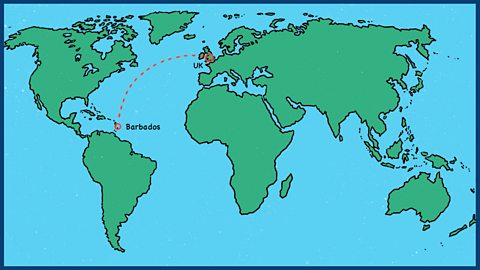
Image: to assist the discussion about rejection. image
Image from the video - click to display image full size
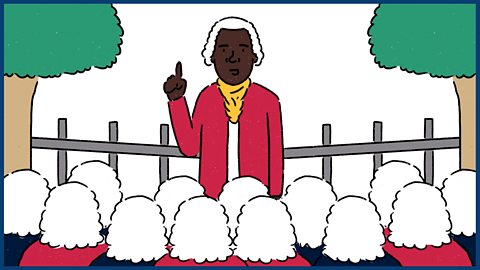
Olaudah Equiano (1745 - 1797) video
Celebrating the life of the anti-slavery campaigner Olaudah Equiano, once an enslaved person himself.
Mary Seacole (1805 - 1881) video
Celebrating the life of Mary Seacole who journeyed to the Crimean War and cared for British soldiers there.
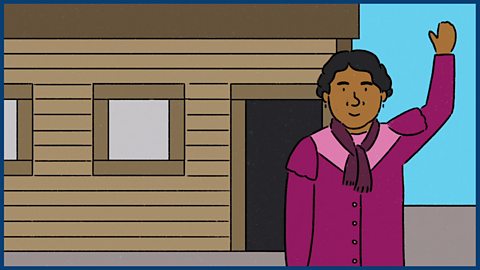
Betty Campbell (1934 - 2017) video
Celebrating the life of Betty Campbell, a pioneering headteacher and campaigner for Black History Month.