A KS1 (ages 5-7) lesson about Olaudah Equiano. Nigel Clarke celebrates the life and work of the eighteenth century anti-slavery campaigner Olaudah Equiano, once an enslaved person himself.
The video
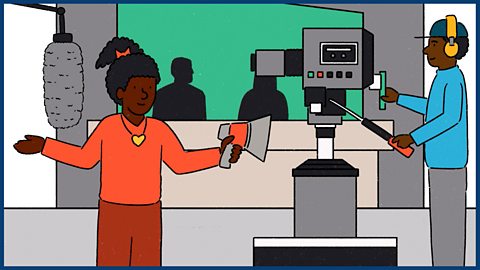
Hi, I'm Nigel, and I'm a TV presenter. I was born and raised in London, in the United Kingdom, and my parents were born and raised in the Caribbean. My mum, dad, aunties and uncles moved here from a Caribbean country called Guyana.
Did you know that there are over two million black people living in the UK just like me? Many of us who moved here long ago, and those of us who live here now, have worked really hard to shape British history and have made a real difference.
This is the story of just one of them - the awesome Olaudah Equiano, who lived more than 200 years ago.
In Nigeria, where he came from, they pronounce his name Olaudah - Ol - au - dah.
Olaudah spent many years of his life as a slave. Being a slave means that someone else owns you and tells you what you must do. Slavery is a terrible thing, but sadly, many black people were slaves at the time that Olaudah lived. Olaudah wrote a book about what it felt like to be a slave. It was a book that helped to change history.
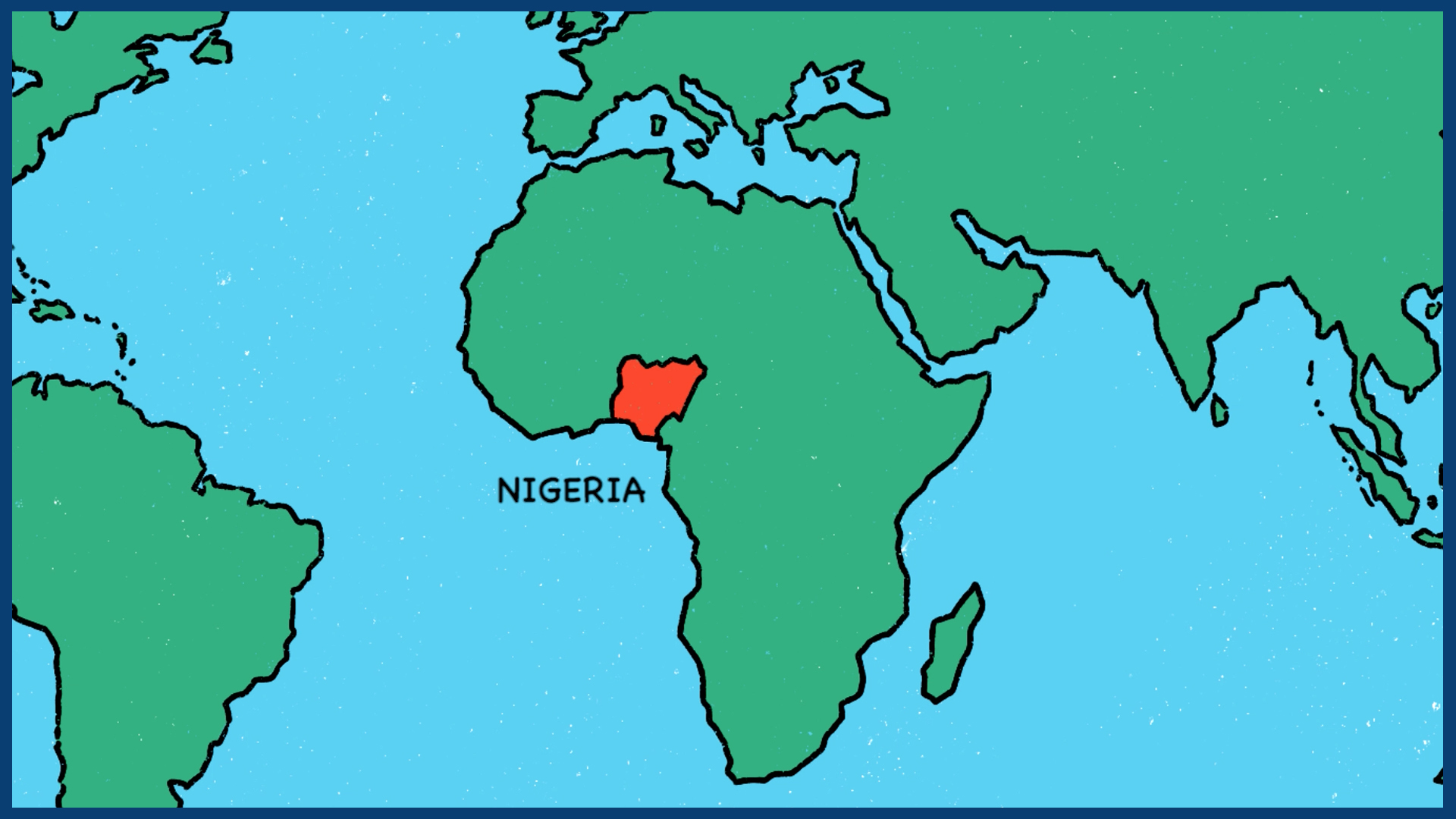
Olaudah was born in the African country of Nigeria in 1745. He was born to a very important family and was meant to become the leader of his people. But when he was 11 years old, he was taken from his village and sold to be a slave.
He was put on a big ship with other slaves and sent across the ocean, first to the Caribbean and then to America.
in America Olaudah was sold to one man and then, less than a year later, sold to another - an English sea captain who forced Olaudah to use a different name: Gustavus.
Olaudah's new master brought him to England before setting off on journeys to many different countries, taking Olaudah with him as his slave.
At around this time, Olaudah learnt to read and write - something that enslaved people were often forbidden to do.
Then in 1762, Olaudah was sold again and taken back to the Caribbean and then sold for the final time in America.
Olaudah's new master must have liked him, because he allowed Olaudah to earn a little money for himself.
After three years Olaudah had earned enough money to buy his freedom. In exchange for all the money he'd earned he was given something called a Certificate of Emancipation. E - man - ci - pa - tion. It means he was now free. He was no longer a slave.
It was now 1766 and Olaudah was about 20 years old. He travelled to London and began work as a barber, cutting people's hair, but Olaudah never forgot the terrible treatment he and the other slaves had suffered.
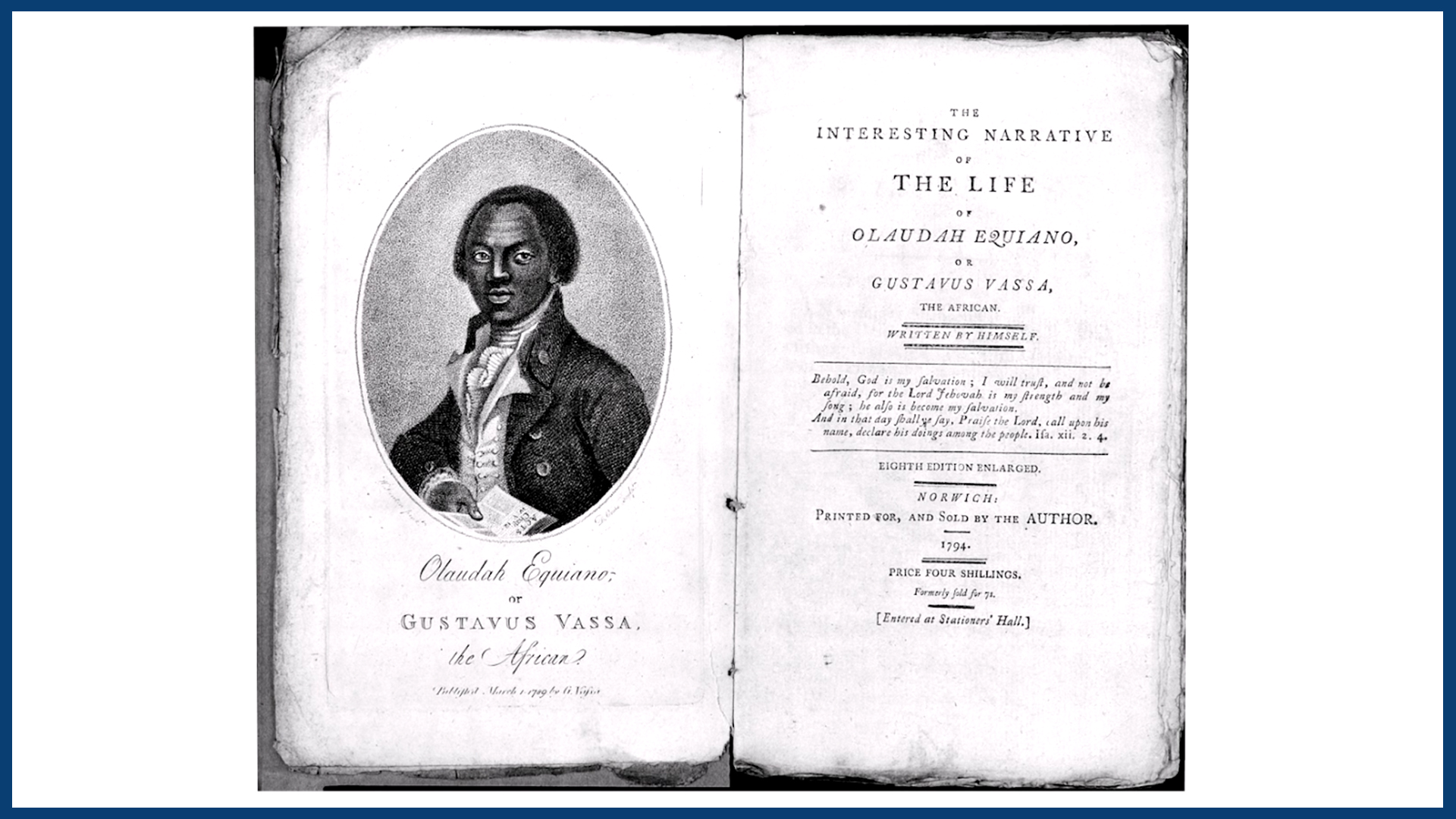
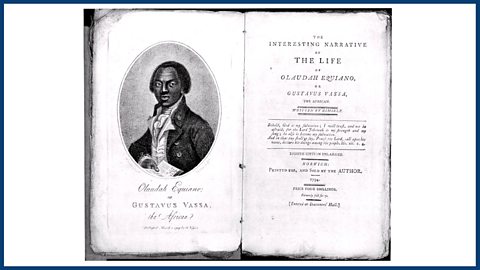
So he wrote a book all about his life so that people would understand what it was like to be a slave. It was the first book written in the English language by an African, and it was called The Interesting Narrative of the Life of Olaudah Equiano.
The stories in the book were so powerful that Olaudah was asked to travel around England to speak about what he had written. It helped people to understand why slavery was such a bad thing.
For the rest of his life Olaudah worked as hard as he could to force the government and the people of the United Kingdom to end slavery.
Olaudah died in 1797 and, some years after his death, everything that he worked for came true. Slavery in this country was made illegal. It came to an end. He was a great man who changed British history.
(Recap) So Olaudah's story begins in Nigeria, in Africa, where he was born. He was taken as a child to America and sold as a slave. Later, he was allowed to earn a little bit of money and eventually he saved enough to buy his freedom. He moved to London, where he did everything he could to end slavery, including writing a book about his life. It helped people to understand how terrible slavery was and help bring it to an end.
Teacher notes – The Life of Olaudah Equiano: A KS1 lesson
This film covers Olaudah Equiano's early life as an enslaved person before going on to consider his work campaigning in the UK to abolish slavery. It includes some images depicting slavery, including a contemporary illustration of people forced onto a slave-ship. It is essential to watch the film before sharing to assess its suitability for your class or group.
Olaudah Equiano (1745 - 1797) was born in Nigeria. As a child he was sold as a slave and taken to America. During his time as an enslaved person he had several different masters, the last of whom allowed him to buy his freedom. Olaudah travelled to London where he worked initially as a barber. Olaudah was an early campaigner against the slave trade (an 'abolitionist') and key to his success was his autobiography The Interesting Narrative of the Life of Olaudah Equiano, in which he described his early life and the horrors of slavery. It was immensely popular during his lifetime and helped the passage of legislation banning the slave trade in the UK, which happened in 1807.
Before watching the video – discussion ideas around slaveryOlaudah’s story inevitably requires some discussion of slavery - what it is, and its abhorrence. You may wish to describe enslaved people as people who are taken far from their homes, forced to do very hard jobs - all day - without any pay, often in dangerous conditions, and with little or no hope of release. You may wish also to draw out parallels between the experiences of enslaved people and teaching on 'Stranger danger' or bullying.
You could prepare for Olaudah's story by also asking:
- What do you think everyday life would have been like over 250 years ago when Olaudah lived? How would it have been different from today?
- What is an author?
- What is an explorer?
- Can you show me the continent of Africa on a map / globe?
- Can you help me find Nigeria on a map of Africa?
After watching the video - Questions to ask about Olaudah EquianoConsolidate pupils' recall and understanding of Olaudah's story by asking:
- Where was Olaudah born? (In modern-day Nigeria)
- What age was Olaudah when he was taken from his village? (Around age 11)
- Where was Olaudah taken? (Across the Atlantic Ocean, first to the Caribbean and then on to America)
- Where did Olaudah travel to once he was free? (London)
- What was the name of the book Olaudah wrote? (The full title is The Interesting Narrative of the Life of Olaudah Equiano)
- What did Olaudah do after writing his book? (He travelled around the UK talking about his experiences as an enslaved person, so that people would understand how bad slavery is)
KS1 discussion about slavery and Olaudah EquianoDiscussion. How do you think Olaudah felt when his name was changed without his permission? How do you think Olaudah felt when he was finally free? Can you find three words to describe his feelings for 'before' and 'after'?
Discussion. Olaudah is described as a 'campaigner'. What is a campaign / campaigner? Is there something that you would like to campaign for? How do you persuade other people to join your campaign?
Discussion. Slavery is wrong and shouldn't happen. When we see someone doing something hurtful to another person what should we do? Who should we talk to?
Further resources
Map locating Nigeria within Africa. map
Image from the video - click to display image full size
Map: Olaudah's forced journey to America. map
Image from the video - click to display image full size
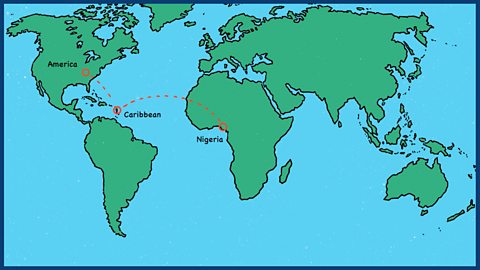
Image: Olaudah's autobiography. image
Image from the video - click to display image full size
Mary Seacole (1805 - 1881) video
Celebrating the life of Mary Seacole who journeyed to the Crimean War and cared for British soldiers there.
Betty Campbell (1934 - 2017) video
Celebrating the life of Betty Campbell, a pioneering headteacher and campaigner for Black History Month.
Floella Benjamin (born 1949) video
Exploring the life and work of actress, writer, TV presenter and politician Baroness Floella Benjamin.