A KS1 lesson (for ages 5-7) with Nigel Clarke celebrating the extraordinary life of Mary Seacole.
The video
Hi, I'm Nigel. You may know me from the TV. Now, as you can see, I'm black. I was born and grew up in this country, the United Kingdom, but my parents were born and grew up in the Caribbean. My mum, dad, aunties and uncles moved here from a Caribbean country called Guyana.
There are over two million black people just like me living in the UK. Many of us moved here years ago, and we've worked really hard to make a difference to the lives of people that live here.
This is the story of just one of them, the marvellous Mary Seacole.
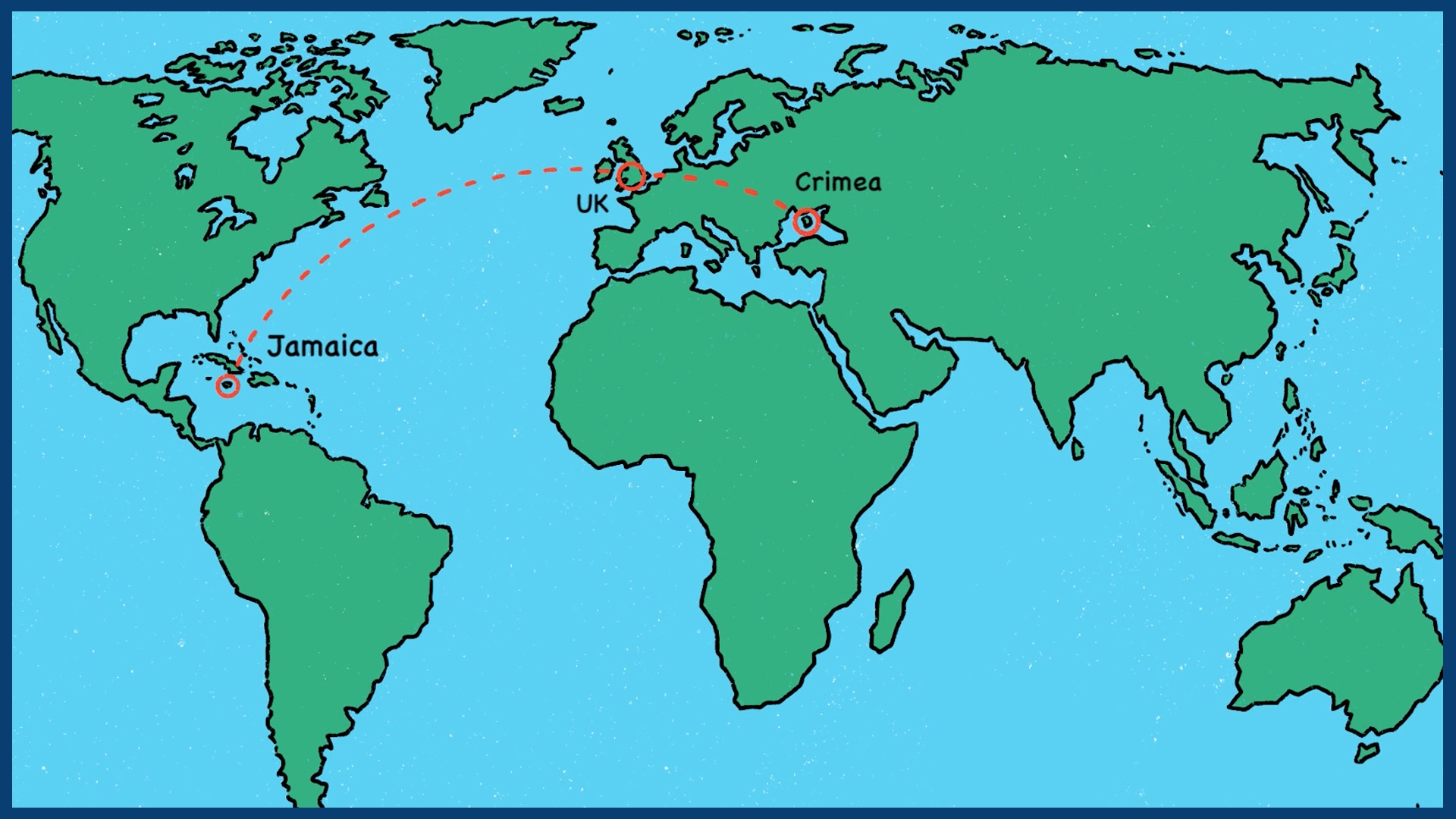
Today, we remember Mary because a long time ago, she made an amazing journey all the way from her home in the Caribbean, first to this country, Britain, and then right across Europe to a place called Crimea.
Mary went there because of a war, and during the years she spent there, close to the fighting, she was able to look after many of the soldiers.
Mary was born over 200 years ago in 1805 in Jamaica, an island in the Caribbean. Her father was a soldier from Scotland and her mother was Jamaican. Mary's mother was a healer, meaning she knew how to treat sick people using traditional African and Jamaican methods.
When Mary was young, she would watch her mother and copy her healing skills practising on her own toy dolls.
By the time Mary was 12 years old, she was helping her mother for real. And in 1853, when Mary was much older, she used her skills to treat a lot of people suffering from a nasty disease called cholera.
1853 was also the year a war broke out in a part of the world called Crimea. One of the countries fighting in this war was Britain.
Jamaica was a British colony, which means that it used to be ruled by Britain. So Mary wanted to help the British soldiers in the war. She had heard that they were not well cared for.
So she travelled to England and asked to become one of the nurses looking after the soldiers. But Mary was told no her help wasn't needed. So instead, Mary used her own money to travel to Crimea.
It was a long and difficult journey. When she got there, Mary set up what she called the British Hotel.
It was a simple building where British soldiers could come for a meal and be looked after. And during her time in Crimea Mary also helped some of the soldiers injured on the battlefield. Mary became so popular with the British soldiers that they called her 'Mother Seacole'.
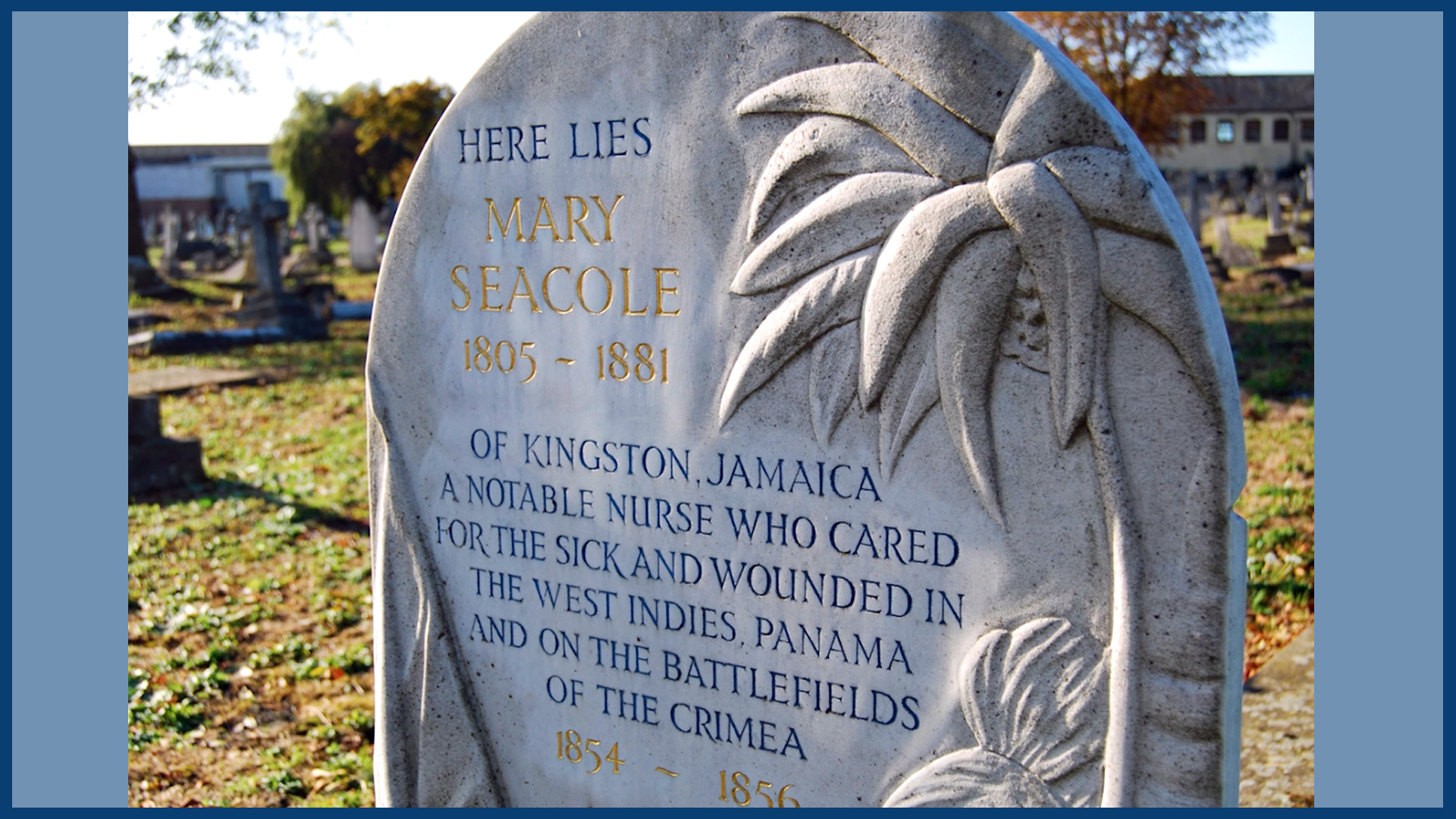
And after the war ended, she returned to London, where she lived until she passed away in 1881.
For over 100 years, it seemed as though everyone had forgotten about Mary.
Then nurses from the Caribbean who had moved to the UK started visiting Mary's grave in London. People rediscovered Mary's story. After much campaigning in 2016 a statue of Mary was unveiled at a hospital in London.
Mary is now rightly remembered as an extraordinary person who lived an exciting life and helped care for many people.
(Recap) Mary Seacole was born in Jamaica in 1805. Her mother was a healer and Mary learned all her healing skills from her. In 1853, Mary travelled to England and then on to Crimea, where there was a war. She set up the British Hotel to provide help and care for the British soldiers involved in the war. And today we celebrate Mary Seacole as one of the extraordinary women of British history.
Teacher notes for a KS1 history lesson
This video celebrates the extraordinary life of Mary Seacole (1805 - 1881). Mary was born in Jamaica, where her mother ran a guest house in Kingston. Her father was a Scottish army officer. Mary learned traditional healing skills from her mother and was able to use these during outbreaks of cholera and yellow fever in Kingston.
In 1853 war broke out in Crimea and one of the combatants was the UK. Mary travelled to London intending to join the group of nurses being organised by Florence Nightingale, but at the War Office Mary was told that her services were not needed. Undeterred Mary arranged her own journey to Crimea, where she established the British Hotel - a place where soldiers could buy a meal or extra provisions. The British Hotel was close to the fighting and Mary was able to use her skills to care for wounded soldiers.
After the war Mary returned to London, but she was destitute. Her fortunes revived thanks to William Howard Russell, a journalist who had visited Mary in Crimea, and subsequently Mary's contribution during the Crimean War was recognised by Queen Victoria.
Following her death Mary was largely forgotten about. A revival of interest in her story culminated in her being voted first in a poll of '100 Great Black Britons' and a statue of her being unveiled at St Thomas' Hospital in London by Floella Benjamin in 2016.
Discussion points and activities about Mary Seacole to do before watching the videoPrepare for the video by helping children to grasp how long ago the nineteenth century was. Their parents will mostly have been born at the end of the twentieth century. Their great-great-grandparents may have been born at the end of the nineteenth century - longer ago than the birth of any living person. The time of the Crimean War is another 50 years further back (1853 - 1856).
Use a map or globe to track Mary's journey from Jamaica to London and then on to Crimea. Gauge children's understanding of transport at the time. Mary's journey was made mostly at sea and took many long weeks.
Discuss with the children what a nurse is and what the work of a nurse involves. Share with them that at the time of Florence Nightingale and Mary Seacole the role and skills of a nurse were still developing.
Questions to ask about Mary Secole after watching the videoConsolidate pupils' recall and understanding of Mary's story by asking:
- Where was Mary born? (Jamaica)
- What did Mary's mother do to help people? (She was a healer)
- Where did Mary travel to on her long journey? (First to London, then on to Crimea)
- What was the name of Mary's building in Crimea? (The British Hotel)
- What did the British soldiers call Mary? (Mother Seacole)
Activites and discussion points about Mary Seacole
- Discussion. Talk about how Mary must have felt when she was told in London that she couldn't join the team of nurses going to Crimea. What does it tell us about Mary's character that she still made the journey to Crimea?
- Sequencing the events of Mary's story. Reinforce the key events of Mary's narrative arc. You could write simple captions on separate pieces of paper - eg 'Birth', 'Healing', 'Journey', 'London', 'British Hotel', etc - and ask children to sequence them in the correct order.
- Discussion. Why do you think it's important that we remember Mary's story?
Further resources
Teacher's Notes (pdf) document
Download / print the Teacher Notes to accompany the videos
Map showing Mary Seacole's journey. map
Image from the video - click to display image full size
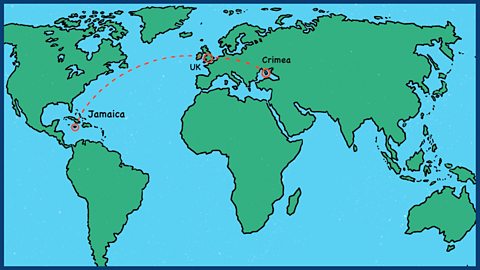
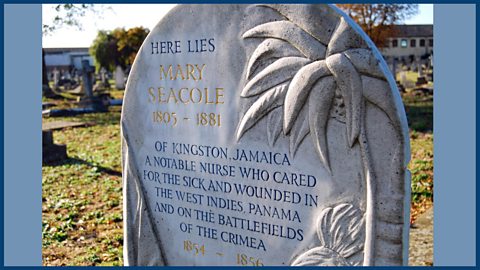
Image: Mary Seacole's gravestone. image
Image from the video - click to display image full size
Related links
The life of Mary Seacole - a three-part animation about Mary's life from BBC Teach
Mary Seacole - Assembly - an assembly, most suitable for KS2.
Who was Mary Seacole? - BBC Bitesize's KS1 page on Mary
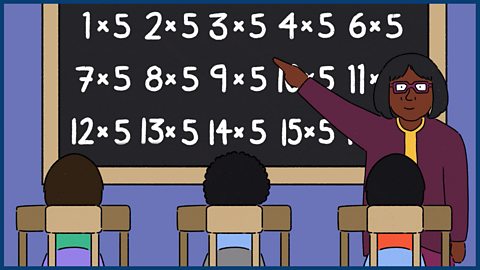
Betty Campbell (1934 - 2017) video
Celebrating the life of Betty Campbell, a pioneering headteacher and campaigner for Black History Month.
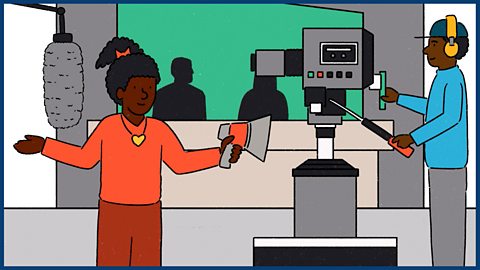
Floella Benjamin (born 1949) video
Exploring the life and work of actress, writer, TV presenter and politician Baroness Floella Benjamin.
Laurie Cunningham (1956 - 1989) video
Celebrating the life of superstar Laurie Cunningham, one of the very first black footballers to play for England.