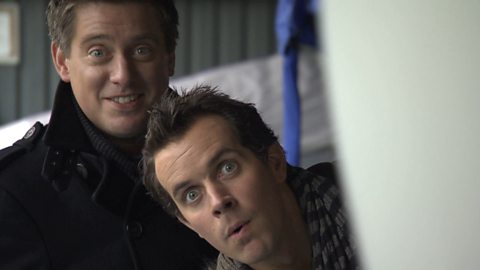
DICK:Today we're going to introduce you to a genius with a difference.
DOM:A real trailblazer who helped revolutionise the way that modern music was made.
DICK:Pioneering techniques that produce sounds that we'd never heard before.
DOM:And she produced possibly one of the most famous pieces of music in this country.
DOM:'Today's genius helped create the most iconic TV theme tune of all time - Dr Who.'
DR WHO:What did you say?
DOM:'And when Dr Who hit our screens back in 1963 It was the first time that most people had ever heard electronic music. It was ground-breaking.
DOM:'But she didn't just come up with a catchy tune, in fact she didn't even write it. It was the way she made it.'
DOM:Ladies and gentlemen, we give you… Delia Derbyshire.6DELIA DERBYSHIRE:Hello chaps.
REPORTER:'-This is a journey into sound'
DOM:'Born in 1937, Delia grew up during World War Two. Delia loved music, but music back then was very traditional played by orchestras and nothing like the electronic tunes that she'd go on to create. Along with music, maths was her other passion and she graduated with a degree in, yep, you guessed it, maths and music from Cambridge University.'
DELIA DERBYSHIRE:First, it's the simplest sound of all, which is a sinewave.
DOM:'Having finished university, she got a job at the BBC in a new department called the radiophonic workshop.
DOM:'The workshop's purpose was to provide unusual music and sound effects for TV and radio.
DOM:'Of course shows had used music and sound long before the workshop existed but it all tended to be much more traditional.'
DICK:Oh hello darling how was your day?
DOM:Marvellous thank you. I went to the market.
DICK:Oh, did you see anything nice?
DOM:Yes. I bought a horse, called Brian.
DICK:Brian the horse?
DOM:Stop this.
DOM:Of course traditional sound effects like these were very effective and are still used today in radio plays to Hollywood movies.
DICK:But by the early 1960s, TV programmes were getting more adventurous and needed sounds and music to match.
DOM:'Back then, space travel was new and exciting. The public was fascinated by the idea of new worlds
DICK:'and all this was happening at the ame time as Dr Who was launched but programs about aliens needed alien sounds.'
DOM:Thankfully though, new technology meant that by the time Dr Who was ready to hit our screens there was a brand new generation of young new musicians.
DICK:'And these geniuses were Delia and the radiophonic workshoppers.
DOM:'The radiophonic's genius idea was to make music and sound effects that no one in the world had ever heard before.
DICK:'Using unusual recording equipment they created strange sounds such as the sound of spaceships, monsters, and aliens, and of course the sound of the Tardis.'
DICK:Nah. Still don't get it.
DOM:'We needed some serious help–'
DOM:Is this really important tape?
DOM:'and we found it in the form of genius composer, Mark Ayres who worked at the radiophonic workshop and even knew Delia.'
DICK:We've been looking around the building at all these machines but what do they actually do?
MARK AYRES:Well these machines, these are quarter inch tape machines. On here I've got a very simple tone.
MARK AYRES:One note. If I double the speed of the tape machine. It's gone up an octave. If I halve the speed of the tape machine. It's gone down an octave. Now, if I play it and start varying the speed while we do it
DICK:Ah, so you can actually make a tune by just–
DICK:That is a bit of a tune isn't it? Just by going faster and slower.
MARK AYRES:And that's the start of making music with tape.
DOM:'And what a start it was but Mark was about to pull something out of the bag that would blow our minds.
MARK AYRES:Guess what that is.
DICK:What is it? Let's have a look.
MARK AYRES:That is the original master tape.
DICK:Original theme tune!
DICK:What year is this from?
MARK AYRES:1963.
DICK:Wow.
DELIA DERBYSHIRE:Don't drop it.
DICK:'Surely it wouldn't still work though?!'
DR WHO THEME PLAYS
DOM:-'Of course it did.'
DICK:That sounds a bit like the tone I was playing with earlier.
MARK AYRES:-Absolutely, very-- Done exactly the same way varying the speed of tone and adding some echo to it.
DOM:-'Her music was so ahead of its time, that it still inspires electro-music acts today like Orbital, who, with a little help from the doctor played their version of Delia's tune at a recent festival.
DOM:'The truth was that, although we love our music, we're more about the dancing.'
CRUNCH
DICK:But what we have found out, is that Delia Derbyshire, you, are an absolute genius.
DELIA DERBYSHIRE:Thank you boys.
Video summary
Dick and Dom from 'Absolute Genius' describe the work of Delia Derbyshire who helped develop electronic music.
She is well remembered for producing the Doctor Who theme tune.
This was the first time many people had heard electronic music.
She developed this entirely new type of music by playing notes on tape and then speeding them up or slowing them down.
This short film is from the CBBC series, Absolute Genius with Dick & Dom.
In this entertaining series Dick and Dom learn about the geniuses whose ideas, creations and discoveries have shaped our world.
Teacher Notes
This short film is ideally suited to introducing pupils the significant achievements of Delia Derbyshire.
Any study of the 20th century will need to explore the impact of the worlds of science and technology on everyday life.
Pupils could discuss the impact of Delia Derbyshire on their lives.
Do electronic music and sound effects like this deserve a place among the most significant events of the 20th century?
What has been its impact on everyday life?
Does Delia deserve the title 'absolute genius'?
How might you decide if someone is/was a genius, and how much impact they have had on people's lives?
This short film is suitable for teaching science at Key Stage 2 in England, Wales and Northern Ireland, and Second Level in Scotland.
Discovering the work of Archimedes. video
Dick and Dom describe the major scientific achievements of 'Absolute Genius', Archimedes, who is best known for his work on floating and sinking.
Discovering the work of Elsie Widdowson. video
Dick and Dom describe the scientific achievements of 'Absolute Genius', Elsie Widdowson, who was the first to discover the nutrional values of many foods.

Discovering the work of Isambard Kingdom Brunel. video
Dick and Dom describe the achievements of 'Absolute Genuis', Isambard Kingdom Brunel, who designed famous bridges.
Discovering the work of James Watt. video
Dick and Dom describe the major scientific achievements of 'Absolute Genius', James Watt, who made steam engines much more efficient.
Discovering the work of Joseph Bazalgette. video
Dick and Dom describe the major scientific achievements of Joseph Bazalgette, who designed one of the first ever sewers.
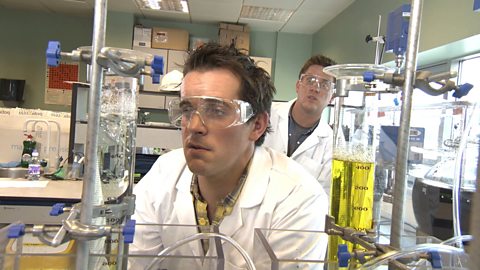
Discovering the work of Leonardo da Vinci. video
Dick and Dom describe the scientific achievements of 'Absolute Genius', Leonardo da Vinci, who is famous for his painting of the Mona Lisa.
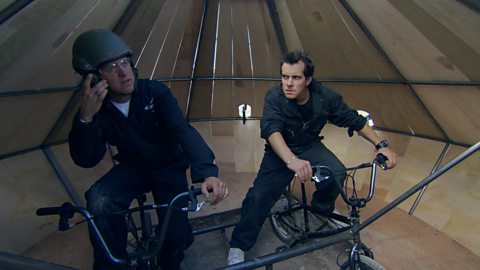
Discovering the work of Michael Faraday. video
Dick and Dom describe the major scientific achievements of Michael Faraday, who is most remembered for his work on electrical energy.
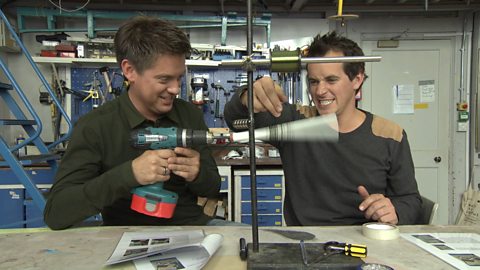
Discovering the work of Sir Isaac Newton. video
Dick and Dom describe the scientific achievements of Isaac Newton, who is best known for discovering gravity.
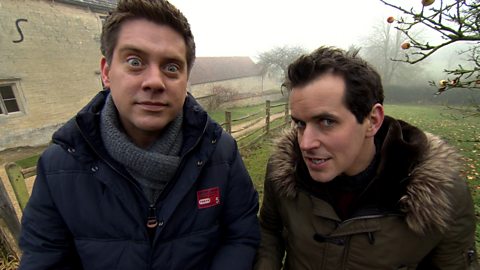
Discovering the work of Wernher von Braun. video
Dick and Dom look at the scientific achievements of Wernher von Braun, who was described by NASA as “the greatest rocket scientist in history”.