Lots of advances in medicine were made during World War One.
X-Rays, antibiotics and blood transfusions were all first used in World War One.
Even small wounds could lead to infections or death.
If a soldier was wounded in the battlefield, he’d first be treated in the trenches.
They were then taken to a casualty clearing area behind the lines.
Dr Henry Ernest MacFarlane. 42 years of age. Surgeon.
Just finished my first shift as a volunteer surgeon. Only been in France three days. Got here yesterday. I’d never even seen a field hospital before. It’s just tents… in a field. I spent most of the war in a small hospital in Brighton so this was a bit of a shock.
I arrived just as a big attack started. The reception marquee was already full of injured men so there was no time to lose - I just scrubbed up and got ready to work.
I’ve never seen injuries like this before. I was more used to taking out tonsils or mending the odd broken arm. This was so different.The work’s not pretty. Not in this war. They say that one of the biggest killers here is septicaemia. When men are injured in explosions or gunfire, mud and dirt and bits of uniform get into their wounds. They say that often men survive their injuries only to die long horrible deaths when their wounds go septic. As surgeons our job is to cut away the dead and injured flesh around the wounds. As I say. Not pretty.
All day the casualties kept arriving. It was hard. I’d never seen injuries like this before but I knew what had to be done. We worked right through the day - couldn’t stop to take a break or even eat.
And as it got dark they lit lanterns so that we could keep going through the night. Then this morning as it got light, the guns fell silent, the casualties stopped arriving and now my shift as a surgeon near the front line is over.
I know there’ll be other days like this. But this was my first and I’ll never forget it.
Video summary
This short film is for teacher use and contains potentially upsetting content; teacher review is recommended before use in class.
Newsreel and commentary about the advances in medicine made during World War One.
These include pioneering work on X-rays and blood transfusions, which were widely used for the first time during the conflict.
Antiseptic was also used, and research during and after the war eventually led to the development of antibiotics.
However, during World War One, antiseptic medicine was very basic, and even a small injury could sometimes result in infection or death.
Teacher Notes
Pupils could develop a timeline, showing when X-Rays, antibiotics and blood transfusions were first discovered or employed.
They could use a range of information sources, such as books and websites to find out more.
What are the names and life stories of the scientists most closely associated with these developments?
This short film is suitable for teaching history at Key Stage 2 / Second Level or above.
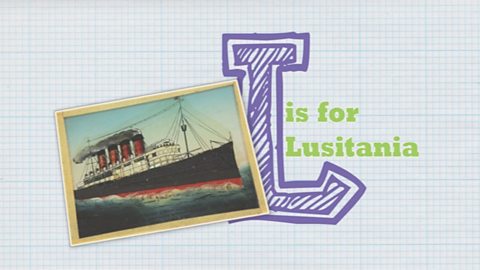
L is for Lusitania. video
Newsreel and a dramatised monologue about the Lusitania, a passenger ship that was sunk by a German U-Boat off the coast of Ireland.
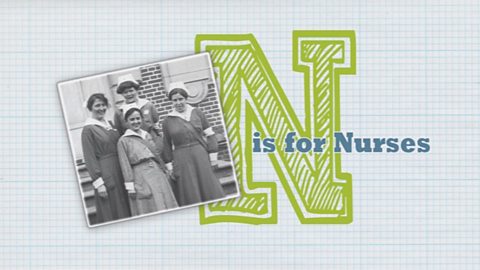
N is for Nurses. video
Commentary, newsreel and dramatic monologue describe the role of nurses during WW1, including the work of Edith Cavell.
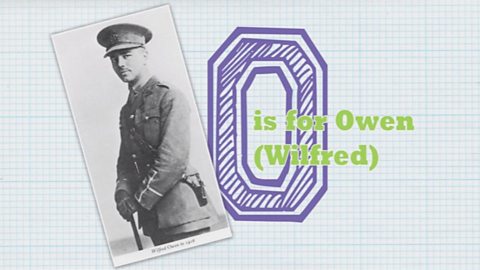
O is for Owen (Wilfred) video
Commentary, newsreel and dramatic monologue introduce Wilfred Owen, today one of the most widely recognised WW1 poets.