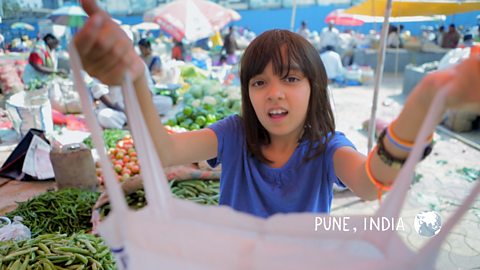
This place comparison explores what is similar and what is different in two cities on rivers: Belfast in Northern Ireland and Pune in India.
Belfast is the capital city of Northern Ireland, running through the city is the river Lagan. There are many bridges crossing the river, and ships, and cranes.
Far away from Belfast, is the city of Pune. It's in India, a country in the continent of Asia. It also has a river running right through the middle of it, with many shops and markets along its banks. This river is called the Mula-Mutha.
Uma: My name is Uma. I am nine years old. I live with my mum, my dad, my sister and my cat.
Robin: My name is Robin. I am nine years old. I live with my mum, my dad, and my annoying twin brothers, in Belfast. The river that runs through Belfast is called the river Lagan. The bit of the river near our house, we usually cycle along, or go for wee walks beside it. You feel like you're in the middle of the countryside. So you hardly ever see anything except wildlife, and sometimes you come across stuff that people just throw in.
Uma: There's a river in Pune called the Mula-Mutha river. It's really rubbishy on one side, and foamy and rocky on the other side. It's less dirty than it was before but still people throw garbage in it.
Robin: I would usually go into the centre of Belfast every fortnight, maybe. I like to eat near the river because it gives you a taste of Belfast. A taste of the food and a taste of the Lagan. I am eating traditional fish and chips from Belfast, which are very nice!
Uma: When I'm free I like to go to the market with my mum, to buy vegetables and fruits.
Uma’s mum: Do you know what this is called?
Uma: Bhindi?
Uma’s mum: Bhindi. And in English, do you know what it's called?
Uma: Ladies' Fingers.
Uma’s mum: Yeah, Ladies' Fingers, or okra.
Uma: The market is full of dust, full of veggies, fresh smells, and there's always something new.
Robin: I like visiting Victoria Square, which is a shopping centre in Belfast. It has a big dome, and it has seven floors. My house is over that direction, and it's right beside the river Lagan, which flows all the way through Belfast, over to the ports over there. You can see the Harland and Wolff cranes, which are called Samson and Goliath, and they made the Titanic which is a very big ship which sadly sank going to America.
Uma: Before breakfast we change, and then we brush our teeth.
Robin: My mum and dad wake up first, and then I wake up and then my twin brothers wake up. Then we eat our breakfast and get into the car. On our journey to school, we see cows and horses, and lots of wildlife.
Uma: Sometimes when we pass the river, we see ladies washing their clothes and I feel bad for them because they have to wash it in dirty water, and they don't have washing machines to do stuff.
Robin: At school there are lots of different clubs. The clubs I go to are choir, which I very much enjoy.
Uma: It's less dance class, more creative movement class. It's really enjoyable, you can really have fun in it.
Robin: It feels just enjoyable, when you're singing a happy song it brings out your mood.
Uma: I'm not really sure what I want to be when I grow up.
Robin: I would like to be an actor or I would like to be a singer.
Video summary
This short film was first published in 2018.
Download/print a transcript of the video.
Like many big cities, Pune and Belfast have rivers running straight through the middle of them. What other similarities are there between the two cities and what are the differences?
In the past both cities have relied on the industry these rivers created and to varying degrees still do today.
Robin, 10, from Belfast and Uma, 9, from Pune explore how living by the river influences their lives and talk about the activity in the river, such as washing, sailing and wildlife.
They also express their concerns about the amount of litter in the rivers and how polluted they’ve become.
Robin and Uma tell us about their lives day-to-day: how they get to school, where they go to buy food, what they have for breakfast and what they want to do when they’re older.
Together they illustrate the cultural and geographical differences and similarities of these two distinct places.
This clip was originally broadcast as part of the series Your World.
Teacher Notes
Pupils could make lists of similarities and differences between Pune and Belfast.
What are the different geographical features they see in the clip?
Pupils could list the different things that happen in rivers e.g. fishing, washing, sailing etc.
What activities do they see in rivers close to them? What wildlife have they seen there? Why is it important to keep our rivers clean?
This clip is relevant for teaching Geography at KS1 and KS2 in England, Progression Step 2 and 3 in Wales, Early and 1st level and 2nd Level in Scotland and Foundation and KS1 in Northern Ireland.
More from Comparing locations: 'Your world'
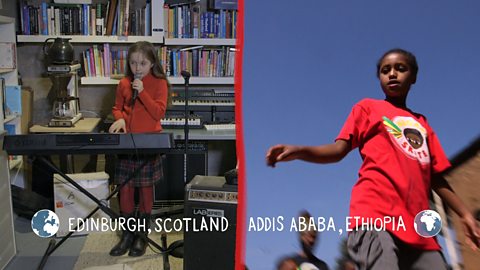
Location comparison - the hilly cities of Edinburgh and Addis Ababa. video
KS1/KS2. Rose from Edinburgh, Scotland and Eden from Addis Ababa, Ethiopia, describe their lives in these hilly cities.
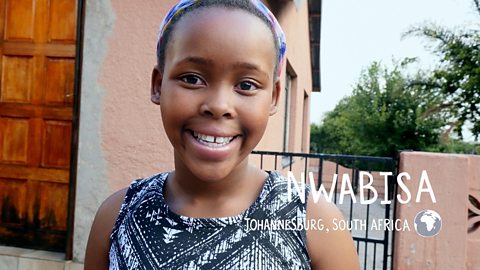
Location comparison - living in the suburbs of Birmingham and Johannesburg. video
KS1/KS2. The similarities and differences living in the suburbs of two large cities: Birmingham and Johannesburg in South Africa.
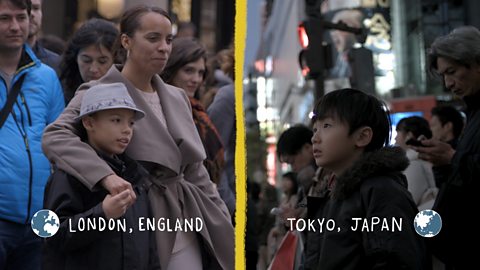
Location comparison - living in the megacities of London and Tokyo. video
KS1/KS2. Kei from Tokyo and Louis from London describe living in two megacities, with a focus on transport.
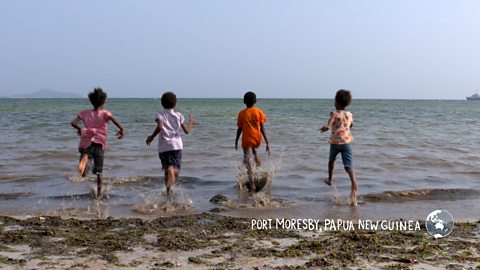
Location comparison - contrasting coastal capital cities: Cardiff and Port Moresby. video
KS1/KS2. Judah from Cardiff in Wales and Reenie from Port Moresby in Papua New Guinea reveal what is similar and different in two coastal capitals.
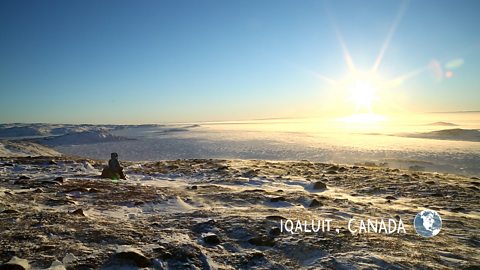
Location comparison - two remote island regions: Shetland and Iqaluit in Canada. video
KS1/KS2. Kayla-Marie from Shetland and Christina from Iqaluit in northern Canada compare life in two remote island regions.
Location comparison - two river cities: Belfast and Pune. video
KS1/KS2. Robin from Belfast, Northern Ireland and Uma from Pune, India compare living in two very different cities with rivers.