This place comparison explores what is similar and what is different living in two cities built on hills: Edinburgh in Scotland and Addis Ababa in Ethiopia.
Edinburgh is the capital of Scotland. It's a very hilly city, because in and around Edinburgh are many extinct volcanoes, such as Arthur's Seat, and Castle Rock.
Nearly 7,000 miles south of Edinburgh is Addis Ababa, the capital city of a country called Ethiopia. Addis Ababa is at the base of an enormous mountain, Mount Entoto, which is much higher than the hills in Edinburgh.
Eden: My name is Eden. I live with my two brothers, and my mother and father, in Addis Ababa.
Rose: My name is Rose, and I am eight. I live in Edinburgh. I live with my brother James, my mum, my dad and my three pet rabbits. Edinburgh is quite a hilly city. It's quite tiring to walk up and down them. This is Arthur's Seat, one of the biggest hills in Edinburgh. In the distance I can see lots of hills.
Eden: You can see the whole city from here. Addis Ababa is higher than other areas of Ethiopia, and the highest part of the city is called Entoto. There's a mountain in Entoto, and from there you can see the whole of Addis.
Eden: It's a hilly area, so it's hard to go up, but easy to come down. I can see the airport over there. Over there is the Ghion Hotel, and closer, over here, is our school.
Rose: Royal Mile is a street. There's a castle at the top, it has got lots of shops on. It's quite popular. This is Edinburgh Castle where the old Kings and Queens used to live. This is one of the typical shops on the Royal Mile, that sells traditional Scottish things.
Rose: This is a kilt, which is made of tartan. Some things are useful in Edinburgh: warm hats and umbrellas, because it's usually quite cold and wet here.
Eden: Shiromeda is famous for its woven textiles. These traditional clothes are made by people from Southern Ethiopia. Both the local community and tourists come to Shiromeda to buy these clothes.
Rose: Every Friday morning, we have pancakes.
Eden: Injera is the main food that we eat. We eat it every day. To prepare injera, you grind the teff, mix it to make a batter, and then cook on a pan.
Rose: Someone has to flip the pancake so that it turns over, and you can cook the other side.
Eden: When I go to school it takes ten minutes if I walk fast, and fifteen if I walk slowly. My journey to school is noisy, because lots of people live in this area.
Rose: I quite often read when I'm walking to school, because there's nothing really to do, apart from walk.
Eden: There are people who go to work, and people going to school, so the street is crowded and the street is usually busy and noisy.
Rose: My favourite lessons are reading, writing stories, and art. We have a band every Thursday.
Eden: Most Sundays we go skateboarding. I go to the skatepark with my friends, I like it when we play and train together.
Rose: My dad plays guitar and keyboards, and my little brother starts hitting a little drum madly every time we play. I think I’ll keep playing music, as long as I’ve got a keyboard.
Video summary
This short film was first published in 2018.
Download/print a transcript of the video.
Rose, 8, from Edinburgh and Eden, 14, from Addis Ababa tell us about life in their respective cities, which are both built on hills.
From the bustling and expanding city of Addis Ababa to the quaint cobbled streets of medieval Edinburgh, Rose and Eden reveal the similarities and differences of living in two places surrounded by and built upon hills and mountains.
Both children give us a tour of their cities, tell us about daily life and highlight features of their geographical surroundings.
We learn about the weather, what it’s like to live in a hilly area, how they travel to school, their hobbies, where they go shopping, and the food that they eat, along with interesting and quirky observations about their environments.
Together the two children’s lives highlight the cultural and geographical similarities and differences of two distinct places.
This clip was originally broadcast as part of the series: Your World.
Teacher Notes
Pupils could make lists of how Edinburgh and Addis Ababa are similar and different.
What are the different geographical features they see in the clip?
Pupils could be asked to locate where both cities are on a world map, the continents that they belong to and the surrounding seas.
This clip is relevant for teaching Geography at KS1 and KS2 in England, Progression Step 2 and 3 in Wales, Early and 1st level and 2nd Level in Scotland and Foundation and KS1 in Northern Ireland.
More from Comparing locations: 'Your world'
Location comparison - contrasting climates in England and Australia. video
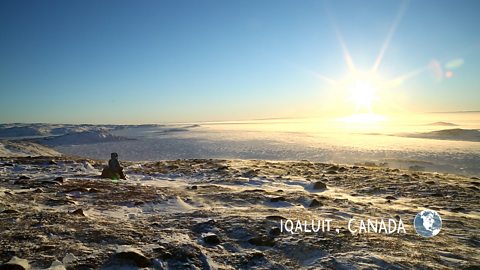
KS1/KS2. Talia from the North of England and Khynaan from northern Australia compare their home towns, focusing on weather and climate.
Location comparison - two river cities: Belfast and Pune. video
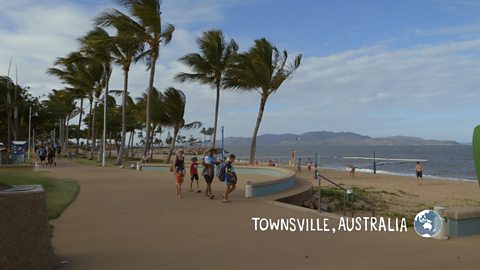
KS1/KS2. Robin from Belfast, Northern Ireland and Uma from Pune, India compare living in two very different cities with rivers.
Location comparison - living in the suburbs of Birmingham and Johannesburg. video
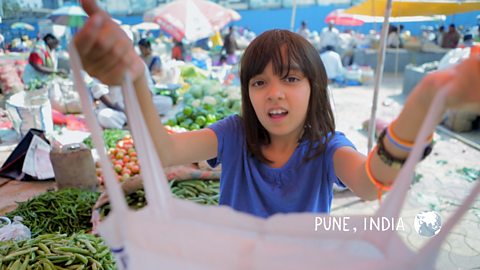
KS1/KS2. The similarities and differences living in the suburbs of two large cities: Birmingham and Johannesburg in South Africa.
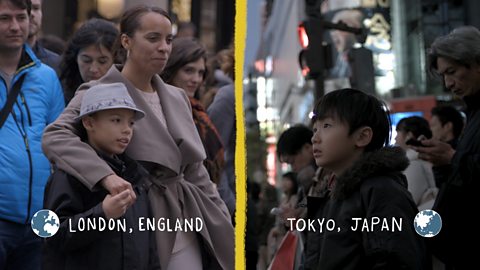
Location comparison - living in the megacities of London and Tokyo. video
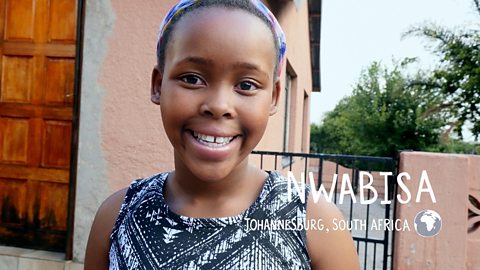
KS1/KS2. Kei from Tokyo and Louis from London describe living in two megacities, with a focus on transport.
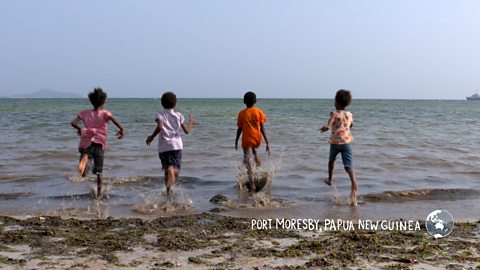
Location comparison - contrasting coastal capital cities: Cardiff and Port Moresby. video
KS1/KS2. Judah from Cardiff in Wales and Reenie from Port Moresby in Papua New Guinea reveal what is similar and different in two coastal capitals.
Location comparison - two remote island regions: Shetland and Iqaluit in Canada. video
KS1/KS2. Kayla-Marie from Shetland and Christina from Iqaluit in northern Canada compare life in two remote island regions.