My name is Meng Ke.I'm 11 years old.
TRANSLATION:
I live near Sandoupingin the province of Hubei.Hubei province is in central China.My house is on a hill.It's close to the River Yangtze.My family used to liveright next to the river.Then we had to move awaybecause a huge dam was built.The dam is calledthe Three Gorges Dam.They built it to help Chinawith flood controland generate electricity.It's one of the biggest damsin the world.
I can see the damand the River Yangtze from my roof.My grandpa said he met a lotof foreignerswhen they were building it.The electricity is sent from hereto all over China.
The River Yangtze startson the Tibetan Plateau,in Qinghai province,and ends in Shanghai.In the olden days before moderntransport,this was the main route for productsto be sent from province to province.It's the longest river in Asia,and the third longest in the world.
I live with my grandparents.They look after me because my parentswork in another province.My grandpa and Iusually do the shopping together.Today we've gotlots of things to buybecause it's our Spring Festival.Everyone buys special reddecorations.
It's called Spring Festivalbecause it's usually in the spring.This year it's in January,and it's still really cold.It's a very exciting day becausemy mum and dad are coming home.So we have to get everything ready.
Fireworks are very importantfor the Spring Festival.Everyone buys them.Even though Grandpa thinksthey're not very safe,he always buys quite a few fireworks,especially for me.
There's lots to dobefore my parents arrive.Once we have dropped our shoppinghome, we have to get the vegetables.My grandpa has his own vegetablepatch. It's not far from our house.I like going with Grandpato get the vegetables.
One last thing I have to dois sweep the floor.This is also a part of theChinese Spring Festival tradition.You have to make sure you sweep awaybad luck and make it clean,so that good luck can arrive.
I'm so happyand excited they're coming home.I haven't seen them for nearlya year.My aunt, uncle and cousin have alsocome speciallyfor the family reunion.
Now everything is ready and we justhave to wait for my mum and dad.They're coming all the wayfrom Guangdong province.Dad needs to drive over 20 hoursto get home.
Here they are!I feel so excited.My mum and dadhave brought presents for everyone.Lots of tasty sweets,new clothes and new shoes.
The colour red is very important,because we have an old storyof an evil beast called Nian.It used to eat all the people's foodand even eat little children.This evil beast hated the colour red,so that's why red is lucky,because the evil beast willrun away from red.
The scrolls mean, "May happinessfall on anyone"who comes inand out of the house."
Mmm! Something smells nice.We have dumplingsmade by all my family.These chocolates are in the shapeof our ancient Chinese money.The money was madefrom real gold and silver.
At dinner, all the food we haveis traditional for Spring Festival.Everyone in my village is nowsetting off firecrackers.The evil Nian was scaredof the sound of firecrackers.I hope that you have the opportunityto come to Chinato celebrateSpring Festival together.
Video summary
Li Memgke lives near Sandouping in the shadow of the Three Gorges Dam, very close to the Yangtze River.
Her family had to move here when the dam was built, because their home was in the path of the new construction. The dam was built to protect parts of China from flooding and to harness the Yangtze's power to generate electricity.
It lies in the Gorge area of China, famous for its beautiful peaks and picturesque stretches of river. Many tourists visit to take cruises up and down the Yangtze and through the gorges.
The river is also an important transportation route for ships carrying cargo across China. Memgke lives with her grandparents, as both her parents have had to travel away for work. They spend the whole year working in Guangdong province, over a 20-hour drive away.
Li Memgke is preparing for their return so that the whole family can celebrate Spring Festival (Chinese New Year) together. She goes into town with her grandfather to buy Chinese lanterns, decorations and fireworks, and explains that red is the traditional colour for this celebration.
Once home, they prepare a Chinese feast and collect vegetables from their vegetable patch on the slopes of the hills near their house. The food is traditional and there are many dishes.
When her parents arrive, they sit down together and eat, then let off Chinese firecrackers and watch the spectacular firework displays from the roof of their house.
Teacher Notes
This clip can be used during a module on China or energy production.
Students could be asked to note down any aspect of Memgke's life and culture that is similar or different to their own.
They could also be asked to take notes on aspects of energy production associated with hydroelectric power.
Finally, students could be asked to suggest the pros and cons of the use of large dams in comparison to smaller scale projects or other types of energy production.
This clip will be relevant for teaching Geography at Key Stage 2 in England and Northern Ireland, Progression Step 3 in Wales and 2nd Level in Scotland.
A child-led tour of Shanghai in China. video
A child-led introduction to (and tour of) the Chinese city of Shanghai.
A child-led tour of Yangshuo, in China. video
A child-led tour of Yangshuo, in China.
Life in China - Xingping. video
A child-led tour of Xingping in Guangxi Province in China.
A child-led tour of Chan'gou in the Yunnan Province of China. video
The physical and human geography of Chan'gou, Yunnan, China.
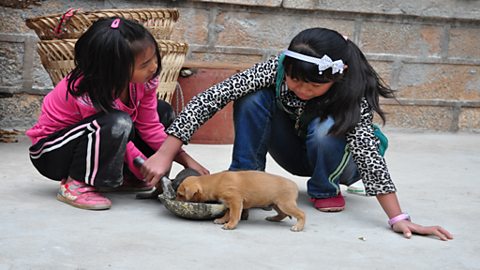
A child-led tour of Lijiang, in China. video
A child-led introduction to Lijiang in Yunnan Province, China.
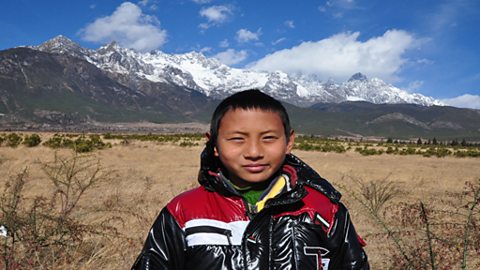
A location in Europe - Haarlem, Netherlands. video
10-year-old Mika describes the traditional Dutch architecture of her hometown of Haarlem, Netherlands.
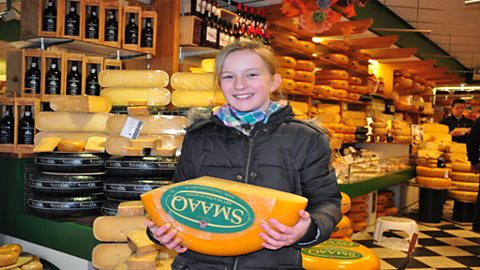
A location in Europe - Haarlem, Netherlands. video
10-year-old Mika describes the traditional Dutch architecture of her hometown of Haarlem, Netherlands.
A location in Europe - Veere in the province of Zeeland, Netherlands. video
Nine-year-old Robbert introduces his hometown of Veere in the province of Zeeland, Netherlands.
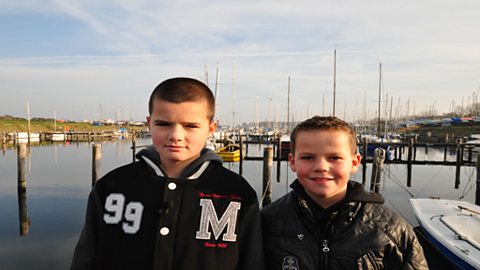
A location in Europe - Kinderdijk, Netherlands. video
Nine-year-old Donna introduces Kinderdijk - a region famous for its canals and windmills.
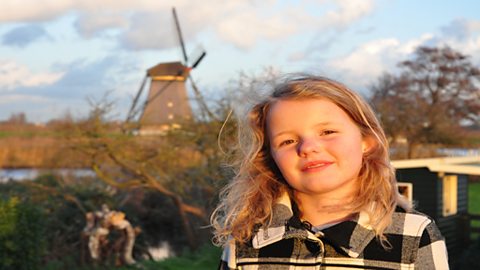
A location in Europe - the North Frisian island of Sylt, Germany. video
11-year-old Helen explains what life is like on the German island of Sylt.
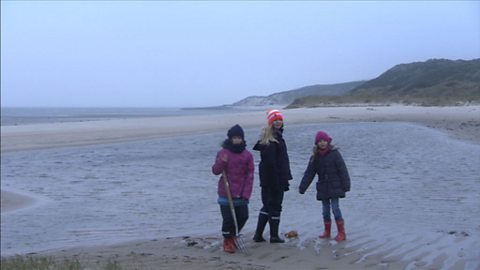
A location in Europe - Inzell, Germany. video
11-year-old Josephine introduces the physical and human geography of Inzell, in Bavaria.
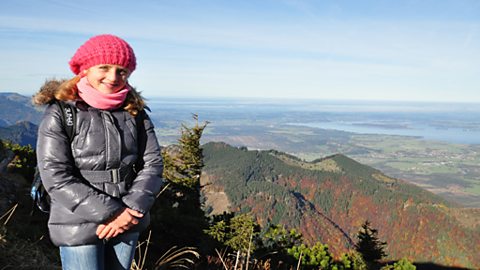
A location in Europe - Hamburg, Germany. video
Nine-year-old Zoe introduces the physical and human geography of Hamburg, Germany.
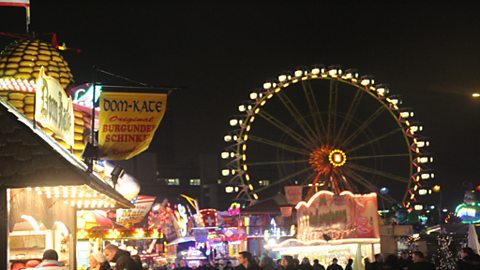
A location in Europe - Cologne, Germany. video
Nine-year-old Niklas shows what life is like in the city of Cologne.
A location in Europe - Füssen, Germany. video
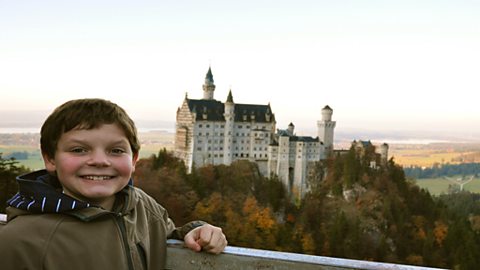
12-year-old Philipp introduces Füssen in the Allgäu region of Bavaria.