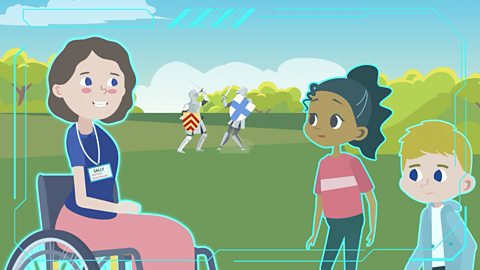
Fatima and Harry learn how castles defend against attack by hearing the stories of two famous sieges: that of Dover Castle in 1265 and of Edinburgh Castle in 1571.
Fatima: So we know that castles were built to defend an area.
Harry: And to protect people - all their important stuff like gold and jewels.
Fatima: But if you did want to attack one, how would you do it?
Sally: Very good question! Over the years there have been many different ways to attack and defend a castle.
Harry: So castles changed over time?
Fatima: And the way to attack them changed too?
Sally: Yes, absolutely right. So there were two main ways to capture a castle. You either attacked the castle walls and tried to break the defences; or you stopped any food from going into the castle, so that those inside finally got so hungry that they had to surrender. That's called a siege. Shall we take a look at two famous sieges to find out more?
Fatima & Harry: Yes.
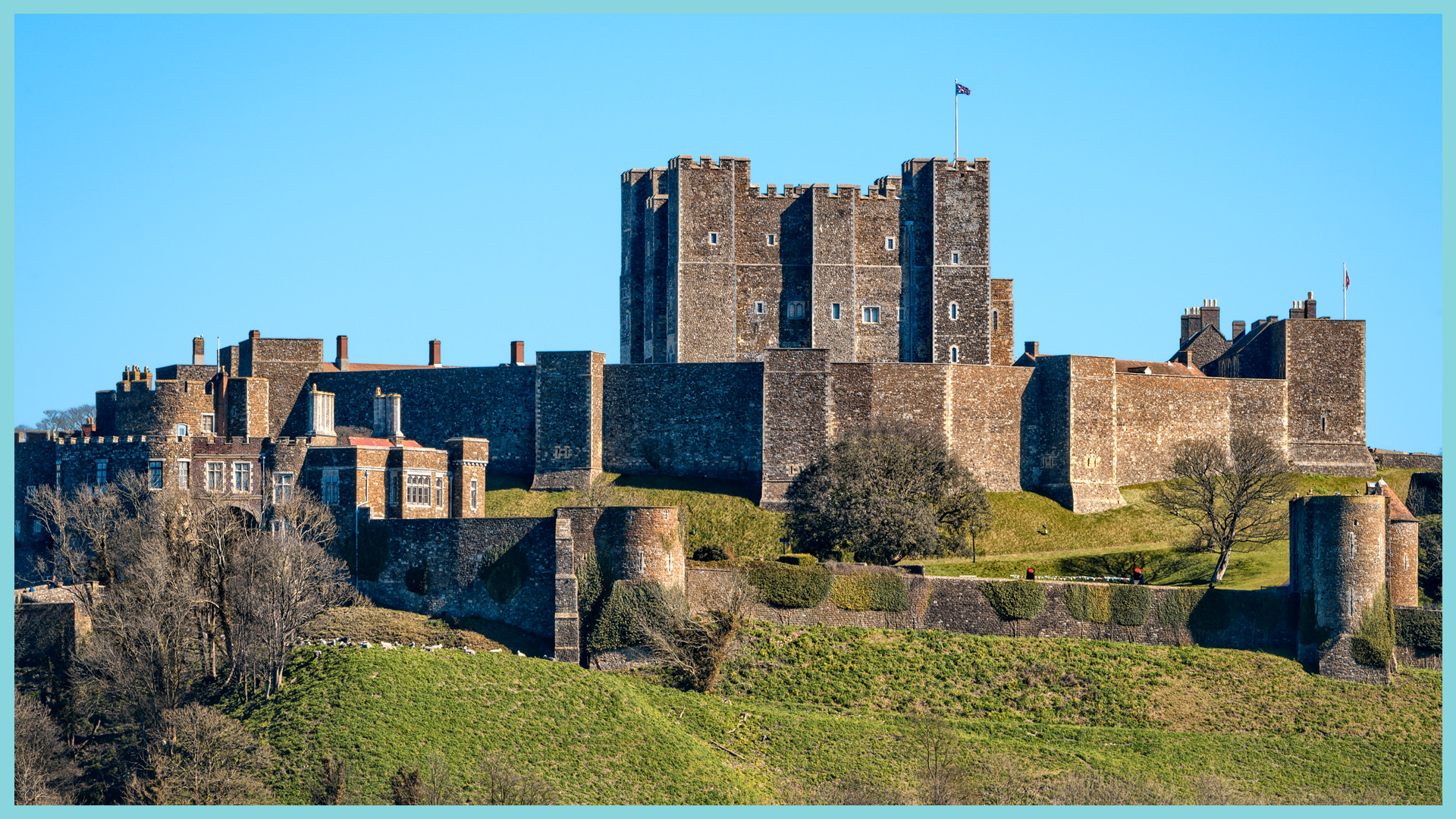
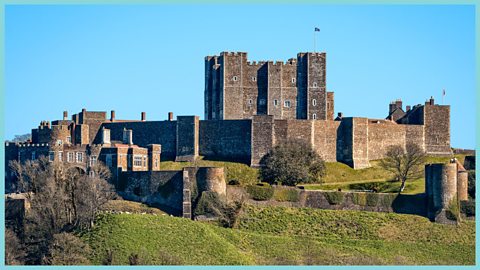
Sally: Right then let's put our virtual reality headsets on and go and find out about Dover Castle. In 1264, an important noble called Simon de Montfort had a big argument with the King, as Simon wanted to be king himself. He captured Dover Castle from the King and became ruler of England. But in 1265, Simon was defeated in a huge battle with the King and he and his son were killed.
Fatima: Oh no, how terrible!
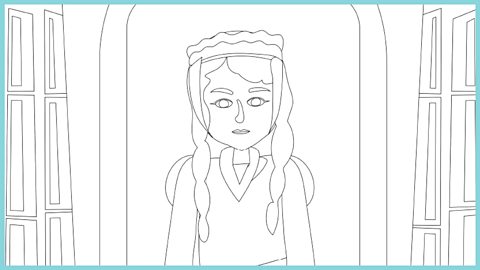
Sally: Yes, his wife Eleanor raced to Dover Castle, as she was worried that the King would kill her, too. She brought archers with her and even a massive catapult to help defend the castle. At first she defended the castle and it seemed like she might be able to stay there, safe behind the thick walls. However, some of her own soldiers decided that they wanted to be on the side of the King, not on her side. So knowing that she had enemies outside the castle and enemies inside the castle, she realised she had a huge problem.
Harry: Oh no! So she had no one left to trust?
Sally: Exactly. She decided that she had no choice. She had to surrender. So she opened the gates and ordered her soldiers to lay down their weapons.
Fatima: What other interesting sieges where there?
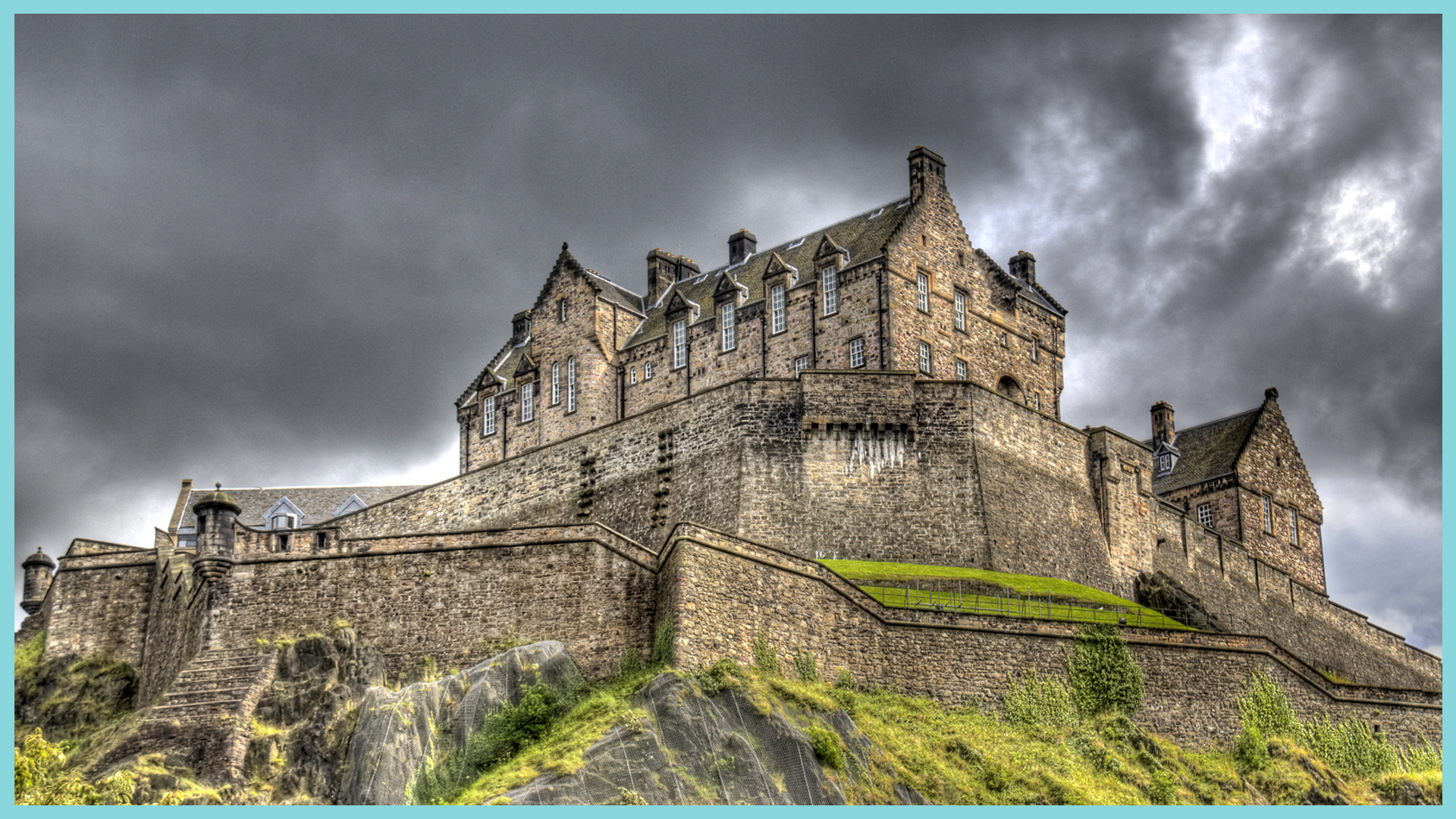
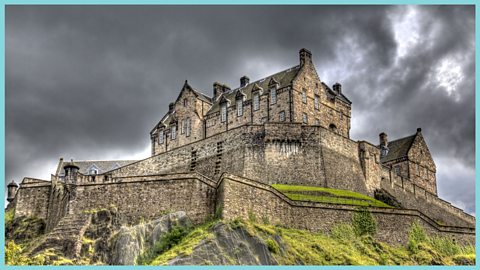
Sally: The siege of Edinburgh Castle in Scotland was super interesting. In 1571, a man called William Kirkcaldy, a friend of Scottish Queen Mary, was defending Edinburgh Castle. He was worried the armies would come and attack the castle, so he made lots of new defences, like thicker walls. And he was right. A huge army did come and surround the castle.
Harry: Oh no! So they were going to destroy the castle?
Sally: They wanted to, but they couldn't. They just couldn't break down the walls. The castle was so strong they had no way to destroy it.
Harry: Wow, what a strong castle!
Sally: The attackers realised that they had to destroy the walls. That was the only way they could get into the castle. So they brought up a huge number of cannons and they poisoned the castle's water, so that everyone in the castle was thirsty and had nothing to drink. Then they started firing at the castle all day, all night for ten days.
Fatima: Ten days! How could anyone in the castle sleep? It must have been terrifying.
Sally: They fired so many cannonballs, that people were still finding bits of them 300 years later. And after 10 days of continuous firing, the tower and the castle wall collapsed. That was it. The castle had to surrender.
Harry: Wow, what a story!
Sally: If you go to Edinburgh Castle, you can see the walls and the towers for yourself. It's amazing.
Harry: Thank you, what a fascinating story.
Sally: It was a pleasure. Castles are so very interesting.
Famous sieges
In this episode Fatima and Harry learn how castles defended against attack by hearing the stories about two famous sieges - that of Dover Castle in 1265 and of Edinburgh Castle, beginning in 1571.
The animation explores the techniques used to attack castles and some of the strategies that were employed in defence - including having a source of water inside the castle, huge stores for food and plenty of livestock within the castle walls.
The film also references ‘the lives of significant individuals in the past…and events', including two women - Eleanor de Montford and Mary Queen of Scots.
Depending on where in the UK this is being taught, it would also meet the National Curriculum objective of ‘significant places in their locality’.
Further resources
Teacher's Notes. document
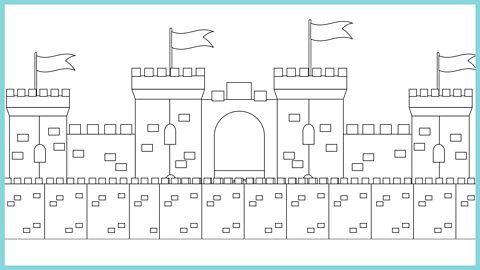
Download / print the Notes including illustrations, photos and worksheets (pdf)
Dover Castle. image
Click to display the image full-size
Castle outline drawing to colour. document
Click to display the image full-size
Eleanor de Montford - outline drawing to colour. document
Click to display the image full-size
Edinburgh Castle. image
Click to display the image full-size
Teacher's Notes
Before the video
The teacher could show the class a picture of a castle. The pupils can then work in small groups to come up with as many ideas as possible for attacking it.
Each group can then present their ideas to the class. The teacher can use this to explain some elements of chronology - somethings hadn’t been invented when the castle was built!
During the video
The teacher can use the video to run a ‘guess what happens next’ style activity as the story of the sieges continues.
The teacher could support pupil thinking by providing statements and asking if pupils think this will happen / not happen and explain their answers.
This will help to develop the historical skill of interpretation and also helps with the predictive skill used to develop reading.
After the video
After the video the teacher could use this resource to practice storytelling which leads to writing.
Pupils could use the stimulus of the video - perhaps even the characters involved - to tell a fictional story about their castle being attacked (or being the attackers).
This can then be used to practise writing sentences based on their story.
The video also brings in different parts of the UK - Dover, London and Edinburgh.
This could be used as part of a geography activity to target the objective of ‘name, locate and identify characteristics of the four countries and capital cities of the United Kingdom and its surrounding seas’. Pupils could draw pictures of the castles on a map of the UK, labelling the countries and identifying the flags.
Build a castle! This would fit with the Art NC objective of ‘using a range of materials creatively to design and make products…to use drawing…and sculpture to develop and share their ideas, experiences and imagination…to develop a wide range of art and design techniques in using colour, pattern, texture, line, shape, form and space'.
This film is relevant for teaching History at KS1 in England, Wales and Northern Ireland and 1st Level in Scotland.
More from this series
The Features of a Castle. video
Fatima and Harry hear about the key features of a castle - such as thick walls, towers, drawbridges and moats.
The Legend of King Arthur. video
Fatima and Harry learn the difference between fact and fiction - hence the difference between history and myth.
The Real Life of a Knight. video
Fatima and Harry learn some more of the many ways life in medieval times is different from today.