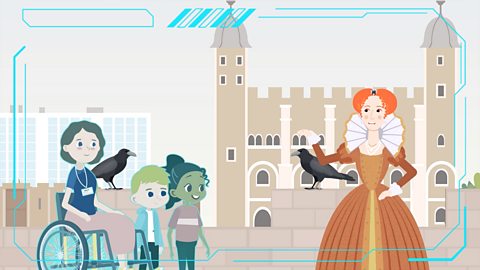
Fatima and Harry find out that the real life of a knight was often very different to the stories that are told.
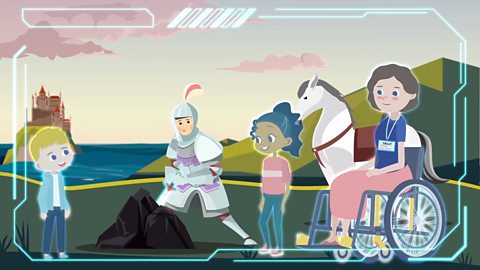
Fatima: So I've heard lots of stories about knights that can't be real. Like St George fighting a dragon. So what was it really like to be a Knight?
Harry: Yeah, did they run the country? Where did they live? Did they have any rules they had to follow?
Sally: Good questions. How about we go back in time and see what things were really like for knights?
Fatima: Good idea, let's take a look.
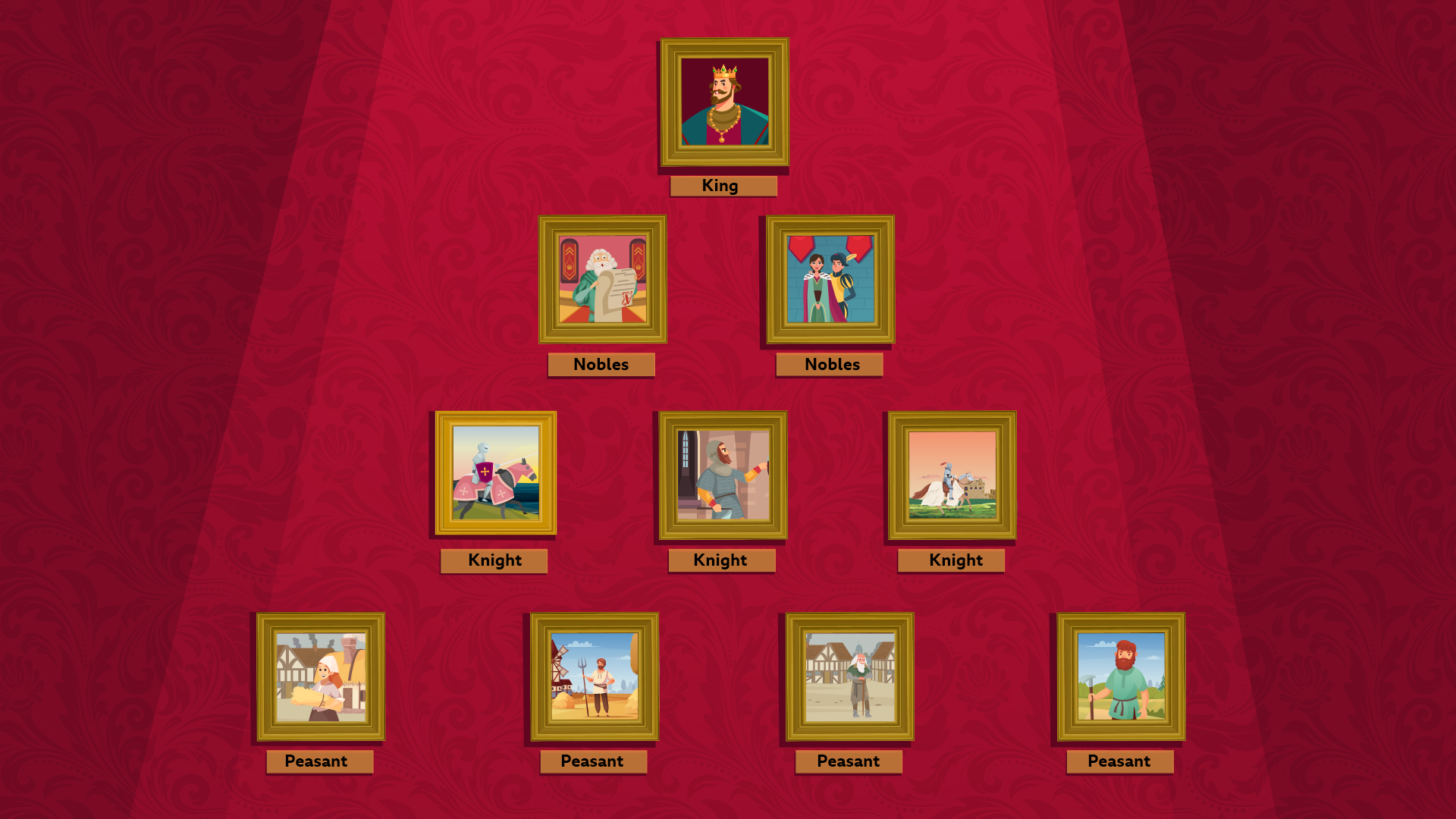
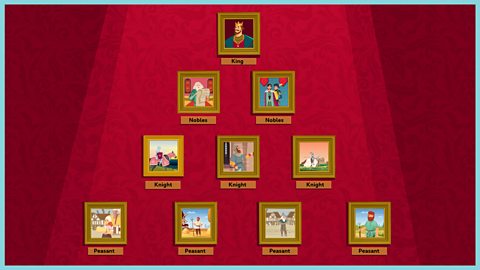
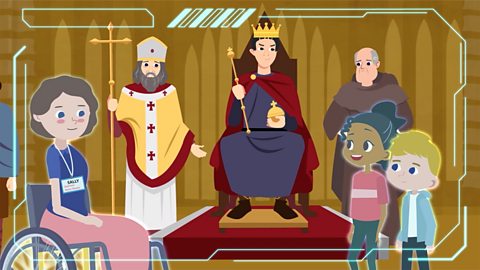
Sally: To understand what life was like for knights, first, we have to understand how life was organised. Who was in charge? At the very top was the king or queen. He or she would order people around and was very rich and powerful. Below the king or queen were the nobles. Rich people that the king or queen gave land to in order to gain their support.
Beneath the nobles were the knights. They also owned some land, given to them by the nobles and so they had to do what the nobles told them, including fighting for them. At the very bottom were the ordinary people, peasants.
Harry: Could a king or queen do anything they liked?
Sally: Well, not quite. They had to keep the nobles and other important people happy.
Fatima: So the knights had quite a few people who could tell them what to do?
Sally: Yes - kings, queens and nobles would often tell them what to do. It was a hard life in many ways. When the king went to war, the knights would have to fight for them. Sometimes the nobles would fight each other, which meant the knights would have to fight for them too.
Fatima: Why were knights so important in battle?
Sally: Knights often rode on horses, which meant they were fast - so they could get around the battlefield quickly and do a lot of damage to the enemy. They also fought on foot too.
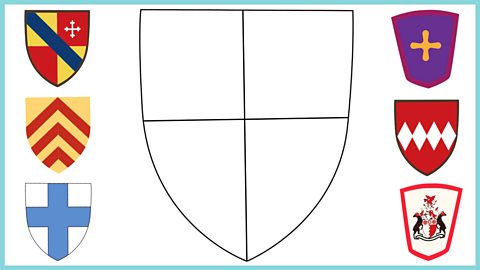
Harry: What are those pictures on the shields?
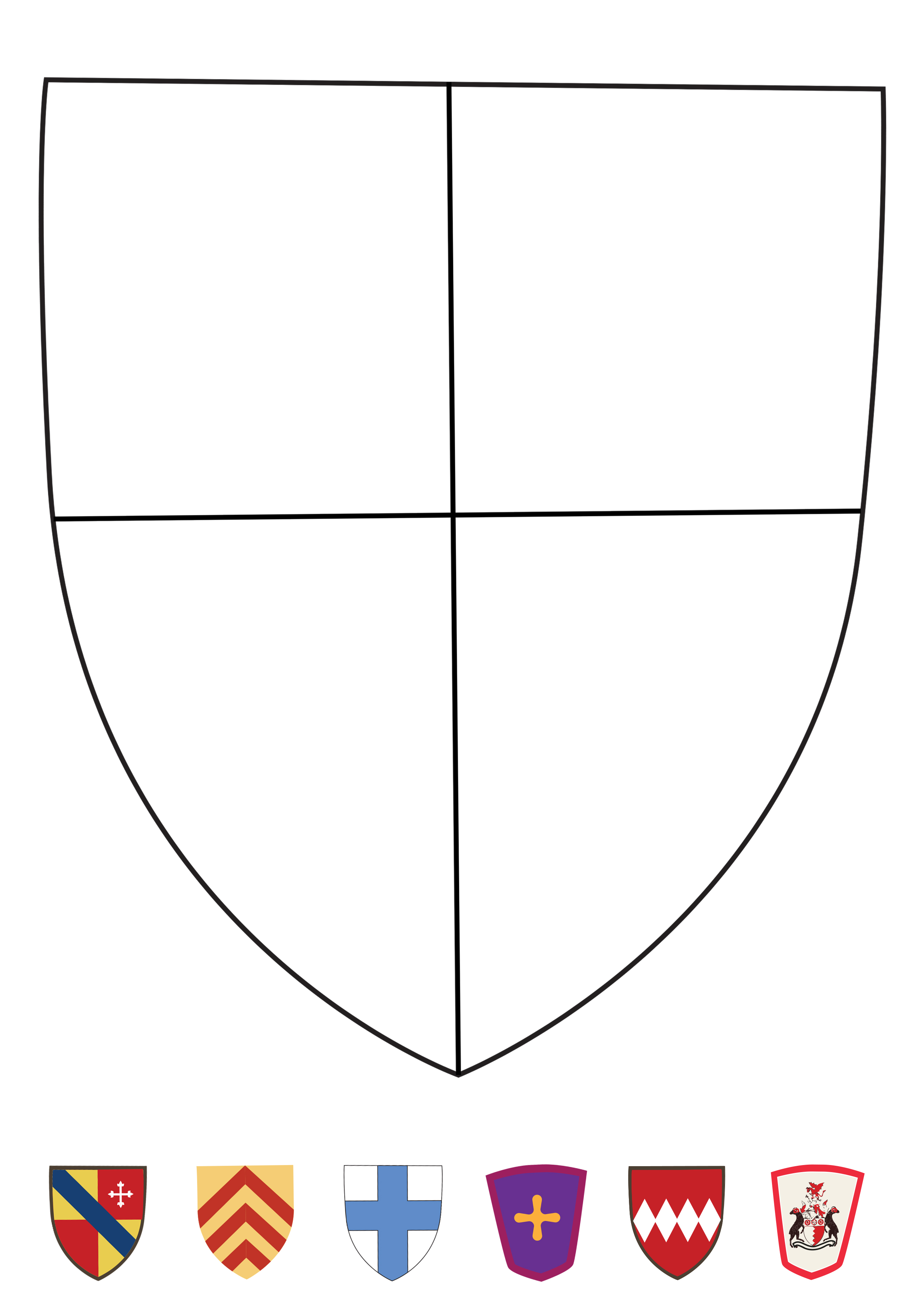
Sally: Each knight family had a coat of arms: a special picture that told a story about their family and the place they came from. Everything in the coat of arms is like a little story and means something special.
Fatima: That armour looks heavy.
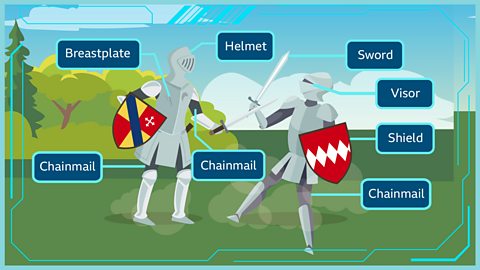
Sally: Yes, the armour was very heavy and very important, as it helped protect the knights from swords and arrows. It was made of two layers: chainmail - which is armour made of lots of metal hoops linked together - was often placed in areas that needed to move easily. Over the chain mail they had more armour made of sheets of metal to protect the really important places, like a helmet to protect their heads and a breastplate to protect their chest.
Harry: Wow. It must have been tricky to get dressed.
Sally: Yes, it was and they would need lots of help.
Fatima: If a knight fell over on the battlefield it must have been very hard to get up again!
Harry: Did they always wear armour?
Sally: No, not every day.
Fatima: Was armour expensive?
Sally: Oh yes! In today's money it cost up to £100,000!
Fatima & Harry: Wow!
Harry: What are they doing?
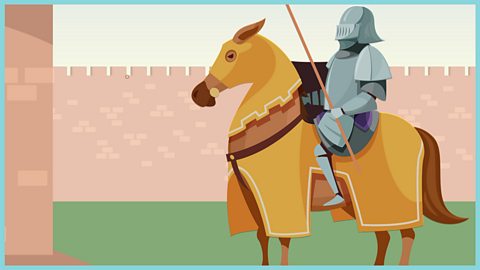
Sally: This is called jousting. Two knights use a wooden pole, called a lance, to try to knock the other off their horse. It was originally used to practise for battle, but then became a kind of sport.
Fatima: Were there any female knights?
Sally: Not knights, which was a male role. But there were very powerful women, who led armies and controlled battles.
Fatima: Wow, thank you. That was so interesting!
Sally: You're very welcome. There's so much more to find out about. There are hundreds of years of stories about knights and castles. Many castles changed over the years and have so many stories about the things that happened there. And each knight has their own story to tell - who they were, the castles they lived in and the many exciting adventures they had!
Fatima & Harry: Thank you!
The Real Life of a Knight
In this animation Fatima and Harry learn some of the ways in which life in medieval times is different from today.
Sally tells them about how society was organised - a very basic explanation of the 'feudal system' - and some of the ways that the life of a real knight was different to what we read in stories. They learn about armour (hugely expensive) and coats of arms (each picture tells a story).
The video can be used to help pupils understand some basic elements of chronology (ie things were different in the past) and can form a good base for the curriculum objective of studying ‘events beyond living memory’.
Further resources
Teacher's Notes. document
Download / print the Notes including illustrations, photos and worksheets (pdf)
A knight's place in medieval society. image
Click to display the image full-size
Design your own coat of arms. document
Click to display the image full-size
Two knights with labels. image
Click to display the image full-size
Label a knight on horseback. image
Click to display the image full-size
Teacher's Notes
This video is a good initial stimulus for an introduction to the way society is structured - who has power?
Before the video
The class could explore what they already know about knights - this would be helped by showing some images or even props such as costumes.
The teacher could prompt questions, such as where they may have seen knights (books, cartoons, films etc).
It would also be a good idea to ask what they know about kings and queens? What were they like in the past? What are the similarities and differences between a monarch in the past and monarch today?
During the video
The teacher could stop at various points, asking questions about what is the same and what is different between the Medievalperiod and today.
To make this clearer, the teacher could use two overlapping hoops (positioned as a Venn diagram) to capture a bank ofpupil reflections.
Pupils could also be asked to check if what they originally thought turned out to be true.
For example, are knights what we expected? Is the king or queen really powerful?
After the video and beyond
English (Composition) - imagine you are a knight for a day… What is life like? Make up a story about a knight and a castle!**Pupils could work in groups to come up with a story about what it is like to be a knight and then the teacher could use this as a stimulus to get the pupils to compose some writing.
This would be enhanced if the teacher could do some examples of oral storytelling first to set expectations and give examples which would make the pupils feel more confident.
Art - the video introduces ‘heraldry’ - you may use this to link to the art curriculum objective of ‘using a range of materials creatively to design and make products…using colour, pattern, texture, line, shape, form and space’.
Pupils could make a shield and coat of arms to represent them and their family.
This film is relevant for teaching History at KS1 in England, Wales and Northern Ireland and 1st Level in Scotland.
More from this series
The Legend of King Arthur. video
Fatima and Harry learn the difference between fact and fiction - hence the difference between history and myth.
William the Conqueror. video
Fatima and Harry learn about William the Conqueror’s invasion of England and the Battle of Hastings.
The Tower of London. video
Fatima and Harry explore one of the most famous castles in the UK: the Tower of London.