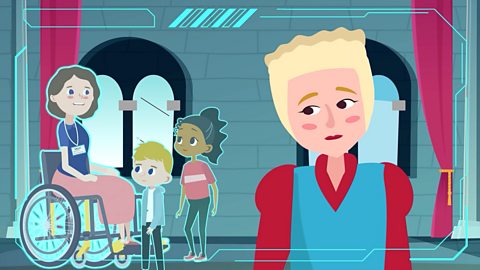
Queen Elizabeth I is our guide to the Tower of London, built by William the Conqueror.
Fatima: We'd like to find out about the Tower of London. Can you tell us more?
Sally: Absolutely!
Harry: Why did William the Conqueror build it and what did he use it for?
Sally: Good questions! Let's go and meet someone who knows all about the tower. Queen Elizabeth I.
Fatima: Queen Victoria, 1819 to 1901…
Harry: The Great Fire of London in 1666…
Fatima: Here we are! Queen Elizabeth I, born 1533, died 1603. Wow! She looks tough!
Sally: She was a very powerful ruler and not to be messed with. Let's put our virtual reality headsets on and go talk to her.
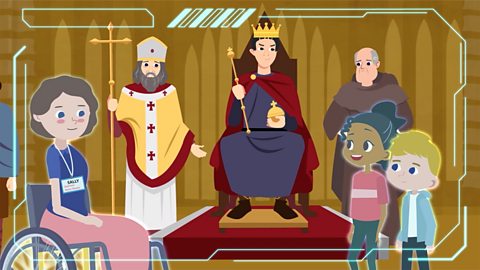
Queen Elizabeth I: Greetings subjects!
Harry: Hello.
Queen Elizabeth I: You must call me 'Your Royal Highness'.
Sally: Hang on, let me pause it. Okay, so when talking to a king or queen, you have to use special words and be extra polite. Queen Elizabeth was very powerful and it was an honour to speak to her. So people treated her with extra special care.
Fatima: Okay, let's try again. Greetings, Your Royal Highness.
Queen Elizabeth I: Greetings, loyal subjects.
Sally: Your Highness, could you tell us about the Tower of London?
Queen Elizabeth I: Yes, indeed I can. I was a prisoner there, you know.
Harry: Wow! Really? How did you escape?
Queen Elizabeth I: Let's go and find out. Ready?
Fatima & Harry: Ready.
Queen Elizabeth I: William the Conqueror started building the Tower of London in 1078, after he defeated King Harold at the Battle of Hastings. It took many years to build even the first part of the castle, which was very small compared to how big it is today.
Fatima: What was it used for?
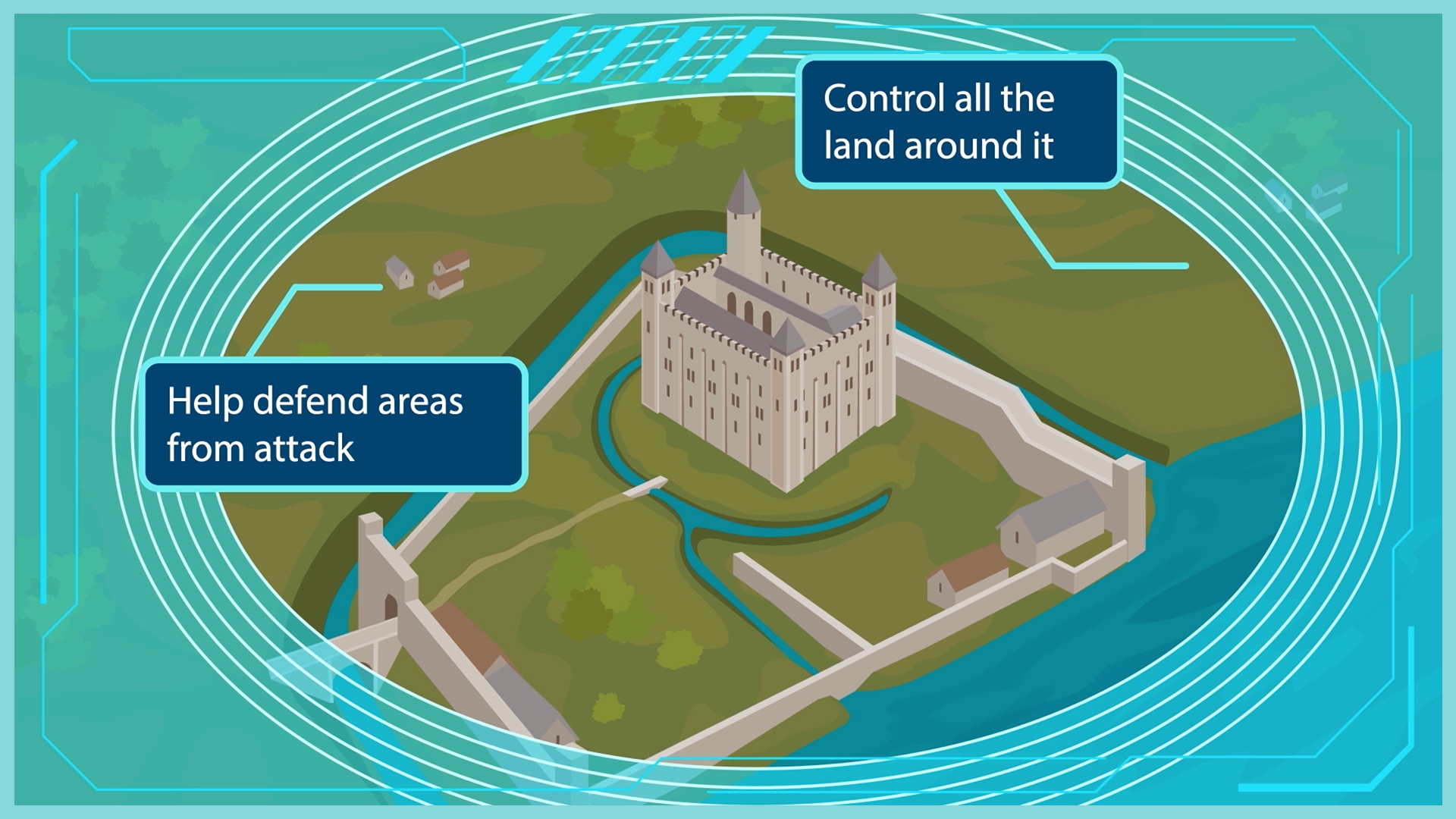
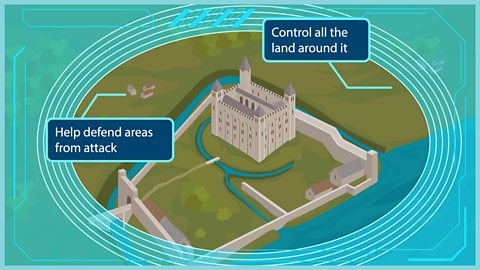
Queen Elizabeth I: Castles were used for lots of things. The most important use was to help defend areas from attack. Having a castle in an area meant you could control all the land around it. That's why William built a castle there to defend London.
Harry: Did Castles ever get attacked?
Queen Elizabeth I: Yes, they did and sometimes they were destroyed, but never The Tower of London. Castles would be built with thick walls and often surrounded by water, which is called a moat, to stop enemies from being able to get inside. The walls would be built so arrows and other weapons could be used to stop soldiers. They were very hard to attack.
Fatima: What else were castles used for?
Queen Elizabeth I: Castles were also used to store important things like gold and jewels and they were also used to hold prisoners.
Harry: So when were you a prisoner in the Tower?
Queen Elizabeth I: Around 500 years after it was built, I was put in prison here by my sister Mary, who was queen before me. If I'm being honest, I was very scared about what would happen to me.
Harry: Wow. And then you escaped?
Queen Elizabeth I: Well, actually, I was set free. My sister, the Queen, was afraid that if something happened to me and I died in the tower, she would look bad. So she let me go.
Fatima: So what does the tower look like today?
Queen Elizabeth I: Well, it's a lot bigger. Over the years, lots has been added to it. It's now home to the royal family's most valuable crowns and jewels and there are lots of big birds called ravens living there. There is a story that if the ravens leave, the Tower of London will fall down. It's a fascinating place and visitors come from all over the world to see it. Anyway, I have to go. My kingdom needs me.
Fatima & Harry: Bye.
Queen Elizabeth I: 'Good bye, Your Royal Highness', you mean.
Harry: Good bye, Your Royal Highness.
Queen Elizabeth I: Better.
Fatima: Wow, cool to meet a Queen.
Harry: What an amazing person.
Sally: So as we have seen, castles have lots of uses. They're so interesting and each one has its own different stories. Why it was built, who lived there, and many other interesting things.
The Tower of London
This episode explores one of the most famous castles in the UK - the Tower of London.
The Tower was one of the first castles to be built by William, Duke of Normandy, following his successful conquest of England. Our guide to the Tower and the many functions it has served over the centuries is Queen Elizabeth I, who was imprisoned in the Tower by her sister, Mary I.
The animation can be used to help pupils understand some aspects of chronology - as they walk down the corridor highlighting some ‘significant individuals in the past’ and it references the Tower being built ‘around 1000 years’ ago.
This can be used as a starting point to explore the life of Queen Elizabeth I (as referenced in the National Curriculum) and forpupils based in the South East it would also be a good base to explore the ‘history of their local area’.
Further resources
Teacher's Notes. document
Download / print the Notes including illustrations, photos and worksheets (pdf)
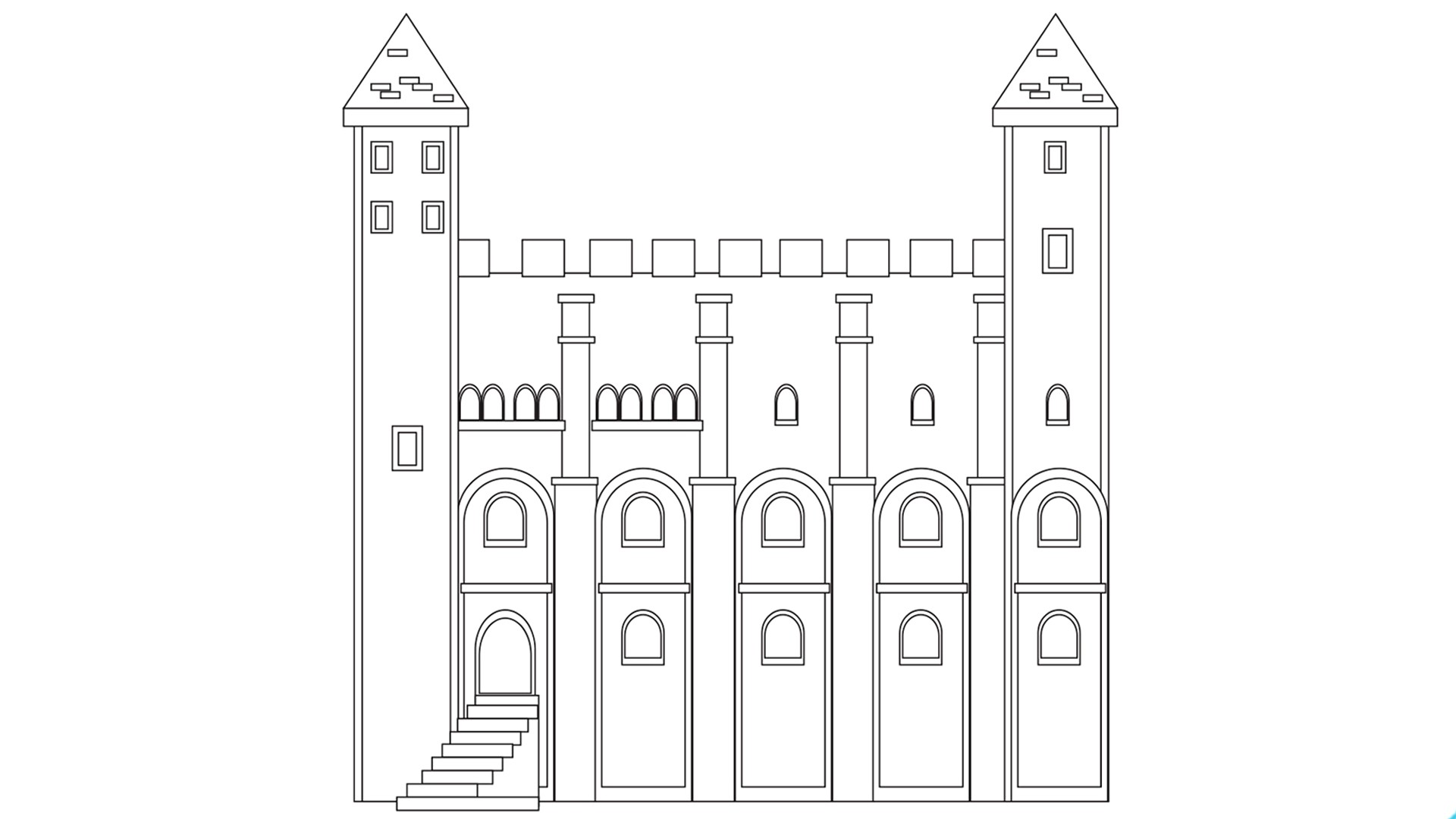
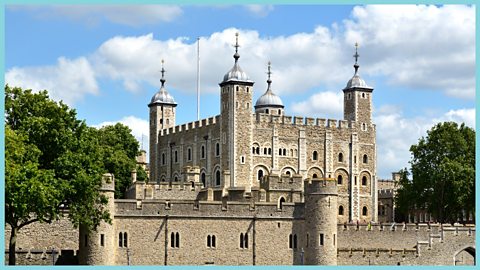
The Tower of London. image
Click to display the image full-size
The Tower of London showing location of the moat and River Thames. image
Click to display the image full-size
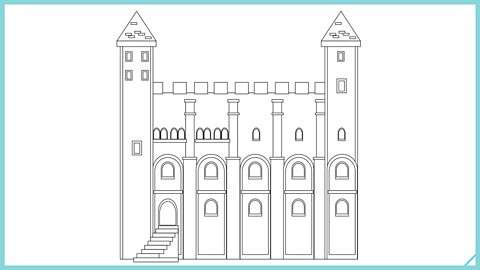
Teacher's Notes
Before the video
The teacher could show an image of the Tower of London to explore what pupils already know (if anything) about it.
They could also try to use the photo to interpret what the building was used for.
During the video
The teacher could pause and ask pupils questions.
The corridor scene could also be used as a way to draw out chronology and explore some of the ‘significant individualsand events from the past’ as they are mentioned.
After the video
After the video the teacher could use it as a stimulus for a discussion (links to the English spoken language objective: 'participate in discussions…debates').
The teacher could ask basic comprehension questions - such as, Why was it built? What is it used for?
The teacher could make a statement - eg ‘The Tower of London was not a safe place’, as sometimes statements elicit a more passionate response from the younger pupils. Then ask the pupils if they agree / disagree / somewhat agree with the statement - and why - before moving into a more conceptual discussion around what important ‘jewels’ the pupils would keep in the Tower of London.
Pupils could be asked to draw three important things they would want to keep protected. To try to draw out the concept of chronology the children could pretend they were living 1000 years ago. What would they value then?*
What is similar, what is different compared with today? This could be represented by two hoops laid out as a Venn diagram to capture pupil reflections.
Curriculum Notes
This film is relevant for teaching History at KS1 in England, Wales and Northern Ireland and 1st Level in Scotland.
More from this series
William the Conqueror. video
Fatima and Harry learn about William the Conqueror’s invasion of England and the Battle of Hastings.
The Features of a Castle. video
Fatima and Harry hear about the key features of a castle - such as thick walls, towers, drawbridges and moats.
Famous Sieges. video
Fatima and Harry learn how castles defended against attack by hearing the stories of two famous sieges.