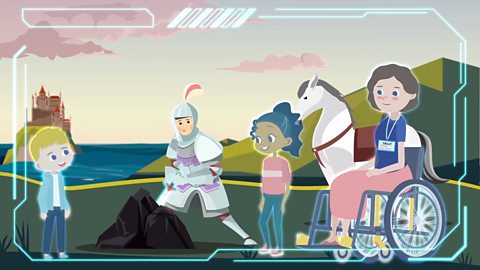
Fatima and Harry find out about the main features of a castle - including the moat, drawbridge, battlements, thick walls, towers, etc.
Fatima: So I've seen lots of castles in books and on the Internet, but it will be great to know a bit more about what makes a castle, a castle.
Harry: Yes, all the castles are different, but they all seem to have some of the same things, thick walls, for example. What kinds of things does a castle have to have to be called a castle?
Sally: It's a good question. Castles are all different and how they were built changed over time. At first they were built of wood, but that burnt too easily. So then they were made of stone. There were lots of changes over the years. Let's put our virtual reality headsets on and go and take a look at two castles to find out more.
Fatima: Sounds great!
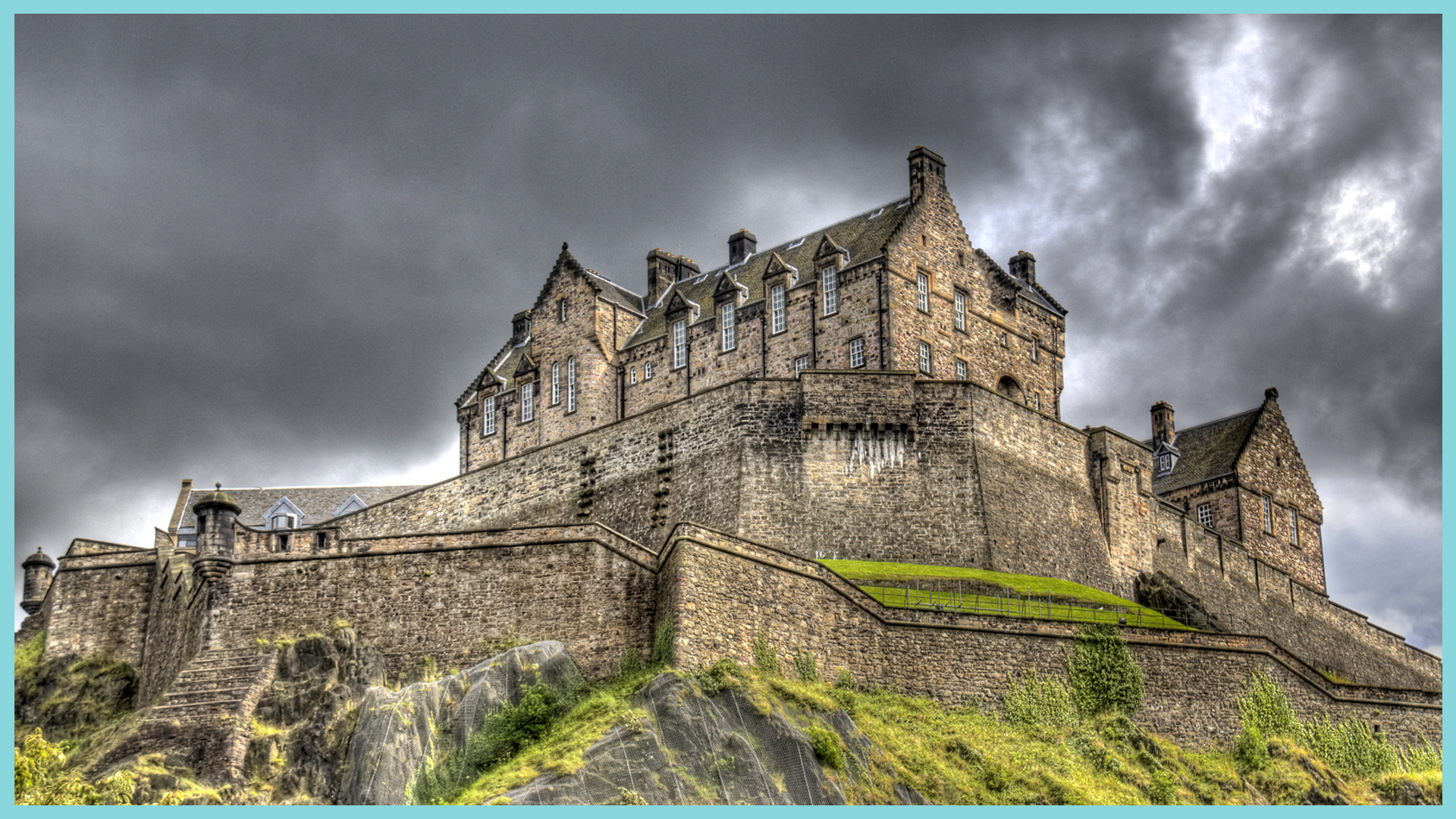
Harry: Wow, that's a big castle. Where are we?
Sally: Edinburgh in Scotland.
Harry: Wow, it's really massive.
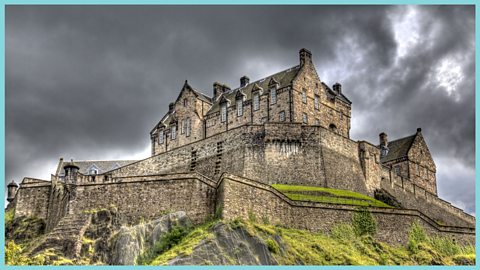
Sally: Edinburgh Castle is a very special castle. It is thought that Edinburgh Castle has been attacked more times than any other castle in Britain.
Fatima: Wow. Is that why the walls are so thick?
Harry: And why they built it at the top of a hill?
Sally: Yes, that's right.
Fatima: If I wanted to build a castle, what would be the most important things to think about?
Sally: Okay. Well how about we start from the outside and work our way inwards? We can look at all the important things as we go.
Harry: Let's do it.
Sally: There was something that Harry said about where the castle was positioned. Do you remember?
Harry: Yes, I said at the top of a hill.
Sally: That's right. The first thing to think about when looking at a castle is where it is built. Normally, castles are built somewhere that is hard to attack, but close to things that you want to defend. So often they are built at the top of a hill.
Harry: Is that because it tires the soldiers out, as they have to walk up a hill to attack it?
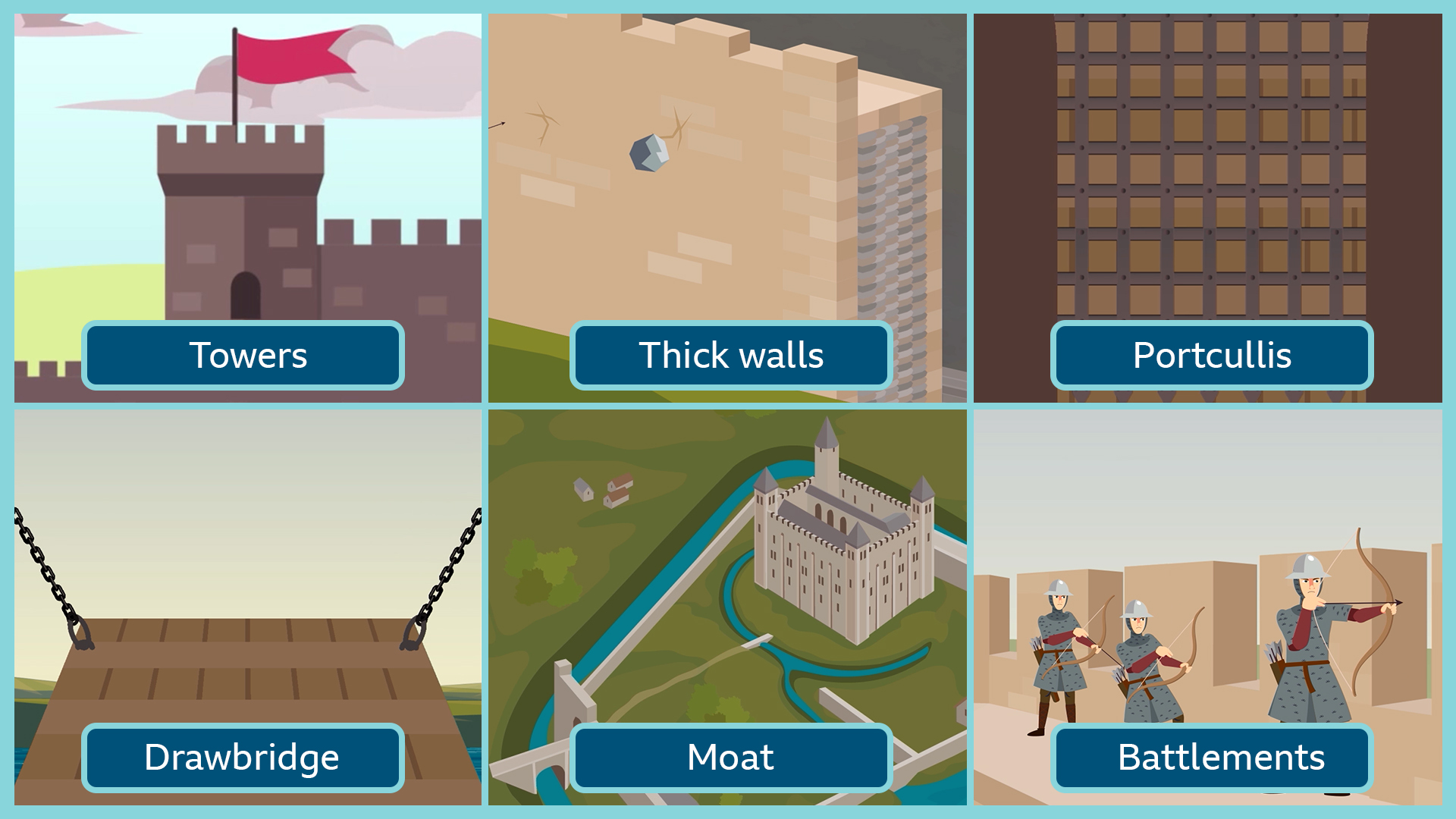
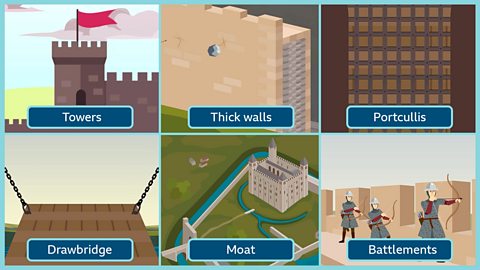
Sally: Yes and so that the defenders can see enemies coming from far away and fire arrows and other weapons at them. The next thing to look at with Edinburgh Castle is the walls. Castles were built with very thick walls to make it difficult for weapons to knock them down. As the years passed, the weapons got more powerful and the walls got thicker.
Fatima: And why did the walls of those funny wiggly bits on them?
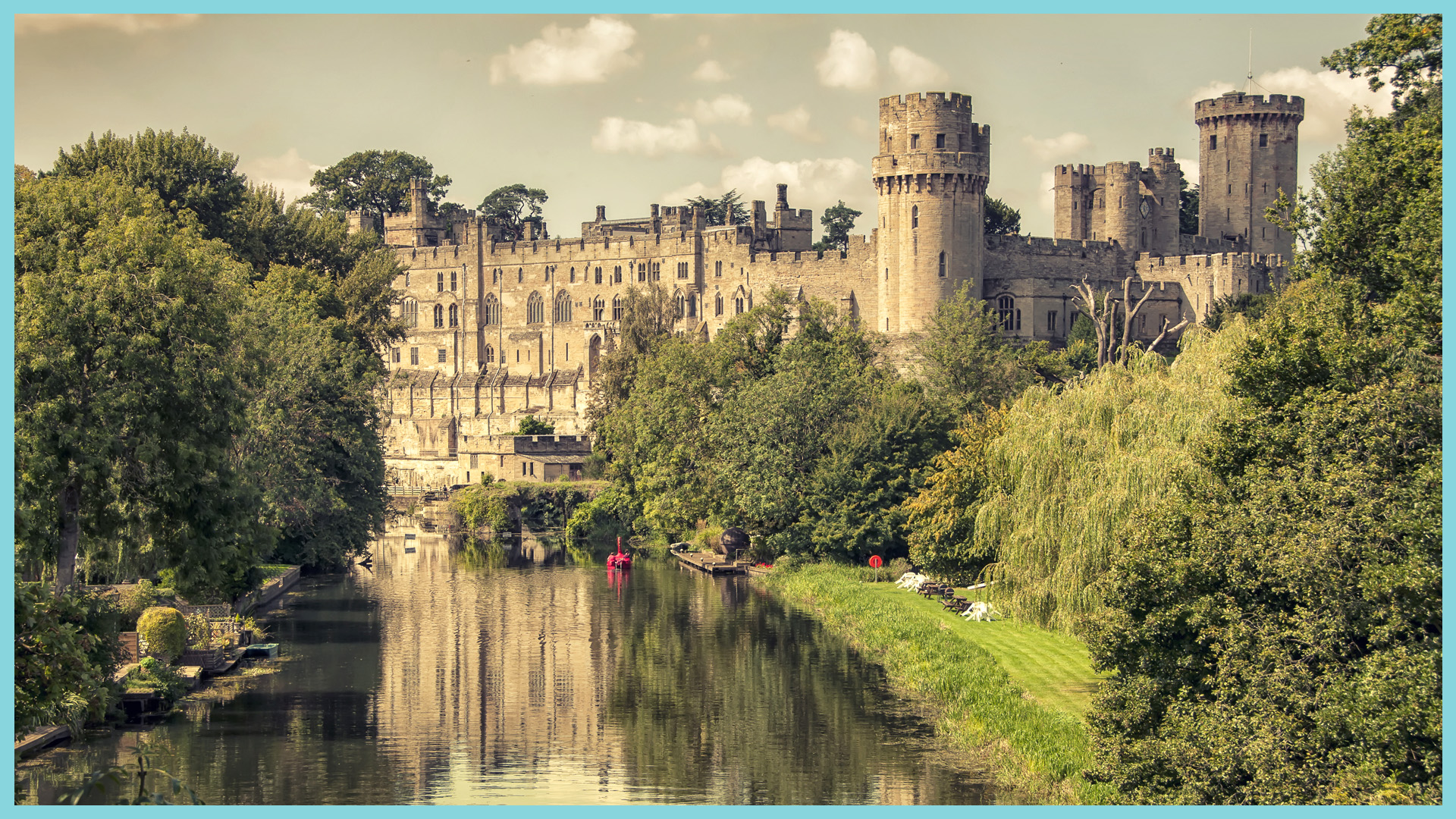
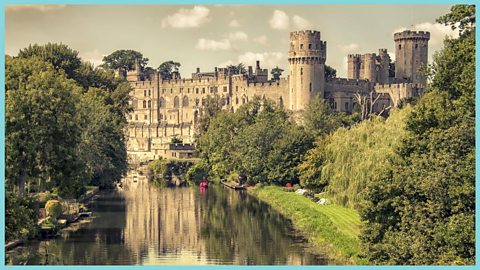
Sally: Those are called battlements and they are there to help protect the soldiers defending the castle. The walls also have towers to help the defenders fire their weapons. Warwick Castle in England has really big towers, which were a great place to defend the castle from.
Fatima: So if the castles were surrounded by walls, how do people get in and out?
Sally: Good question. Each castle had gates, often with a metal barrier called a portcullis and with doors made of a very strong wood. And sometimes they had a moat, which is a ditch filled with water to stop people from being able to get into the castle. You could cross the moat by using a special bridge, called a drawbridge.
Fatima: It looks really big. How many people lived there?
Sally: Lots of people and they had a special place to eat and relax together.
Harry: So how did the people eat. if they were surrounded by an enemy army
Sally: Good question. Castles would often be near a river or have a well, so that they didn't run out of water and they would have cows for milk and chickens for eggs and other food in the castle, like grain to make bread. They kept as much as they could fit in. But food was one of the main ways you could defeat an army in a castle. If those inside ran out of food for too long, they would be so hungry they would have to surrender. So attackers would surround the castle and then not let anything or anyone go in or out. That's called a siege.
Harry: Wow! Thanks for all the ideas.
Fatima: Yeah, I'm going to go and design a castle with tall walls, a moat, a drawbridge, gates, a tower and a big hall for everyone to eat in. Maybe I can make a model of it.
Sally: Good luck.
The Features of a Castle
In this episode Sally shows Fatima and Harry the main features of a castle. It is a stimulus for a range of activities, in particular for showing changes beyond living memory ('What was life like for people who lived in castles?')
During the animation the characters explore a number of castles - including Warwick Castle and Edinburgh Castle - which is useful for schools in these regions wanting to teach ‘significant places in their locality’.
The castle features that Sally shows Fatima and Harry include:
- the significance of location (eg on top of a hill)
- external features - such as towers battlements, thick walls, a moat, a drawbridge, etc
- internal features - such as a well, large stores to guard against siege, a hall for everyone to socialise.
Further resources
Teacher's Notes. document
Download / print the Notes including illustrations, photos and worksheets (pdf)
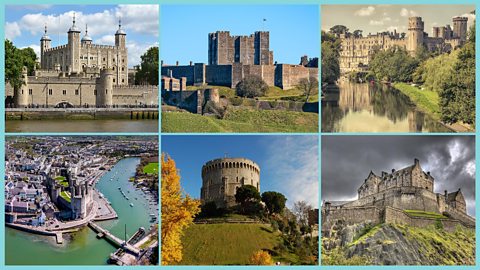
Edinburgh Castle. image
Click to display the image full-size
Warwick Castle. image
Click to display the image full-size
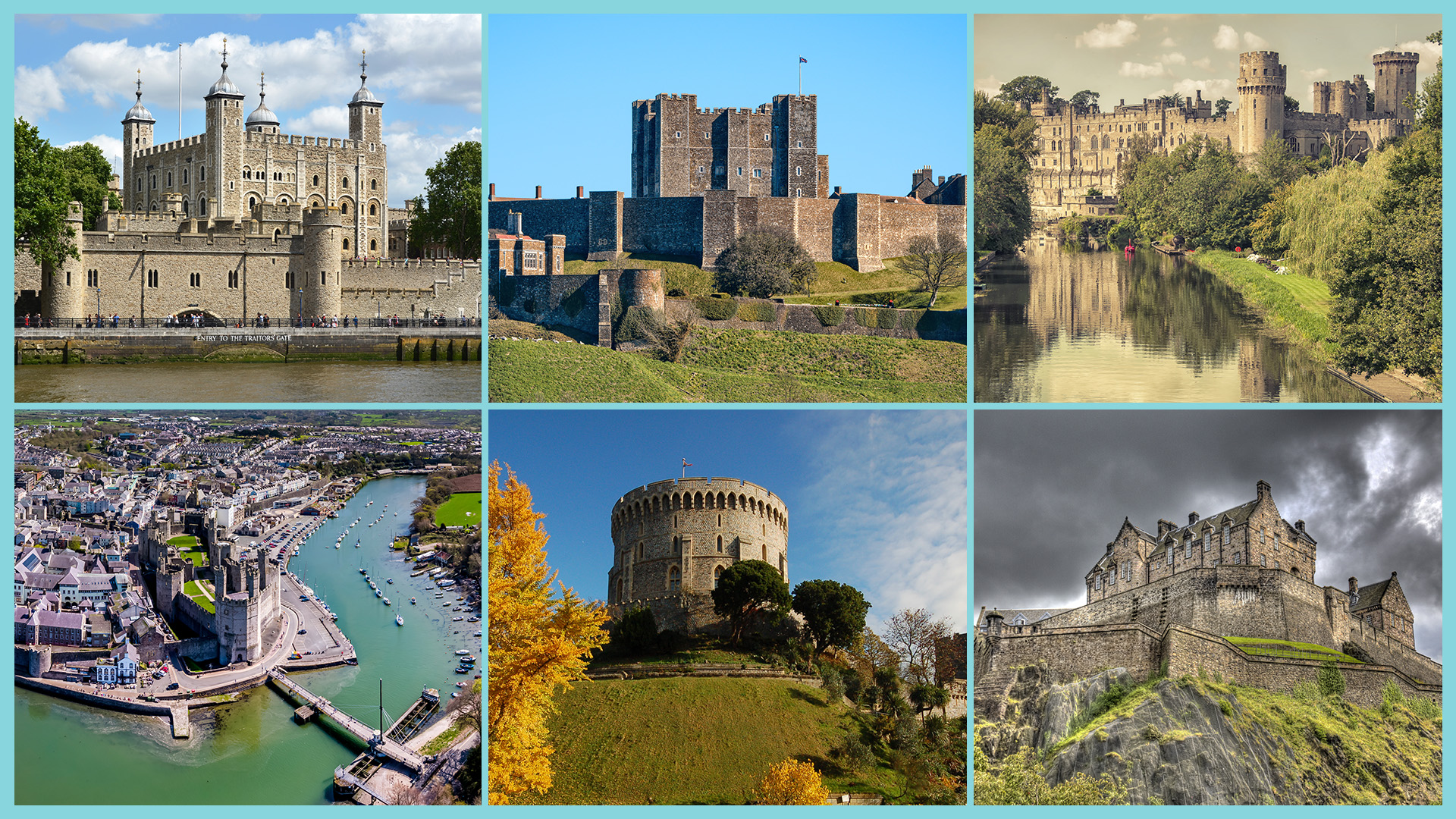
What is the same about these castles? What is different? image
Click to display the image full-size
Some features of a castle. image
Click to display the image full-size
Teacher's Notes
Before the video
The pupils could be asked to draw what they think a castle looks like and present it to the class.
This will help develop pupils using art to express their ideas and thinking as well as develop the spoken language skill of presenting.
The teacher could ask questions about castles such as ‘what are they made of? ‘What are castles for?’
During the video
The teacher can stop and ask pupils to reflect if what they thought castles were like is true.
It might also be good to check for clarifying questions as there is a lot of new vocabulary which may need explaining.
After the video
This video lends itself well for pupils designing, and / or building, their own castle and then presenting it.
This will meet objectives in the NC for Design Technology (eg building structures, exploring how they can be made stronger, stiffer and more stable and using a range of tools and and materials).
When the pupil presents their castle, this would also hit the spoken language objective of using spoken word to present.
This would be a great opportunity for the children to develop their spoken language skills by taking part in a discussion around which is the most important feature of a castle and why.
Each group could be given one feature of a castle and asked to explain to the rest of the class why that feature is the most important feature of a castle.
At the end of the discussion the class could take a vote.
There are also elements of the physical geography curriculum which could be utilised through using this video as a stimulus.
The video includes the need to build castles on hills or near a water supply. This could be used as a way into pupils being able to understand some of the physical features highlighted in the curriculum (beach, cliff, coast, forest, hill, mountain, sea, ocean, river,soil, valley, vegetation).
This could be combined with the above activity of building a castle making it cross curricular between history, geography and DT.
This film is relevant for teaching History at KS1 in England, Wales and Northern Ireland and 1st Level in Scotland.
More from this series
The Tower of London. video
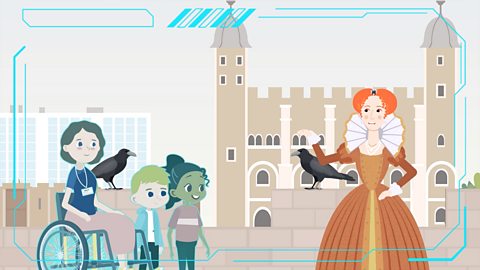
Fatima and Harry explore one of the most famous castles in the UK: the Tower of London.
Famous Sieges. video
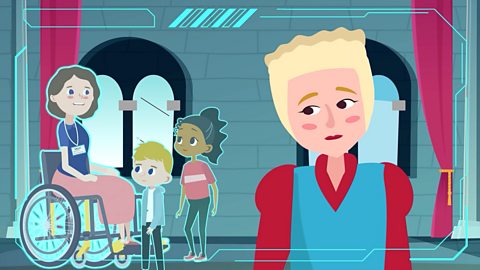
Fatima and Harry learn how castles defended against attack by hearing the stories of two famous sieges.
The Legend of King Arthur. video
Fatima and Harry learn the difference between fact and fiction - hence the difference between history and myth.