GROANS
UNKNOWN MALE #1:I'm seriously full, guys. I can't breathe.
UNKNOWN FEMALE #1:Well I'm not surprised after what you had. I'd have been full after your starters.
UNKNOWN FEMALE #1:'You had one and one sixth of the vegetarian pizza, and three quarters of the pepperoni pizza. So how much did you have in total? This implies addition, so one and one sixth plus three quarters. With mixed number fractions, we need to calculate what this is as an improper fraction.
UNKNOWN FEMALE #1:'To do this, we multiply our whole number by the denominator, and add the numerator to the value. This will give us our numerator, and the denominator remains the same.
UNKNOWN FEMALE #1:'So in this case, one times six equals six, and six plus one equals seven. So we have seven sixths plus three quarters.
UNKNOWN FEMALE #1:'Now to add the fractions, we simply multiply diagonally both ways across the fractions, and multiply the bottom numbers together.
UNKNOWN FEMALE #1:'So if we multiply diagonally, six times three equals 18, and seven times four equals 28. As we're adding fractions, we add these two figures together.
UNKNOWN FEMALE #1:'If this was subtraction, the only difference would be that we would subtract the figures at this point.
UNKNOWN FEMALE #1:'So, 28 plus 18 equals 46. This will be our numerator. And multiplying across the bottom of the fractions, six times four equals 24. This will be our denominator.
UNKNOWN FEMALE #1:'So we end up with 46 over 24. We can simplify this down. So in its simplest terms, we are left with 23 over 12. So you had 23 twelfths of pizza in total.'
UNKNOWN FEMALE #2:I'm stuffed too. I don't even think I can get up.
UNKNOWN MALE #2:You barely ate anything.
UNKNOWN FEMALE #2:Well I'm glad I didn't order fries with my burger, otherwise it would be waste.
UNKNOWN MALE #3:But they tasted SO good! Two thirds of us had them with our burgers.
UNKNOWN MALE #2:And half of us had burgers.
UNKNOWN MALE #3:'So, how many people had fries then? I need to find two thirds of a half. And a fraction of the group means multiplication.
UNKNOWN MALE #3:'Here we multiply across the numerators and again for the denominators.
UNKNOWN MALE #3:'So two thirds multiplied by a half is two multiplied by one, which equals two, and three multiplied by two, which equals six.
UNKNOWN MALE #3:'So we have two sixths, or a third in its simplest terms. Which means one third of the group bought fries.'
UNKNOWN FEMALE #2:Well I only ate a quarter of my cheesecake, and there's plenty left if anybody wants to try it.
UNKNOWN FEMALE #1:If you're not going to finish it, I'll have one fifth.
UNKNOWN MALE #2:If there's enough, I'll have the same.
UNKNOWN FEMALE #2:'Will there be enough? To see if two fifths go into three quarters we have to use division.
UNKNOWN FEMALE #2:'However, as we can't divide fractions, we need to change the division into multiplication. We do this by flipping the second fraction upside around, so three quarters divided by two fifths becomes three quarters multiplied by five over two.
UNKNOWN FEMALE #2:'And three multiplied by five over four multiplied by two is equal to 15 over eight. And 15 divided by eight equals 1.875.
UNKNOWN FEMALE #2:'So two fifths goes into three quarters 1.875 times. As this is more than once, there is enough left for both of them to have one fifth each.'
UNKNWON FEMALE #1:Okay guys, so we need to split the bill. Anyone good at maths?
Video summary
A group of friends demonstrate how to add, subtract, multiply and divide fractions in order to share a meal.
When working out how much pizza and chips they have eaten, and how much cheesecake there is to share, they calculate how to cancel a fraction down to it's simplest terms, and convert mixed number fractions into top heavy fractions.
The clip covers the 4 rules of add/subtract multiply and divide with fractions, making it a good resource to either introduce or revise the topic.
Teacher Notes
The video can be used in the classroom to introduce or reinforce the basic rules of fractions, with learners organized in groups to investigate fractions in ratios, recipes etc.
A variety of fractions are used in the NHS, business, industry and so on.
Students can investigate and form questions based on the skills learnt in the video and beyond. Based on viewing the video, learners in groups to design questions and then approach other groups where they solve questions.
Students can further level the questions and assess their knowledge of fractions.
This clip is relevant for teaching Maths at KS4/GCSE level in England, Wales and Northern Ireland, and National 4/5 in Scotland.
Ratio and Proportion. video
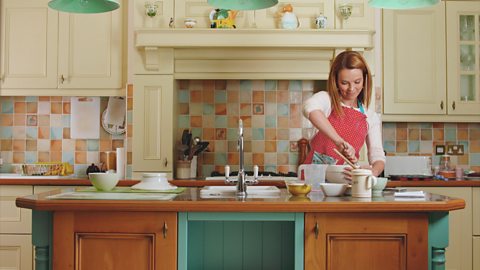
A cake company demonstrates how ratios and proportions are used to complete an order.
Percentages. video
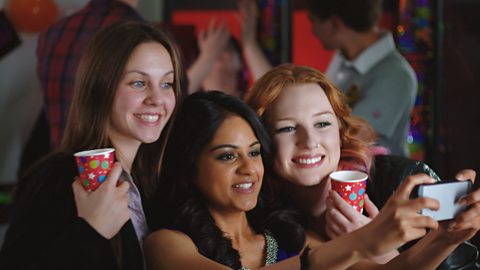
Clothes shopping and video statistics are used to explain percentages.
Algebra. video
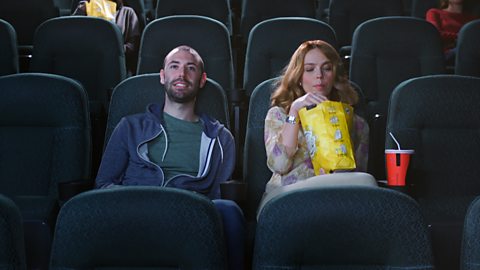
A mobile phone deal and a trip to the cinema are used to explain algebra.
Sequences. video
The purchasing of cupcakes is used to explain linear and quadratic sequences.
Pythagoras. video
Cleaning a window and installing a TV are used to explain the theory of Pythagoras.
Probability. video
Predicting the weather and choosing a chocolate are used to explain probability.

Trigonometry. video
A hiker trying to work out the height and distance he's walked uses trigonometry.

Geometry. video
A clothes designer trying to make an outfit uses geometry.
Finance. video
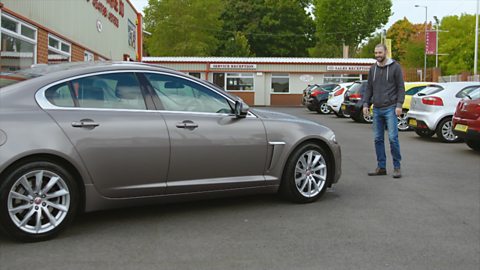
A man buying a car uses financial planning and investment to work out how much he'll pay.