DALJIT NAGRA:So I've written a few shopkeeper poems and I think the main reason for writing this is to kind of or write poems about shopkeepers-- My parents worked in factories.
DALJIT NAGRA:My dad worked I a concrete factory, where he made concrete blocks. My mum worked in a hospital laundry. Really difficult, tough jobs.
DALJIT NAGRA:So for them to save up and buy a shop-- We bought a shop in Sheffield, so we lived there for about 15 years, was a great achievement. OK?
DALJIT NAGRA:So for a lot of those migrants who haven't been educated, to have those businesses is probably as good as they can get. OK? So when I think of my parents,
DALJIT NAGRA:well it might be a stereotype but within that stereotype is a great story of success OK. So I want to acknowledge that in some of the poems.
DALJIT NAGRA:In this poem, it's kind of a love poem, a happy love poem, I've tried writing a few happy love poems. This one is about a shopkeeper who is-- He's working downstairs.
DALJIT NAGRA:He's recently married to his wife. I imagine she runs a kind of internet marriage company but his English isn't very good in the poem. OK? So he just wants to get up there, have some hanky panky. Spend some time with her.
DALJIT NAGRA:And in the final section I imagine they're behind the sweet counter so I want to establish that as the romantic heartland of my poem. You're always looking for interesting, unusual settings to make the centre ground for your writing.
DALJIT NAGRA:So that's gonna be there at the end behind the shop counter on that silver stool.
DALJIT NAGRA:So it's called Singh Song.
DALJIT NAGRA:"I run just one ov my daddy's shops from 9 o'clock to 9 o'clock and he vunt me not to hav a break but ven nobody in, I do di lock -
DALJIT NAGRA:cos up di stairsis my newly bride vee share in chapati vee share in di the chutney after vee hav made luv like vee rowing through Putney.
DALJIT NAGRA:Ven I return vid my pinny untied di shoppers always point and cry.
DALJIT NAGRA:"Hey Singh, ver yoo bin? Yor lemons are limes. Yor bananas are plantain. This dirty little floor need a little bit of mop in di worst Indian shop on di whole Indian road.
DALJIT NAGRA:Above my head, high heel tap di ground as my vife on di web is playing vid di mouse ven she netting two cat on her Sikh lover site she book dem for di meat at di cheese ov her price - my bride
DALJIT NAGRA:she effing at my mum in all di colours of Punjabi den stumble like a drunk making fun at my daddy my bride tiny eyes ov a gun and di tummy ov a teddy my bride she hav a red crew cut and she wear a Tartan sari a donkey jacket and some pumps
DALJIT NAGRA:on di squeak ov di girls dat are pinching my sweeties - Ven I return from di tickle ov my bride di shoppers always point and cry:
DALJIT NAGRA:Hey Singh, ver yoo bin? Di milk is out ov date and di bread is alvays stale, di tings yoo hav on offer yoo have never got in stock in di worst Indian shop on di whole Indian road -
DALJIT NAGRA:Late in di midnight hour ven yoo shoppers are wrap up quiet ven di precinct is concrete-cool vee cum down whispering stairs and sit on my silver stool,
DALJIT NAGRA:from behind di chocolate bars vee stare past di half-price window signs at di beaches ov di UK in di brightey moon -
DALJIT NAGRA:from di stool each night she say, How much do yoo charge for dat moon baby?
DALJIT NAGRA:From di stool each night I say, Is half di cost ov yoo baby, from di stool each night she say, How much does dat come to baby? From di stool each night I say, Is priceless baby - "
DALJIT NAGRA:OK. Thank you, thank you very much.
Poet Daljit Nagra performs and describes his poem Singh Song!.
He describes how it contrasts a hard work ethic and drive for independence and achievement in the British South Asian community, with old fashioned romanticism and a desire to happily while away the days.
This is from the series: Contains Strong Language
Teacher review is recommended
Teacher Notes
Pupils could compare how Daljit Nagra describes the poem before reading it, with the final work.
Do they think the poem effectively conveys his intentions? How does the use of language and verse affect the audience?
Does hearing the poem performed aloud change it's meaning in comparison to reading it from the page?
Curriculum Notes
This clip will be relevant for teaching English Literature.
This topic appears in OCR, Edexcel, AQA, WJEC KS4/GCSE in England and Wales, CCEA GCSE in Northern Ireland and SQA National 4/5 in Scotland.
More from the series: Contains Strong Language
Daljit Nagra performs his poem X. video
Daljit Nagra performs his short poem X, and gives insight into the background of the poem.
Daljit Nagra performs In a White Town. video
Daljit Nagra performs his poem In a White Town, and gives insight into the background of the poem.
Daljit Nagra performs Darling and Me. video
Daljit Nagra performs his poem Darling and Me, and gives insight into the background of the poem
Imtiaz Dharker performs The Trick. video
Imtiaz Dharker performs and describes her poem The Trick.
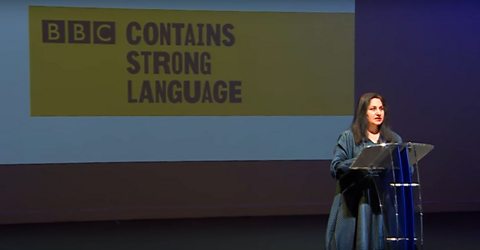
Imtiaz Dharker performs The Right Word. video
Imtiaz Dharker performs and describes her poem The Right Word.
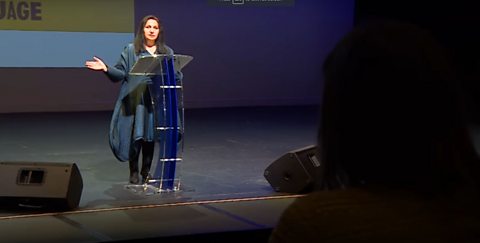
Imtiaz Dharker performs poem Honour Killing. video
Imtiaz Dharker performs and describes her poem Honour Killing.
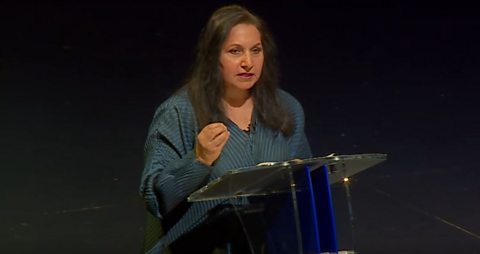
Imtiaz Dharker performs Blessing. video
Imtiaz Dharker performs and describes her poem Blessing.
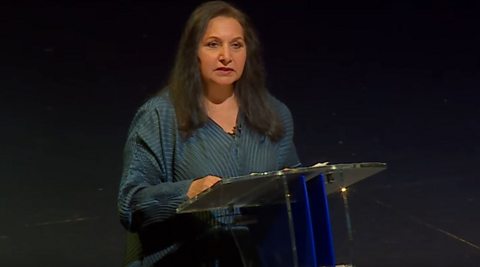
Imtiaz Dharker performs This Room. video
Imtiaz Dharker performs and describes her poem This Room.
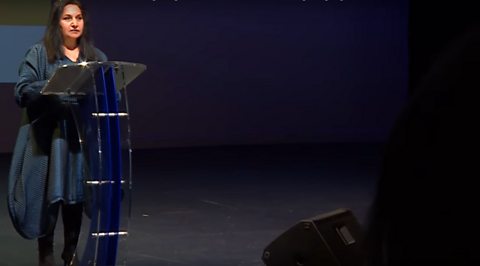
Imtiaz Dharker performs This Tide of Humber. video
Imtiaz Dharker performs and describes her poem This Tide of Humber.
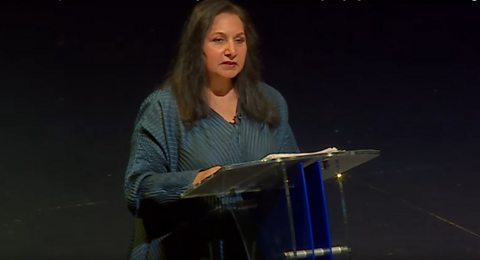
Imtiaz Dharker performs her poem Tissue. video
Imtiaz Dharker performs and describes her poem Tissue.
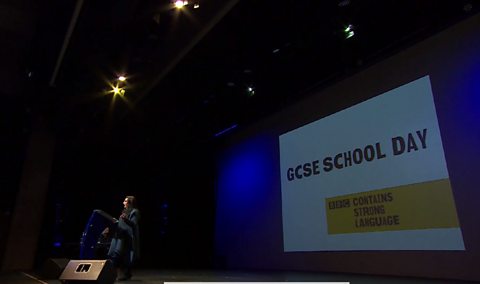
Imtiaz Dharker performs her poem Speech Balloon. video
Imtiaz Dharker performs and describes her poem Speech Balloon.