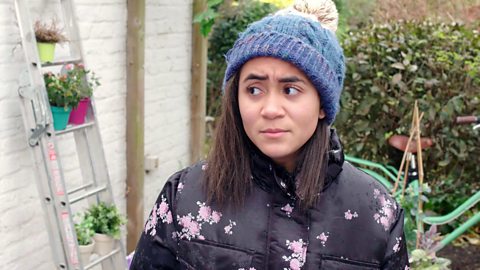
Ash: How can they do that?!
Ivy: Ahah! So there is something you don't know.
Ash: I can't believe they're tearing apart the forest!
Ivy: Well they have to clear some space to build these new houses!
Ash: That's terrible. What about the wildlife who live there now?
Ivy: Oh I'm sure they'll find somewhere else to live.
Ash: Plants and animals can't just find new homes that easily! They're not prepared for such sudden change.
Ivy: Well they're used to change, the seasons make the environment different throughout the year and they've adapted to deal with that!
Ash: But this change is being made by humans, and it happens way too quickly for the wildlife to respond. Their homes have been destroyed, their food has been destroyed…
Ivy: So what will happen to them all?
Ash: Well, they'll die.
Ivy: Stop! Stop what you're doing!
Ivy: Oh no no no. I'm so sorry, forgive us.
Ash: We are losing more and more of our woodland to new homes, roads and motorways, new shops and factories and rubbish tips. Soon we might not have any forest left at all!
Ash: When woodland habitats are destroyed, that is called 'deforestation'. It's not just wildlife that is affected by deforestation, it affects humans too.
Ivy: But I don't live in a tree-house!
Ash: Trees and other plants play an important part in sustaining the ecosystem, which means the environment, and all the living things in it. Leaves are really important because they help humans to breathe. When we breathe our bodies need the oxygen from the air. We breathe out carbon dioxide. Trees and other plants are so clever because they take in the carbon dioxide and release oxygen. And then the cycle starts all over again. If we didn't have plants there wouldn't be enough oxygen for us to breathe. And that's why we have to take care of our forests.
Video summary
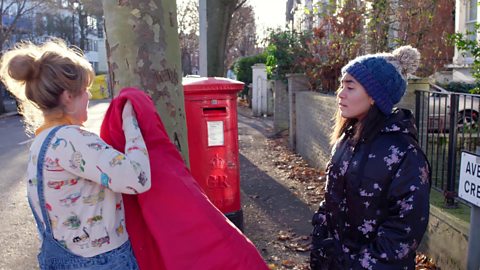
An overview of the dangers deforestation poses to both plants and animals.
This film highlights the impact habitat loss has on animals, how it causes their numbers to decrease, even to the point of extinction.
The impact it has on humans is also discussed. In particular, how the lack of trees to convert carbon dioxide into oxygen leads to increased air pollution.
This is from the series: Ivy's Plant Shop
Teacher Notes
You could ask your pupils to look at habitats and food chains and what could happen if deforestation continues.
They could look at what the term 'extinct' means and investigate what has happened to other species of animals that have become extinct.
They could then make posters, warning people about the dangers of destroying animal’s natural habitats.
This film will be relevant for teaching Science/Biology at Key Stage 1 and Key Stage 2 in England, Wales and Early and 1st and 2nd Level in Scotland.
Also at Foundation, KS1 and KS2 in Northern Ireland.
What do plants need to survive? video
A film looking at what plants need in order to survive.
The anatomy of the flower. video
A film looking at the various parts and functions of flowers.
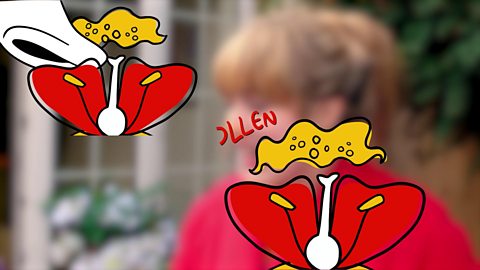
Parts of a plant. video
A film looking at the various parts of a plant and their functions.
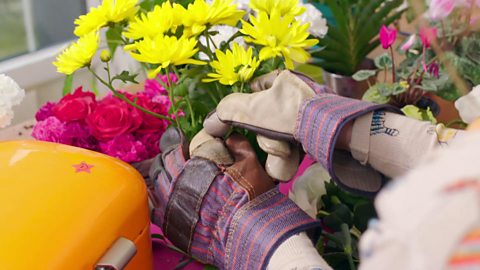
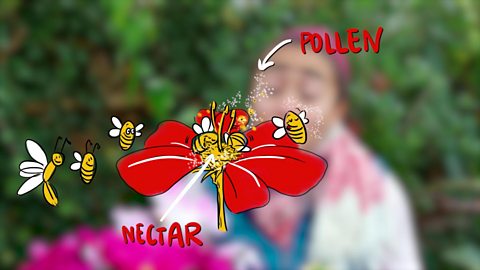
What is pollination and how does it work? video
A film looking at what pollination is and how it works.
Classifying and grouping plants. video
A film looking at different ways of classifying and grouping plants.
Grouping living things. video
A film looking at different ways of classifying and grouping living things.
How does water get from the roots to the leaves of a plant? video
A film looking at how water travels through a plant from the roots to the leaves.
Are plants the same all year round? video
A film looking at how plants adapt in order to deal with the different seasons of the year.
How can we protect plants and nature? video
A film looking at the ways we can all protect plants and nature.