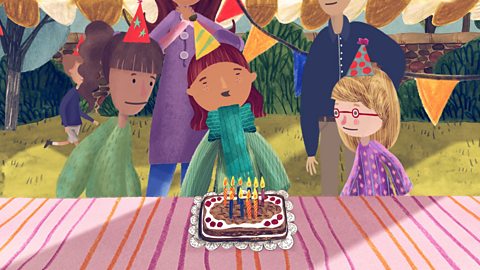
SUMMER: My name's Summer.
I’m twelve years old and I have epilepsy.
Epilepsy's… I don’t want to say it’s a ‘disability’, but for me it’s pretty much as an impediment.
If a get too hot or if I get too cold or if there’s strobe lights or really, really, really bright lights and I look up at them, I’m going to a full blown seizure. Because I think it’s something that goes off in the brain.
It can happen anytime… anywhere and I’m not aware that they’ve actually happened.
It can go for like ten, maybe fifteen seconds.
It’s sort like I’m staring into space, like there’s nothing there except for me looking at thin air pretty much…
And I can’t hear and I can’t speak. I don’t even blink.
I know I’m there but I don’t feel like I’m there. It sort of feels like someone is feeling in for me.
I come round, I don’t remember what’s gone on, what’s been said, who said what, who’s written what on the board.
And I think it really, really affects my grades, because if I didn’t have as many absence seizures as I do, then I’d probably be in the top sets for all my lessons.
I used to get told off quite a lot in lessons because it looks like I’m not concentrating. And I’ve tried to explain to them, but they just don’t listen. It doesn’t give me a lot of confidence.
Another type of seizure I have it’s called a “Tonic clonic”.
Like, they can happen when you’re ill, they can happen when you’re in the middle of watching a film.
A tonic clonic lasts longer than an absence seizure. It’s a full blown spasm.
Starts off with my arm and then it moves to my leg and then it moves to my toes. I can’t get my words out properly! And I can hear but I can’t speak. It’s like every time I get to talk, it’s like I’m mute and my voice box doesn’t work.
A lot of people are petrified of asking me to go around their house because they don’t want the hassle of them looking after me after I’ve had my seizure.
My mum has to come along on the trips because she has to administer medication.
I feel really embarrassed that my mum's there, because all my friends don’t have their mum there and I sort of feel I’m the odd one out.
It’s really frustrating. I love my mum and I know why she has to be there, but I just sometimes… There’s that little bit of me that wants her not to be there.
I feel some people rub it in my face, that they’ve gone on sleepovers or that they’ve gone watched a film in 3D.
I feel really jealous and upset that I’ve not been able to go.
Like if I do see a 3D movie, it’ll bring on a seizure…
When I’m at home and I’m writing stories and I’m writing plays, I feel like I’m doing what I was made to do, but then when I get to school I just feel like I’m playing another person.
I feel like my whole school life is a play.
Like, when something goes wrong, the scenes are written wrong…
And you have to go back and rewrite the scene and then replay that.
I don’t feel like I’m me, I feel like I’m some sort of ghost out of a film… And it’s never going to get back to that film, because that film is over now.
I sometimes think “Why does it have to be me?” I was born this way and if I wanted to act a miserable person, I could act like a miserable person. What’s the point of that when I have got my whole life ahead of me?
Video summary
A powerful and beautifully animated documentary that uses the first-person testimony of Summer, a 12 year-old living with epilepsy.
Summer explains the different forms of epilepsy that she suffers from; absent seizures and tonic Clonic seizures.
She talks about how her condition affects her everyday life and the emotional challenges she faces.
This animation will be particularly useful for teachers when covering understanding and respecting differences and similarities.
This is from the series: I Can't Go To School Today.
Teacher Notes
You could ask your pupils to write down suggestions of how they could help an epilepsy sufferer to feel as comfortable as possible with their illness.
Discuss these suggestions as a class.
This short film is relevant for teaching KS2, KS3 and KS4 in England, Wales and Northern Ireland and at 2nd, 3rd and 4th Level in Scotland.
Melissa's Story - Living with HIV. video
Melissa, a child living with HIV, explains what it is, how she was diagnosed, the medication she takes and the physical effect of the virus.
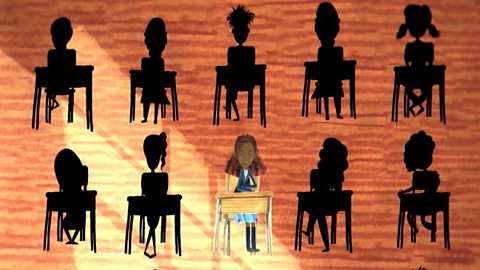
Naomi's Story - Living with leukaemia. video
Naomi is a nine-year-old girl who has recently been cured of leukaemia. Naomi explains her diagnosis, her treatment (including chemotherapy and radiation therapy), and her recovery.
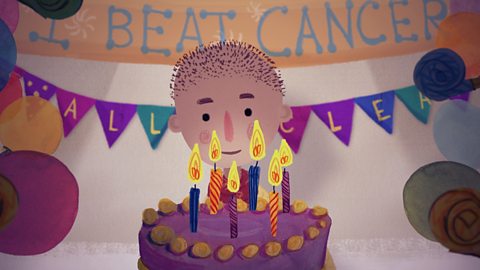
Jasper's Story - Living with cystic fibrosis. video
Jasper, a boy who lives with cystic fibrosis, explains what his condition is, the treatment he receives and the emotional challenges he faces.
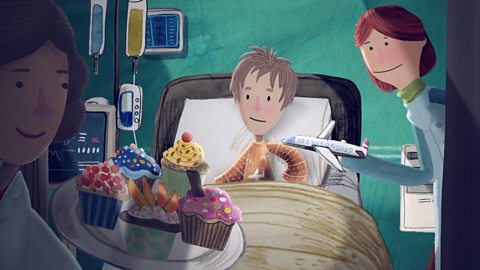
Izzy and Ben's Story - Living with anaphylactic allergies. video
Two children, Izzie and Ben, both suffer with anaphylactic allergies. Izzy describes what anaphylaxis is and together they describe the different ways it influences their daily lives.