Reptiles come in many different shapes and sizes.
But all our wonderful.
They have tough scales to protect their body, especially useful if you're a snake, slithering over sharp rocks.
Britain's biggest reptile at almost two metres long is the grass snake.
It has a yellow stripe behind its head and can swim.
Although grass snakes are good swimmers.
The female lays her eggs on dry land.
Another snake that can be found in Britain is the adder.
Adders don't lay eggs, but instead have live young between five and twenty tiny stakes at a time.
In other countries you can find some dangerous reptiles.
Like this spitting cobra who looks like it has a hood over its head.
Then there are boa constrictors.
They use their strong muscles to squeeze other creatures until they can't breathe.
Boa constrictors will eat frogs, birds, lizards and even small deer or monkeys.
Watch out, it's an alligator, these reptiles hunt in the water and use their sharp teeth to bite their prey.
All turtles love to swim.
But this female turtle has come ashore to a sandy beach to lay her eggs.
When the tiny turtles hatch, they scramble through the sand and down to the sea, all by themselves.
There are lots of amazing lizards and they come in all shapes and sizes.
Lizards smell by licking the air with their tongues.
Some lizards, like this gecko, don't have any eyelids, so they also use their tongues to lick their eyes clean.
One lizard that can do something very special is the chameleon.
It is able to change the colour of its skin to match the leaves or stones around it.
This makes them hard to see as they are camouflaged.
Our world is full of reptiles, some small and shy, others big and fierce.
But all of them are amazing.
Video summary
A brief audio slideshow explaining the characteristics of reptiles and how they are different to other animal types.
Teacher Notes
- This video could be used as an introduction to reptiles.
- Pupils could be asked to compare the characteristics of reptiles against other animal types.
This short film is relevant for teaching Science at KS1 in England and Wales, Foundation and KS1 in Northern Ireland and Early level and first level in Scotland.
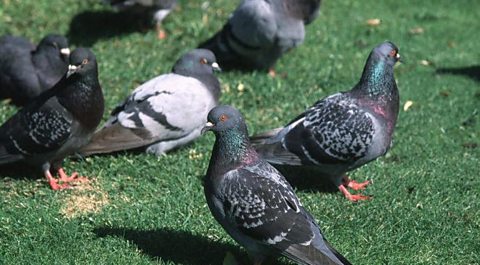
What do urban birds eat? video
A look at the different foods eaten by urban birds.
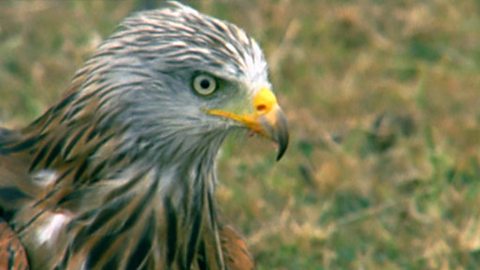
What is a bird of prey? video
An outline of the common features of birds of prey and a look at the birds of prey found at a Scottish farm.
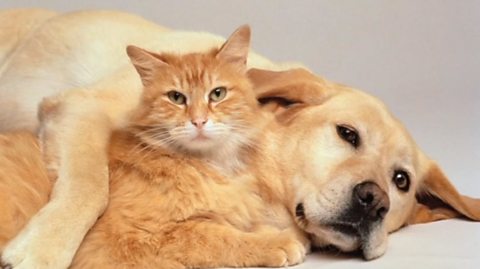
What are the different types of mammals? video
A short audio slideshow showing some different types of mammals.
Animals. collection
A collection of KS1 science clips about animal classification. Watch simple introductions to fish, amphibians, marine life, egg-laying animals, spiders, animals with patterns and nocturnal wildlife.