Ade Adepitan visits Sydney to learn about an organisation that redistributes food that would otherwise be wasted.
ADE: Hi, my name’s Ade. I’m in Sydney, Australia. And I’m about to find out one of the simplest ways in which we can all cut down on our carbon emissions and the great thing is: it’s completely free. In fact, it could save us all money!
ASHLEY: Hey, how are you going?
ADE: Ashley Killeen works for OzHarvest, a company that collects perfectly good food that’s about to be chucked away.
Is this some of the stuff you’ve got?
ASHLEY: Yes, beautiful greens, some corn. We’ve got beautiful cherries. I mean…
ADE: Wow. And these are what’s wrong with them, they look great?
ASHLEY: The supermarket has got another delivery that’s come in. They want it to be super fresh. So they’ve taken this stuff off the shelf and then they’ve put the new stuff in. And if we weren’t there to collect it, it would go to landfill.
ADE: It looks like there’s nothing wrong with them, and that’s all gonna get chucked away. It’s nuts.
Around the world, about a third of the food we produce goes to waste. And the trouble is, growing food produces masses of greenhouse gases. So wasting it means we’re creating emissions for nothing.
I need to work out… This is my… [KNOCKS OVER FOOD CONTAINERS] Oh! Haha! I’ve wrecked the joint! Sorry!
ASHLEY: It’s an occupational hazard!
ADE: Despite my best efforts, OzHarvest is taking the waste food it can get, and putting it back on the shelves.
ASHLEY: So this stuff is going to our OzHarvest market. People can come in there and do their shop and it’s completely free.
ADE: The idea is that if we use up waste food, next season, we could get away with producing less and that means we could keep everyone fed but create fewer emissions in the process.
This is busy!
ASHLEY: Yes, welcome to the market. Alright, so fresh produce all along here.
ADE: On this bit? I’ll just put this up here.
ASHLEY: Beautiful cherries. And we can stock this whole space with fresh produce now.
ADE: OK. Is it mainly fresh food that you’ve got here?
ASHLEY: No. We’ve got Lots of stuff so you’ve got your fresh stuff over here and then behind us we’ve actually got a bakery section. It’s got bottles of water.
ADE: We shouldn’t be wasting water. That’s nuts.
ASHLEY: Well, we’re in a drought.
ADE: Of all the things, I don’t understand that, that’s crazy.
ASHLEY: I think a lot of people don’t understand that food waste is one of the greatest contributors to climate change. If you look at the carbon emissions created by food waste, if that was a country, it would be the third biggest country in the world.
ADE: If we stopped producing food that we don’t need, we could cut out almost 10% of our global greenhouse gases. OzHarvest get a lot of their food from supermarkets. But loads of food is also wasted in people’s homes.
ASHLEY: So you can see here that, okay, so the use-by was the 22nd but the freezer is really like a pause button for food, right? So if you put something in the freezer on its best before date, a day before its best before date, it’s perfectly fine and a lot of people don’t know that - it’s coming up to the best before and they’re like oh, I missed my opportunity there, chuck it in the bin, put it in the freezer, it’s like a pause button.
ADE: What really needs to be done in Australia to make a proper change and a proper difference?
ASHLEY: So I would say absolutely the consumers, the bulk of food waste is coming from the households. If you’re not throwing out your food and you’re doing things like shopping to a shopping list or doing a bit of a recce in your fridge before you go to hit the shops, it’s one of the easiest things you can do to contribute towards reducing climate change and it will fill your belly and it will fill your wallet.
ADE: Simple common sense - planning what food we buy, not chucking so much away - can make a massive difference in the fight against climate change.
Video summary
Download/print a transcript of the video.
Ade Adepitan visits Sydney to learn about an organisation that redistributes food that would otherwise be wasted.
Around the world, about a third of the food we produce goes to waste, and food production is responsible for a significant proportion of greenhouse gases - so food waste is a major contributor to climate change. Ade meets Ashley Killeen, to learn how redistributing food that would otherwise go to waste can help to feed communities and reduce the emission of greenhouse gases.
This clip is from the BBC Two series Climate change: Ade on the frontline.
Teacher Notes
Download/print a pdf of the Teacher Notes.
Teacher Notes prepared in partnership with the Geographical Association.
Before watching the film
It may be worth recapping what students already know and think about food production and waste. You could ask students to estimate how much of the food we produce is wasted and what the potential savings could be in carbon emissions if we stopped producing food we did not need. Students could make a note of their answers before watching the film reveal.
During the film
You may wish to stop at relevant points during this short film to pose questions and check understanding or wait until the end. Useful questions might include:
- How surprised are you on hearing that a third of food we produce goes to waste?
- How much does food waste contribute to carbon emissions?
“If we stopped producing food that we don’t need, we could cut out almost 10% of our global greenhouse gases”.
“If you look at the carbon emissions created by food waste, if that was a country it would be the third biggest country in the world.”
After the film you might discuss the above quotes with students and / or ask them which bits of the film surprised or shocked them the most. On the positive side, you might discuss how this film suggests ways that we can all easily play our part in reducing carbon emissions.
Following on from the film
You could establish more evidence about the carbon emissions produced by food waste and create a fact file with students. This could then form the basis for further enquiry. For example, how do the carbon emissions from global food waste compare with carbon emissions produced through other human activities? Which aspects of food waste could be most easily tackled? Who needs to act?
Students could investigate food production from farm to fork to find out some examples of how, and where, food waste happens in the supply chain and apply their understanding to create recommendations for reducing food waste at local and global levels.
Students could explore the carbon footprint of their food through the BBC diet carbon calculator tool and compare its environmental footprint with other carbon producing human activities. How might they use this information to reduce their own carbon footprint?You may find it useful to revisit the film on drought in Queensland and consider how some of the pressures on maintaining levels of food production might be alleviated by reducing food waste.
You may want students to investigate other factors associated with food production such as ‘food miles’ and explore how relevant this is for example when about 60% of food is transported by boat and only 0.16% of food miles come from air travel (Our World in Data).
Students might investigate food waste at a personal or school level and consider ways that food might be consumed more sustainably. Students could design an accessible factsheet or infographic to inform others how food waste might be avoided, and why this matters. There are lots of options here for meaningful geographical enquiry.
This short film is suitable for teaching KS3 and KS4 students. It can be used alongside the other Ade Adepitan films about climate change or watched on its own. All the films build on students’ understanding of climate change issues and enable them to make global connections.
This film supports the KS3 geography curriculum by investigating our changing climate and how human activity relies on effective functioning of natural systems; people as consumers and living sustainably and being able to make informed decisions about responses to environmental impacts.
At KS4, the film supports understanding about managing resources carefully and links to work on food and water security.This clip could be used to support the delivery of geography to KS3 and KS4 students. Specifically, this topic appears in OCR, Edexcel, AQA, WJEC KS4/GCSE in England, Progression Step 5/GCSE in Wales, CCEA GCSE in Northern Ireland and SQA National 4/5 in Scotland.
Rising sea levels in the Solomon Islands. video
Ade Adepitan travels to the Solomon Islands to see the dramatic effect rising sea levels are having on local communities.

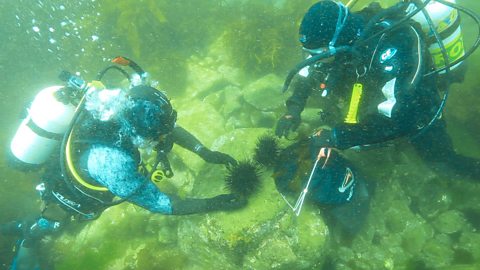
Kelp reforestation in Tasmania. video
Ade Adepitan travels to Tasmania to find out about the work being done to protect the carbon-capturing underwater kelp forests.
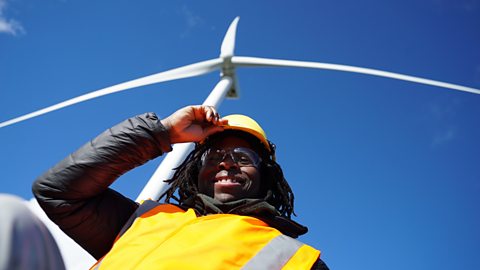
Renewable energy in Tasmania. video
Ade Adepitan visits a wind farm in Tasmania that will help the island to reach a major milestone: producing all of its electricity from renewable sources.
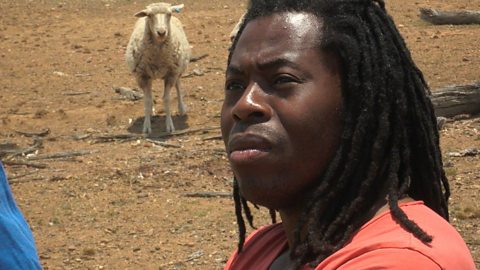
Drought in Queensland, Australia. video
Ade Adepitan visits Queensland, where drought has had a devastating effect on the landscape.