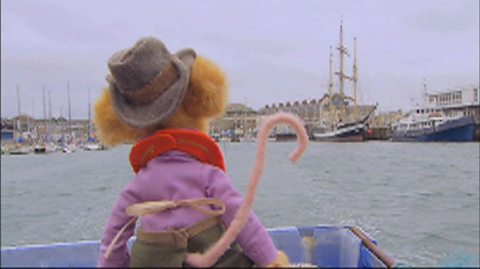
William visits an apiary where he learns about bees, pollination and the production of honey.
The video
William Whiskerson, mouse explorer. Finds adventure, 'round every corner. Where will he go? Who will he meet? His amazing adventures, will make you squeak. William Whiskerson, mouse explorer.
Narrator: Here comes William Whiskerson in his amazing traveling globe.
William Whiskerson: Greetings, adventurers. I am William Whiskerson, the famous mouse explorer.
Narrator: William is in the countryside. He can see lots of fields, trees, and sheep, but which part of the United Kingdom is he in today?
William Whiskerson: Cheese Phone, reveal my location.
Narrator: The Cheese Phone shows William where he is on a map of the world.
Cheese phone: Hello, William. Today you're in Devon. Devon is in the southwest of England.
William Whiskerson: Look. I've got a message coming through on my Cheese Phone.
Sophie: Hello, William. I'm Sophie, and this is my friend Ben. Join us on a honey adventure.
William Whiskerson: Oh, that sounds like a yummy adventure. Lock the location, Cheese Phone.
Narrator: The map shows William where to meet Ben and Sophie.
William Whiskerson: Explorers away!
William Whiskerson: Pleased to squeak you, Ben and Sophie.
Sophie and Ben: Pleased to squeak you, William.
Sophie: Welcome to my garden.
William Whiskerson: It's a lovely garden. Let's go and find some flowers. LAUGHS
Narrator: The explorers show William their garden. The garden is full of beautiful flowers. Can you see the insects? They love the flowers too.
William Whiskerson: What flowers are these?
Sophie: Lavender, William.
William Whiskerson: They smell lovely.
BUZZING
William Whiskerson: What's that noise?
Ben: It's a buzzing bee.
William Whiskerson: A bee.
Narrator: Bees have a very special job to do. They fly from flower to flower collecting a substance called nectar. Then they fly back to their hives and use the nectar to make honey. That's why they're called, honeybees. To find out more about bees, the explorers suggest that William meets their friend Ian, who is a beekeeper on a farm.'
William Whiskerson: Pleased to squeak you, Ian.
Ian: Pleased to squeak you, William.
William Whiskerson: Do you look after the bees?
Ian: Yeah. I'm a beekeeper.
William Whiskerson: What does a beekeeper do?
Ian: Well, it's my job to look after the bees and give them everything they need, so then they can make as much honey as possible.
William Whiskerson: Wow. Can we go and see them?
Ian: We certainly can. We've got some beehives just over here. But first of all, we're gonna have to get you dressed up in some protective equipment.
Narrator: Bees are lovely insects, but sometimes they can sting if they're frightened, so beekeepers have to wear special clothes to protect themselves.
William Whiskerson: I'm gonna get mine on too.
Narrator: They also cover their hands with gloves to stop them being stung.
William Whiskerson: I'm ready.
Ian: Wow, you look great. You definitely won't get stung now.
William Whiskerson: Can we go and see the bees now?
Ian: Yeah. Let's go and see if they've made us any honey.
William Whiskerson: Explorers away!
Ian: Here we are, William. Here are the bees in their beehives.
William Whiskerson: They look like little wooden huts.
Ian: Yeah, they are. We call them beehives, and that keeps out the weather, the rain, and the wind, and also makes it easier for us to collect the honey.
Narrator: These wooden hives are where the bees live, and sleep, and make their honey.
William Whiskerson: Can we go and have a closer look?
Narrator: Ian uses something called a smoker to make the bees feel calm and sleepy, so they're not frightened when the hive is opened. William and Ian don't want to get stung. Ian opens the top of the I've, lifting each layer and adding more smoke, to keep the bees calm. There are thousands of bees in the beehive.
Ian: Okay. In this top layer, William, is the honey, and that's what we're gonna take back to the farm today.
Narrator: Ian shows William a frame from lower down in the hive.
Ian: There is honey down here, but that's the honey that we leave for the bees, and let's just take a frame out.
Narrator: Ian shows William another frame from the hive. It's covered in honey. Yum, yum.
William Whiskerson: So, is this the honey we're gonna take back to the farm?
Ian: Yeah, it certainly is. Would you like to have a look?
William Whiskerson: Yes, please.
Narrator: Ian shows William some honeycomb.
Ian: So over here, these are the wax hexagonal cells, which the bees make themselves out of beeswax. If you look just here, these ones have got some honey in. They act as storage pots, so the bees have got somewhere to put the honey. And these ones, all of this, they're full cells, but they've been capped with wax to keep the honey fresh so the bees can eat the honey later on when they want it in the winter.
William Whiskerson: Will there be enough honey left for the bees?
Ian: Don't worry, William. We always leave enough for the bees.
William Whiskerson: Hello, Ben and Sophie.
Sophie and Ben: Hello, William.
William Whiskerson: Where can we see some more bees?
Ben: At the bee farm.
William Whiskerson: Great. Explorers, away!
Narrator: Inside the bee farm, the explorers have a closer look at some bees and their hives. These bees are all kept behind glass, so you can get a good look without worrying about getting stung.
Sophie: Look, William.
William Whiskerson: What is it?
Sophie: There's lots of different types of bees.
Narrator: A group of bees that lives in a hive is called a colony. There are different types of bees in a colony. The bees that you see here are called worker bees.
William Whiskerson: Sophie, what are these bees doing?
Sophie: They're worker bees. They're working to make honey.
Narrator: Worker bees are female. They collect nectar and pollen from flowers to make honey. They also build the honeycomb inside the hive, where the honey is stored.
William Whiskerson: Those bees have got really big eyes.
Narrator: The bees with big eyes and square bodies are called drone bees. They are the male bees.
Sophie: Look, William. I found a queen bee.
William Whiskerson: Oh, wow.
Narrator: The queen bee is the most important bee of all. Can you see her? She is very large and has a long body.
William Whiskerson: The queen bee looks different to the other bees.
Narrator: In every colony there is only one queen bee. The queen lays eggs called larvae. They're white and round. Can you see the larvae in the honeycomb? These larvae will grow into baby bees. Once the honey is made, the frames can be collected and put in a large machine called an extractor. Inside, the frames are spun around, separating the honey from the honeycomb. The runny honey is filtered through bags, which help to remove any wax. It is then heated to kill any germs. It's now ready to be poured into jars.
William Whiskerson: This is where the honey has ended up, in the shop.
William Whiskerson: Oh, hello, Mr. Bee. Where are you buzzing off to?
William Whiskerson: Thank you, Sophie and Ben, for taking me on a buzzing honey adventure.
Sophie: You're welcome. Here's some honey to remember us.
William Whiskerson: Thank you. Squeak you later, everyone.
Sophie and Ben: Squeak you later, William.
Narrator: Can you remember where William went today? William visited his friends Sophie and Ben in their garden. They saw some flowers, and bees. William then went to meet Ian, a beekeeper, and learned how bees make honey. Can you remember where the bees kept the honey? They kept it in a honeycomb. William also got to see different types of bees, like a queen bee. After his adventure, he even got his own jar of honey as a souvenir.
William Whiskerson: Time to fly, explorers. We're off on another adventure!
Narrator: See you soon, William!
Video summary
Download/print a transcript of the video.
William Whiskerson visits an apiary to discover how honey is made.
He learns all about the different types of bees that live in a beehive, including worker bees, drone bees and the queen. He then discovers how bees make honey from plant nectar and store it in honeycombs inside the hive. Finally he sees how the bee farmer collects and bottles the honey, ready to be sold in the shops.
This episode introduces children to the importance of bees in the process of pollination and thus in the production of food. See also this video from KS1 Science.
Teacher Notes
Ask pupils to find Devon on a map of the UK.
Can they find South Molton, the location of the beehives seen in the clip?
Take a pot of lavender into the classroom, so pupils can drink in the scent as they view the clip.
If it's spring or summer, place the lavender on an outside window sill and ask pupils to photograph any butterflies or bees attracted to it.
Ask: "If you had a bee hive, where would you put it?" Discuss a suitable site in the local area.
The bees need somewhere sheltered, but with plenty of flowers nearby: a park perhaps, or a school garden.
When they're on a shopping trip, the children could check the honey jars to see whether the honey is local or comes from far away.
Back in class, the children will enjoy sampling a little bread and honey, too.
This clip will be relevant for teaching Geography.
This topic appears in KS1/KS2 in England and Northern Ireland, Knowledge and Understanding of the World Foundation Phase in Wales and Early/1st/2nd levels in Scotland.
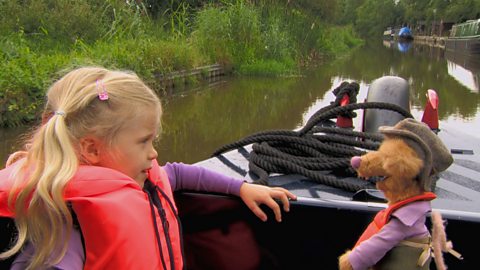
Travelling on a canal boat. video
William Whiskerson meets Sophie and Harry on their narrow boat and they take a trip along the Birmingham and Worcester canal
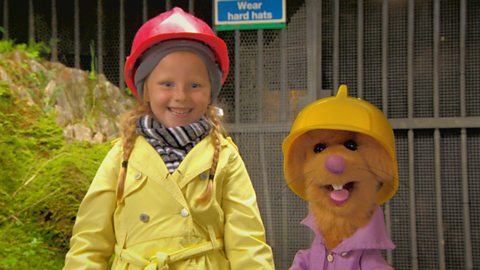
Exploring a cave in Yorkshire. video
William Whiskerson meets Emily and together they explore a cave in Yorkshire.
Living in an eco-village. video
William Whiskerson meets his friend Ewan, who lives in an eco-village in Shropshire.
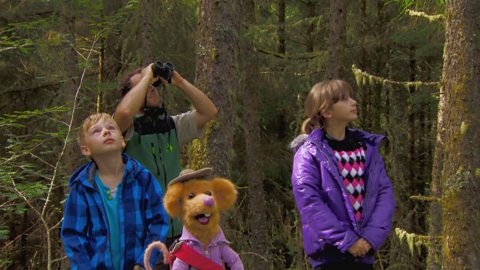
A visit to the Caledonian Forest. video
William Whiskerson travels to the Highlands of Scotland to meet his friends Lewis and Breya.
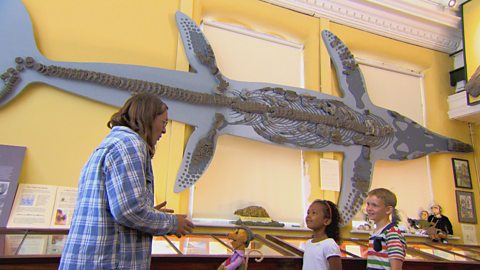
Fossil hunting along the Jurassic Coast. video
William Whiskerson meets a fossil expert and learns how fossils were formed from the remains of plants and animals that lived millions of years ago.
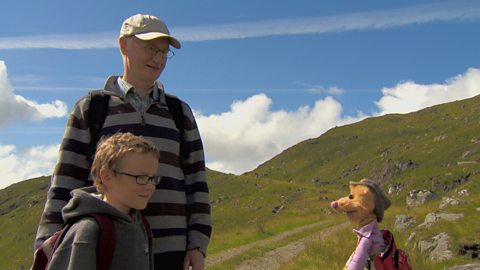
Mountains and electricity. video
William goes to Scotland to see his friend Euan and visit a power station deep inside a mountain.
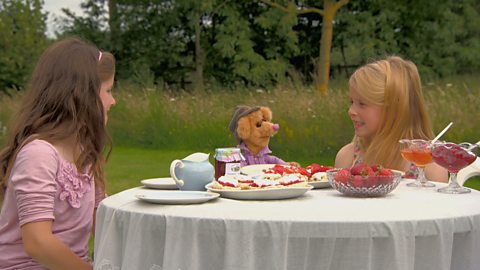
Growing and picking orchard fruit. video
William Whiskerson meets Lucy and Laura in an orchard. He learns about the different types of fruit that grow there including berries, cherries and apples.
How our milk gets from the farm to the shop. video
William Whiskerson meets Theo on his family farm. He learns how female cows make milk and then takes a trip around the farm where he sees a calf being born.
Life on the Isles of Scilly. video
William Whiskerson travels to the Isles of Scilly, a group of islands lying off the Cornish peninsula of Great Britain.
Transport, travel and landmarks of London. video
William Whiskerson meets Kulala who lives in London, and visit some of the key landmarks.
Jobs and tourism in a seaside town. video
William Whiskerson visits the seaside town of Weymouth. He explores the beach and sees tourists on the esplanade.