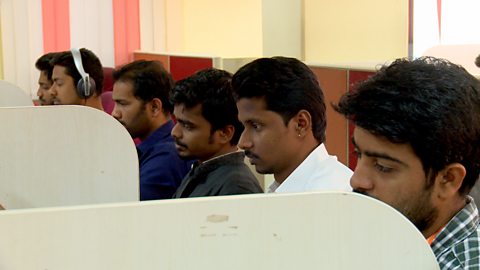
Dua and Nayan explore rural life in India and discover that the majority of the population are subsistence farmers living in countryside villages.
NARRATOR: Three 13-year-olds from the UK are on their way to explore the geography of India. Dua, Amalia and Nayan are on a ten-hour flight to India, a country of one and a quarter billion people, 20 times the population of the UK. Nineteen hours after leaving London, Heathrow, they finally reached their destination. They've come half way across the world and a huge adventure awaits them.
Most people in India live in the countryside so the rural economy is central to Indian life. This is very different from the UK where only one in six people lives in a rural area. Today, Dua and Nayan are visiting a village to find out what life's like for the people who live there. En-route, they're having breakfast with Alindal Bhaniji who has spent the last 20 years working with rural communities.
DUA: What is the average percentage of people living in villages?
ALINDA: I think the population of India is more than one and a quarter billion and, of them, more than 70%, which works out to be more than 700-800 million people. They live in the villages.
NAYAN: In the UK, people farm on a mass scale. Is it the same in India?
ALINDA: It could be a bit different here. Much of the farming in India is subsistence farming. You know? Subsistence farming means people do agriculture for a living, not for making a lot of money and that has reasons, because if you look at the sizes of the land holdings that people here have most farmers here have very small sizes of plots which just about suffices to produce enough food for their families. So that's what we call subsistence farming.
NARRATOR: 'Subsistence farming is very uncertain. In India's extreme climate a severe drought or constant flooding can wipe out a farmer's livelihood.
NAYAN: How exactly does the flooding of the Ganges affect the farmers?
ALINDA: It affects in particular when there is persistent water-logging. Floods as such, have never been seen as a problem by the people because historically, whenever there is a flood it would typically leave behind a very rich deposit of highly fertile soil. So in the past people used to welcome floods but over the year, the drainage of water out from a flooded area has become a problem because of several obstructions created by human interventions.
NARRATOR: 'The students have come to Karura village 50km south-east of the city of Patna to speak to farmers about the challenges they face.
NAYAN: Namaste.
NARRATOR: 500 people live in the village and they mostly work in the fields. They have two growing seasons: the drier winter for wheat and other grains, and the wetter summer for rice and vegetables like chillies and tomatoes. In Indian villages, the men do a range of jobs but most of the field work is done by women.
NAYAN: Is this all your land?
PRATIMA: [SPEAKING IN MOTHER TONGUE] No, we do have a little bit of our own land, but it's a long way from here. We rent this land because it's more fertile.
NAYAN: How does the flood affect the people who live here?
PRATIMA: [SPEAKING IN MOTHER TONGUE] Flooding has a huge effect on us. When the water floods the land it just sits here, and can't drain away. The water's very dirty and polluted and our seeds are destroyed. Sometimes when our fields are flooded we have to leave the area for two to three months and try to find work in other places.
NARRATOR: Although the monsoon brings many benefits to India, it can also cause problems. During the summer rains, millions of people are forced to migrate from the countryside to the cities in search of work to supplement their incomes or just to survive. People find work depending on their abilities. Someone with construction skills will find a building site in a city such as Patna or Delhi. Others will find employment with a different type of business or will help other farmers sell their vegetables in the markets. Some villages, like this one, are changing their farming methods to make them more efficient. They've introduced simple, affordable equipment and a new method of seed selection and crop cultivation.
PRATIMA: [SPEAKING IN MOTHER TONGUE] In this village, we've changed the way we plant seeds. We used to just scatter them all over the place as they've done in the field behind. We're now careful to plant them in a row. This way of planting means that we now use fewer seeds. Although this new technique's very simple, is extremely effective. We use fewer seeds and we manufacture our own organic compost and fertilizer. The plants are much healthier and we produce more crops. Now, when we sell our produce we earn the same as the field behind, which doesn't use this approach but we only use half the seeds so we make more money.
NARRATOR: Nayan and Dua are meeting a group of farmers to find out more about the impact of the changes. Each of these farmers typically has an acre of land equivalent to about half a football pitch.
NAYAN: Do you farm just to provide for your family or do you farm as well to trade with people?
SANGEETA: [SPEAKING IN MOTHER TONGUE] Yes, we now grow vegetables to sell in the market, not just for our own needs. Although we grow on just one acre of land, we now produce too much food for our own consumption. In the past it used to be different: we didn't have as much land or these new methods; we used to do more work. My grandfather wasn't able to sell his crops. He only produced enough food to eat. Now we're growing more. We have to sell our crops. If we only grew food to eat, how would we provide for our children? How could we send them to school?'
SANYUKTA: [SPEAKING IN MOTHER TONGUE] If we didn't sell the food in the markets, how would we buy anything? How would we survive? Everything's linked to that for our survival.
DUA: Is your work hard?
PRATIMA: [SPEAKING IN MOTHER TONGUE] Yes it is hard work. We get up at 5 a.m. First we clean the house. After that we tend to the animals, we milk the cows. By 8 am we're working in the fields.
NARRATOR: The farmers have a system in which they lend each other surplus crops if someone has a bad year, to be paid back when things get better. They believe it creates a stronger community. This village has also benefitted from the introduction of electricity and running water and access to information through television, radio and the internet.
PRIYA: Do you like to play cricket?
DUA: Yeah, I actually really like playing cricket. It looks fun here as well. What's your favourite thing to do, like after school and stuff?
PRIYA: Working on computers and … doing maths.
DUA: Doing ma… Do you like maths?
PRIYA: Yeah.
DUA: What kind of technology do you have here, in the whole area?
PRIYA: Not so much but we have a computer.
DUA: Yeah?
PRIYA: TV, and a fridge and a mixer, washing machine like this.
DUA: OK.
It's really interesting to see that in this village they mostly give their crops and food to marketplaces to make more money and to provide for their family. I didn't think that they had a lot of technology but even the little that they do have is obviously making a massive difference.
NAYAN: Everyone just works together as a family. Like they look after one another. When the crops get ruined they share the food and make sure everyone's alright.
Bye guys.
DRIVER: Bye-bye, bye-bye.
DUA: It was an amazing experience and we learned so much and we learned that India is not just one thing - you have to explore.
NAYAN: It's loads of different things.
Video summary
Download/print a transcript of the video.
Thirteen-year-old pupils Dua and Nayan are on a trip of a lifetime to explore India.
They meet a local expert to find out about life in rural India and learn that the majority of the population live in villages and are subsistence farmers. They hear how India’s extreme climate can be hazardous for subsistence farmers due to drought and flooding.
They travel to a village 50km south of Patna and meet local farmers. They learn that women do most of the work in the fields and also discover that new techniques are being introduced to increase yield and profits. They learn that there are two growing seasons and that the monsoon can force people to move to the cities each year to work.
They then meet more local farmers and hear from local children about what life is like living in rural India.
This clip is from the series Exploration India.
Teacher Notes
The exploration of rural life in India provides an opportunity to discover the hard work and risks of subsistence farming and contrast this with intensive farming in Britain.
Pupils could consider what it would be like to survive on only what they, or their community, could grow each year.
What would they do if crops failed? Where would they go?
India’s extreme climate of droughts and floods makes this a hazardous occupation, and the monsoon can push farmers from their land and into the cities to work and survive.
Pupils could consider and design improved farming techniques using simple technology, and compare this to techniques being used by the Indian women.
Topics such as development, gender and the important role of women as farmers and community could be discussed.
While there is a contrast with India’s rural life and that found in Britain, there is a positive message which could challenge preconceptions of rural life and poverty in India.
This clip will be relevant for teaching Geography at KS3 in England and Northern Ireland, 3rd Level in Scotland and Progression Step 4 in Wales.
Students and teachers over the age of 16 can create a free Financial Times account. For a Financial Times article about rural India emerging from isolation from 2016, click here.
Education - building the India of tomorrow. video
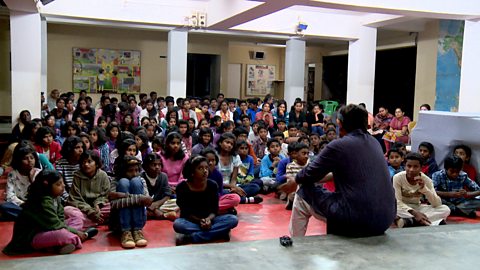
Dua, Amalia and Nayan meet Indian children who have been given the opportunity for a different life through education.
Introducing the physical and human geography of India. video
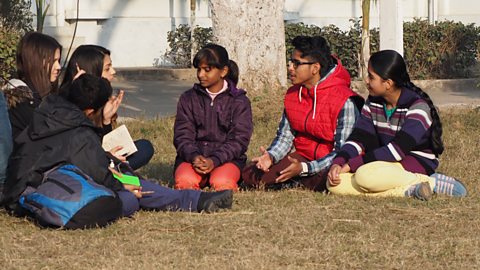
Dua, Amalia and Nayan begin their discovery of the geography of India, including its surface area. They visit Patna and Bangalore.
Rivers: The Ganges. video
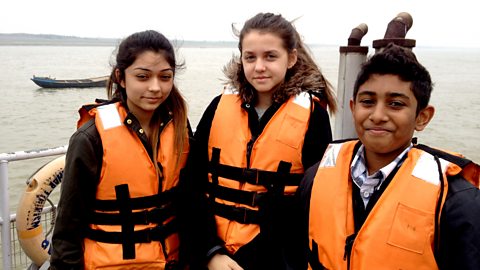
Dua, Amalia and Nayan explore the River Ganges in India and discover its significance to both physical and human geography.
Urbanisation in India. video
Dua, and Amalia learn about the impact of migration to the Indian city of Bangalore (Bengaluru) and its rapid urbanisation.
Working life and employment in Indian cities. video
Dua, Amalia and Nayan explore urban life in Bangalore, India - a city that attracts young Indians seeking work and careers.