Overview of Planet Planners on Roblox
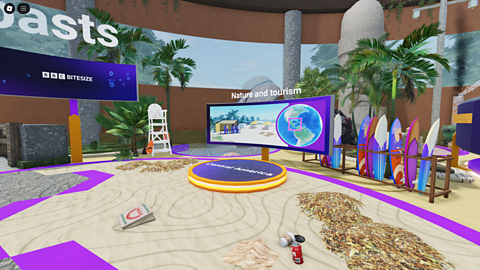
Planet Planners on Roblox is an engaging way for students to learn about some of the world's most pressing challenges – from preparing for natural disasters to managing large cities.
A decision-making exercise game with geographical thinking at its core, it also builds key skills such as teamwork, time management, resilience, problem-solving and decision-making.
It is accessed via Roblox – an immersive platform for 3D experiences. To learn more about Roblox and how it can be used in education, visit Get started with Roblox Education.
For more detailed information about the game, visit How to teach using Planet Planners on Roblox.
Scenario description
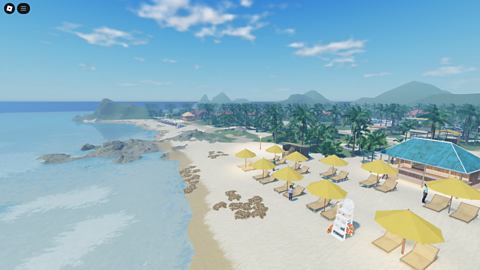
In this scenario, players act as decision-makers working to balance the protection of coastal wildlife habitats with tourism.
They analyse data, make decisions and allocate resources, taking into account local livelihoods and ecological considerations.
Players must think critically about how to sustain and grow tourism while protecting fragile ecosystems.
Approximate location: Central America
Teacher notes
Download/print the teacher notes for this scenario (PDF).
Teacher notes prepared in partnership with the Geographical Association.
Learning objectives
- To identify physical and human processes along coastlines, such as tourism and the formation of coastal habitats.
- To make decisions about how to manage coastlines, including the provision of facilities for tourists and the protection of environments and coastal habitats.
- To examine the social, economic and environmental impacts of decisions made along coastlines.
Key decisions
- How can we protect endangered turtle nesting sites?
- What’s the best way to manage beach access to protect fragile dunes?
- How should we tackle beach litter, shell collecting, and plastic pollution?
- Should we prioritise building car parks or invest in public transport?
- How should we expand infrastructure to meet growing tourist demand?
- How should increasing visitor numbers best be managed?
Key geographical terminology
Habitat: An environment where a particular species of animal or plant lives.
Tourism: Where people visit an area for a holiday and spend time away from home. Tourists travel for lots of reasons including recreation, relaxation, and sight-seeing.
Infrastructure: The parts of the built environment needed for a country to function such as roads, water pipes and ports; even schools and hospitals.
Think, work and apply like a geographer
Encourage students to explore the links between gameplay and real-world job roles, such as:
- conservation officer
- civil engineer
- ecologist
- tourism officer
- transport engineer
Questions to explore
- How can we balance tourism with wildlife and habitat protection?
- What are the impacts of infrastructure on coastal ecosystems?
- Why are dunes, seaweed and turtle nesting sites so important?
- What role does public transport play in sustainable tourism?
- How do individual choices (e.g. taking a shell, dropping litter) impact fragile ecosystems?
- What are the challenges of enforcing environmental regulations fairly?
- What ethical issues arise when conservation affects local livelihoods?
Emotional and ethical considerations
Fear and uncertainty: The challenges faced by baby turtles, and potential damage to fragile nesting sites, could evoke feelings of anxiety.
Ethical decision-making: Should tourism be prioritised over conservation and the protection of ecosystems? Is it fair to restrict access or fine those who sell illegal shell jewellery?
Resources
Teacher notes
Download/print a copy of the teacher notes for this scenario (PDF).

Student worksheet
Download/print a copy of the student worksheet (PDF).
Explore more
Support classroom learning with BBC Bitesize resources.
Note: Some video content may only be available in the UK.
Introduction to tourism
Learn about where people go on holiday and how this changes over time in this guide for KS3 geography students aged 11-14 from BBC Bitesize.
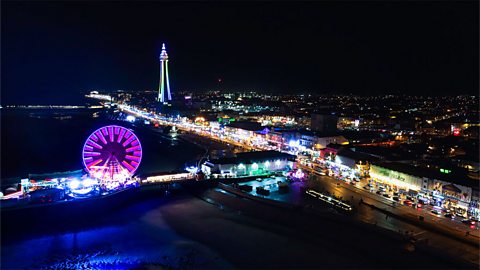
The impact of tourism
Mass tourism can have serious impacts on the environment.
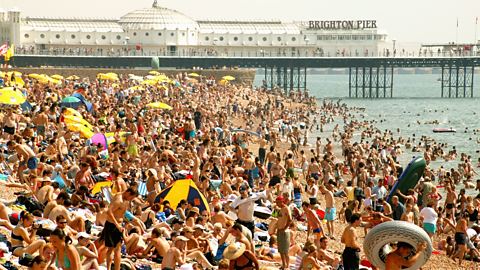
Balancing tourism and conservation in Madagascar. video
The teenagers consider the impact of tourism in Madagascar. They explore the link between the economy and conservation.
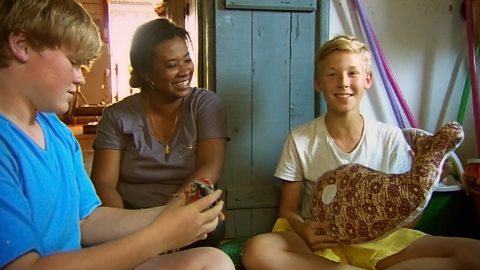
Protecting endangered species in Madagascar. video
The teenagers consider two contrasting wildlife conservation projects, both working to protect endangered species.
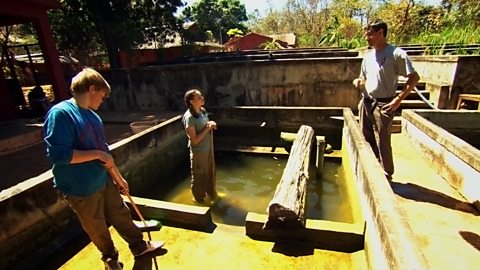
How fishing on a coral reef in Madagascar causes habitat. video
The teenagers consider a local conservation dilemma: families who fish on a coral reef even though the activity is destroying the habitat.
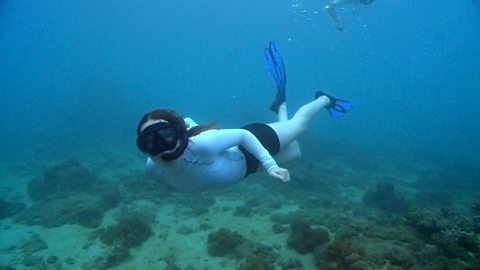
How to become an ecologist: Gabrielle's story
Gabrielle's a graduate ecologist who identifies protected species and helps to protect them.