Please note that this article and videos contains scenes which some viewers may find upsetting. Teacher review recommended before using in class.
The world goes to war
World War Two was the most destructive global conflict in history. It began when Nazi Germany unleashed ferocious attacks across Europe - but it spread to the Soviet Union, China, Japan and the United States.
Cities were destroyed by air raids, the atom bomb was dropped on Japan and six million Jews were killed in the Holocaust. Over 50 million soldiers and civilians died. However, the war that consumed half the world started with a peace agreement.
30 September 1938
The Munich Agreement
In 1938, British Prime Minister Neville Chamberlain wants to ensure another European war is avoided.
With Nazi Germany expanding its territories in Europe, Britain, France and Germany sign the Munich Agreement, which states the Czechoslovakian region of Sudetenland should be given to Germany and Hitler can claim no more land. Chamberlain thinks this guarantees a way of appeasing Hitler and he has assured “peace for our time”. But the Munich Agreement fails to deter Hitler from his expansionist plans and in March 1939 he invades Czechoslovakia, breaking the terms of the treaty.
Chamberlain makes a speech about the Munich Agreement. Clip from A Time to Remember (BBC Four, 2010).
Prime Minister Neville Chamberlain:
This morning I had another talk with the German Chancellor Herr Hitler and here is the paper that bears his name upon it as well as mine.
(Crowd cheer)
Some of you have perhaps already heard what it contains and I would just like to read it to you:
(Reads) We regard the agreements signed last nitht and the anglo-german naval agreement as symbolic of the desire of our two peoples never to go to war with one another again.
Crowd: Hip Hip Hooray!
Narrator:
Three cheers for Mr Chamberlain. And in germany it was three cheers for our great leader, who brings us the Sudetenland with peace. For Adolf Hitler the peace-loving wonder.
1 September 1939
Germany invades Poland
Unknown to the Poles, Germany has signed the Molotov-Ribbentrop Pact with the Soviet Union, agreeing to carve up Poland.
At 04:45 on 1 September 1939, the assault on Poland begins. A German battleship opens fire on the Polish garrison in Danzig (Gdansk). It is the first military engagement of World War Two. Simultaneously 1.5 million German troops march over the Poland border. They tear across the country aided by 1,300 German aircraft which bombard Polish towns and cities. On 2 September Chamberlain sends an ultimatum to Hitler: if he does not withdraw his forces by the following day, there will be war.
Germany invades Poland. Clip from A Time to Remember (BBC Four, 2010).
Narrator:
For the new German armies and the new German airforce the baptism of fire. For Poland the terrible honour of being the first on the worlds list to suffer the Blitzkreig. And so they rolled over the frontiers towards the Vistula and Warsaw setting in to being the Second World War.
London, Paris, New York, Tokyo, the whole world on the line. It's too late for the morning daily's but a scoop of scoops for the early specials of the evening.
3 September 1939
Britain and France declare war on Germany
Britain and France have agreed to defend Poland under the terms of the 1918 Treaty of Versailles.
When Germany refuses to withdraw, Britain and France declare war. The small Polish army is hopelessly outdated and still has several cavalry divisions. They put up plucky resistance for three weeks but are finally defeated by Germany's powerful army. On 17 September, Stalin sends the Red Army to occupy eastern Poland.
Chamberlain announces that Britain is at war with Germany. Clip from A Time to Remember (BBC Four, 2010).
Prime Minister Neville Chamberlain:
I am speaking to you from the Cabinet Room at 10 Downing Street. This morning, the British Ambassador in Berlin handed the German government a final note stating that unless we heard from them by 11 o'clock that they were prepared at once to withdraw their troops from Poland, a state of war would exist between us.
I have to tell you now that no such undertaking has been received and that, consequently, this country is at war with Germany.
17 September 1939
The Phoney War
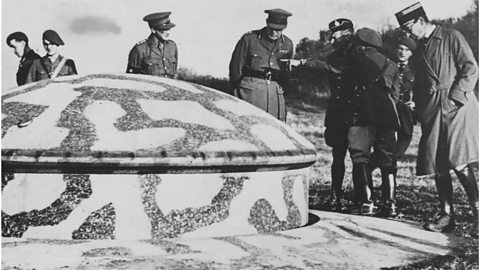
Britain and France are now at war with Germany but for eight months Western Europe is largely peaceful.
Many expect Germany to continue its military expansion beyond Poland, but it delays its advance. This gives time for the British Army, made up of around 150,000 men, to travel to France. Allied forces are put on alert, guarding the border with Germany, Belgium and Luxembourg. The French reinforce an impressive series of fortifications along the German border, the Maginot Line, but crucially they do not extend it to reach the Belgian frontier.
10 May 1940
Germany invades France
Chamberlain’s appeasement policy has failed. He resigns as prime minister on 10 May and is succeeded by Winston Churchill.
German troops use Blitzkrieg tactics and unleash a surprise attack to storm through neutral Belgium, Luxembourg and the Netherlands before crossing the border into northern France. The French, with most of their forces on the Maginot Line further south, are outmanoeuvred and outfought. In the ensuing battles the German Army suffer 150,000 casualties, but the Allies suffer more with 360,000 casualties. Hopelessly outgunned, the British Army retreats towards the coast.
Germany invades France. Clip from A Time to Remember (BBC Four, 2010).
Narrator:
Nine months into the Second World War on the same day that Winston Churchill replaced Neville Cahberlain as Prime Minister of the UK, Germany invaded France, Belgium and Holland. And wester Europe encountered the Blitzkreig.
Archive narration:
Dawn on the 10th May 1940, the panzers, the iron fists that were to hand out to the old order what was coming. Then spurred on by dive bombers, cold-bloodedly but effectively, whole populations set in motion.
On streams a flood, down every road from the shattered front, and now there is no front. Only dep last line thrusts inflicting mortal wounds in the body of a nation.
19 May 1940
The evacuation from Dunkirk
German military success continues as they reach the coast at Abbeville in Northern France and cut off the British Army between Lille and the sea.
Defeated and humiliated, around 340,000 men, including 121,000 French and Belgian soldiers, retreat north with their backs to the sea. They are no match for the ruthless German forces and their surrender looks inevitable, but an enormous rescue mission is undertaken to save them. Between 26 May and 4 June a ragtag fleet, ranging from battleships to pleasure boats braves the Channel to save the stranded soldiers. The incredible courage of the British civilians becomes known as 'Dunkirk spirit'.
Evacuation of the British Army from Dunkirk. Clip from A Time to Remember (BBC Four, 2010).
Archive narration:
Under a black shroud from burning oil tanks Dunkirk and shell torn, bomb-raked beeches becomes the focus of the free world. Hour after hour men wade out to the waiting ships. And between the shore and the larger vessels ferry the little ships. each bringing but a handful, but each handful swelling the ranks of the rescue.
If this luck and effort continues who knows how many yet escape. Swinging out of the black pall, each ship pack with men sets course for England. Sometimes the enemy is shot down, sometimes he leaves his mark. A bomb destroyer wallows helplessly. Alongside comes another craft, and for the men onboard the damaged ship it is all change yet again. But there is no panic only the swiftness of necessity and daring improvisation and then it's Dover or some other crowded port and a shore at last.
14 June 1940
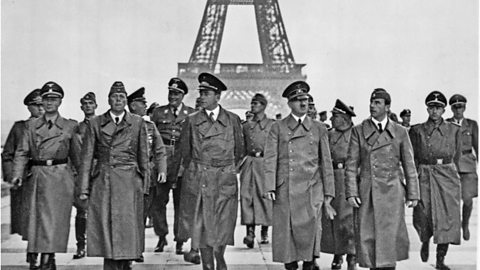
German soldiers enter Paris
German forces take Paris on 14 June. The French government flees, but the Prime Minister Paul Reynaud wants to continue fighting.
However he is quickly outvoted and forced to resign. His replacement, Marshal Philippe Pétain, has no alternative other than to sign a humiliating armistice with the Germans. On 22 June in Compiègne – the site of the 1918 Armistice – France is divided into an occupied section and a German puppet state, headed by Pétain, known as Vichy France. Germany is now the dominant power in Western Europe.
19 July 1940
Battle of Britain
With France conquered, Germany plans a knockout blow to Britain across the Channel.
Hitler wants to attack Britain in the summer of 1940, but before he launches a ground invasion, he must gain air superiority by destroying the Royal Air Force. In July the RAF has only 640 fighters to combat the Luftwaffe’s 2,600 fighters and bombers. But up step "the few". The RAF puts up an incredible fight and, over the course of the battle, downs 1,887 German planes. The Luftwaffe fails to dominate British skies and, by the end of October, the threat of invasion recedes.
The Battle of Britain. Clip from A Time to Remember (BBC Four, 2010).
Archive narration:
Summer 1940, 80-plus assembling over [muffled audio].
Further 60-plus over the vicinity of Dieppe.
Kent and Sussex, summer 1940. Any afternoon, any day of the week. Anytime, anyday. Followed by any evening, and night.
7 September 1940
The Blitz
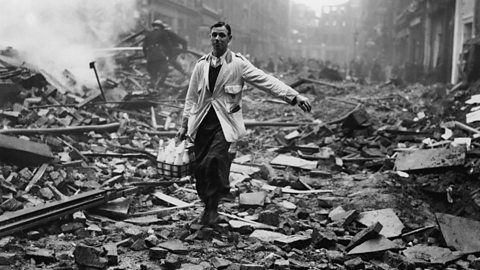
With the Battle of Britain going badly, the Luftwaffe commander, Hermann Goering, switches to bombing British cities.
43,000 civilians are killed and many wounded. In September 5,300 tonnes of high explosives are dropped on London in just 24 nights. Tens of thousands of city children are evacuated to the countryside. Industrial cites and ports across the country including Birmingham, Glasgow, Cardiff and Southampton are attacked. German bombers drop 500 tonnes of high explosives and nearly 900 incendiary bombs on Coventry in 10 hours devastating much of the city and all but destroying the Cathedral.
22 June 1941
Germany invades the Soviet Union
On 22 June 1941 Germany invades the Soviet Union. Three million German troops are supported by Italian, Hungarian, Romanian and Finnish allies.
Stalin is taken by surprise and the Soviets are forced to retreat. The Germans use Blitzkrieg tactics and one week into the invasion the Soviets suffer 150,000 casualties. The invaders are accompanied by SS teams, who round up and kill hundreds of thousands of Jews. By December the Germans reach the outskirts of Moscow. But their supply lines are stretched and Stalin is just as ruthlessly determined as Hitler. Aided by the harsh winter, the Soviet army holds the Germans at bay.
Andrew Graham-Dixon describes Stalin's speech to his generals during the Siege of Moscow. Clip from the Art of Russia (BBC Four, 2009).
Andrew Graham-Dixon:
I'd like you to try and imagine that it's the 7th November, 1941. It's the height of the seige of Moscow, Hitler's army is encamped outside the city.And instead of commuters getting off these trains, we've got a very different scene.
Stalin is holding a rally, it's to celebrate the 24th anniversary of the October Revolution and in the centre of this hall they erect a great statue of Lenin on a podium, and at the end of the meal Stalin addresses all his generals and he says 'We the Soviets, we must stand strong against the Nazis. We will triumph'.
7 December 1941
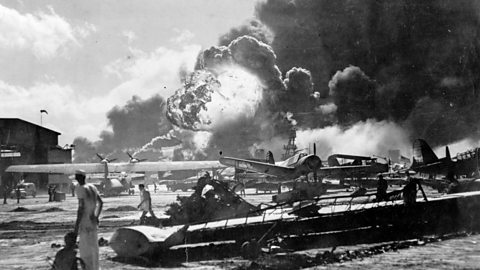
Pearl Harbor
Japan, allies to Germany, bombs the American fleet moored at Pearl Harbor on the Hawaiian island of Oahu.
Japan feels embittered by a US oil embargo imposed in August 1941 to stop its expansionist ambitions in China. In response it launches a pre-emptive knock out attack on the US in an attempt to destroy the Pacific fleet. But the raid fails because Japan’s main target, three US aircraft carriers, are at sea elsewhere and escape unscathed. Japan’s actions waken sleeping giant and US President Roosevelt declares war on Japan, prompting Japan’s ally Germany to declare war on the United States.
15 February 1942
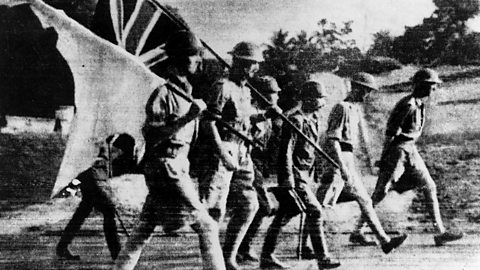
Fall of Singapore
The Imperial Japanese Army continues its expansionist ambitions by hurling itself into a series of offensives across Asia.
Japan's next target is Singapore. With the British defensive guns pointed south towards the sea, Japan mounts an audacious assault battling through the jungles of Thailand and Malaya to attack from the north. After a week of fighting, the Allied forces are running low on supplies. Around 16,000 British and 48,000 Australian and Indian troops surrender and become prisoners of war. The fall of Singapore is seen as a great humiliation for the British government.
23 October 1942
Battle of El Alamein
After two years of see-saw fighting in the deserts of North Africa, Churchill appoints Field Marshal Bernard Montgomery to command the British army.
On 23 October 1942, the British halt Germany’s march into Egypt at the second battle of El Alamein. Germany and Italy are forced to retreat back through Libya. It is the first major allied victory in the war and a huge morale booster on the home front. In May 1943 German forces are finally driven out of North Africa, ending the threat to the Suez Canal, a major trading route, and paving the way for the invasion of Italy.
'Monty' rallies the troops. Field-Marshal Montgomery addresses the 8th Army before the battle of El-Alamein.
'I want to impress on everyone that the bad times are over - they're finished! Our mandate from the Prime Minister is to destroy the Axis forces in North Africa. I have seen it - written on half a sheet of note paper. It can be done…and it will be done! Beyond any possibility of doubt. What I have done is to get over to you the atmosphere in which we will now work and fight. You must see to it that this new atmosphere permeates right down through the Eighth Army…right down to the most junior, private soldier. The great point to remember is that we're going to finish with this chap Rommel once and for all!'
2 February 1943
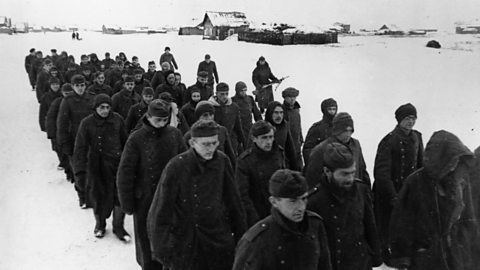
Germans surrender at Stalingrad
A German offensive in August 1942 stalls and the Red Army holds on in Stalingrad until the Russian winter arrives.
It is one of the bloodiest battles in history with nearly two million military and civilian casualties. House-to-house fighting drags on until 2 February 1943. With food and ammunition exhausted, the German commander Friedrich Paulus surrenders. This is a turning point in the war, and Hitler pays the price for underestimating the sheer size and determination of the Soviet forces, which begin the long push west towards Berlin.
9 July 1943
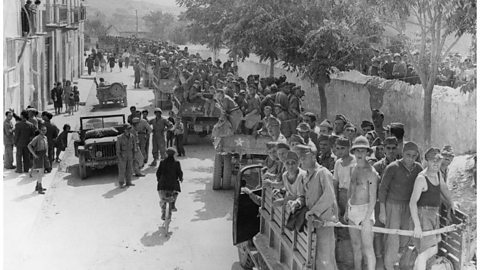
Allied invasion of Sicily
After their success in North Africa, Allied forces invade Sicily and Italian dictator Benito Mussolini is forced to resign.
150,000 allied troops land on Sicily where they meet little resistance from the Italian and German troops. Legend has it the Allies are assisted by several Mafia figures, like Lucky Luciano, who help them to win over the Italian population. The Allies slowly advance up through Italy but are held up by dogged German resistance. At the Battle of Monte Cassino in southern Italy the Allies suffer 55,000 casualties and destroy an ancient monastery in order to breakthrough to Rome.
6 June 1944
D-Day
The Soviet Union has been pressing for two years for a second front to be opened in the west.
British, Canadian and US troops train in southern England for a year before they are given the green light to invade. The German defences stretch over 1,000 miles from Biarritz in southern France to Denmark. They have no idea where the allies might strike. Taking the Germans completely by surprise, 150,000 British, Canadian and US troops land on five beaches in Normandy. Although they sustain heavy casualties they gain a crucial beachhead – the liberation of France begins.
Sophie Raworth explains how D-Day was planned. Clip from iWonder: How was the biggest ever seaborne invasion launched?
Planning every last detail
Presented by Sophie Raworth
At midday on 6 June, several hours into D-Day, Prime Minister Winston Churchill announced to the House of Commons that Allied troops had landed in France.
He said: “The commanders who are engaged report that everything is proceeding according to plan…and what a plan!”
The decision to put that plan into action was made right here at Southwick House near Portsmouth. US General Dwight D. Eisenhower, leader of the Allied forces, was the man who made it, confident that everything that could have been thought of had been.
He knew that he was sending his soldiers off to France with the best maps available. Aerial reconnaissance and reports from the French Resistance had provided minute detail of the terrain and German defences.
Meanwhile, covert Royal Navy teams in mini submarines had surveyed the beaches. He knew his team of commanders had planned every detail, even conducting dress rehearsals along the British south coast.
He knew that now was the best time to invade. Clear weather and smooth seas were more likely in June and the 5th to the 7th would provide bright moonlight for the air invasion and early-morning tide for the seaborne troops.
But even the best-laid plans could go wrong.
Bad weather had already forced Eisenhower to delay for 24 hours. Now he had to gamble that his meteorological team had correctly predicted a 36 hour break in the weather.
Eisenhower’s words, “OK. Let’s go,” sent his commanders rushing to their posts. Left alone, he could only trust and hope that the exhaustive preparations would be enough to win the day.
27 January 1945
Liberation of Auschwitz
The Red Army liberate the Auschwitz death camp, near Krakow.
More than one million people die at Auschwitz – the majority are Jews. The full horrors of the Holocaust, in which the Nazis killed six million Jewish people, as well as their murderous attacks on other ethnic minorities and groups, are only properly comprehended by the British and Americans when they begin to liberate concentration camps such as Buchenwald and Bergen-Belsen in Germany in April. Horrified soldiers find thousands of dead as well as many sick and starving prisoners.
Natasha Kaplinsky explains why people became killers in the Holocaust. Clip from iWonder: Why did ordinary people commit atrocities in the Holocaust?
Natasha Kaplinsky:
These people were form everyday walks of life, an office worker, a policeman, a prison guard even a nurse. But they all committed the most horrific atrocities in the Nazi era. To even try to understand we have to step back into their world.
I the early 20th Century antisemitism was widespread across Europe. In some places the Jews were seen as threatening outsiders. In other places some still saw the Jews as being responsible for the death of Jesus. As the Nazis rose to power in Germany, Hitler exploited these feelings. He blamed the Jews for undermining Germany in World War One and causing its humiliating defeat. He blamed the jews for bringing about the 1929 Wall Street Crash which saw millions join the jobless queue.
(Hitler speech audio)
Anti-Jewish propaganda was everywhere. On the front page of newspapers, in children’s books, antisemitism became part of the school curriculum, even for 4-year-olds. This picture was in a book for pre-schoolers drawn by an 18-year-old illustrator.
We can't say for sure just how many lives were lost because of these messages, but it is likely that by the time World War Two started, the Jews had been dehumanised in the eyes of large numbers of people. Only a courageous few objected when jews in their area were rounded up for deportation. In fact, many to the opportunity to make some money by taking Jews possessions. Often the police doing the roundups and then their neighbours once their properties had been vacated.
The death camps offered more opportunities to profit. This footage shows the mountains of possessions taken from people murdered in one of the camps. Witnesses reported seeing guards take jewellery and other valuables which they then traded for alcohol and sex in neighbouring villages.
Death was now part of people’s day-jobs. They stood shoulder to shoulder in professions were playing by the rules and being considered for promotion meant killing. But after the war some people used this to excuse their actions. They said that they were just following orders and were too scared of the consequences to disobey.
1 April 1945
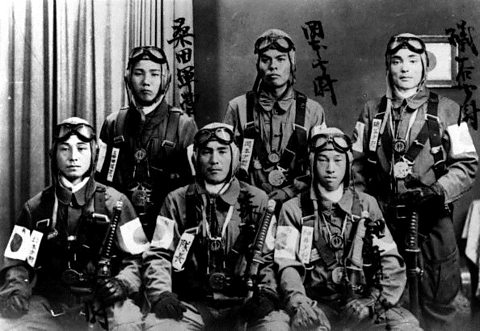
Battle of Okinawa
Japan's early success in the Pacific is brought to an end by the naval Battle of Midway in June 1942.
This is a vital turning point in the war. The Japanese go on the defensive and their empire is gradually pushed back. General MacArthur recaptures the Philippines from the Japanese in 1944, and in March 1945 the US overcomes fanatical resistance on the island of Iwo Jima. The Battle of Okinawa lasts for 82 days. Kamikaze pilots bombard the US ships off the coast, while on shore thousands of Okinawan civilians kill themselves, under pressure from Japanese army officers.
8 May 1945
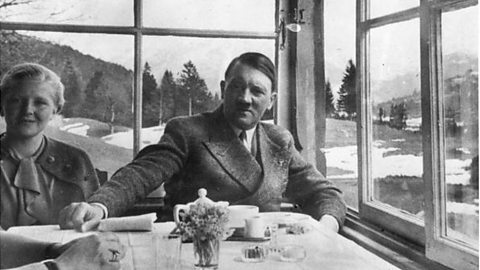
Germany is defeated
The myth of German invincibility is smashed, and the resurgent Red Army gradually roll back the Third Reich into Germany.
The Soviets evict the Germans from Poland and send troops into Romania, Hungary and the Balkans. Stalin is determined his troops will get to Berlin before the British and Americans, who are advancing from the west. As the Red Army reach Berlin, brutal fighting continues street by street and Hitler takes his life in his bunker with his newly wed wife Eva Braun. Nazi Germany is defeated.
6-9 August 1945
Atomic bombs dropped on Hiroshima and Nagasaki
With allies Germany and Italy both defeated, Japan fights on without any hope of staving off a similar fate.
American planes bomb Japanese cities with impunity. It is feared tens of thousands of US troops – and millions of Japanese – will be killed in the event of an invasion. Churchill and Truman demand Japan’s unconditional surrender. When the Japanese refuse, the Americans drop atomic bombs on Hiroshima and three days later, on Nagasaki. This terrifying new weapon causes unprecedented death and destruction. Emperor Hirohito surrenders and the most destructive war in history comes to an end.
The atomic bomb is dropped on Hiroshima. Clip from A Time to Remember (BBC Four, 2010).
Archive narration:
Oakridge and a dozen other might plants spread over the North American continent. Plants were people work in secrecy to make something out of Uranium 235.
Narrator:
And then less then a week later…
Archive narration:
A port on the cost of the Japanese mainland, it;s name Hiroshima. Uranium 235, theory into practice. A thunderstruck Emperor expects what is left of the city after the dropping of one bomb, and realises there can only be one answer.
Narrator:
Japan surrendered soon after. Signalling the end of the Second World War.
Learn more about World War Two
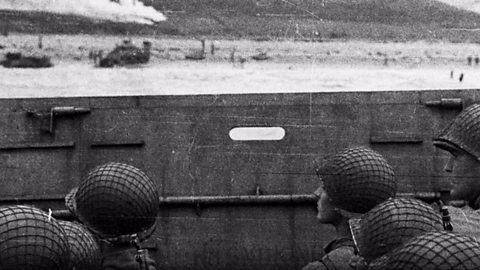
WW2: How was D-Day, the biggest ever seaborne invasion, launched? document
A detailed look at how the D-Day invasion was launched by the Allies against Nazi Germany on 6 June 1944.
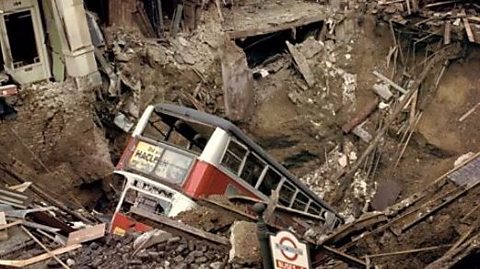
WW2: What would you have done when the bombs fell? document
The Blitz of WW2, sometimes known as the London Blitz, was the German bombing campaign that lasted eight months and targeted 16 British cities.
WW2: Countdown to Hiroshima: The bomb that changed the world. document
A timeline of the events in the days and hours before the dropping of the atomic bomb on Hiroshima, Japan.