Dyslexia can present challenges for younger writers, but did you know that some of the most successful children’s authors are dyslexic too?
Authors such as Sally Gardner (Maggot Moon) and Dav Pikey (Captain Underpants) are dyslexic, as was the late Roald Dahl. These authors demonstrate how you can still write gripping stories and be a successful author, despite facing reading and writing challenges.
According to the British Dyslexia Association, around 10% of the population has dyslexia. This translates to 1.1 million children in the UK that are dyslexic, which is approximately three learners in each average class of 30 pupils.
We are very proud to share that Spencer, the silver winner in the 8-11 category from the 2023/24 competition, is also dyslexic.
500 Words is accessible to everyone - spelling punctuation and grammar are not marked as its all about creativity and having fun with words.
Spencer, who is dyslexic, shares his experience from the 2023/24 competition.
Spencer: Hi, I'm Spencer and I am a 500 Words winner.
Presenter: Did you come here today expecting to win?
Spencer: No, not at all.
Presenter: Not at all.
Spencer: My worries when I entered was I just wasn't gonna win, I just didn't thinkit was good enough.
I didn't like writing, it's just very boring.
Hugh Bonneville: I think I'm right in saying that you weren't going to enter originally. Is that right? Because I think you've sometimes found spelling and things like that a bit of a challenge you thought,
Spencer: Yeah.
Hugh Bonneville: and so you were then told no it's your imagination that we're after.
Spencer's Mom: So Spencer was diagnosed with dyslexia towards the end of Primary 3.
I think we'd always known that there was something, something different, that Spencer was finding reading, learning to read, learning all his sounds, learning his phonics really quite difficult.
But certainly when it comes to having brilliant ideas and being able to make people laugh, he was able to do that in his story. I think his brain definitely, it is a bit of a superpower his dyslexia, I think when it comes to writing stories.
Spencer: Having no punctuation in the marking makes it a lot better for everyone, because it's just fully about the story, not anything else.
What really helped me when I was writing the story was being allowed to use your iPad. It made it a lot easier to type things down, and all the words auto-corrected, so it was really nice and easy.
Spencer's Mom: That is so funny, have you always been this funny?
Spencer: Yes!
Romesh: Yeah okay.
Spencer: The chances of me being a 500 Words silver winner were, was absolutely amazing, one in 44,000 my mind was… [MIND BLOWN]
Spencer's Mom: I think winning the competition has really given Spencer the confidence to give it a go and try and write more and put his ideas down on paper, he has a wee ideas book for scribbling things down, so it really has made a big difference.
Spencer: I want to write a sequel to my current story, maybe something like 'The ASDA Thief'or 'The Revenge of Tesco'.
Jamie Oliver
Jamie Oliver, who has dyslexia, shared his advice on writing stories and overcoming challenges.
Jamie is one of the most successful non-fiction authors in the country - thanks to his cookbooks - which have been published in 96 countries around the world. He has recently turned his hand to writing fiction and in 2024, released his second children’s book ‘Billy and the Epic Escape’.
When it comes to children with dyslexia, Jamie said: "with a lot of kids that struggle at school, they have incredible imaginations, but they can't get it down on paper and obviously with technology now, even my first three cookbooks, I wrote on dictaphone, each chapter was a tape and then I could design it and make it work".
Jamie has shared his advice for children who want to enter the 500 Words competition but have have difficulties when writing because of their dyslexia. Play the video on the right for Jamie Oliver’s top tips.
Being dyslexic, I never thought I'd ever write a cookbook, let alone a kid's book. All I can say my advice to you is I wrote most of my stuff on a dictaphone, just record it. It's nice to buddy up with someone, whether it's Mum or Dad, or a friend.Just to bounce stuff off of. I love using stickies, colour coded stickies. I like to visualise. I like to see things, so stick them up. Simple stories, think about characters. Pull a face you like the look of off the internet, put it up there.
Do a little top trumps. Like their character, what they're like how tall they are. What sports they like. Build up like texture and start seeing a world and you can even get pictures of the world or a wood, or a place. And then, from that you can start piecing it all together like a little jigsaw puzzle. And then where you struggle, just ask for help.
If you're dyslexic, don't be afraid to ask for help because you've got superpowers.
You've got an incredible imagination. 500 Words is an amazing test to get you to bottle down a story. I wish you all the luck in the world.
You do it. Yes, you can.
Advice from the British Dyslexia Association
At the British Dyslexia Association we encourage all learners to improve their literacy skills and storytelling is an important part of that! It is a fantastic way for children to practice their reading, writing and spelling whatever level they are working at.
Learners with dyslexia can be extremely creative and will have wonderful stories to tell. We hope that adults working with dyslexic children all around the UK will encourage their learners to enter the competition.
Our top tips are:
1. Plan your story – You could use a mind map or story mountain to help you.
2. Tell your story – Verbally share it with someone else and use props if you want to.
3. Record your story – Record your story in a phone, tablet or other device.
4. Write your story – Don’t worry about your spelling or handwriting, let the ideas flow and edit afterwards.
5. Enjoy your story – Sit back and relax whilst others enjoy what you have written!

Need more inspiration?
Back to 500 Words
Click here for more information on 500 Words.

Dyslexia: Make a Difference
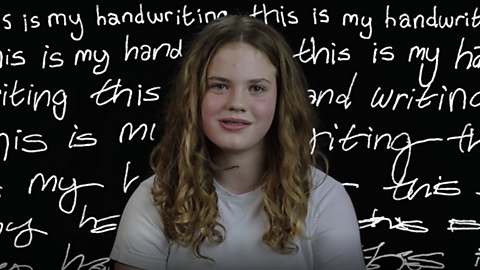
BBC Teach talks to students with dyslexia about the impact this has on them and how different techniques can help.
What are the 500 Words prizes?
There are many prizes to be handed out to the gold, silver and bronze recipients.