Please always refer to the latest government advice before booking travel and departing on any trip.
Take a journey to World Heritage shrines, stunning mountains and coastline, relaxing hot springs and more in Wakayama Prefecture.
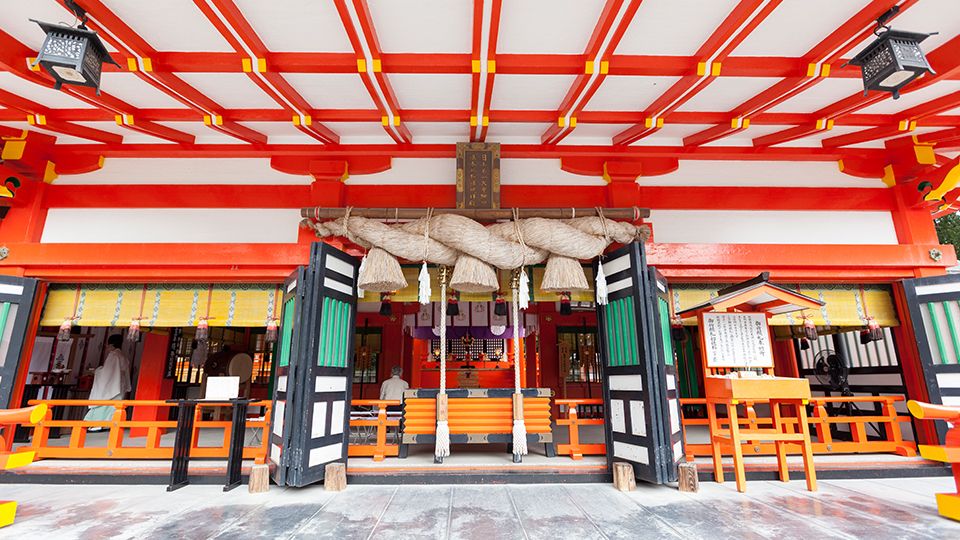
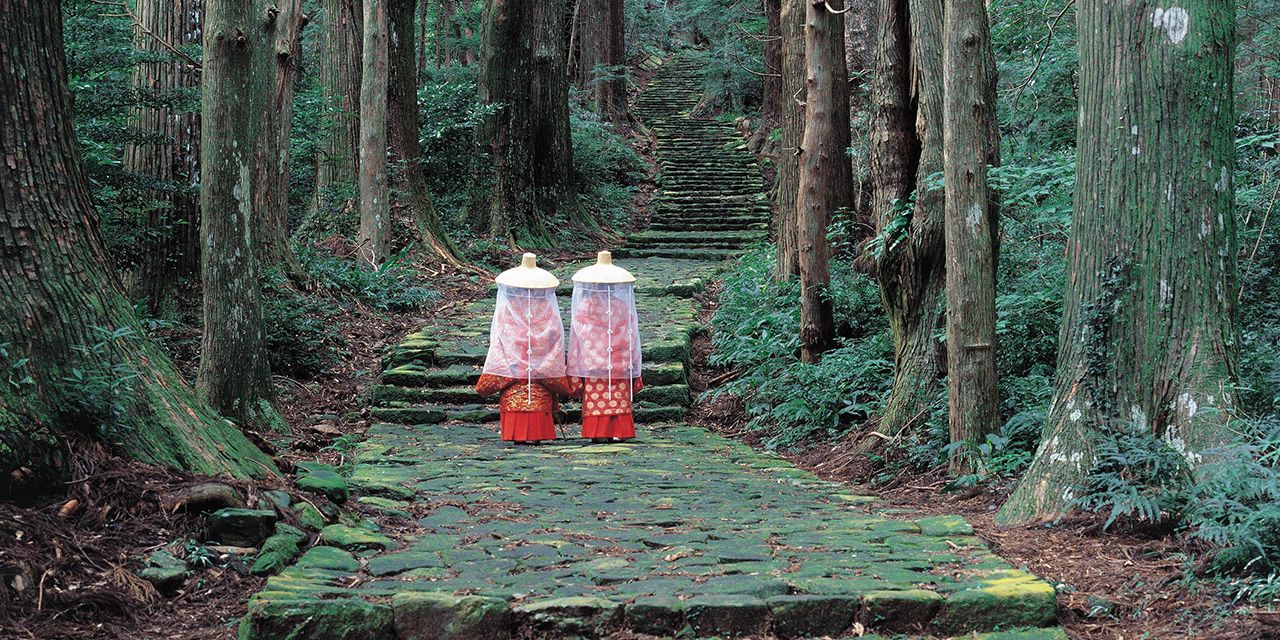
The three grand shrines that form the Kumano Sanzan in Wakayama Prefecture’s Kii Peninsula have been a destination for pilgrims for more than 1,000 years. Initially, the pilgrimage was reserved for the imperial family and aristocrats who would undertake an onerous 40-day journey from Kyoto to pay their respects to the deities, but by the 1500s the Kumano Kodo trails were attracting pilgrims from various walks of life across Japan.
Today, the World Heritage-designated Kumano Kodo and Kumano Sanzan aren’t just for pilgrims, nor is the journey arduous. For those who make the trip, it’s a chance to experience Japan’s ancient spirituality, not to mention soaking in natural hot-spring baths, connecting with nature and experiencing meeting local artisans. Here’s how to do it in two days:
Day 1
Visit Kumano Hongu Taisha Grand Shrine
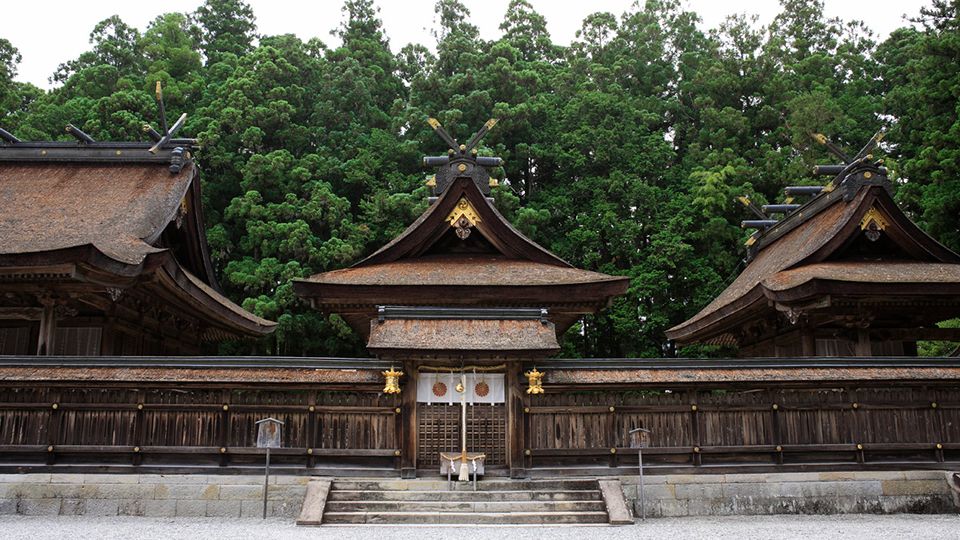
Start with Kumano Hongu Taisha, the head of about 3,000 Kumano shrines around Japan and the point where Kumano Kodo’s ancient trails converge. This grand shrine (taisha) has been in its current form since flooding destroyed most of its structures in 1889, but the way it has been reconstructed with natural, unfinished materials amid unspoiled cypress and cedar forest creates a timeless feel. Give yourself a couple of hours to slowly soak it all in.
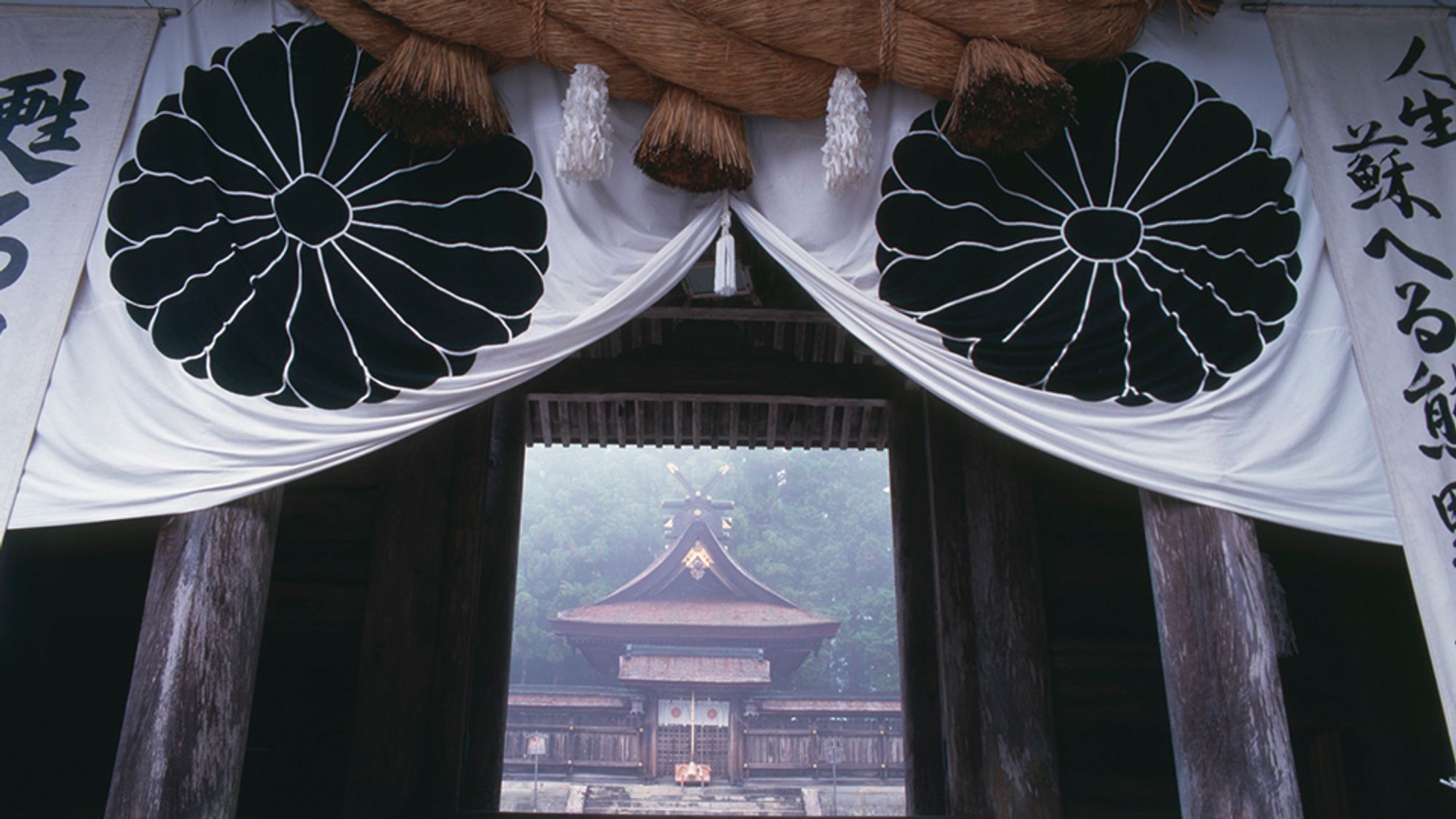 Kumano Hongu Taisha Grand Shrine
The grand shrine feels worlds away from the hustle of Osaka, 150km to the north, yet it’s not a long trip. If you’re coming via Osaka or Kyoto, take the Kuroshio express train to Kii-Tanabe in Wakayama; it’s two hours, 10 minutes from Shin-Osaka (departing almost hourly) and three hours from Kyoto (departing once a day, at 5.47pm). From Kii-Tanabe, buses run almost every hour across the Kii Peninsula to Hongu, taking 90 minutes to two hours, depending on the service. If you’re planning to fly from Tokyo or elsewhere, you could also get to Kii-Tanabe via Kansai International Airport or Wakayama’s Nanki-Shirahama Airport.
Make your own washi paper
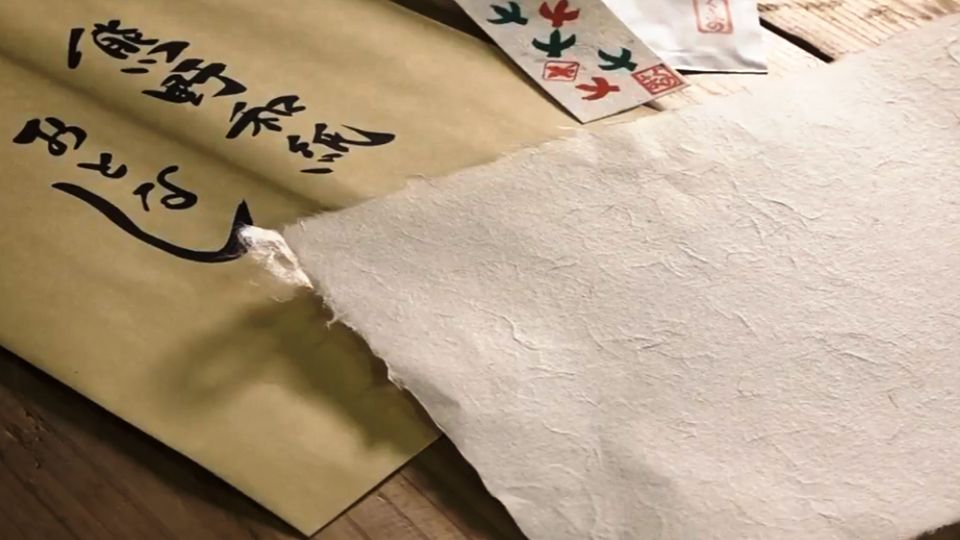
If you want to create your own souvenir from the Hongu Taisha, stop off beforehand at the Otonashi washi workshop (a short walk from the grand shrine) to make traditional handmade paper called washi. Guided by expert washi makers, the workshop takes 20 to 30 minutes and once you’ve finished you can take the sheet of paper to be stamped with a sacred seal at the grand shrine. Just remember to make a reservation a week in advance, unless you’re going on a Saturday, Sunday or national holiday, when walk-ins are accepted.
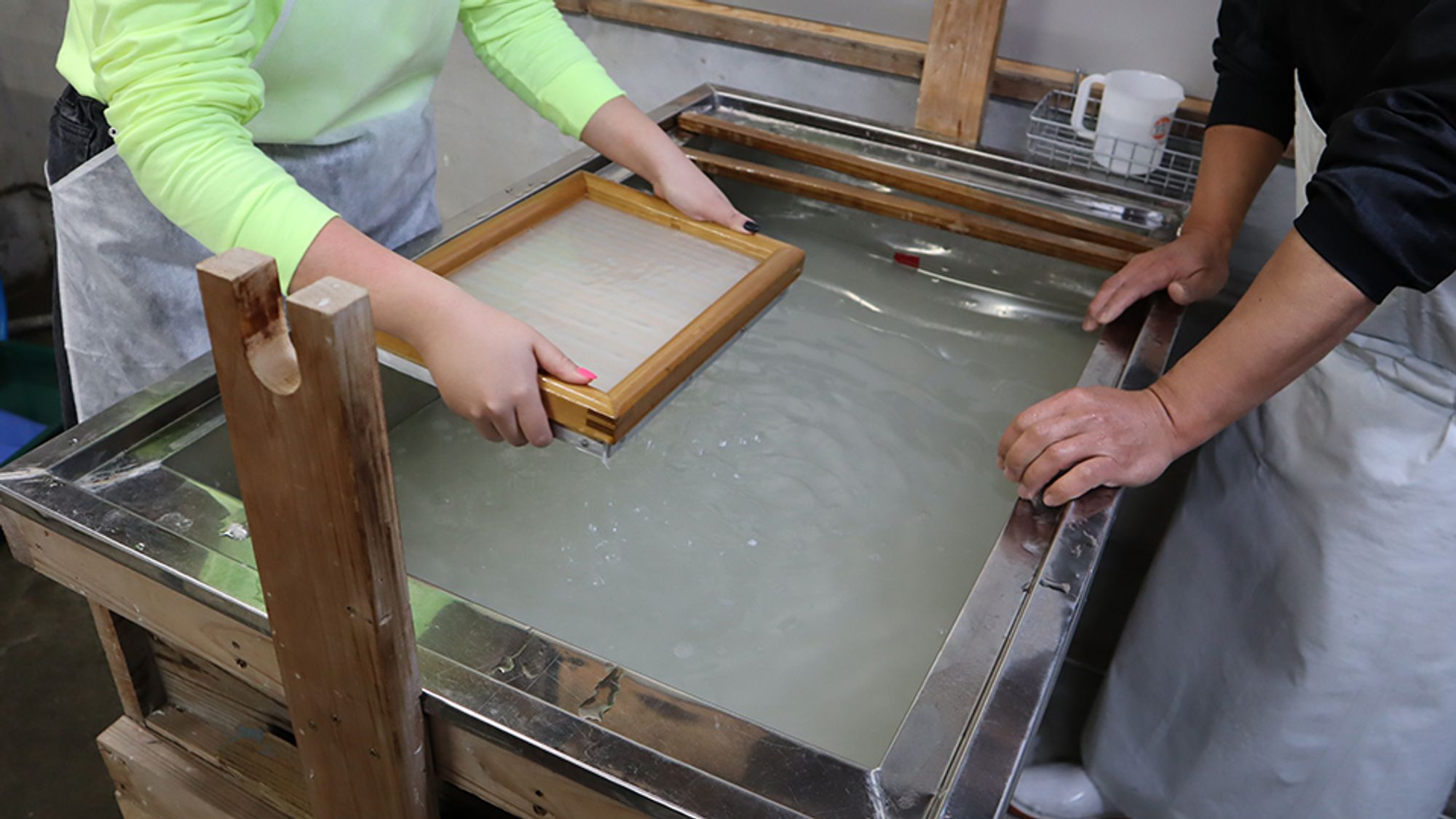 Making Washi paper
Yunomine Onsen
Back on the bus from Kumano Hongu Taisha, it’s only 10 to 20 minutes to two small onsen (hot spring) hamlets. The first, one stop from Kumano Hongu Taisha, is Yunomine Onsen, set in a lush valley deep in the mountains. Here, rain that fell in the mountains more than a century ago is believed to be heated by underground magma before bubbling back to the surface. These hot springs are said to be among the oldest in Japan, having been discovered almost 1,800 years ago. At one time, Kumano Kodo’s pilgrims would traditionally purify themselves in these naturally piping-hot waters before visiting Kumano Hongu Taisha. Travellers often notice that the water naturally changes colour throughout the day, possibly due to weather conditions.
Among the public bathing options in Yunomine today, the Tsuboyu bath is quite unlike the typical onsen you find around Japan. This private, stone-lined bath, which is housed in a small cabin by the creek that runs through Yunomine Onsen, can only fit two to three people (it can be booked for half an hour), but because of its age and historical significance it is registered as a Unesco World Heritage site.
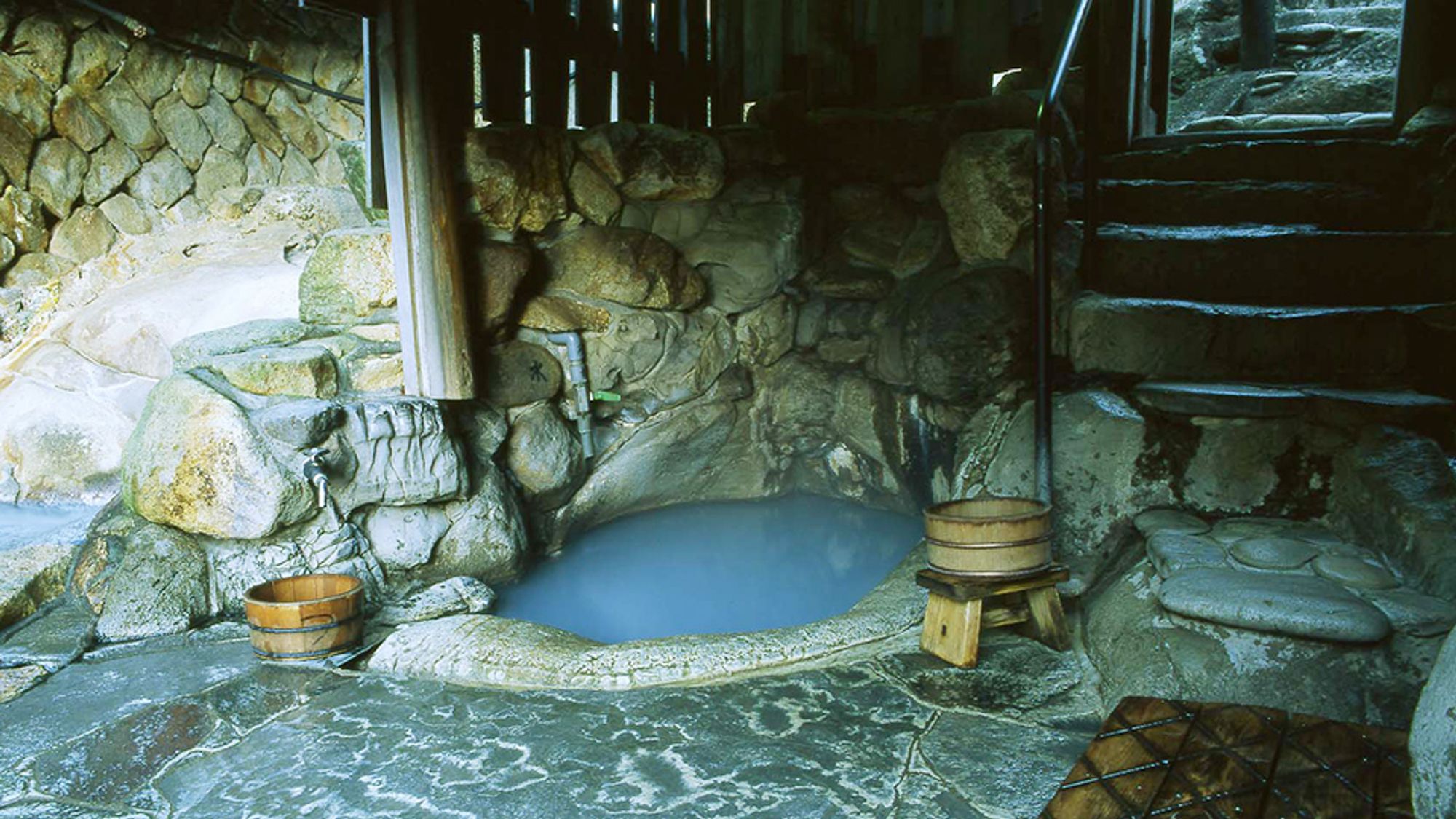 Yunomine Onsen
Kawayu Onsen
Roughly 10 minutes by bus from Yunomine, you’ll find Kawayu Onsen located on the Oto-gawa River. In winter, Kawayu is most famous for its Sennin-buro River Bath (thousand-people bath), a dammed section of the river where hot-spring water gurgles to the surface. In a world before social distancing, you might well have been able to fit close to 1,000 bathers in here, but nowadays the Sennin-buro is ideal for a public soak far apart from fellow bathers. Any time of year, you can also dig into the Oto-gawa’s gravel riverbed, letting the hot-spring water seep through to create a private, outdoor hot-spring bath – something rare even in a hot-spring rich country such as Japan.
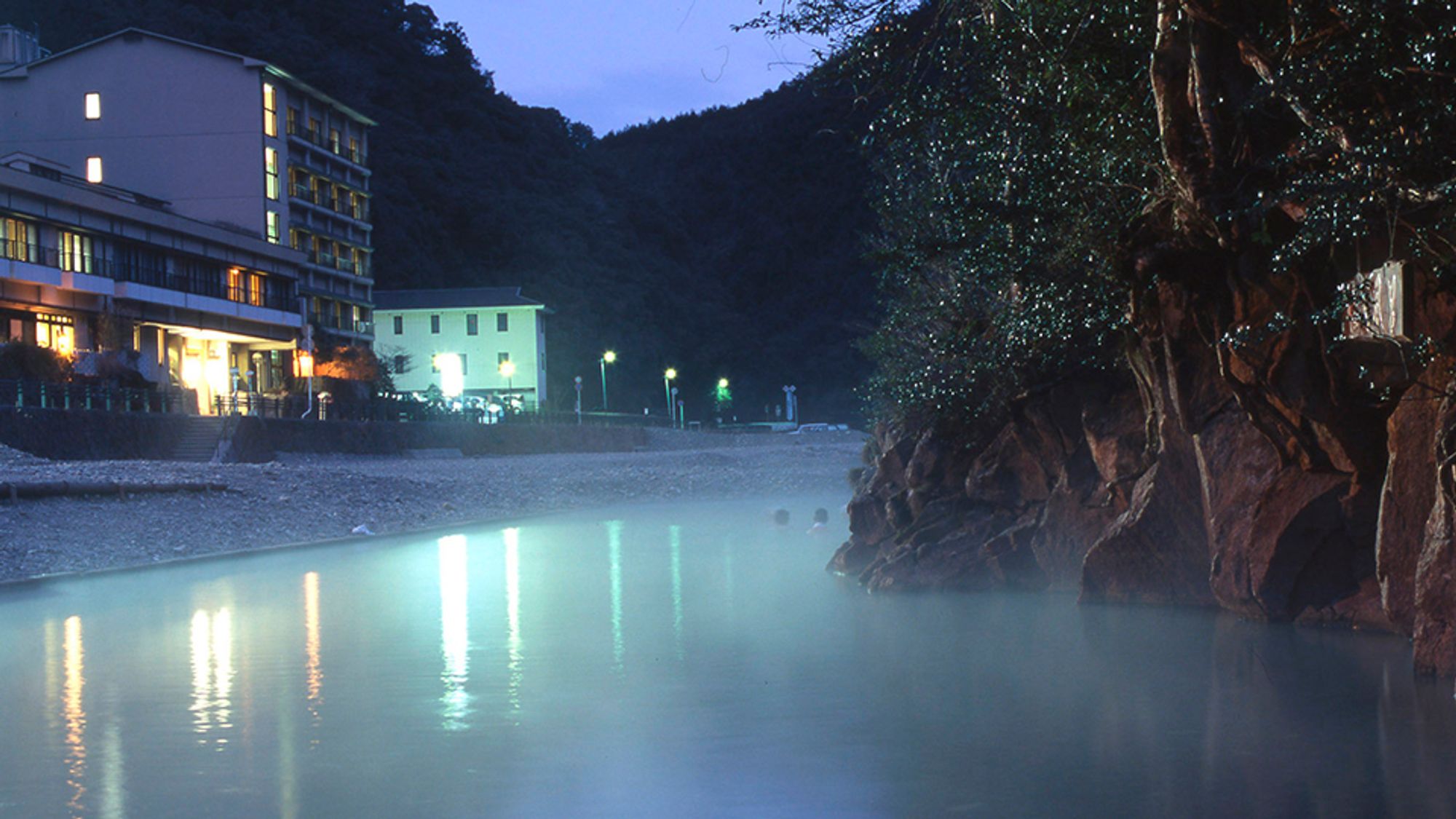 Kawayu Onsen
Stay at a ryokan
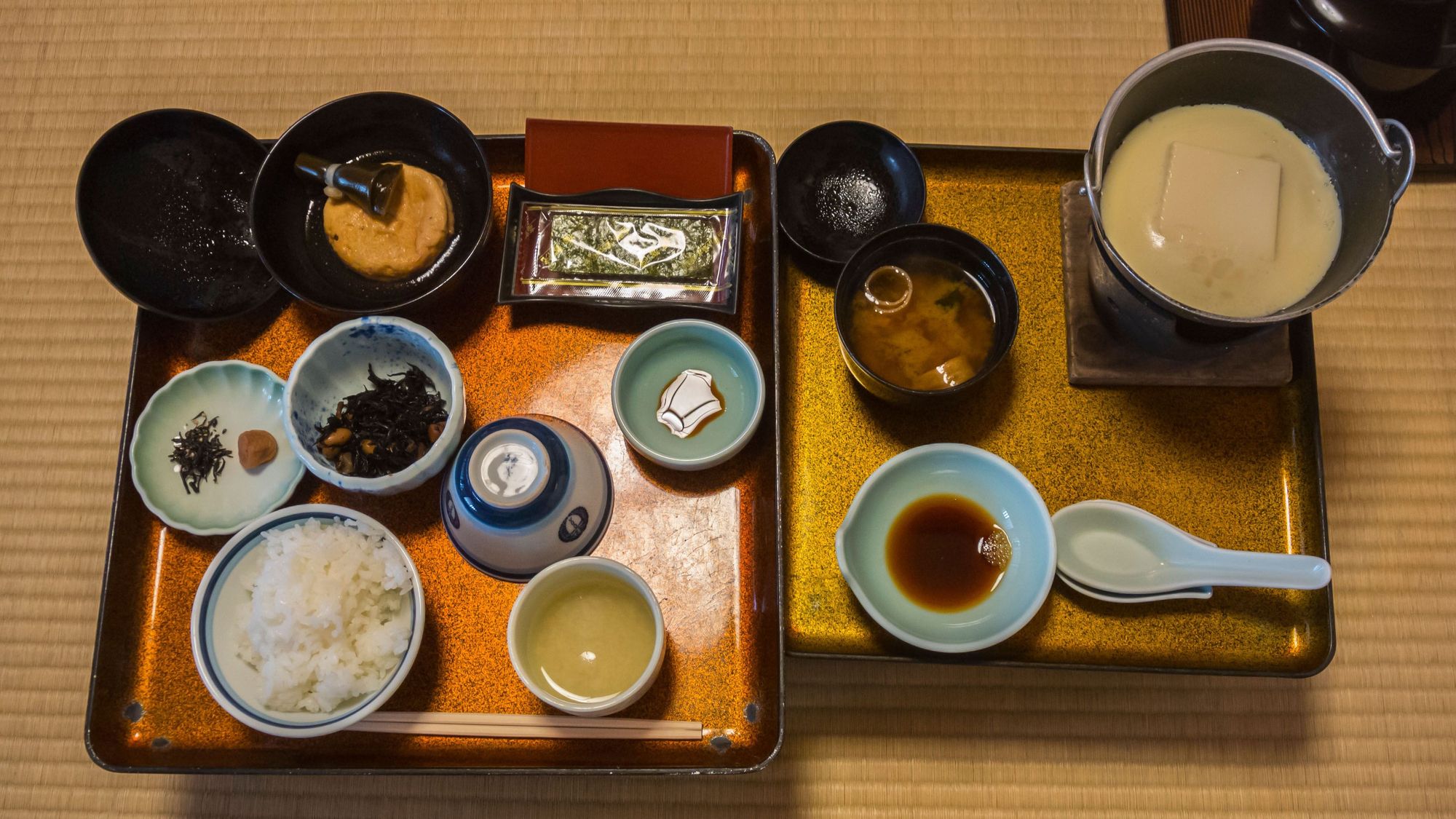
Besides bathing, both Kawayu and Yunomine also have a collection of traditional ryokan inns and family-run minshuku guesthouses that make the villages a peaceful place to stop for the night. Visitors can find a variety of inns to suit their budget, with average prices ranging from 10,000 yen to 45,000 yen per person, per night for a half board stay. All have their own hot-spring baths for guests, serve fresh local cuisine such as salt-grilled ayu (sweetfish) and offer the opportunity to enjoy an evening relaxing in tatami-mat guestrooms, while the clear, countryside air means you can step outside at night for a spot of stargazing.
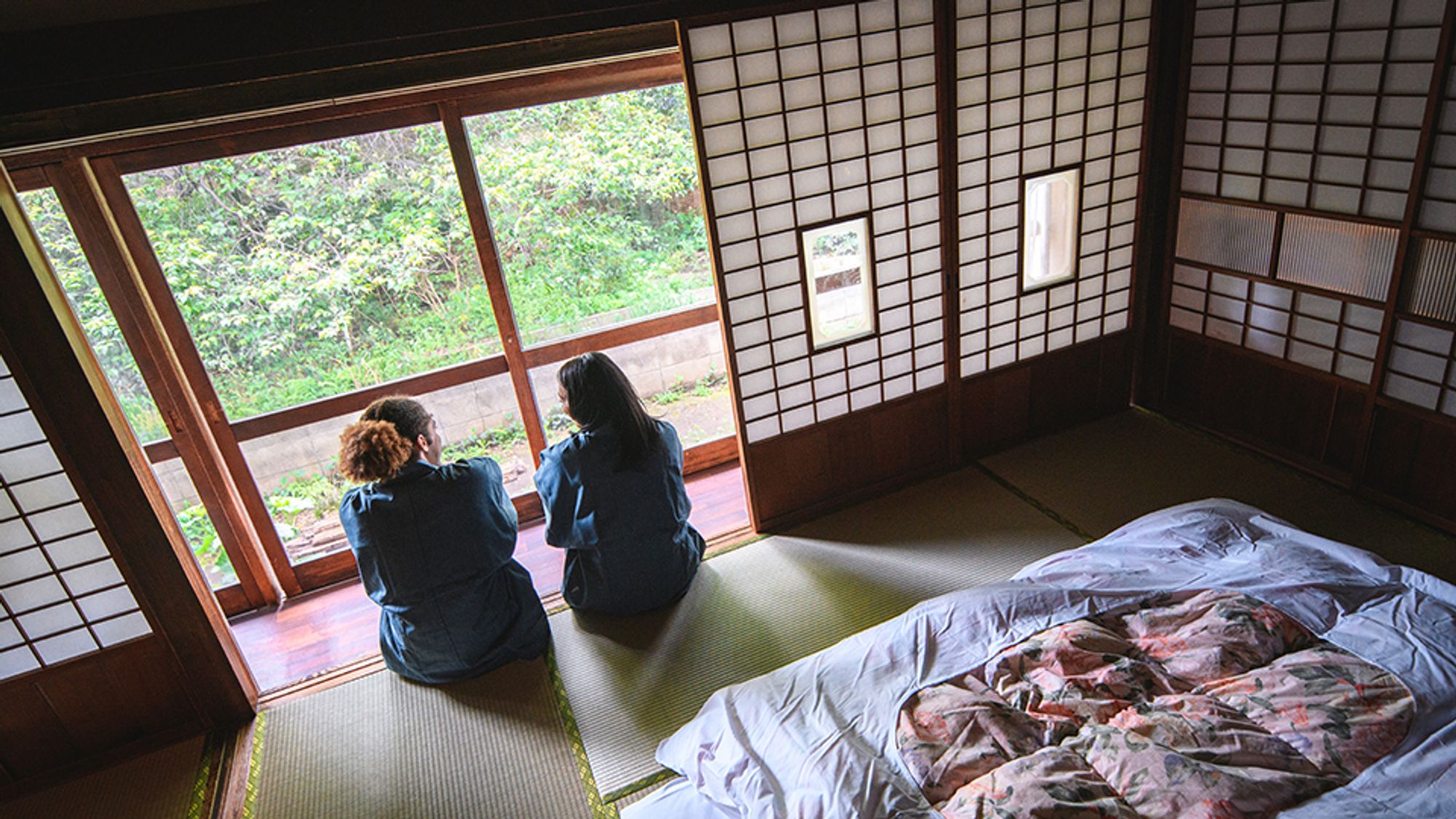 A traditional ryokan
Day 2
Kumano-gawa River Boat Tour to Kumano Hayatama Taisha Grand Shrine
In the morning, retrace part of the journey pilgrims once would have taken, with a 90-minute boat trip (starting at 10am) down the Kumano-gawa River from Hongu Taisha to the second of three grand shrines, Kumano Hayatama Taisha Grand Shrine, located in the seaside town of Shingu. As you glide down the river in the same type of flat-bottomed wooden boats that have plied the river for centuries, you’ll pass through lush gorges accented by waterfalls and unique rock formations, and might even be treated to a shinobue flute performance by your guide.
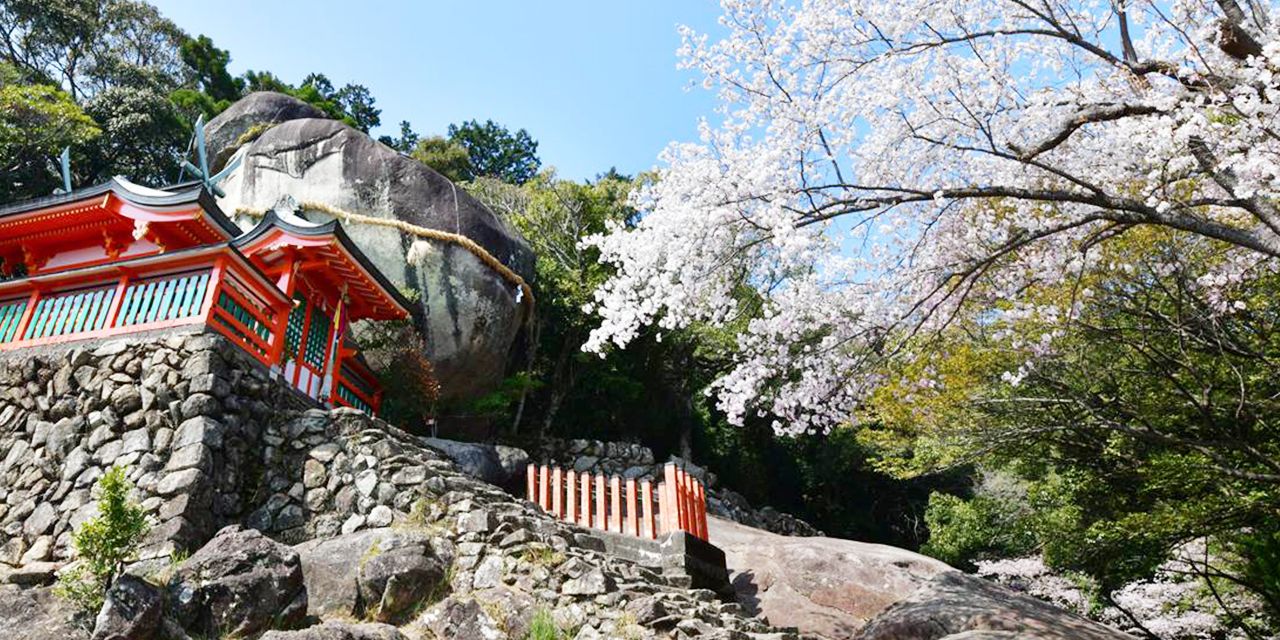
After the boat trip, you won’t need more than an hour at Hayatama Taisha, but in that time you can get a real sense of how Shintoism, Japan’s indigenous religion, reveres nature, with a collection of natural monuments on the grand shrine’s grounds. Both the 1000-year-old Nagi-no-Ki tree and the massive Gotobiki-iwa Rock – which looks set to topple from its clifftop perch and flatten the grand shrine – are considered deities.
If you want to see one of the region’s most spectacular events, each year on 6 February the Oto Matsuri fire festival features mass purifying rituals on the mountain followed by a fiery night-time procession of torches.
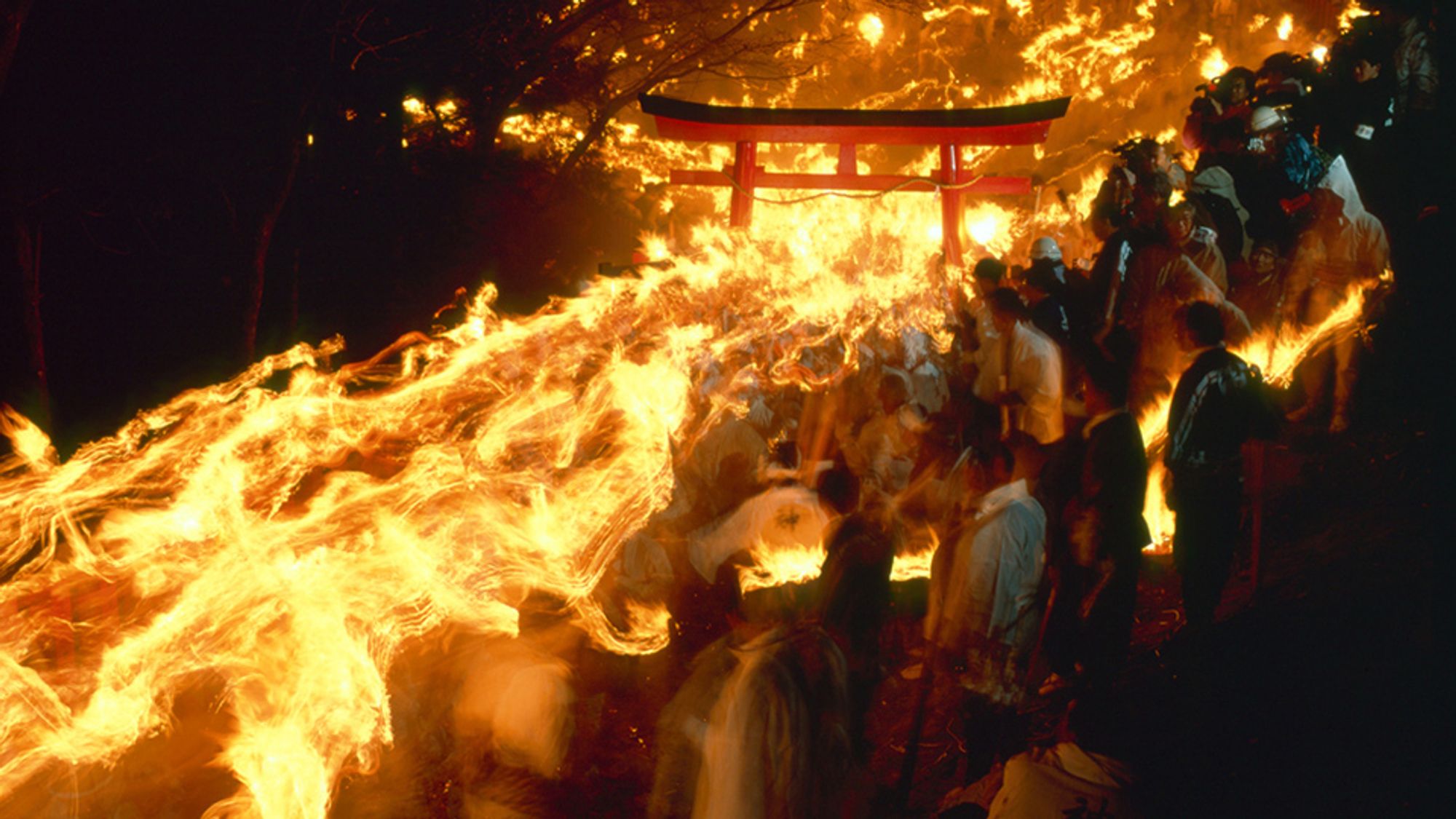 Oto Matsuri fire festival
Finish with Kumano Nachi Taisha Grand Shrine and Nachi Waterfall
From Shingu, there are regular bus and train connections down the coast to Kii-Katsuura, where you can take another bus (25 minutes) to the third of the grand shrines, Kumano Nachi Taisha Grand Shrine. Details of all the area’s bus routes can be found here.
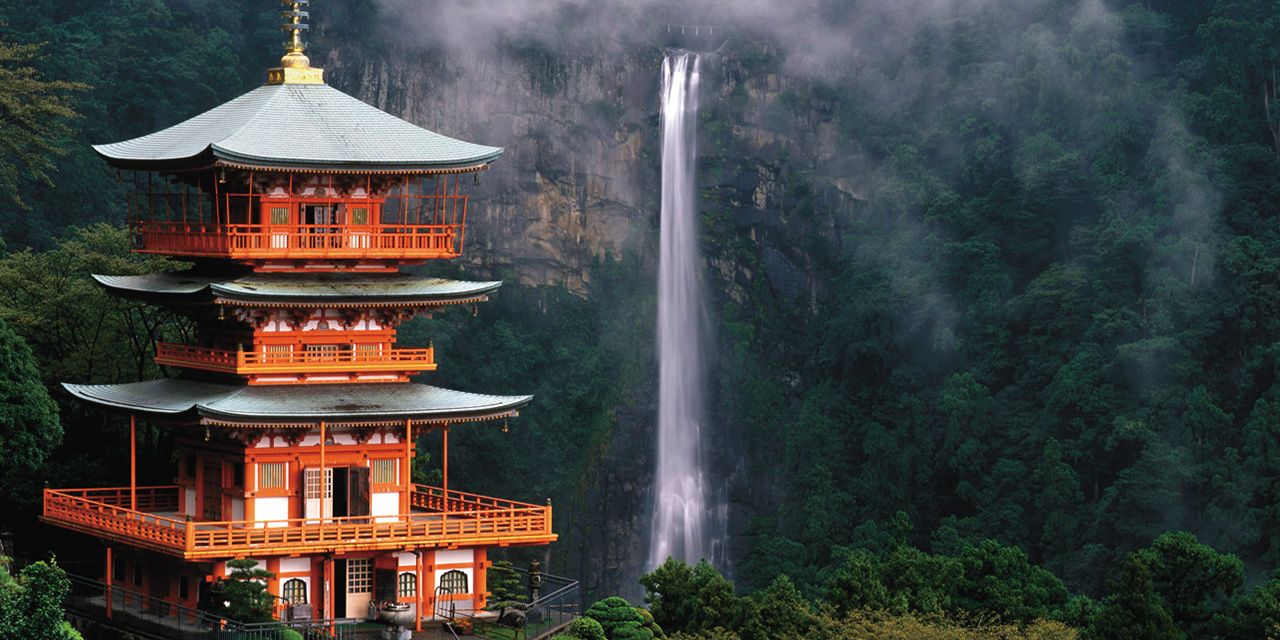
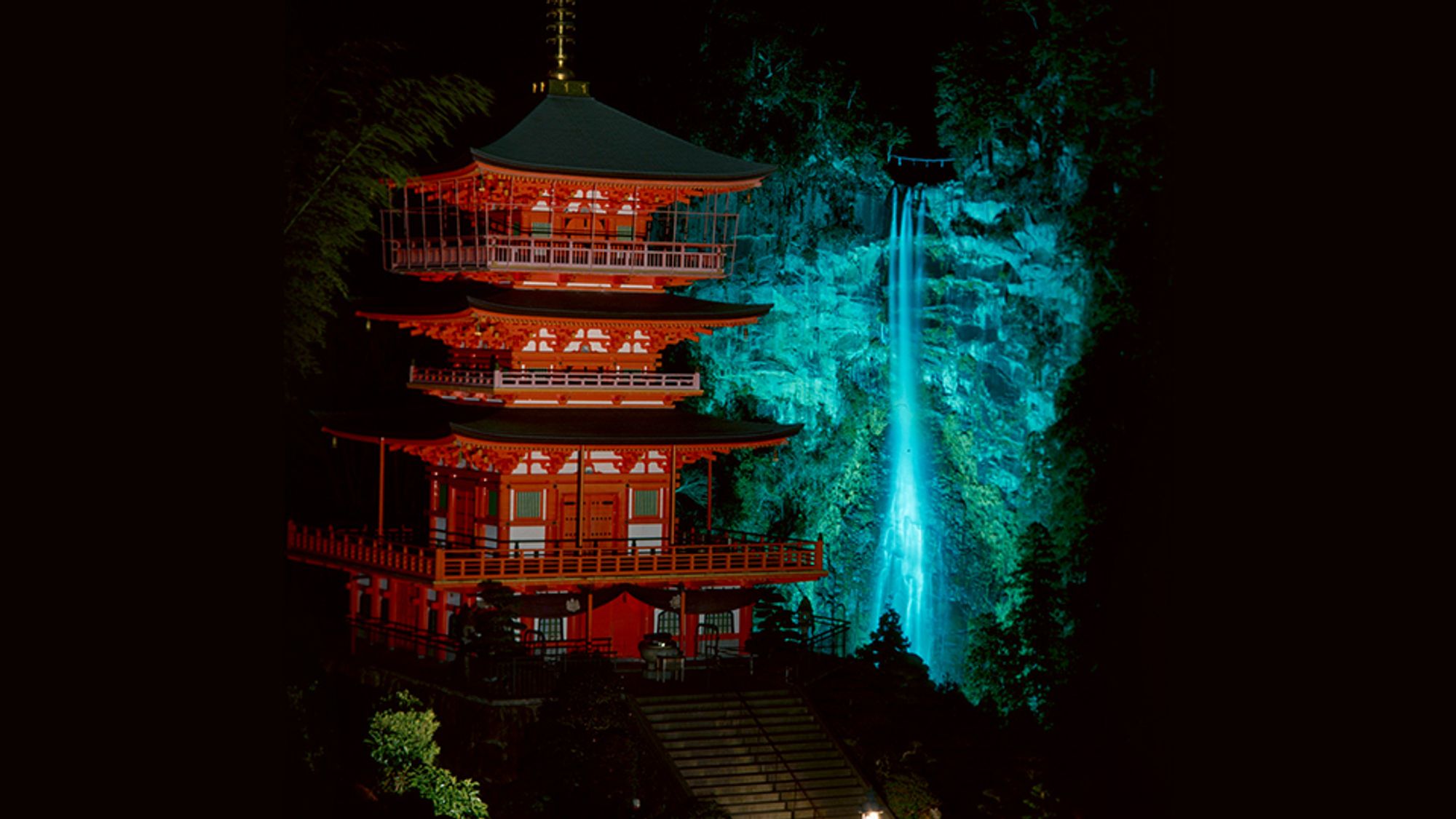 The pagoda at Nachisan Seiganto-ji Temple and Nachi Waterfall
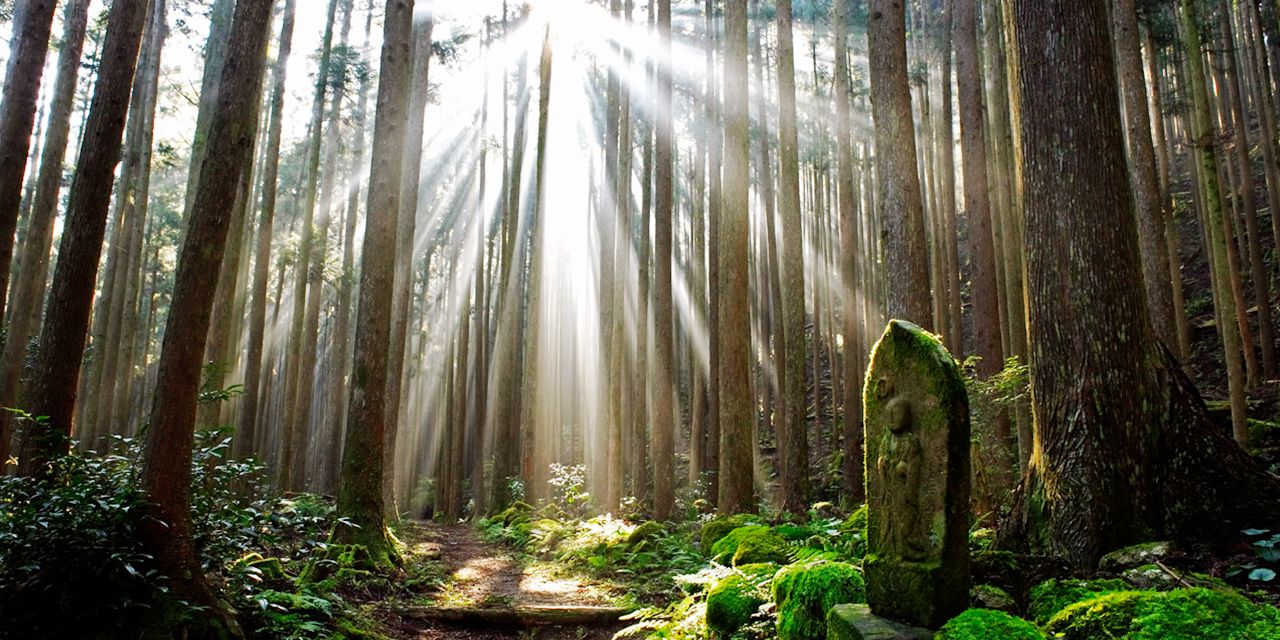
As with the Hongu area, Nachi is more than just a shrine visit, as you’ll discover if you get off at the Daimon-zaka bus stop and allow yourself a couple of hours of gentle strolling – starting with a walk up the cobblestone Daimon-zaka slope, a part of the Kumano Kodo that passes through towering Japanese cedars, camphor trees and bamboo groves.
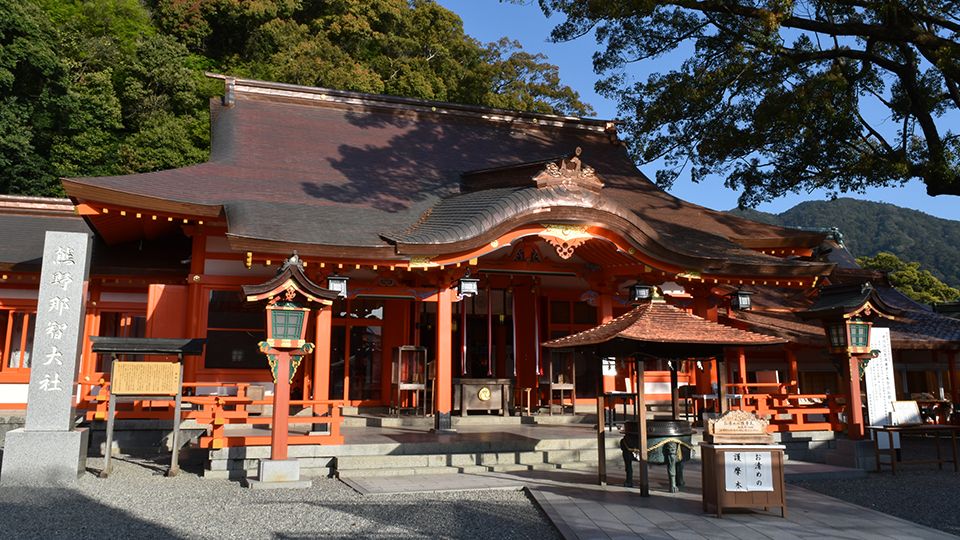
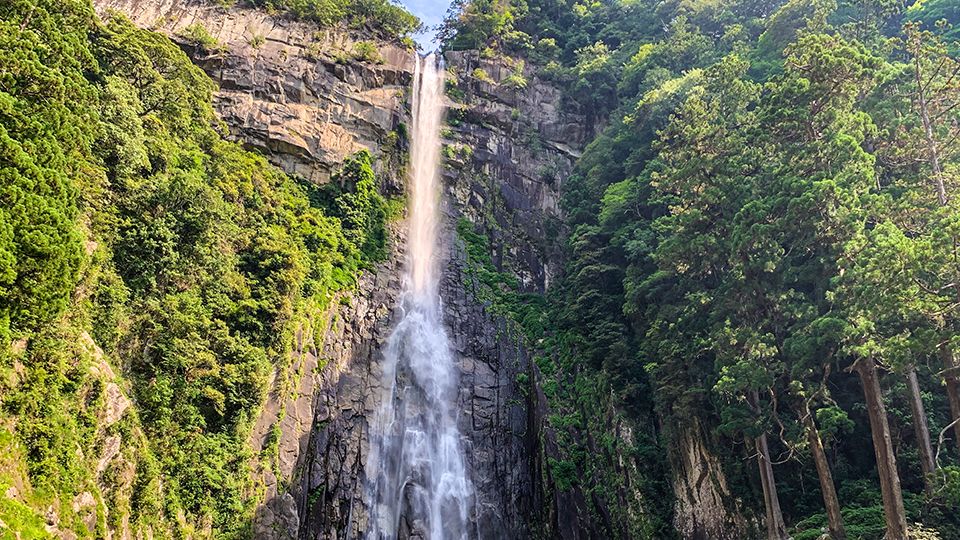
After 267 steps spread over 600m, the Daimon-zaka leads to the entrance to Kumano Nachi Taisha, which, unlike the serene Hongu Taisha, is coloured with an eye-popping orange that bursts from its natural surroundings. It’s an aesthetic continued at the connected Nachisan Seiganto-ji Temple whose three-tiered pagoda creates a photogenic contrast with the 133m Nachi Waterfall as its backdrop – a classic Wakayama view with which to end a laidback mini pilgrimage to the Kumano Sanzan.
If you have more time
From Nachi Taisha, head back to Kii-Katsuura and you can take the Kuroshio express train to Osaka (four hours), Kii-Tanabe (two hours) or the Nanki Wide View express train to Nagoya (four hours). Alternatively, consider staying in Wakayama a day or two longer. There’s plenty to do in Tanabe City, Wakayama City and other parts of the prefecture, and plenty of specialist travel agencies and guide groups who can help non-Japanese speakers experience the best Wakayama has to offer.
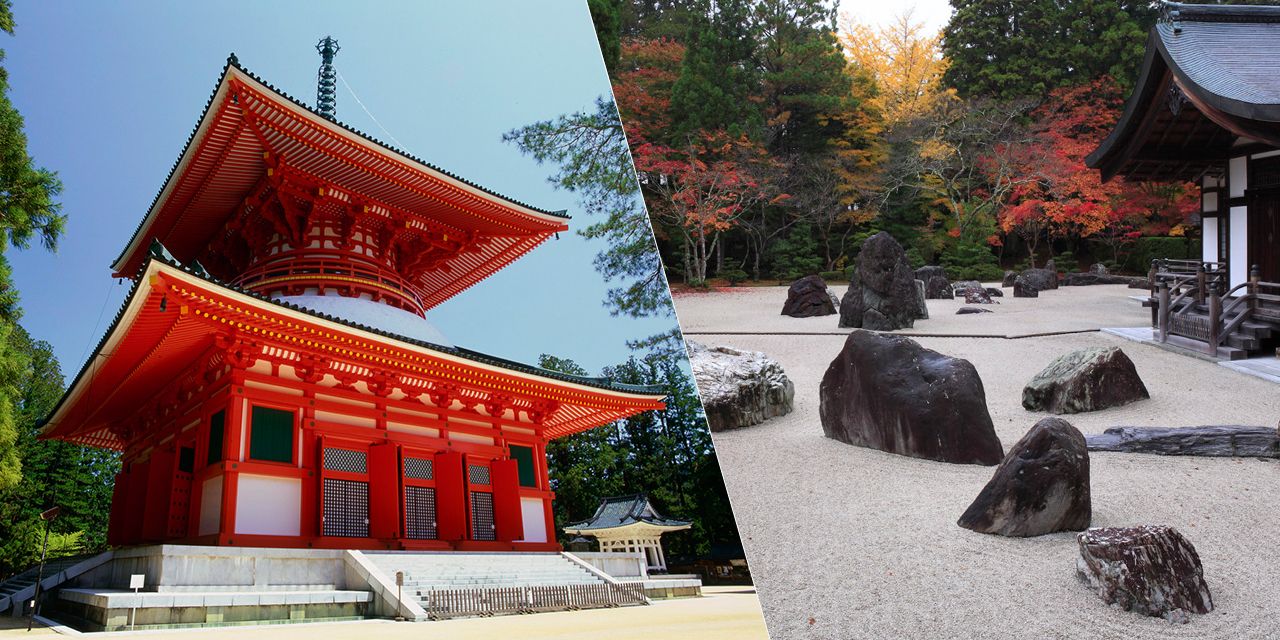
A longer Kumano Kodo hike, a stay overnight at a temple in sacred Koyasan or trying traditional log rafting – it’s all easy to do using the Koyasan-Kumano Access Bus or with a private tour. Alternatively, visit the southern tip of Wakayama for sea kayaking and other water sports, or gear up for a cycling tour.
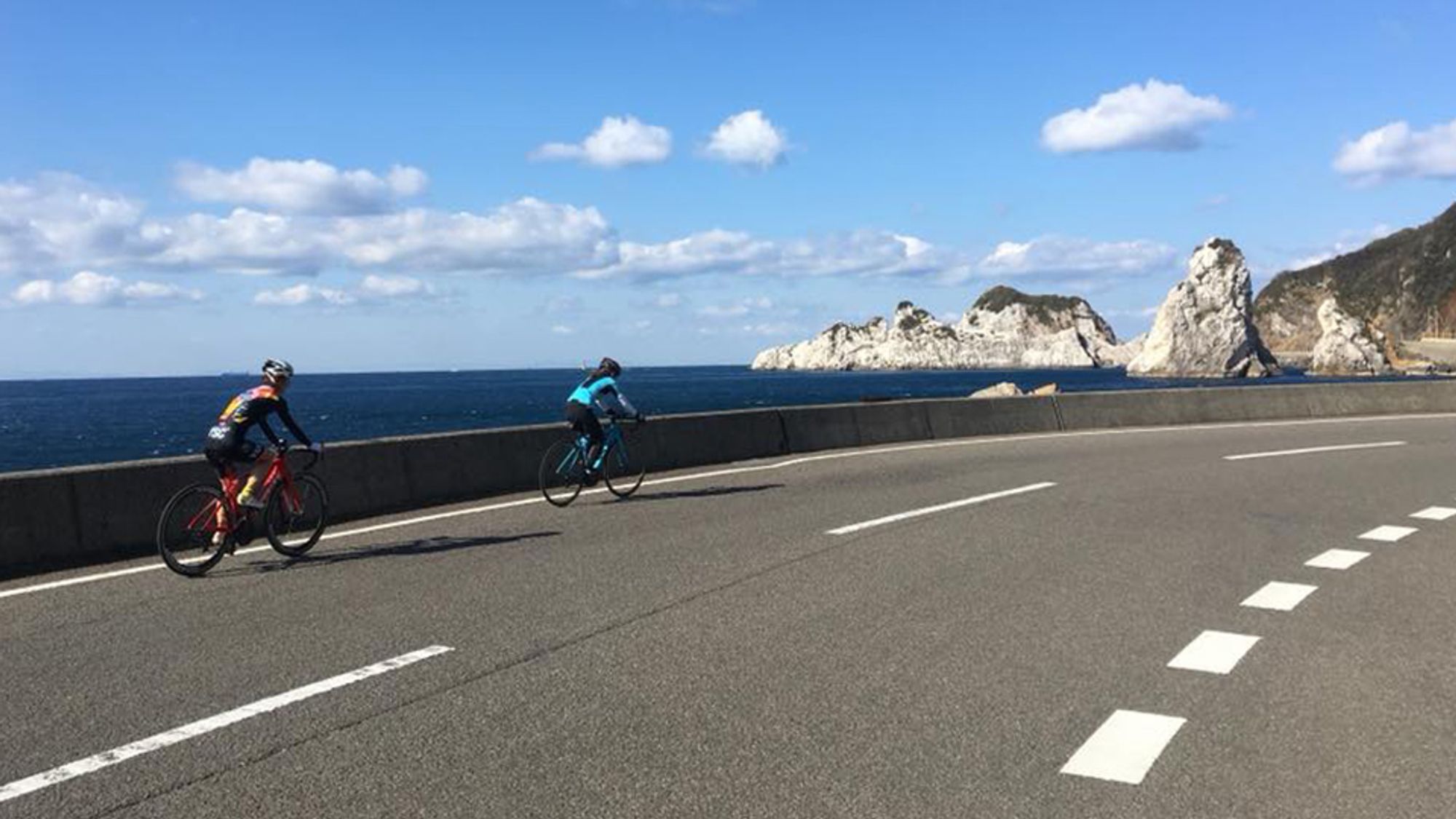 Explore Wakayama by bicycle
From outdoor activities to World Heritage shrines to natural hot-spring baths, Wakayama has all that and much more to offer, and wherever you are in Japan, it’s all just a short trip away.