|
 |
 | | | You are in: Football |
|
| | Monday, 6 January, 2003, 00:02 GMT City of darkness  Rio has been wrongly labelled as the 'city of samba'
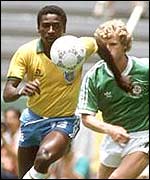
Josimar went into the 1986 World Cup an unknown and emerged a star. During the course of the competition he won Brazil's right-back slot, from where he scored goals which, but for Diego Maradona, would have been the best of the tournament. But as quickly as he came he was gone. Josimar buried his potential under a mountain of cocaine and chaos. The roots of his rise and fall are to be found in his home neighbourhood. Cidade de Deus was an unsuccessful attempt to rehouse shanty town dwellers in better conditions on the edge of Rio de Janeiro. Its name mockingly translates as "City of God" - a nightmarish neighbourhood now immortalised by a magnificent film which has just opened in London. The film was a box office sensation in Brazil but did not receive universal critical acclaim. Usually the Brazilian press support any local film, and Cidade de Deus did win some rave reviews.
But it was savaged in some quarters. The reason... the truth hurts. One of the most glaring aspects of Brazil is the chasm in income distribution. The majority live on the wrong side of the tracks, a fact which Brazilian films have handled in a number of ways. Some choose to ignore the poor altogether. Others turn them into cute victims or glorious heroes. Cidade de Deus had the courage to grasp the essential truth - a brutal environment produces damaged, brutalised people. The film is the perfect antidote to guidebook nonsense about "the world's most vibrant culture", full of people "doing the samba on their way to the beach", written by those who know nothing or those who should know better. The realities of poverty, violence and social breakdown are not nearly so glamorous. Once the context is understood, it is easy to imagine how Josimar grew up lacking the structure necessary to cope with the global fame he so suddenly acquired.
The film covers the years that Josimar spent in Cidade de Deus - the 60s, 70s and early 80s. Director Fernando Meirelles feels that the current situation in the neighbourhood is far worse, which is my impression. The contemporary Cidade de Deus is the kind of place where 14-year-old girls are cradling their babies while 14-year-old boys are articulate only with an AK-15. In such an environment, it is a serious business when a young boy shows talent on the football field. On his adolescent shoulders are thrust all the hopes of his entire family and he becomes their ticket to a better future. The tensions are increased by the fact that Brazil combines mass poverty with a rampant consumer culture. So football ceases to be an activity of pure pleasure at a very early age. Even a pre-pubescent will talk of his ambition to be signed by a major European club and buy a car and a house for his mother. It is something to remember next time Brazil are in action and some dim-witted commentator talks about "the happy-go-lucky skills of the samba stars". Because those skills have been sharpened by the fear that the consequence of failure is a condemnation to permanent poverty. | |
Top Football stories now:  Links to more Football stories are at the foot of the page. | ||||||||||||||||||||||||||||||||||||||||||||||||||||||||||||||||||||||||||||||||||||||||||||||||||||||||||||||||||||||||||||||||||||||||||||||||||||||||||||||||||||||||||||||||||||||||||||||||||||||||||||||||||||||||||||||||||||
| | | | | | ||||||||||||||||||||||||||||||||||||||||||||||||||||||||||||||||||||||||||||||||||||||||||||||||||||||||||||||||||||||||||||||||||||||||||||||||||||||||||||||||||||||||||||||||||||||||||||||||||||||||||||||||||||||||||||||||||||
 | |
|  E-mail this story to a friend E-mail this story to a friend |
| |
| Links to more Football stories |
| | | ||
 | ||||
 | | Back to top
| ||
| ------------------------------------------------------------ BBC News >> | BBC Weather >> -------------------------------------------------------------------------------- © MMIII | News Sources | Privacy |






 It is easy to imagine how Josimar grew up lacking the structure to cope with global fame