'Life in Welsh rugby' but stats show issues remain

Wales have not won in the Six Nations since their 2023 victory over Italy in Rome
- Published
Few Wales defeats will have been met with quite as much optimism as the one against Scotland on Saturday.
Granted, Welsh rugby will cling to the tiniest sliver of hope right now. This was a 24th loss from 26 Tests and a 14th successive Six Nations defeat.
But after a run of demoralising, often record-breaking thrashings, the thrilling contest with the Scots at least showed that Wales can be competitive.
"I've been worried for Welsh rugby," former captain Sam Warburton told BBC Sport.
"I was thinking if we carry on, interest is going to plummet, 57,000 at the France game, interest was going down and it felt like Welsh rugby was in a little bit of freefall.
"Loads of record defeats recently and it needed something to recover it, and I felt a bit emotional in the stadium hearing the noise in there. Fair play to the fans, even after all the defeats, they have all put their hands in their pockets, turned up and cheered them on.
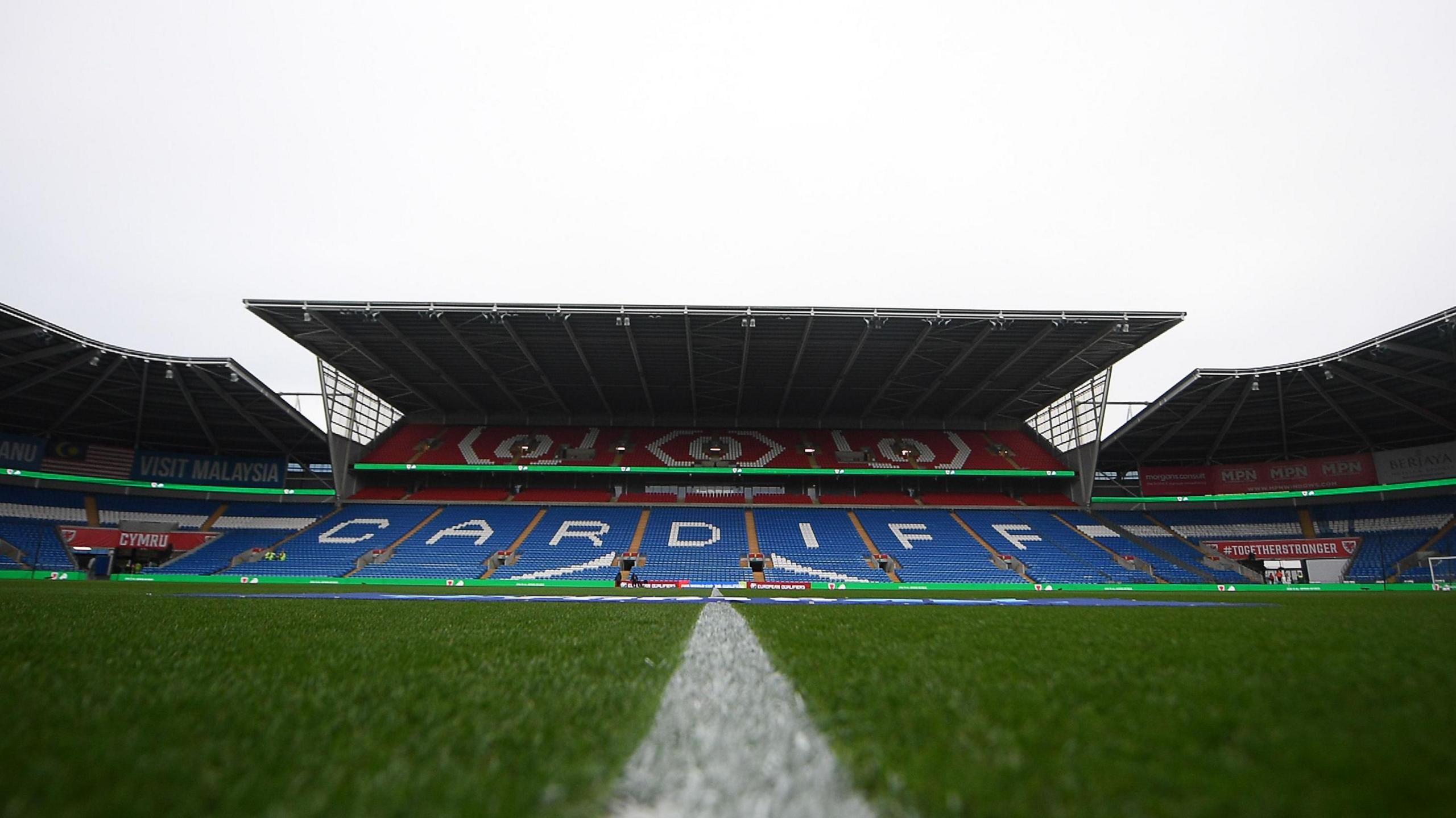
"It was loud in there and I thought: 'Brilliant, there's life in Welsh rugby.' Those fans will walk away, look forward to Italy [on the final weekend] and I think that will be a 70,000 game."
There is a weekend off and a daunting trip to Ireland to come before Wales return to the Principality Stadium to finish their campaign at home to Italy on 14 March.
As Warburton suggests, the Scotland game gave the Welsh fans a reason to believe they might yet finally get that elusive win.
And while some statistics offer further reason to be cheerful, others paint a more concerning picture.
Welsh Rugby Union set to face EGM
- Published2 days ago
Agony and hope for Wales after Scotland loss
- Published2 days ago
James and Wainwright lead the way in carrying improvement
A lack of ball-carriers has been one of the many glaring weaknesses Wales have demonstrated during their three-year Six Nations losing run.
But against Scotland, there were signs of improvement in that respect.
Number eight Aaron Wainwright has made 48 carries during the first three rounds of this campaign, a tally bettered only by England's Ben Earl.
The Leicester-bound Dragons back-rower is also second to Earl in metres made after contact, with 70.
Wainwright, captain Dewi Lake and prop Rhys Carre all punched holes in the Scottish defence on Saturday, and perhaps most impressive of all was centre Eddie James.
The tall and powerful Scarlets 23-year-old, who caught the eye in defence as well as attack, has made more metres per carry than anyone else in this Six Nations.
"Eddie James put his hand up and said: 'I'm a centre for the future,'" said Warburton.
"He is what an international centre looks like. He was great. There was lots in the game Wales could build on."
Discipline better – but late penalties costly
Should Scotland's winning try against Wales have stood?
Poor discipline has cost Wales dearly of late.
They conceded 16 penalties – their highest total in a Test since 2009 – during their opening demolition by England and had four yellow cards, the joint-most any team has been shown in a Six Nations match.
Wales gave away 10 penalties against Scotland but, crucially, five of those came in the final 15 minutes.
One was Tomos Williams' so-called croc roll on Rory Darge. Wales were 23-19 up at that point, playing with a penalty advantage, but the penalty was reversed and Scotland regained momentum before going on to snatch a late win.
"Wales will be gutted. They had that game," said former Scotland captain John Barclay.
"In Test-match rugby the margins are tiny. In the last 15 minutes they gave away five penalties, and a huge one was the croc roll.
"You might think that has to be grabbing someone around the head and neck and twisting them, but it's also about lateral movement. It's something they are trying to get out of the game."
Morgan absence underlines breakdown shortcomings
Spirited second-half fightback gives Scotland win over Wales
If there is one position where you can shine in a losing cause, it is openside flanker.
Jac Morgan has shown that in abundance for Wales, making a mockery of their dismal form in recent years to earn a string of man-of-the-match awards and a place in last year's British and Irish Lions team.
However, the Wales captain is injured now – and his absence is being keenly felt.
There are no Welsh players in the top 10 for turnovers in this Six Nations, and they have struggled to slow the speed of opponents' ball.
Alex Mann and Josh Macleod have both worn the seven jersey Morgan usually occupies, while Mann has played on the blindside as well.
Tandy chose not to pick Leicester's Tommy Reffell in his Six Nations squad, a decision which created debate at the time and continues to raise eyebrows as Wales struggle at the breakdown.
Are Wales getting the best of Rees-Zammit at full-back?
Graham scores try for Scotland straight from restart
Louis Rees-Zammit is arguably Wales' most dangerous player, so you can understand why head coach Steve Tandy has moved him from the wing to full-back for this campaign.
The idea is that Rees-Zammit will get his hands on the ball more frequently and with more time and space to cause damage.
He has made more metres than anyone else in this Six Nations with 292, but that particular statistic tends to be dominated by full-backs with open field in front of them.
Defensively, however, there is concern as Rees-Zammit has the highest number of missed tackles in the competition with 12 from his three games.
His positional play was also questioned for some of France and Scotland's tries.
Rees-Zammit will be tested again when Wales visit Ireland, fresh from their comprehensive win in England.
The question Tandy and his staff must answer is whether Wales are getting the best out of Rees-Zammit at full-back.
Related topics
- Published2 days ago

- Published1 day ago