


Friday, 30 October 2009. Phoenix, Arizona.
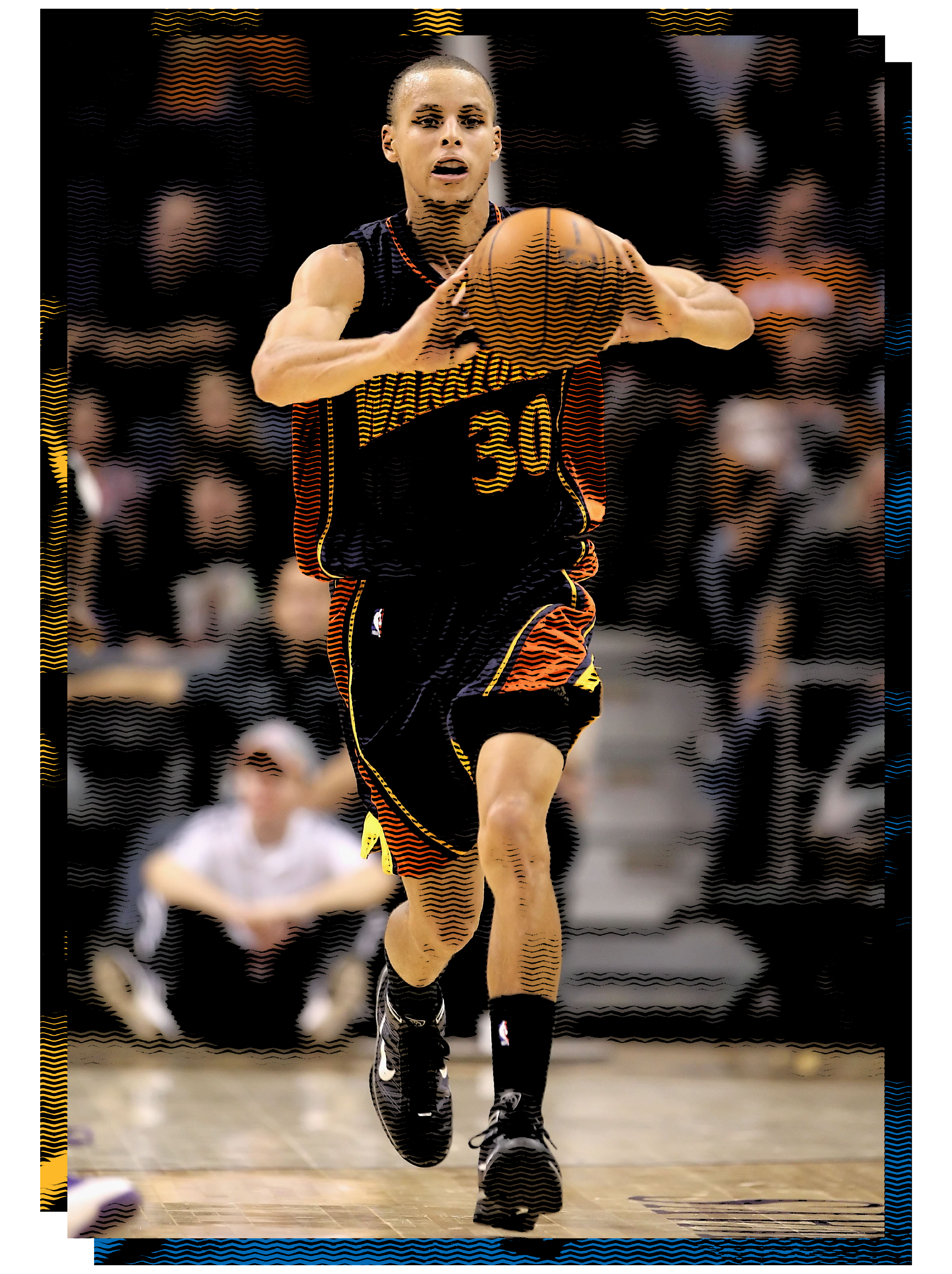
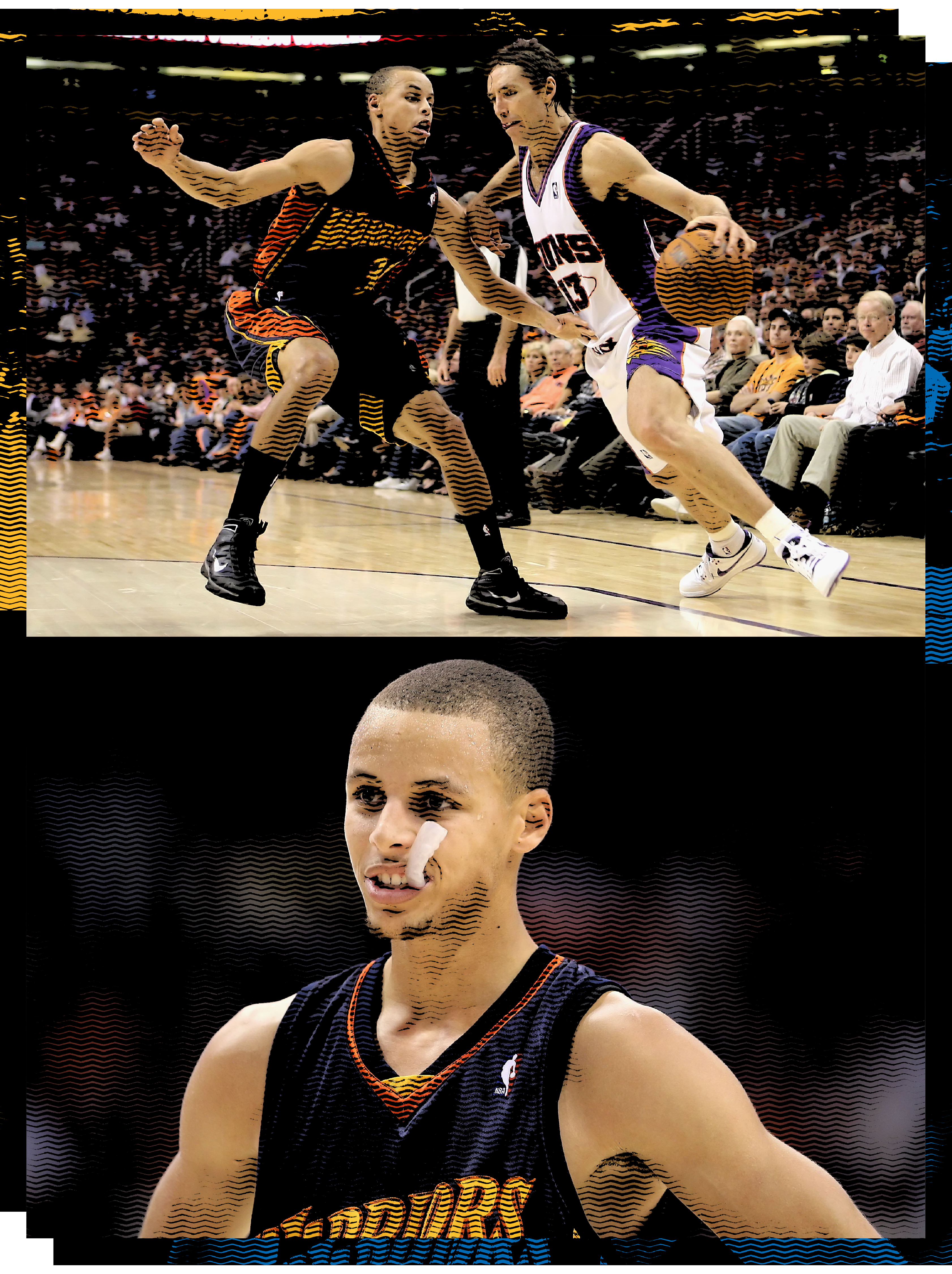
Stephen Curry, baby-faced, shaven-headed, is playing his second game in the NBA. The 21-year-old’s Golden State Warriors team are away to the Phoenix Suns.
With a minute to go in the second quarter, Curry dribbles the ball halfway up the court before passing it to a team-mate.
Curry nonchalantly makes his way up the floor, stopping beneath the basket – a position where, without the ball, dwarfed by defenders, he is little threat to the opposition.
What happens in the next two seconds will be the catalyst for changing basketball. Forever.
Curry pushes off his defender. It is just enough contact to open up space, not enough to warrant a foul.
He then sprints back outside the three-point line, gathers a pass and releases a high-arching jump-shot.
Swish! A sharp ripping, rippling sound comes from the rim. His scoring shot touched nothing but net.
From a distance of about 24 feet, with lactic acid coursing through his system, sweat slicking his palms, an opponent in his face and millions watching around the world, Curry sends a ball, nine inches wide, precisely though the centre of a hoop, just 18 inches in diameter.
“Now that’s what they were talking about,” purrs the television commentator. “One of the purest shooters you are ever going to see coming out of college.”
It was Curry’s first successful three-point shot under the NBA’s bright lights.
It was the first few lines in the story of a player once deemed too small, too weak and too skinny to succeed in a sport of giants.
Curry proved those doubters wrong, but even he could not anticipate how his skills would transform an entire league and define an era.
“The three-point shot is the most dangerous weapon in basketball. He's the face of that. He is the catalyst for that movement.”
Matt Matheny – Stephen Curry’s coach at Davidson College

THE EARLY YEARS
The odds of making it to the NBA are slim. Very slim.
Of the 150,000 or so eligible each year, only about 60 players are drafted into the league.
Those numbers make it even more remarkable that the Curry family has produced three NBA players in quick succession.
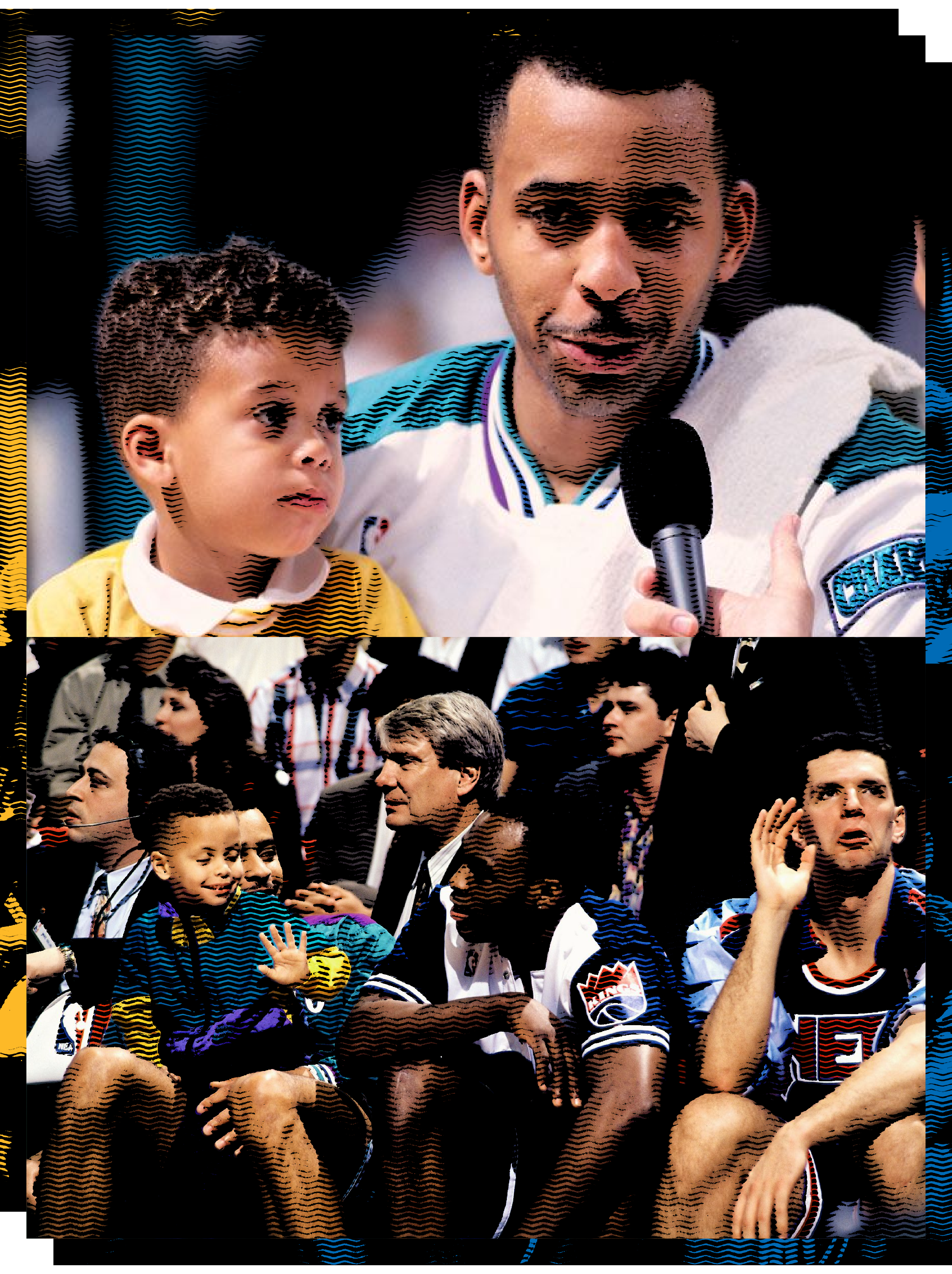
Born in Akron, Ohio on 14 March 1988 – three years and a couple of months after LeBron James arrived on the same maternity ward - Curry is the son of former NBA player Wardell 'Dell' Curry.
It meant Stephen and his younger brother Seth grew up surrounded by the game.
Their early years were spent moving from city to city with Dell playing for the Utah Jazz, Cleveland Cavaliers, Charlotte Hornets, Milwaukee Bucks and Toronto Raptors in a 16-year top-level career.
As well as attending games, the young Curry brothers would also visit practice sessions – front-row seats to see the NBA’s finest – and soaked up the experience like sponges.
There are videos online of the pair – with the basketball seemingly bigger than they are – making shots with the accuracy and frequency some adults dream of.
Matt Matheny, who coached Curry at Davidson College, says that unique upbringing played a crucial role in the player’s evolution.
“There's a very famous story about Steph not being physically strong enough to shoot a normal jump shot,” Matheny tells BBC Sport.
“So when he was young, he really had to heave it from his waist area.
“One summer Dell took Steph out in the driveway and spent the whole summer changing Steph’s shot.”
That first deadly three-pointer in Phoenix? It began way back there, but from far closer range.
Those one-on-one sessions with his father started mere inches away from the basket.
Once Curry was comfortable and competent from there, he would move back a foot or so. He would repeat the drill, sinking hundreds of baskets, sharpening his shooter’s eye and carving the shot into his muscle memory.
Then he would move back up another foot. A whole summer passed, a player evolved.
Curry's dedication to shooting from distance may have been borne out of necessity.
Ever since its inception, basketball has been almost entirely dominated by big men playing in the paint and above the rim.
Officially listed at a relatively titchy 6ft 3in – some say it depends on the type of trainers he's wearing – Curry didn’t fit that mould.
Growing up, his fresh features made him look younger than his age and his slight frame was swamped in his jersey and shorts. Curry was always short in comparison to team-mates and opponents.
Shooting from distance was his way of evening up the field.
It took him away from the areas where his physical shortcomings would have had him at a disadvantage.
By the time Curry was in his early teens, basketball’s comprehensive and stringent scouting process had him pegged as an average prospect, with only an outside chance of a career at the elite level.
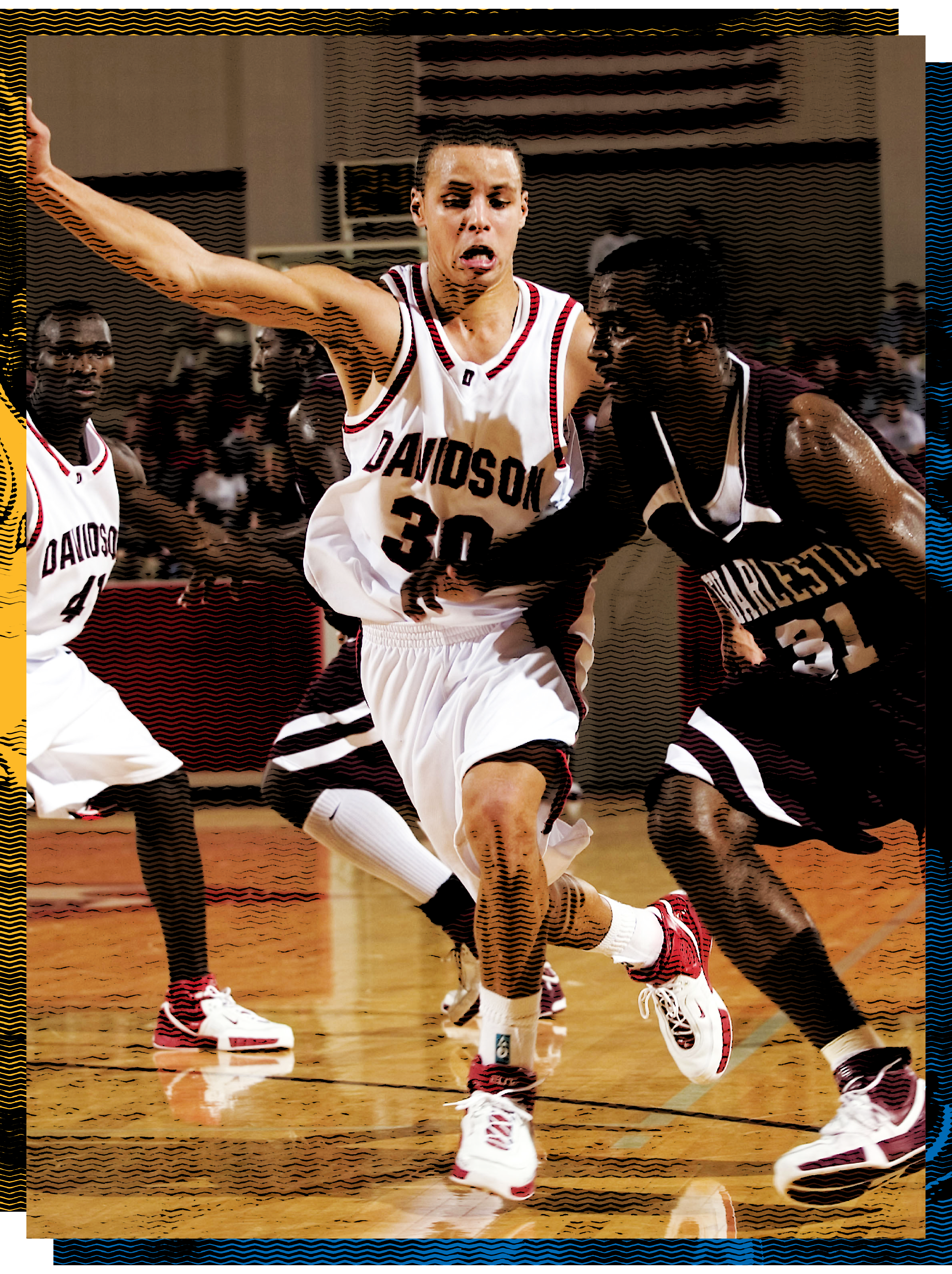
Curry, who wore the same number 30 his father had, saw his dreams of following Dell into the NBA dented when several powerhouse colleges passed up the chance to recruit him from high school.
Matheny admits selecting him to play at Davidson – a relatively low-key basketball programme compared to some others - was a risk, but the coach saw that what Curry lacked in brawn, he made up in brain.
“Steph has always been advanced in his basketball IQ. When you are a 17 or 18-year-old going into a college environment, the physicality of the game is the major thing,” Matheny says.
“He’s playing against 22 or 23-year-old men. There’s a speed to the game and an understanding of the game that you just haven't experienced yet.
“He conceded 13 turnovers in his first game, but we won after being down 17, thanks in large part, to some of the plays that he made.
“But then the second game in college, he scored 32 points against the University of Michigan. That didn’t mean he had arrived, but that was just a glimpse into how special he was at an early age and his ability to adapt, improve and learn very quickly.”
Under current NBA rules, players based in the United States must spend at least one year with a college team. Commonly known as "One and Done”, it’s the preferred option for the vast majority of rookie players joining the league.
Yet Curry spent three years playing at college. While he had the required skill level and game understanding for the big time, his size held him back.
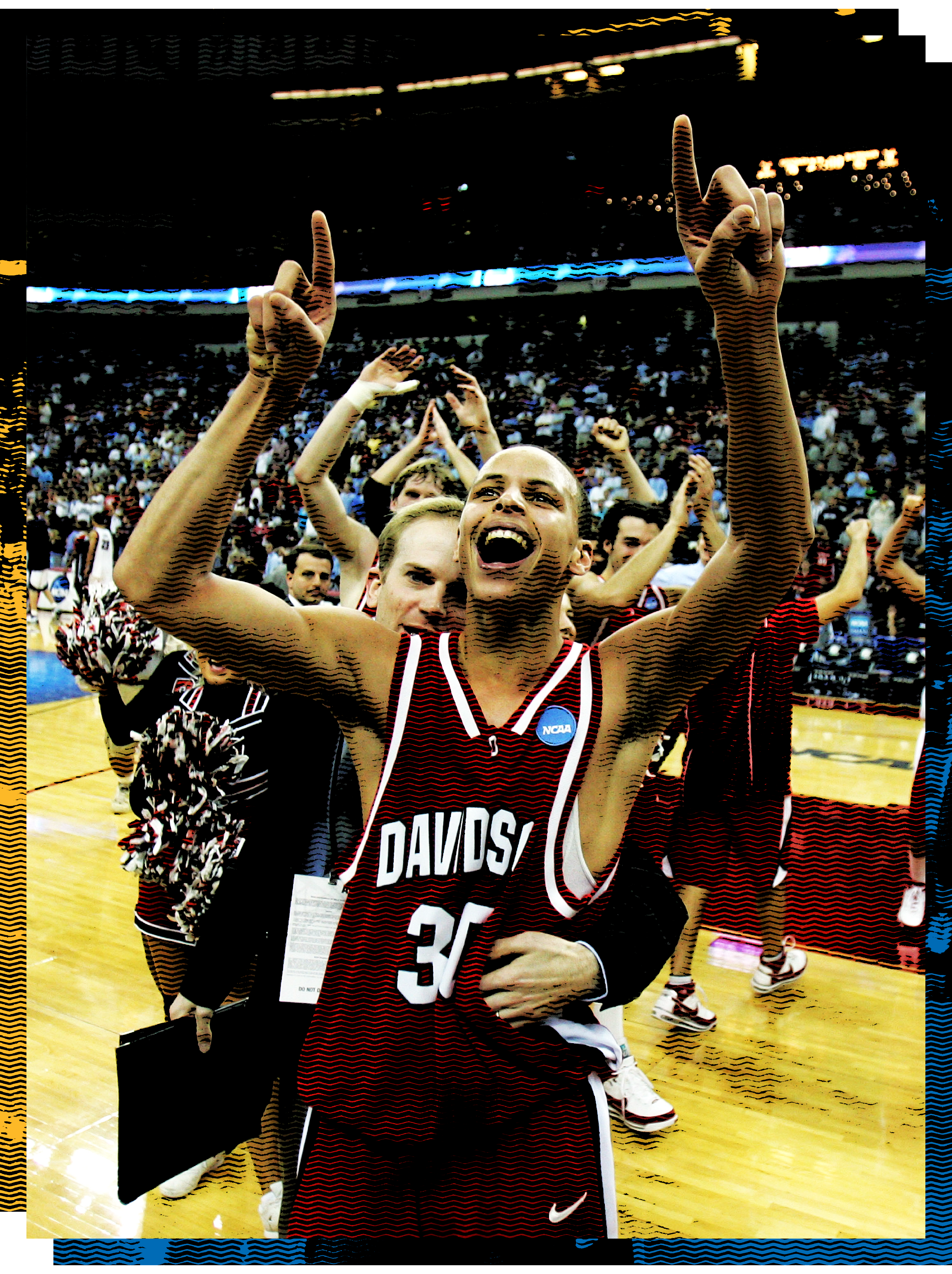
“During his sophomore year and our run to the Elite Eight in the NCAA tournament – that changed a lot of things,” Matheny fondly recalls.
Screened on major television networks across the country, the elite college tournament is a chance for viewers to see the next generation of talent.
“He captivated America with his play,” Matheny remembers.
“Our team was wonderful to watch. And he was the superstar on that team. There were a lot of pundits saying he might be an NBA player. But at that point, it was not a sure thing.
“I think he could have left after that year. Although coming back to Davidson for that third year gave him an opportunity to get a little bigger, a little stronger. We played him with the ball in his hands a little bit more. I think that helped his maturation as a player.”
NBA DRAFT & BIRTH OF THE 'SPLASH BROS'
Curry was a high-profile but down-to-earth figure on his college campus.
Away from the court, he appeared in comedy skits for Davidson’s variety show, played in softball games and volunteered to help new students unload their belongings into their new dormitories.
But before his fourth and final year, Curry decided it was time. He declared for the 2009 NBA draft. The buzz about him had built steadily, but the man himself was not getting carried away.
“That’s all I'm really focused on at this point; just make it up the stairs," Curry said in the days before the draft.
“I'm going to be nervous and I don't want to trip going up on stage in New York when I hear my name called."
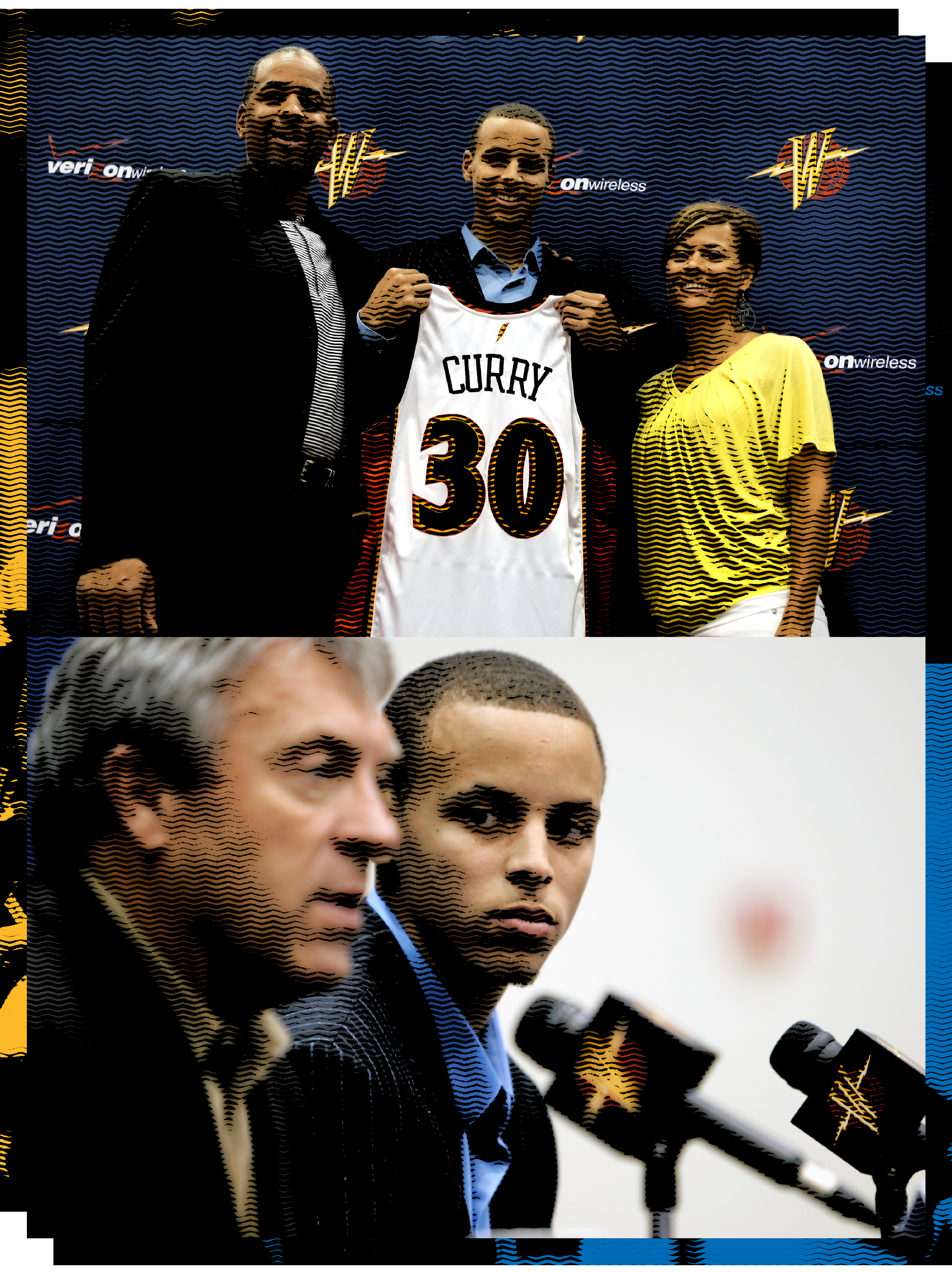
He didn’t have to wait too long. He was selected by the Golden State Warriors as the seventh overall pick.
His selection reflected the remaining doubts; he was not the outstanding prospect of his generation. Some were unsure the potential would translate into a blossoming career and whether his skillset fit the NBA.
Respected scouts saw his strengths, but also plenty of weaknesses.
“Too skinny,” said one. “Lacks great athletic ability,” said another. “Far below NBA standard in regard to explosiveness…he’s extremely small for an NBA shooting guard,” wrote a third.
“Teams passed on him. Minnesota [Timberwolves] took two point guards, Ricky Rubio and Johnny Flynn, ahead of him," says Dave McMenamin, NBA writer for ESPN.
“Certainly, he was a phenomenon in college. But some of it was kind of a novelty, because you see this little guy with skinny arms shooting from three or four feet beyond the three-point line. That wasn’t the customary shot that teams were looking for back in the day.”
In his first few years in the league there were glimpses of Curry’s brilliance. Although the Warriors’ roster contained a good mix of experience and youth, overall it wasn’t a team that could challenge for the championship.
But retrospectively every shot he made – especially from three-point range – picked at the fabric of the traditional NBA format. Soon it would unravel completely.
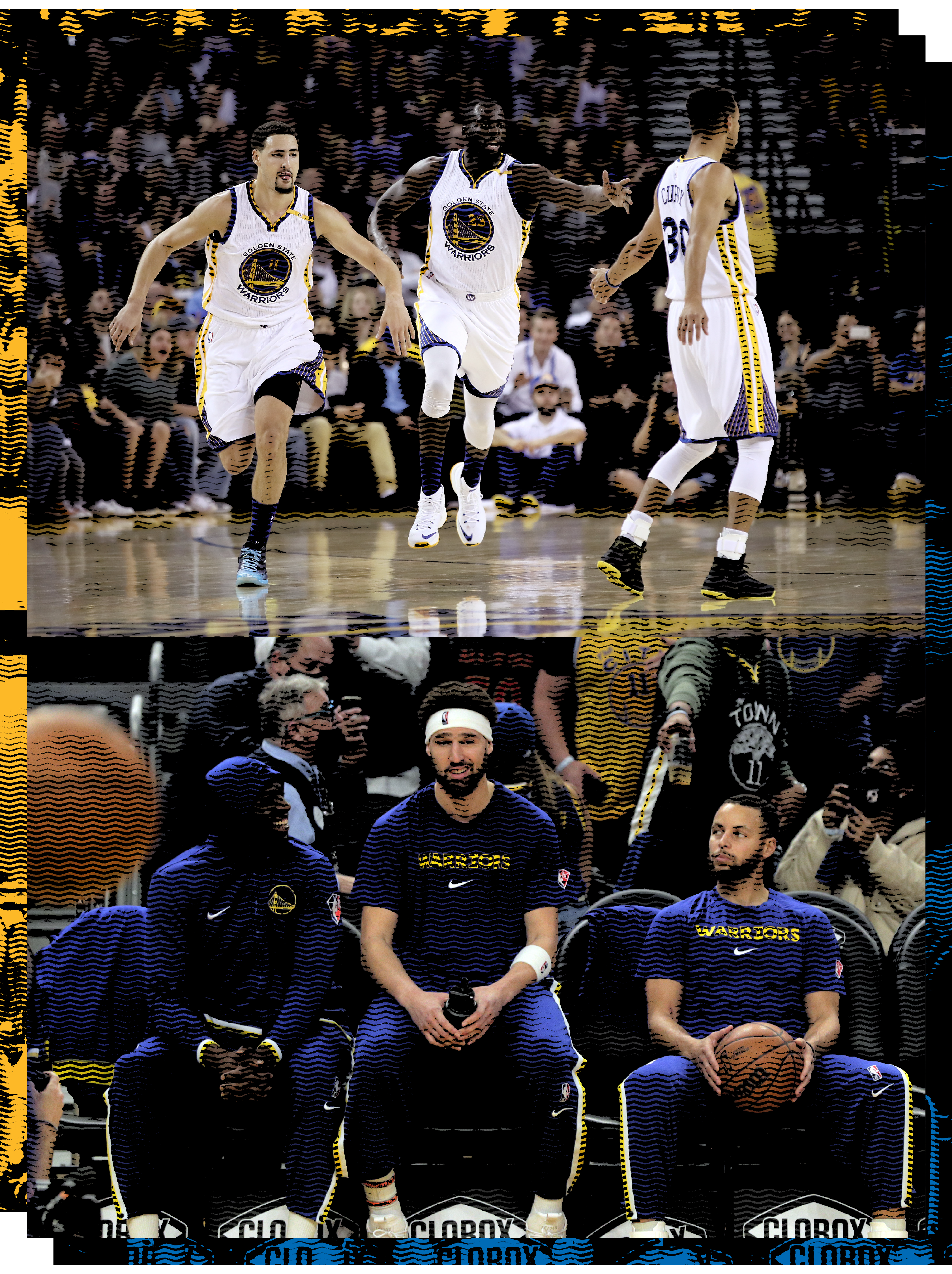
If the history books will list Curry as the main ingredient in the Warriors’ golden era, then Klay Thompson (drafted in 2011) and Draymond Green (drafted in 2012) were the perfect accompaniments.
Under the tutelage of head coach Mark Jackson and his successor Steve Kerr, the trio were key pieces in a brand of basketball that took the NBA by storm.
In the 76-year history of the league there has been a direct correlation between a team’s success and the quality of the player at the number five or centre position.
Typically the tallest and most physical players, they specialise in rebounding, shot blocking and intercepting aerial passes.
An NBA centre is typically seven feet tall or pretty close to it, which makes them rare. Athletes of that size clearly grow but, as the saying goes, not on trees.
Hall of Fame players who excelled at the position include Bill Russell, Shaquille O’Neal, Kareem Abdul Jabbar and Tim Duncan.
During the 2014-15 season the Golden State Warriors, like so many teams before them, were following the traditional basketball blueprint.
That was until, in a best-of-seven series, the team fell behind 2-1 to Lebron James and the Cleveland Cavaliers.
Kerr made the decision to replace seven-foot Australian centre Andrew Bogut with power forward Andre Iguodala, at a relatively modest 6ft 6in.
The adjustment surrendered size and strength for speed and play-making. It would soon become the Warriors’ default line-up and the results were deadly.
It was so dangerous in fact it would become known as the ‘Death Line Up’.
It wasn’t the first time a team had played without a traditional tall centre, but it unlocked a brand of basketball perfect for the Golden State Warriors’ individual players.
“The reason why it worked is the spacing in today's NBA,” McMenamin says.
“There have been defensive rule changes which mean you can't get up on a guy and basically armbar him to maintain contact. You have to give a degree of freedom of movement on defence.
“And so, if you already have Steph on one wing with Klay Thompson on the other, it's a split-second catch and shoot and that’s three points ‘swish’ down the net.”
Curry thrived in the system. The shooting threat across the entire Golden State team meant opponents could not always afford to deploy two players to double-team and deny him the ball as they had previously.
Before Curry, the game of basketball had players considered dead-eyed shooters. The likes of Reggie Miller, Ray Allen and Kyle Korver come to mind.
Yet Curry had another special, if less spectacular, attribute which elevated him above them all: his movement.
There isn’t a second of the game when he is stationary. One of the best conditioned athletes the game has ever seen, Curry often finds himself guarded by several opposing players throughout a game – the exertion it requires makes it unsustainable as a solo job.
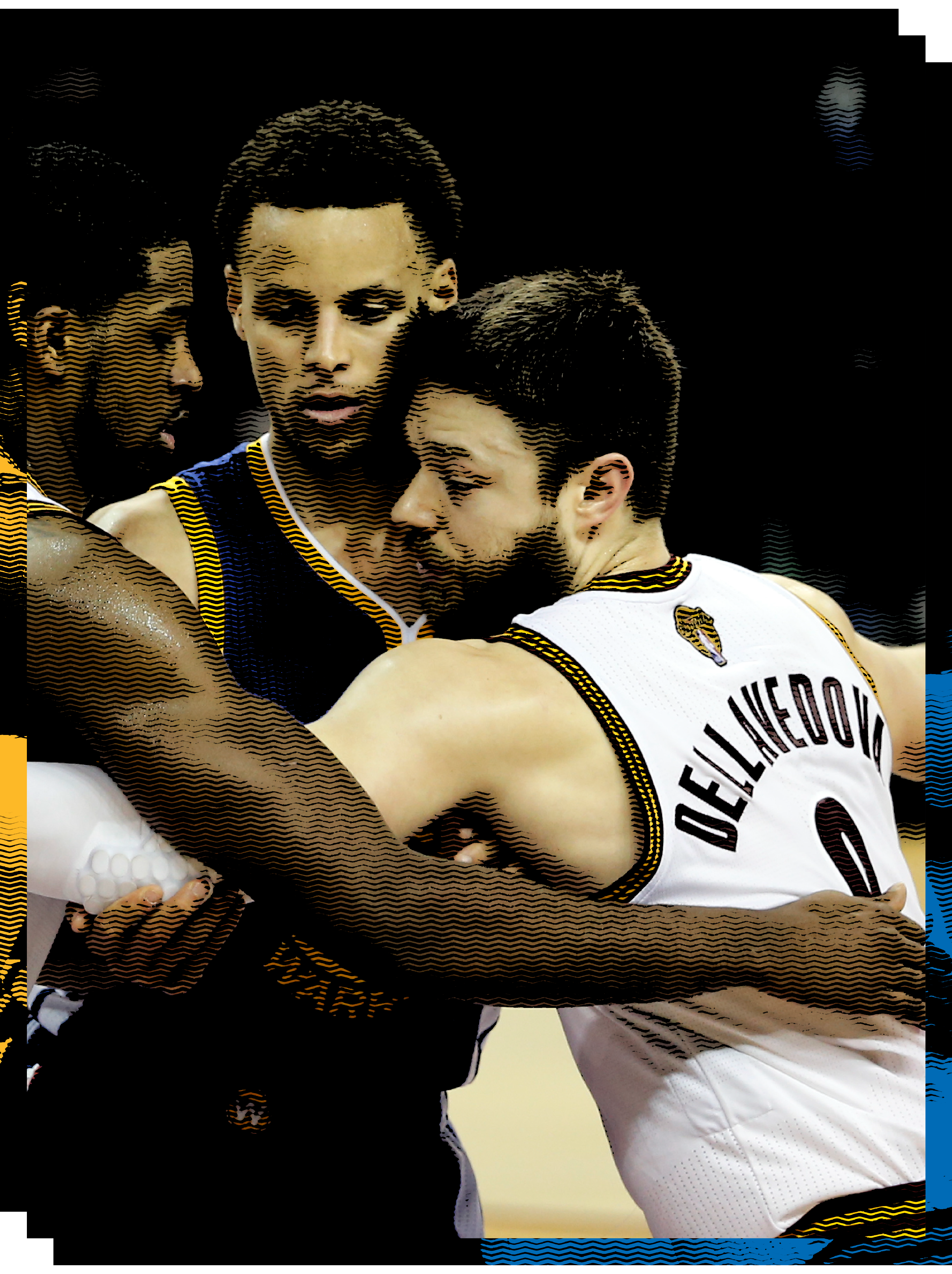
Former Cavaliers player JR Smith – who played against Curry in the 2015 NBA Finals – recently revealed what it’s like trying to keep track of Curry.
Smith confessed he was relieved the task had fallen to his team-mate Matthew Dellavedova, rather than himself.
“I love Delly to death, but Delly almost died guarding Curry,” JR Smith told The Old Man & the Three podcast.
“He could barely talk after, that's how hard he was trying. That respect level, to me, it goes through the roof.”
As a result of trying to keep up with Curry, Dellavedova’s efforts after one game resulted in him suffering severe cramping. He had to visit a hospital to have an intravenous drip inserted.
“First my quads both cramped. Then my hammies. Then my adductors. I couldn't move off the training table,” Dellavedova told ESPN a few years after the event.
“I was stuck on the table. I had the IV in and I was still cramping. They helped me to the cold tub and I just collapsed in it for 20 minutes.”
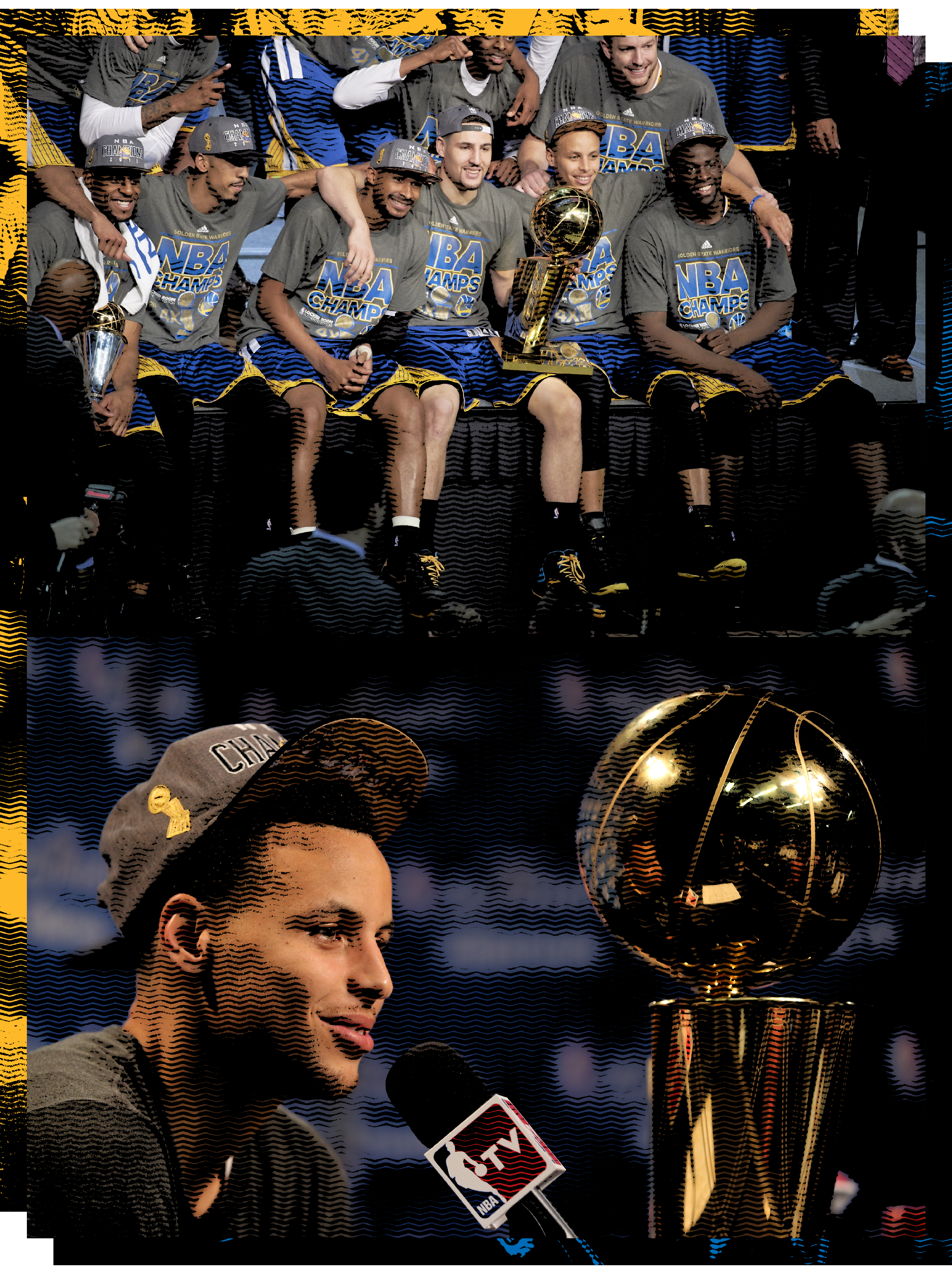
Changing their style changed the momentum of the 2015 Finals. The Warriors reversed the 2-1 deficit to the Cavaliers to win the series 4-2.
Curry and his team-mate Thompson lit up the series with their displays from beyond the three-point line, earning them the nickname ‘The Splash Brothers’ – owing to the sound the ball makes as it ripples the bottom of the net without touching the rim.
Like a stone being thrown into deep water.
It became common for Thompson and Curry to regularly make double digit three-point shots between them.
And the maths meant, in order to beat the Warriors, teams had to at least try to do the same. Keeping up with regular two-point shots was no longer an option.
GAME CHANGER
The three-point rule had been introduced to the league for the 1979-80 season. In that initial campaign the Los Angeles Clippers’ Brian Taylor led the NBA with 90 successful attempts.
Although that number has steadily grown as teams realised the value of the shot, Curry has maintained a success rate at a frequency and from distances previously thought impossible.
For seven of his 15 seasons in the league, Curry has led the NBA in three-point shots made. He holds the record for the most in a single regular season, scoring 402 in the Warriors’ 2015-16 campaign.
Lebron James once joked that in order to stop Curry you would need to guard him from the moment he got out of his car.
The Warriors’ new brand of basketball was great to watch. The next question was whether it was also a sustainable winning formula.
“I do remember Charles Barkley, obviously the great all-time power forward, saying a jump-shooting team can never win a championship. Boy, was he ever wrong,” McMenamin says.
Curry’s reign as the king from range ushered in what would become the most successful period for the Golden State Warriors. The franchise were crowned NBA champions in 2015, 2017, 2018 and 2022.
They ended the 2015-2016 regular season with 73 wins and just nine defeats, the best winning percentage ever recorded by an NBA team in an 82-game season. The previous holders of that record were Michael Jordan’s Chicago Bulls – with a record of 72 and 10 – in the 1995-96 season.
Jeff van Gundy, a former coach in the NBA and now an announcer on American television coverage, often refers to the league as “make or miss”.
While the concept and reasoning seems apparent – the team who makes the most shots wins – the new reality is less so.
In its simplest form, if one team makes three three-pointers, their opponents could make four two-pointers and still lose.
By demonstrating it is possible to hit successful three-point shots in volume and with accuracy, Curry has tilted the tactical balance.
Now, it is the decisive statistic: the team who scores the most threes on any night usually wins the game.
Teams who may have once been reluctant to change have had no choice but to face up to the reality and shift their style.
This has directly led to teams drafting smaller players capable of shooting from range. A player unable to shoot three-pointers is a liability - today even centres the likes of Denver Nuggets’ Nikola Jokic and the Philadelphia 76ers’ Joel Embiid are hybrid players.
They are no longer content, nor have the luxury, of living in the paint but instead regularly play on the perimeter taking three-point shots.
“Steph Curry, is allowed and encouraged to take the shots that he does, because he is practising all of them on a daily basis,” says McMenamin.
“The problem is that some have tried to mimic him and take the same shots, but they don't put in the same amount of work.
“There’s a method to the madness of him shooting from that deep because he can do it.
“He can do it and some others can do it, sometimes. Just not at the level that Steph Curry can.”
In years gone by the slam dunk was the in-game move that whipped NBA crowds into a frenzy. Currently it is the three-point shot.
Curry’s long-range shooting is such a must-see that arenas are packed hours before tip-off just to see his warm ups.
The 35-year-old is the ultimate crowd-pleaser, easing through his repertoire of drills which show of his razor-sharp reflexes and ball handling.
That’s followed by the same piece of practice he mastered on his driveway. Starting at the rim, Curry drains jump-shots, taking two steps back after each successful shot attempt. He only stops when he has backed all the way up to the halfway point of the court.
If that wasn’t impressive enough it is normal to find him in the crowd – heaving a shot from the expensive seats. It has become tradition that after he makes a final successful effort Curry high-fives a watching security guard before sprinting to the locker room.
2974
The easiest way to start an argument between two basketball-loving fans is to ask: who’s the best player ever?
Stephen Curry’s name is unlikely to be top of many lists. LeBron James, Michael Jordan, Magic Johnson and Kareem Abdul-Jabbar might all have stronger claims.
But there is little argument or doubt that Curry is the greatest shooter the game has ever seen.
On 14 December 2021, Curry reached a milestone which cemented that status.
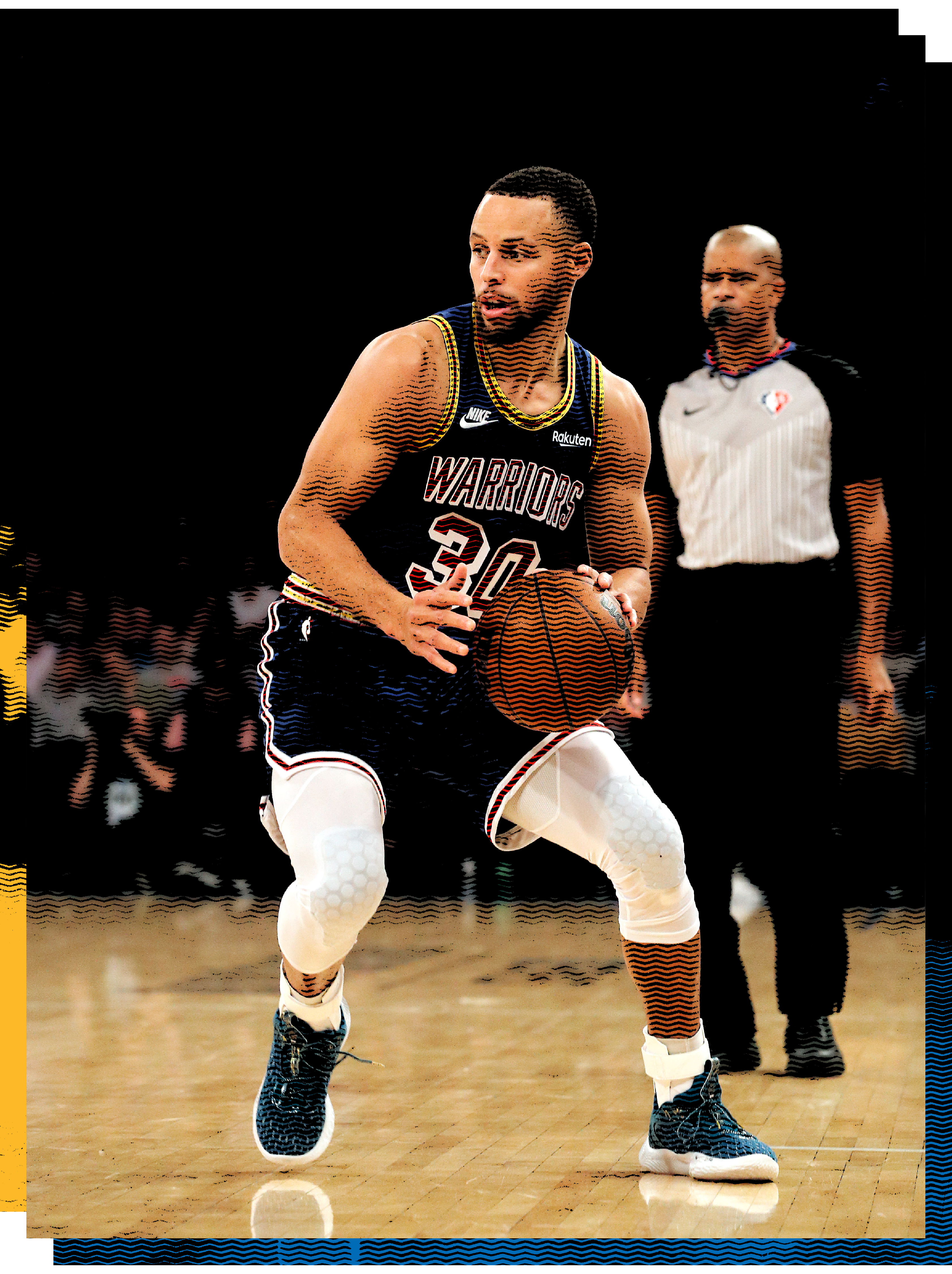
At New York’s Maddison Square Garden – a venue considered basketball’s spiritual home – against the Knicks, Curry scored his 2,974th three-point shot in the regular season.
It broke Ray Allen’s record which had stood for 11 years – and impressively Curry did it in 511 games fewer than Allen.
“There were 82 three-pointers taken tonight,” said Kerr, head coach of the Golden State Warriors.
“So, on a night when he broke the record, the sum of both teams’ three-point attempts was kind of a testament to Steph’s impact on the league. It’s a different game [now], obviously. But Steph made it a different game.”
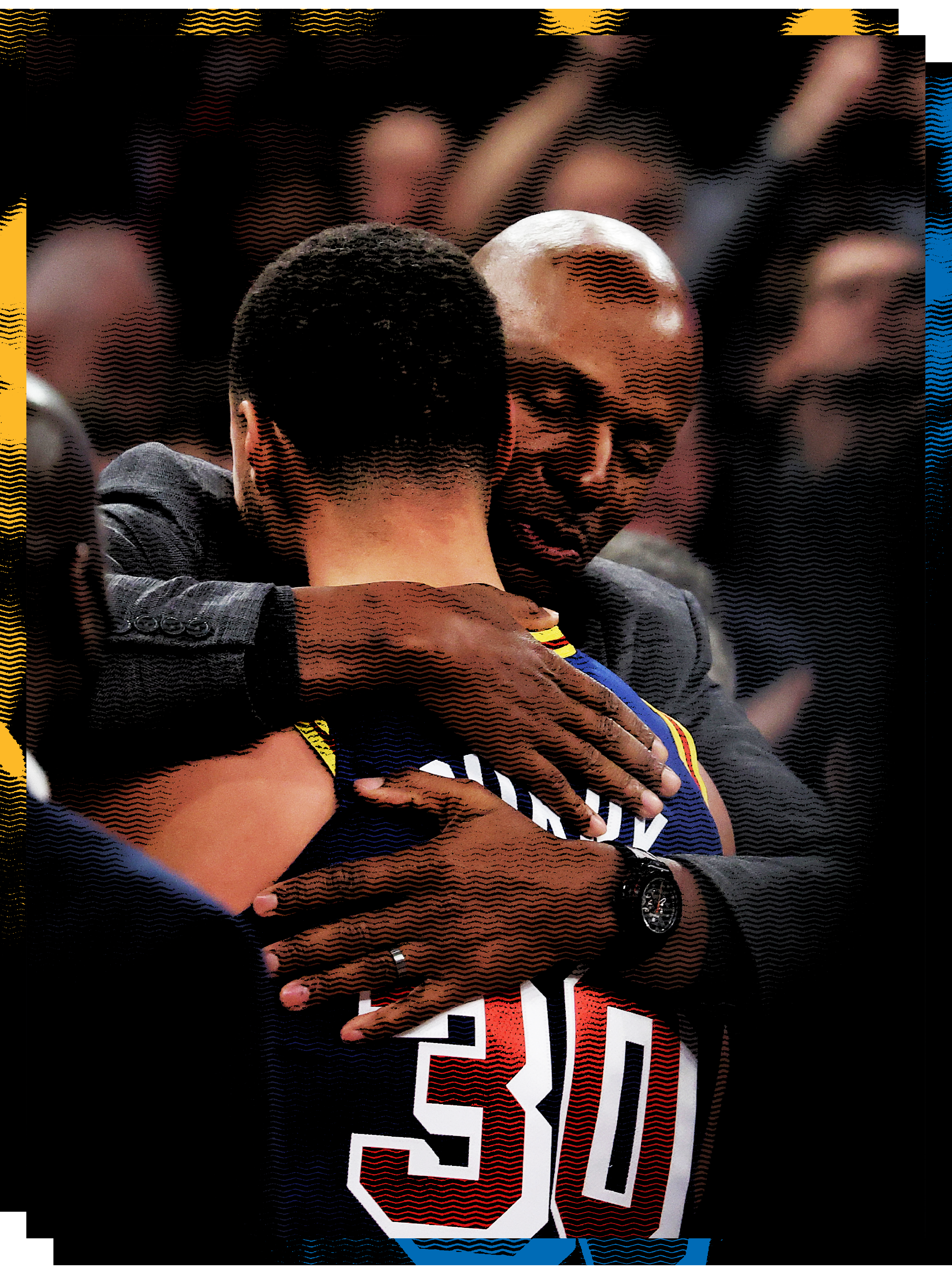
In the dressing room after the game, Curry was modest as ever; another trait that’s earned the admirers in and out of the sport.
Curry told team-mates and the coaching staff: “This is a career milestone because of everybody I have suited up with, everybody that sets screens for me, everybody that passed me the ball and everybody that believed in the offence and believed in the process.
“We got a lot more threes to go…”
LEGACY
The Stephen Curry story is still being written.
Now a 15-year NBA veteran, the 35-year-old shows no signs of slowing up, with many claiming this past season – in which he averaged 29.4 points, the third-highest total of his career – was among one of his best.
Off the court Curry is a husband and father. Hugely religious, he’s often spoken about how lucky he is that God gifted him these talents.
He is adored by his fans and revered by his rivals.
“He is as nice a human being as you could imagine,” says Richard Jefferson, who played both with and against Curry during his own 17-year career in the NBA.
“He’s the type of guy that will play cards, we’ll go to dinner, we’ve sat next to each other at weddings of former team-mates… he’s just a good dude.
“For me, as a basketball nerd, he’s the ideal face of the NBA.
“You want someone that takes on that ownership and knows the responsibilities that it carries and what he has to do. Very few guys can handle the weight of a multi-billion dollar industry saying that you are the face.”
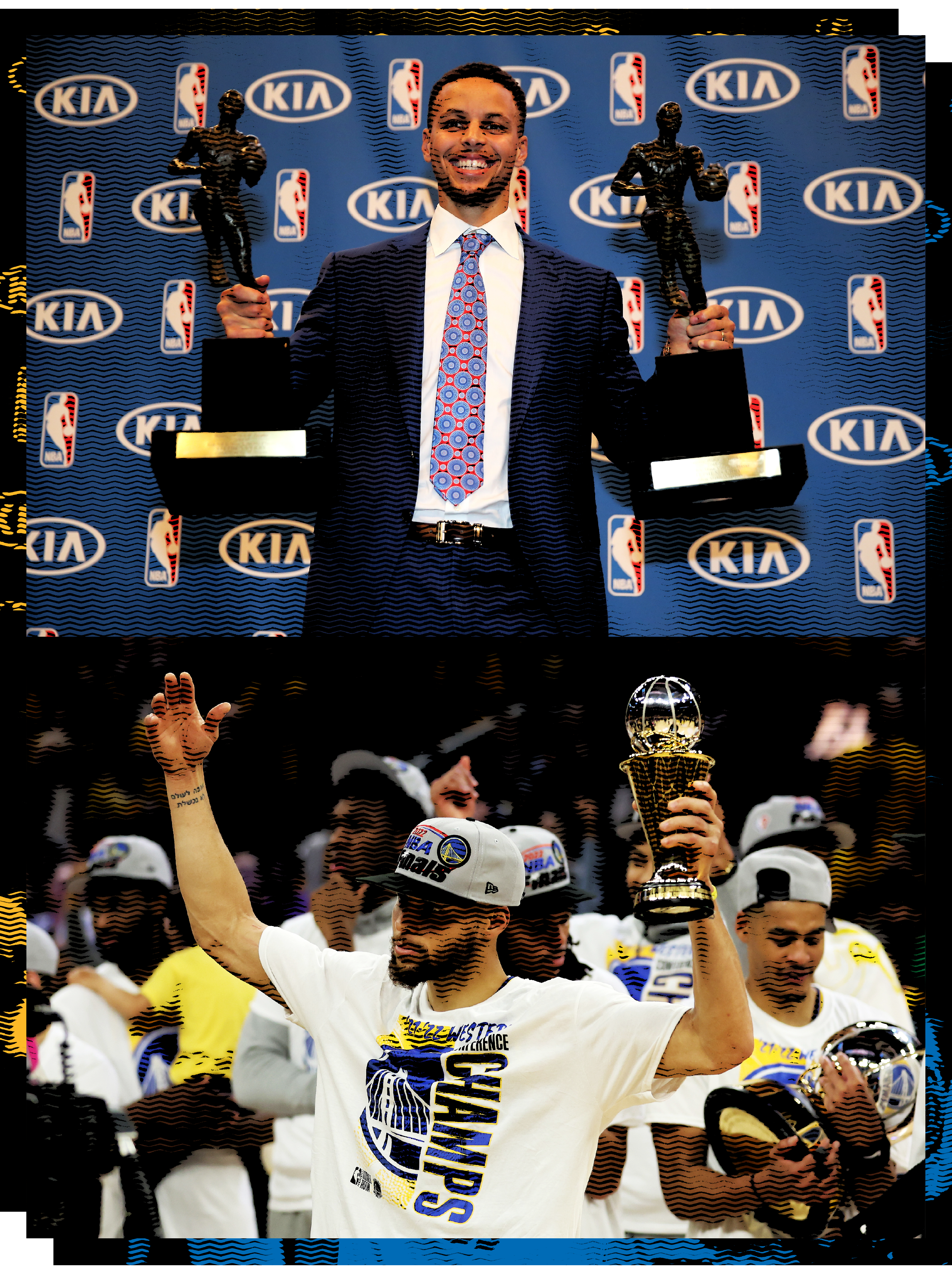
Curry is a four-time NBA champion, the all-time leading three-point scorer and the only unanimous Most Valuable Player (MVP) in the history of the league.
4 x NBA CHAMPION
2015, 2017, 2018, 2022
Curry shares the record for the most NBA titles – the prize fought over by 30 teams from across the United States and Canada - of any other active player. Lakers’ superstar LeBron James and Warriors team-mates Klay Thompson and Draymond Green also have four championship rings.
2 x NBA MVP
2015, 2016
Voted for by a panel of basketball reporters, broadcasters and writers, the NBA’s Most Valuable Player trophy is awarded to the best player over the league’s regular season and is regarded as its greatest individual honour.
After landing a record 402 regular-season three-pointers, Curry was ranked top of all 131 ballots cast in 2016. It made him the first and only unanimous choice in the award’s 67-year history.
NBA FINALS MVP
2022
Curry was once again a unanimous selection when the votes were counted for the best player in the 2022 NBA Finals – the season finale of the Warriors’ most recent title win. Curry averaged 31.2 points per game as Golden State beat Boston Celtics 4-2 in the best-of-seven series.
By winning the Finals MVP award, Curry joined an exclusive club of NBA legends, comprising of Michael Jordan, Magic Johnson, LeBron James, Tim Duncan and Kareem Abdul-Jabbar, to have claimed at least four titles, two regular-season MVP awards and a Finals MVP award.
9 x NBA ALL-STAR
2014-2019, 2021-2023
Curry has earned selection for the NBA All-Star game – an exhibition consisting of 24 of the league’s biggest stars – nine times. He captained one of the teams in 2018.
9 x ALL NBA SELECTION
First team, 2015, 2016, 2019, 2021; Second team, 2014, 2017, 2022, 2023; Third team, 2018
Selected by the same panel of voters who pick the NBA’s MVP award, the All NBA teams acknowledge the best players in their position across the whole of the league.
NBA 75th ANNIVERSARY TEAM
Curry was among 11 active players selected among the 75-strong squad listed to commemorate the NBA’s 75th anniversary.
When Steph Curry does decide to call it a day and walk away from the game - it will be in the knowledge that he has left his imprint on the game of basketball – in the NBA and far beyond.
His impact is visible in every high school and college gym. Even in a friendly shoot-a-round between friends in the park.
Coaches who teach the game to all ages talk about having to coach the ‘Steph Curry’ out of some players.
Little kids to grown men walk on to a gym floor and heave the basketball from long distances, perhaps unaware that Curry makes it look a lot easier than it is precisely because he learned the opposite way round - from close in first.
Throughout history there’s only been a handful of athletes who’ve been so influential and ground-breaking, they have changed the way the sport is played.
Tiger Woods. Serena Williams. Jonah Lomu. Shane Warne. Dick Fosbury.
It’s safe to say you can add Stephen Curry to that list.
CREDITS
Written by Nesta McGregor
Edited by Mike Henson
Sub-edited by Rebecca Ranson
Graphics by Andy Dicks with Lee Martin
Images by Getty Images
Videos by NBA Entertainment
