

 |  |
© SNSpix | |
|
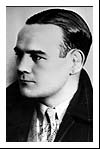
But the spirit of Benny Lynch remains. The tough Gorbals district of Glasgow which produced the ring's No. 1 flyweight - from 1935-38 - is gone. His achievements as a fighter look all the more amazing when placed in such a social context.
Lynch was born on 12 April 1913 and began boxing as a teenager in a bid for fame and fortune to escape the poverty and deprivation of his family background. With other aspiring fighters he learned his craft at local clubs such as LMS Rovers or in the fairground booths on Glasgow Green.
Lynch stood out. From an early age, he was an exceptional fighter, combining assured ring artistry with percussive punching power - unusual in a fighter whose body frame appeared so slight.
He excelled as an amateur and turned professional aged 18 in 1931, stopping Young McColl in round three in Glasgow.
It was the start of a career which spanned 104 bouts - most of them wins - which peaked when he won the world flyweight title in 1935 at 21.
As a raw teenager, Lynch's potential was spotted by bookie Sammy Wilson who opened his own boxing club - the New Polytechnic - at No. 49 Clyde Place.
Sammy spotted Lynch training at another local club and was impressed by his speed and accuracy.
He signed the young boxer, and their partnership would lead to the title. Training was tough, with none of today's modern gym technology.
|  |
© EMPICS | |
|
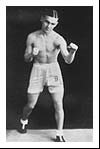
Lynch's professional record was impressive. In his first 30 fights he won 20 and drew 5.
In 1933 alone, he fought 17 times – unthinkable now. The following year Lynch claimed his first crown, winning the Scottish flyweight title by defeating Jim Campbell on points in a tough 15-rounder in Glasgow.
In March 1935, he fought a draw with title holder Jackie Brown in Glasgow. Their return match - in September - was the big one. Lynch travelled to Belle Vue in Manchester to challenge Brown again for his British, European and world flyweight titles.
He stopped Brown in just two rounds, scoring four knock downs in the opening round followed by a further six in round two.
Page: 12





